


Сколько воды необходимо для производства лотков для яиц? Полное руководство по потреблению.
Введение
Вода является одним из важнейших ресурсов в производстве лотков для яиц.
Он используется на протяжении всего процесса — от подготовки целлюлозы до формования и очистки оборудования.
Многие инвесторы спрашивают:
Сколько воды требуется для работы фабрики по производству лотков для яиц?
Ответ зависит от:
- Производственная мощность
- Концентрация мякоти
- система рециркуляции воды
- Конфигурация оборудования
В этом руководстве мы объясняем... фактическое потребление воды при производстве лотков для яиц, включая способы использования воды, необходимое количество воды и методы снижения водопотребления за счет проектирования системы.
Полный обзор производственного процесса см. в [ссылка]. Процесс производства лотков для яиц
Где используется вода при производстве лотков для яиц?
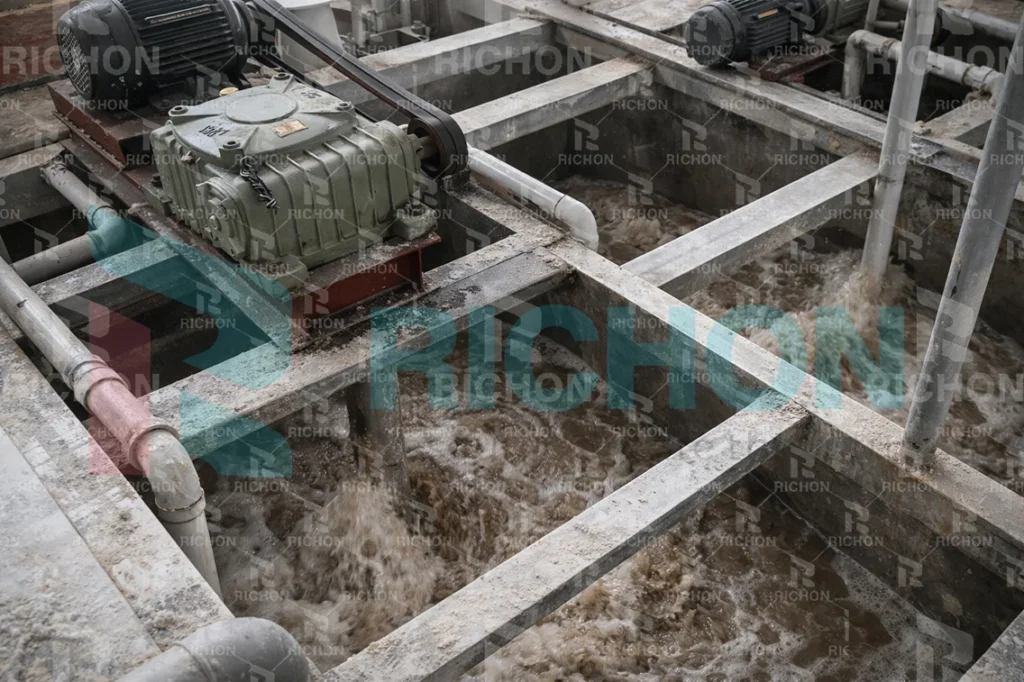
Вода используется на нескольких ключевых этапах:
1️⃣ Система измельчения
- Макулатура смешивается с водой.
- Волокна бумаги измельчаются до состояния суспензии.
- Типичная консистенция пульпы: 3%–5%
👉 На этом этапе потребляется наибольший объем воды.
2️⃣ Процесс формирования
- Вода переносит волокна к плесени.
- Вакуум удаляет излишки воды.
- Большая часть воды возвращается в систему в результате рециркуляции.
3️⃣ Очистка оборудования
- Трубы и резервуары требуют периодической промывки.
- Предотвращает засорение и загрязнение.
Типичное потребление воды в зависимости от производственной мощности
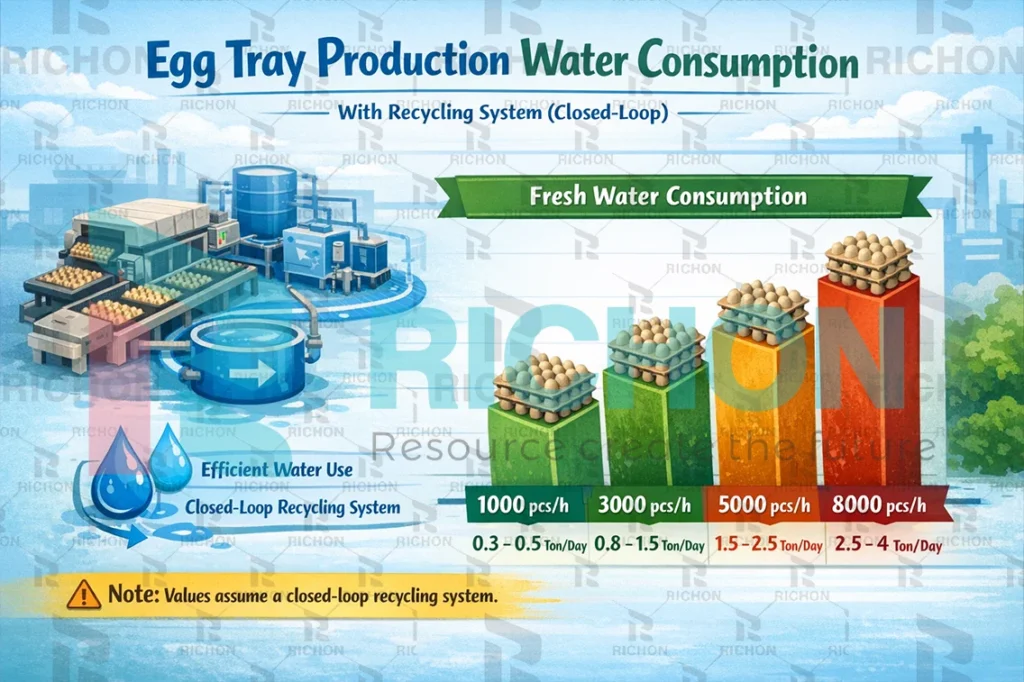
Потребление воды зависит от мощности оборудования.
Референтные значения (с учетом системы переработки)
| Емкость | Потребление пресной воды |
|---|---|
| 1000 шт./час | 0,3 – 0,5 тонны/24 ч |
| 3000 шт./час | 0,8 – 1,5 тонны/24 ч |
| 5000 шт./час | 1,5 – 2,5 тонны/24 часа |
| 8000 шт./час | 2,5 – 4 тонны/24 часа |
⚠️ Важно:
Эти значения предполагают замкнутая система рециркуляции воды.
Без переработки потребление может увеличиться на:
5–10 раз
Почему потребление воды оказалось ниже ожидаемого?
Многие новички ошибочно полагают, что для производства лотков для яиц требуется большое количество воды.
В действительности большинство современных производственных линий используют:
Замкнутый цикл рециркуляции воды
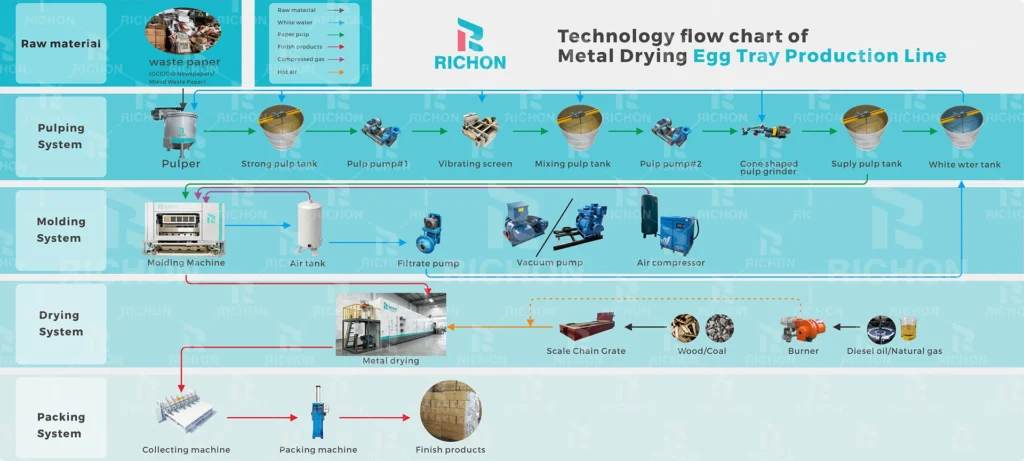
В стандартной системе:
- Вода, стекающая из форм, собирается.
- Возвращено в резервуары для целлюлозы
- Непрерывное повторное использование
Типичный показатель переработки отходов:
80% – 90%
Это значительно снижает потребность в пресной воде.
Водный баланс при производстве лотков для яиц
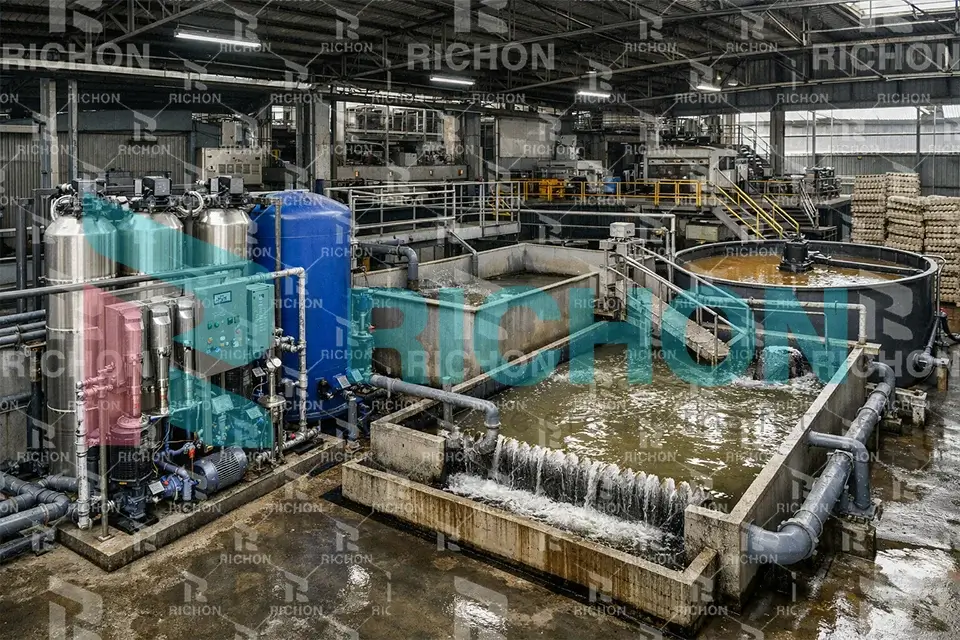
Чтобы понять, как используется вода, рассмотрим этот упрощенный баланс:
Подача воды → Система целлюлозного производства → Формирование → Восстановление → Повторное использование
Потери воды происходят главным образом по следующим причинам:
- Испарение в процессе сушки
- Незначительная утечка из системы.
- Сброс осадка
Фактически пресная вода используется в основном для:
- Компенсировать испарение
- Поддерживайте стабильность системы.
Требования к очистке воды
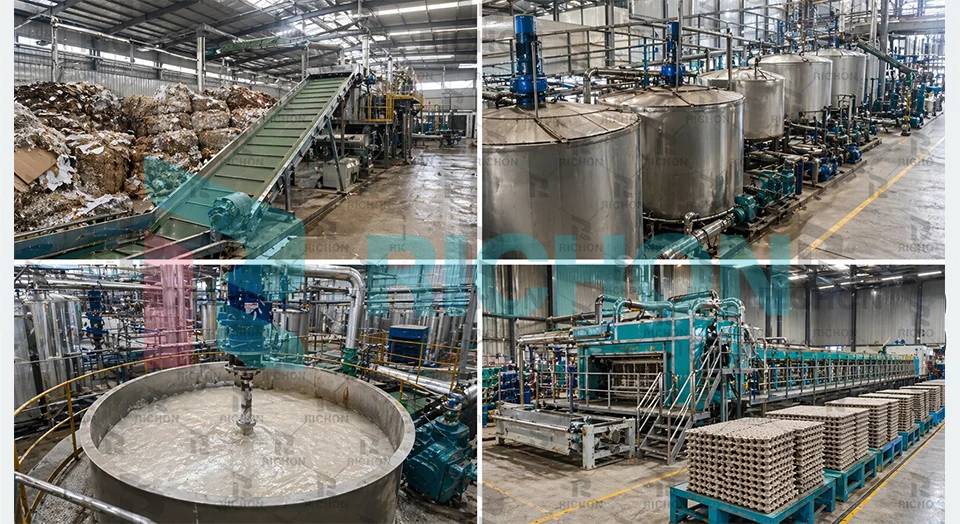
Несмотря на то, что вода перерабатывается, требуется её базовая очистка:
К распространенным системам относятся:
- Отстойники
- Системы фильтрации
- Удаление осадка
Правильная очистка воды помогает:
- Улучшение качества продукции
- Продление срока службы оборудования
- Сокращение проблем с техническим обслуживанием
Как сократить потребление воды
С инженерной точки зрения, потребление воды можно оптимизировать за счет:
1️⃣ Стабильная концентрация целлюлозы
Поддержание согласованность 3%–5% снижает чрезмерное потребление воды.
2️⃣ Эффективная вакуумная система
Улучшенная производительность вакуумной системы:
- Улучшает рекуперацию воды
- Уменьшает потери воды
3️⃣ Оптимизированная конструкция конвейера
Уменьшает протечки и ненужные потери воды при циркуляции.
4️⃣ Правильное техническое обслуживание
Предотвращает:
- Засор
- Перелив воды
- Системные неэффективности
Взаимосвязь между водой, энергией и стоимостью
Потребление воды тесно связано со следующими факторами:
- Энергопотребление (насосы, вакуумные системы)
- себестоимость производства
- компоновка завода
Например:
- Больше воды → больше энергии, затрачиваемой на перекачку.
- Низкий уровень переработки отходов → более высокие эксплуатационные расходы
Вы также можете прочитать:
👉 Прайс-лист на автоматы для изготовления лотков для яиц
👉 Руководство по компоновке фабрики по производству лотков для яиц
Инженерная рекомендация
Основано на реальном опыте реализации проектов:
- Всегда проектируйте замкнутая система водоснабжения
- Предусмотрите место для резервуаров с водой и систем очистки.
- Обеспечьте стабильное водоснабжение и водоотведение.
В большинстве случаев доступность воды ограничена. не является ограничивающим фактором, при условии надлежащего внедрения системы переработки отходов.
Заключение
Вода играет ключевую роль в производстве лотков для яиц, но фактическое потребление намного ниже, чем ожидают многие инвесторы.
Основные выводы:
- Большая часть воды перерабатывается (80–90%)
- Потребность в пресной воде относительно низка.
- Правильное проектирование системы значительно снижает потребление.
Понимание водопотребления помогает инвесторам лучше планировать производственную инфраструктуру и эксплуатационные расходы.
Если вы планируете проект, вы можете ознакомиться с нашими предложениями.Линия по производству лотков для яиц
для настройки оборудования и проектирования систем.
Или свяжитесь с нашей инженерной командой через Контакт для индивидуальных решений.
Нужны рекомендации по пропускной способности для вашего рынка?
Укажите желаемую производительность, местные условия влажности/энергопотребления и тип лотка. Наши инженеры предложат подходящий вариант. 3000–8000 шт./час конфигурация и решение для сушки.
- Контрольный список планировки и инженерных коммуникаций завода
- Оценка узких мест сушки
- Справочная информация по оценке затрат и рентабельности инвестиций.
Получите быструю инженерную проверку.
Ответ в течение 24 часов (рабочих дней).
Связаться с нашими инженерами →