


Процесс производства лотков для яиц
Инженерное руководство по процессу производства формованных лотков для яиц из целлюлозы — от переработки макулатуры до вакуумной формовки, сушки, штабелирования и упаковки.
Планируете проект? Ознакомьтесь с нашими предложениями. Линия по производству лотков для яиц Вы можете обратиться к нашим инженерам за решениями или за консультацией по настройке.
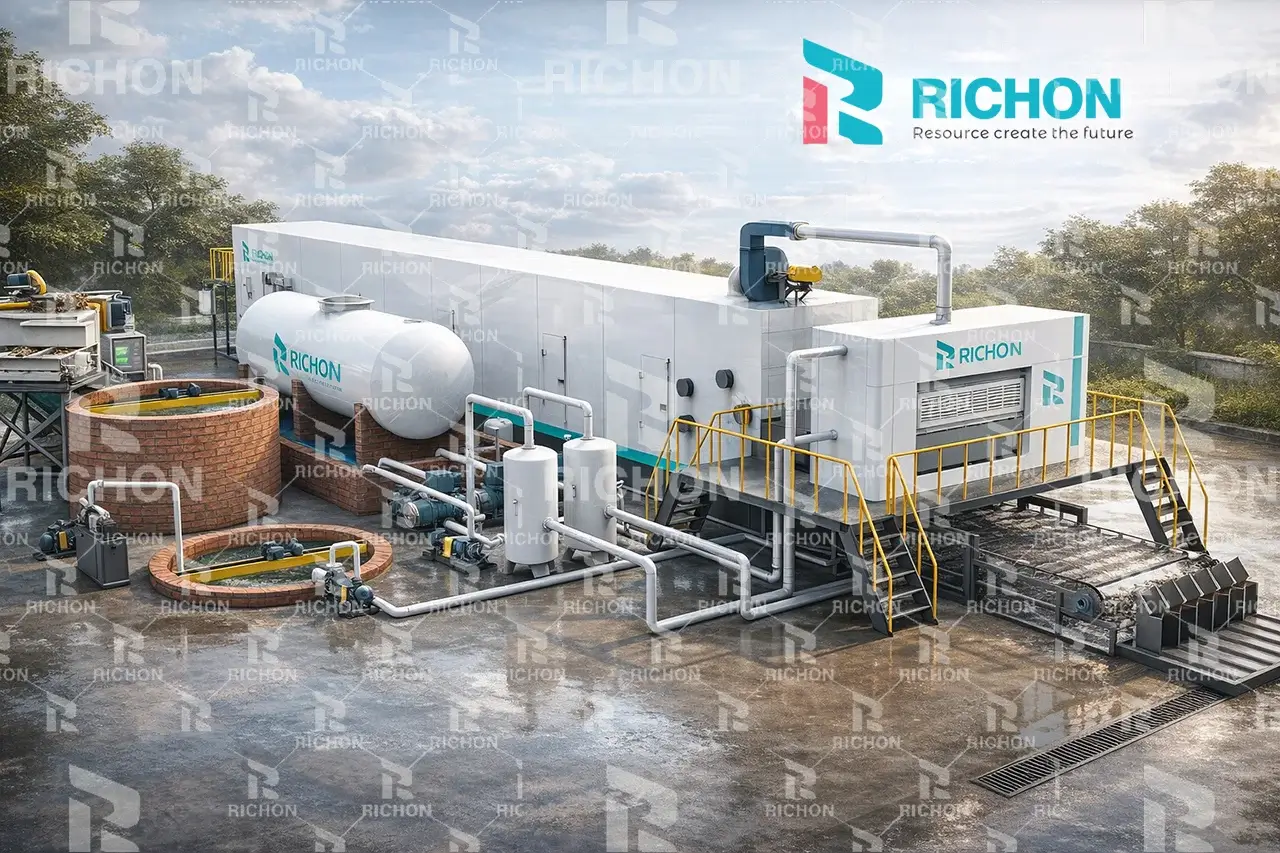
Как сделать лотки для яиц из бумаги
Лотки для яиц изготавливаются из бумаги путем переработки макулатуры в целлюлозу, формования влажных лотков на пресс-формах с помощью вакуумного отсоса и последующей сушки для получения прочной формованной волокнистой упаковки. Этот процесс производства бумажных лотков для яиц широко используется на фермах, у дистрибьюторов яиц, на упаковочных фабриках и в проектах по производству продукции из переработанных материалов.
Сортировка макулатуры
Переработанные газеты, картон OCC, картонные коробки и офисная бумага сортируются для удаления пластика, металла и других примесей перед измельчением в целлюлозу. Стабильный выбор сырья способствует улучшению прочности и внешнего вида готовых лотков.
Измельчение и смешивание
В гидропульпере макулатуре макулатура смешивается с водой для получения однородной суспензии. Правильная консистенция пульпы способствует улучшению контроля веса лотков, стабильности формования и эффективности производства.
Отбор и уточнение
Целлюлозу просеивают и очищают для уменьшения количества примесей, улучшения дисперсии волокон, а также для защиты пресс-форм, насосов, трубопроводов и формовочной системы во время непрерывного производства.
Вакуумное формование
Форма лотка для яиц из бумажной массы формируется за счет вакуумного всасывания, которое притягивает волокна к поверхности формы и удаляет часть воды из влажного лотка перед переносом.
Сушка
Влажные лотки можно сушить естественным способом, с помощью кирпичной сушилки или металлической сушильной системы. Эффективность сушки напрямую влияет на суточную производительность, затраты на рабочую силу, энергопотребление и качество лотков.
Складирование и упаковка
Готовые лотки с яйцами проверяются, укладываются в стопки, подсчитываются и упаковываются для хранения или доставки. Правильная укладка и упаковка помогают снизить риск повреждений во время транспортировки.
Как сделать лотки для яиц из бумаги
Лотки для яиц изготавливаются из бумаги путем переработки макулатуры в целлюлозу, формования влажных лотков на пресс-формах с помощью вакуумного отсоса и последующей сушки для получения прочной формованной волокнистой упаковки. Этот процесс производства бумажных лотков для яиц широко используется на фермах, у дистрибьюторов яиц, на упаковочных фабриках и в проектах по производству продукции из переработанных материалов.
Сортировка макулатуры
Переработанные газеты, картон OCC, картонные коробки и офисная бумага сортируются для удаления пластика, металла и других примесей перед измельчением в целлюлозу. Стабильный выбор сырья способствует улучшению прочности и внешнего вида готовых лотков.
Измельчение и смешивание
В гидропульпере макулатуре макулатура смешивается с водой для получения однородной суспензии. Правильная консистенция пульпы способствует улучшению контроля веса лотков, стабильности формования и эффективности производства.
Отбор и уточнение
Целлюлозу просеивают и очищают для уменьшения количества примесей, улучшения дисперсии волокон, а также для защиты пресс-форм, насосов, трубопроводов и формовочной системы во время непрерывного производства.
Вакуумное формование
Форма лотка для яиц из бумажной массы формируется за счет вакуумного всасывания, которое притягивает волокна к поверхности формы и удаляет часть воды из влажного лотка перед переносом.
Сушка
Влажные лотки можно сушить естественным способом, с помощью кирпичной сушилки или металлической сушильной системы. Эффективность сушки напрямую влияет на суточную производительность, затраты на рабочую силу, энергопотребление и качество лотков.
Складирование и упаковка
Готовые лотки с яйцами проверяются, укладываются в стопки, подсчитываются и упаковываются для хранения или доставки. Правильная укладка и упаковка помогают снизить риск повреждений во время транспортировки.
Обзор процесса производства бумажных лотков для яиц
Процесс производства бумажных лотков для яиц включает в себя переработку макулатуры и превращение ее в формованные волокнистые лотки посредством измельчения, просеивания, вакуумной формовки, сушки, штабелирования и упаковки. В этом процессе переработки макулатуры в лотки для яиц необходимо контролировать консистенцию целлюлозы, стабильность формования, точность пресс-формы, удаление воды и эффективность сушки для достижения стабильного объема производства и неизменного качества лотков.
Эта страница поможет вам принять решение.
- Как переработанная бумага превращается в лотки для яиц из бумажной массы: пошаговая инструкция
- Какой этап ограничивает ваши возможности и как время цикла влияет на рентабельность инвестиций?
- Какое решение для сушки лучше всего подходит для достижения целевых показателей производительности, климатических условий, типа топлива и особенностей площадки?
- Какие параметры процесса помогают снизить растрескивание, деформацию, прилипание и процент брака?
Связанные технологические центры: Производственная линия · Сравнение сушки · Технология литья
Типичные сырьевые материалы для производства бумажных лотков для яиц
Большинство фабрик по производству лотков для яиц используют переработанные волокнистые материалы, такие как газеты, картон OCC, картонные коробки и офисная бумага. Чистота сырья влияет на загрузку при просеивании, потребности в рафинировании, стабильность вакуумного формования, качество поверхности лотков и долгосрочную производительность линии по формованию из целлюлозы.
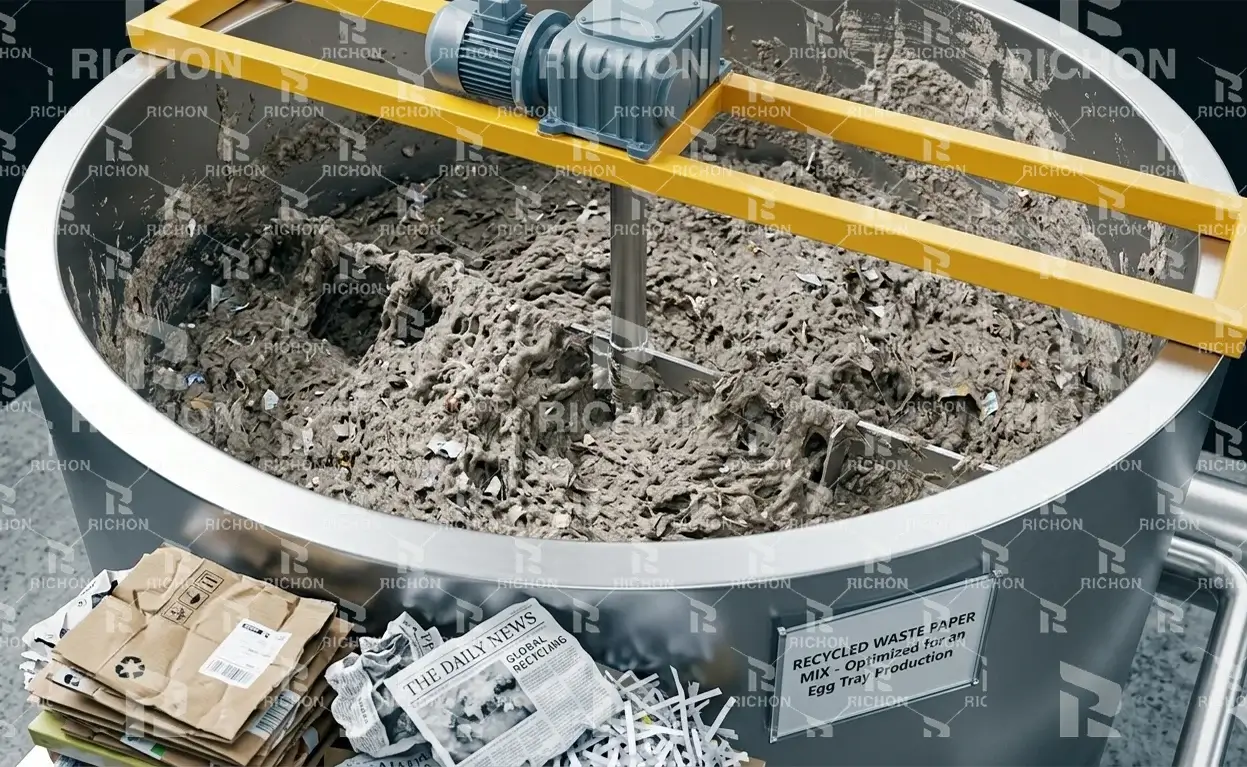
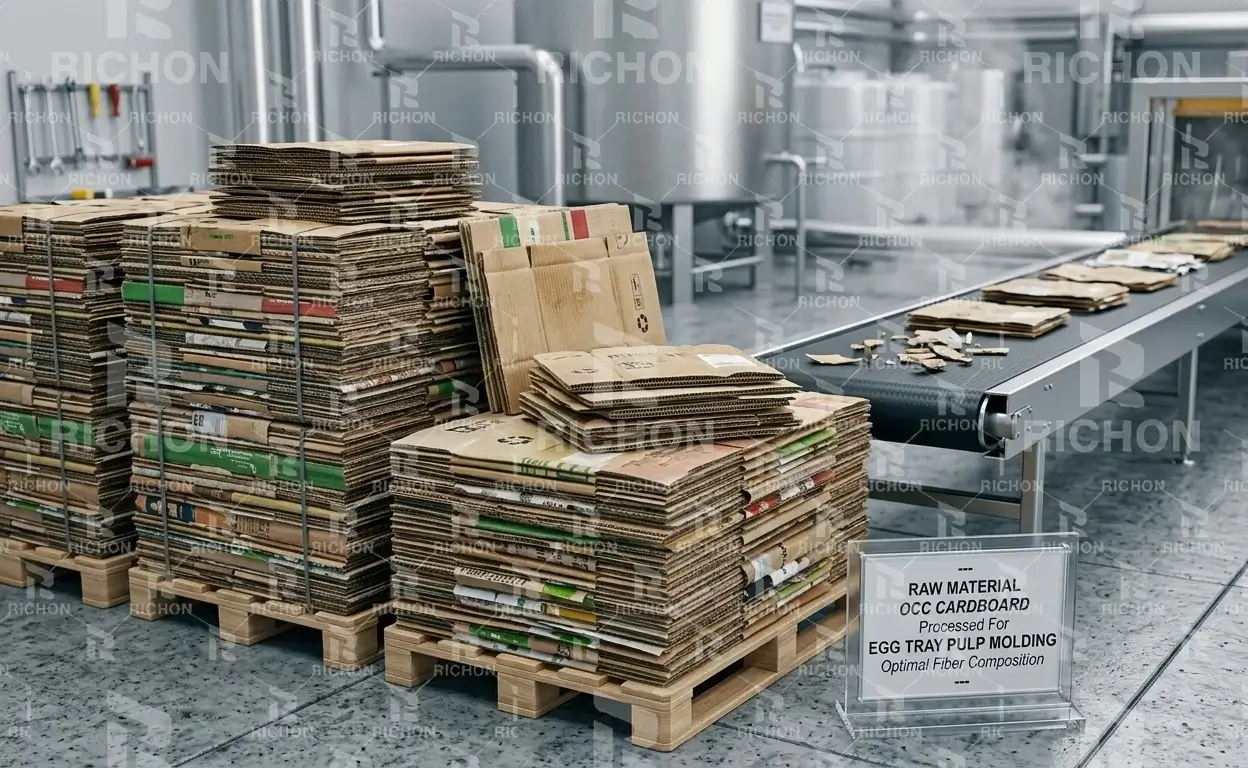
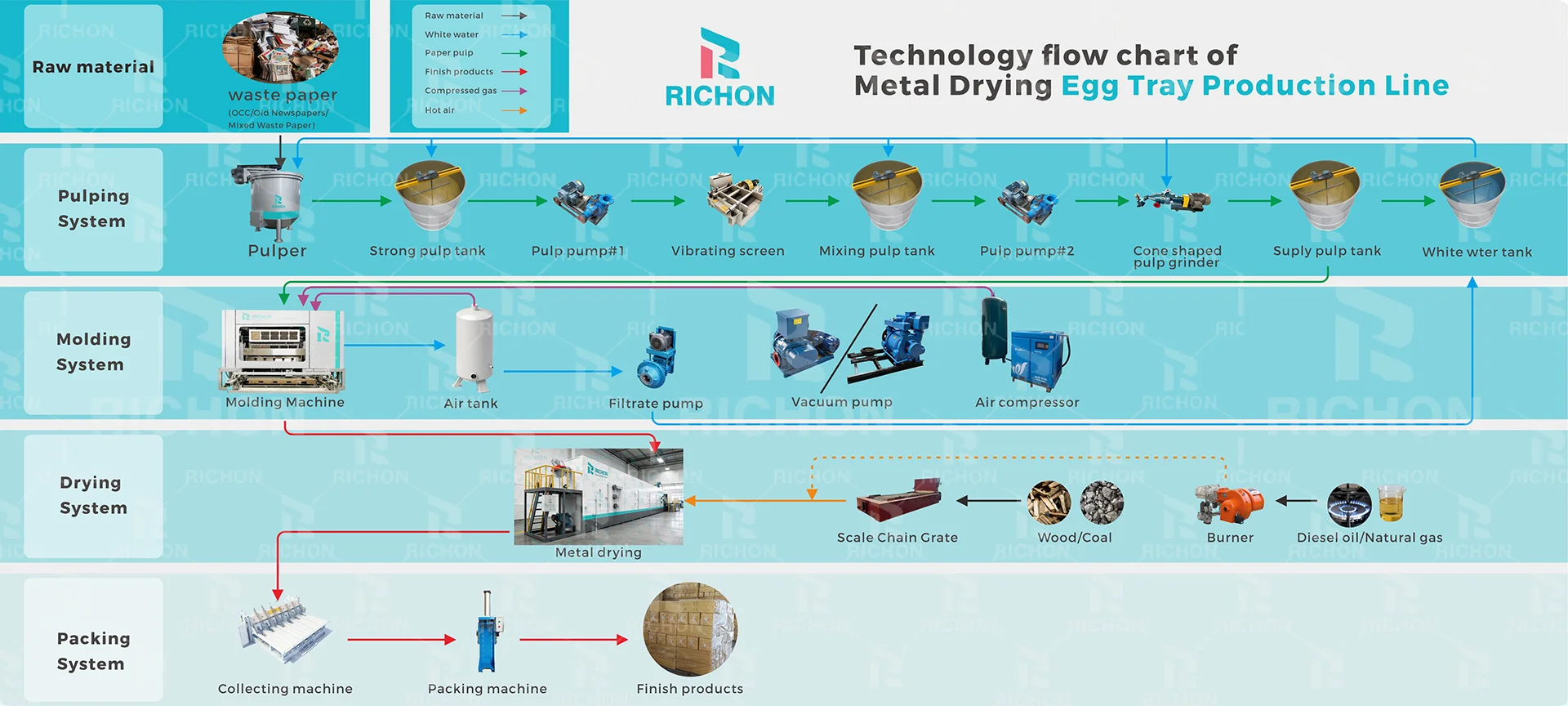
Технологический процесс переработки макулатуры в лотки для яиц.
На этом изображении показан процесс производства бумажных лотков для яиц, демонстрирующий, как переработанная макулатура превращается в формованные волокнистые лотки для яиц посредством измельчения, просеивания, вакуумной формовки, сушки, штабелирования и упаковки.
Посмотрите, как производится лоток для яиц в Узбекистане.
Эти видеоматериалы, снятые на месте, связывают этапы процесса, описанные на этой странице, с видимой производственной деятельностью. На них показаны подготовка пульпы, формовка и перемещение влажных лотков, оборудование для непрерывной сушки и визуальный осмотр готовых лотков для яиц.
Что показано на видеозаписи
Границы доказательств: Точная конфигурация оборудования, производственная мощность и стадия проекта должны быть подтверждены на основании окончательной проектной документации. Видео представлено в качестве наглядного подтверждения процесса, а не в качестве испытания мощности, энергопотребления, приемки или производительности.
Пошаговый процесс производства бумажных лотков для яиц из макулатуры.
В этом разделе описывается, как изготавливать лотки для яиц из бумаги в реальных условиях фабрики, включая подготовку сырья, измельчение, вакуумную формовку, сушку, штабелирование и упаковку.
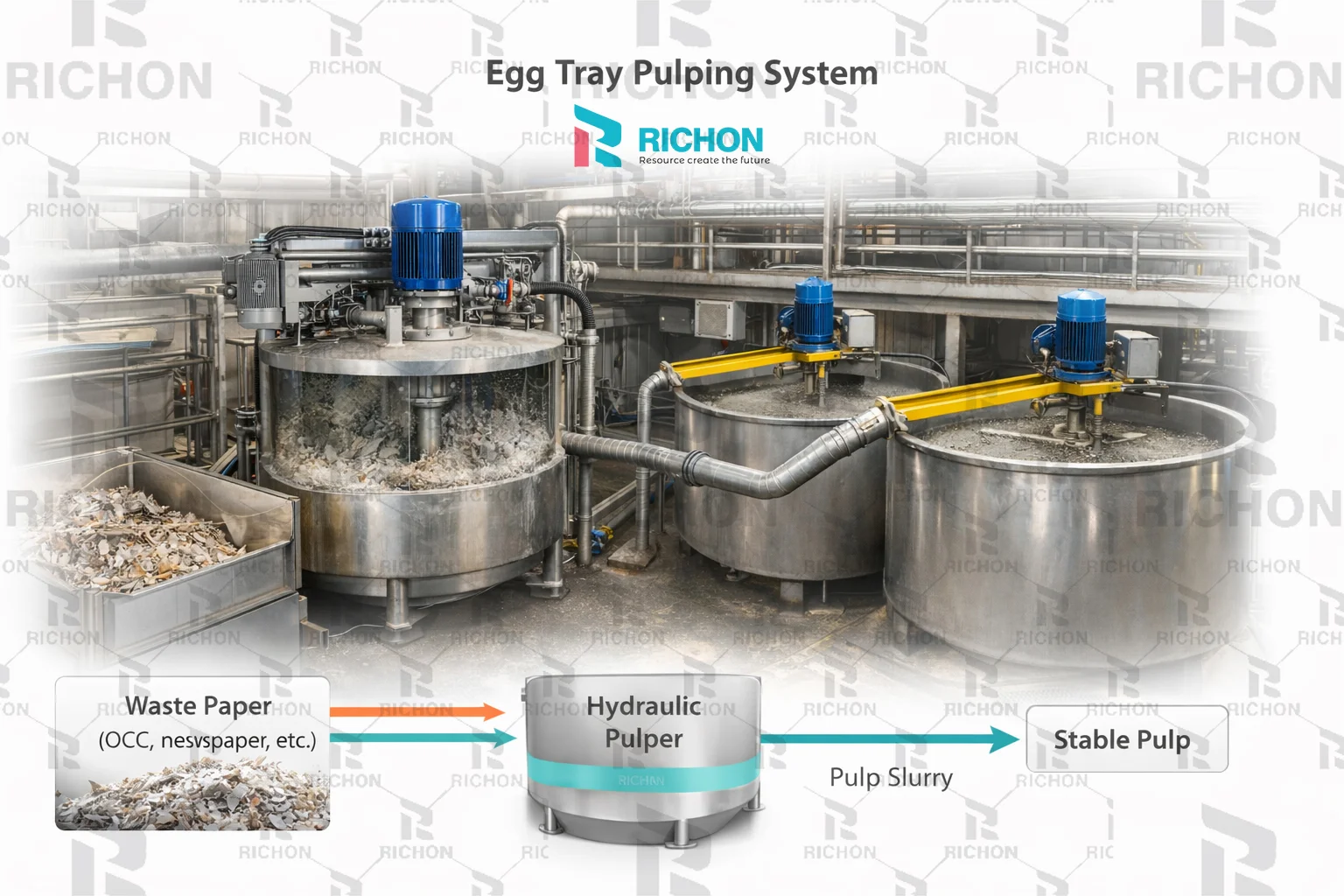
Сортировка, переработка и рафинирование макулатуры
Процесс переработки макулатуры в лотки для яиц начинается с сортировки переработанной бумаги. Газеты, картон OCC, бумажные коробки и офисная бумага должны быть проверены на наличие пластика, металла, камней и других примесей, прежде чем попасть в систему измельчения.
После сортировки макулатура смешивается с водой в гидропульпере и превращается в однородную суспензию. Просеивание и, при необходимости, рафинирование помогают улучшить дисперсию волокон, уменьшить количество примесей и подготовить стабильную целлюлозу для следующего этапа формования.
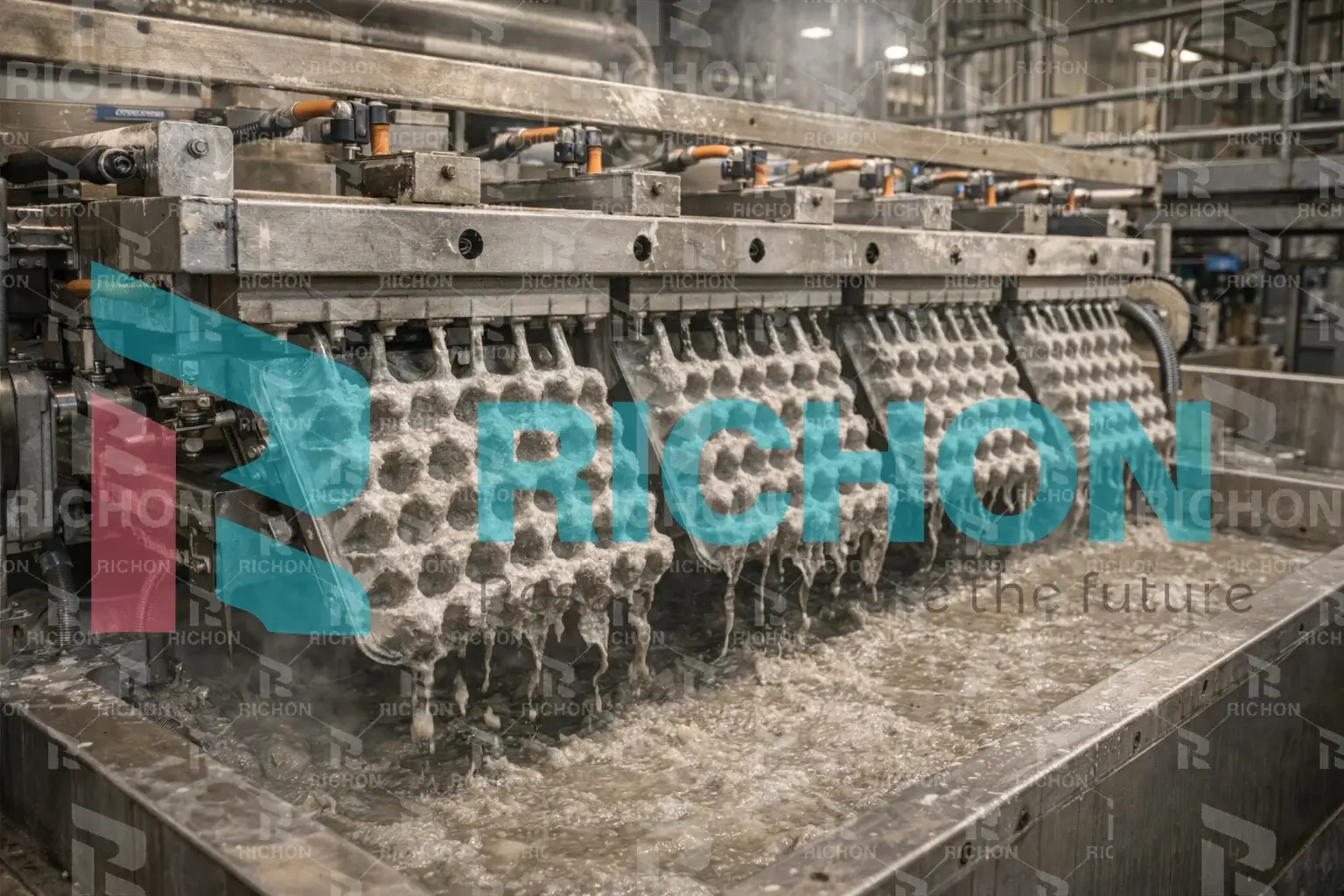
Вакуумное формование
Вакуумная формовка — это основной этап процесса производства бумажных лотков для яиц. Вакуумные насосы создают отрицательное давление, притягивая волокна к поверхности формы и удаляя часть воды из влажного лотка.
Конструкция пресс-формы и точность обработки влияют на время цикла, прочность лотка, целостность кромок, качество поверхности и повторяемость формования. Для стабильного формования необходимы постоянная подача пульпы, сбалансированное распределение вакуума и надежная герметизация пресс-формы.
Связанный: Технология литья
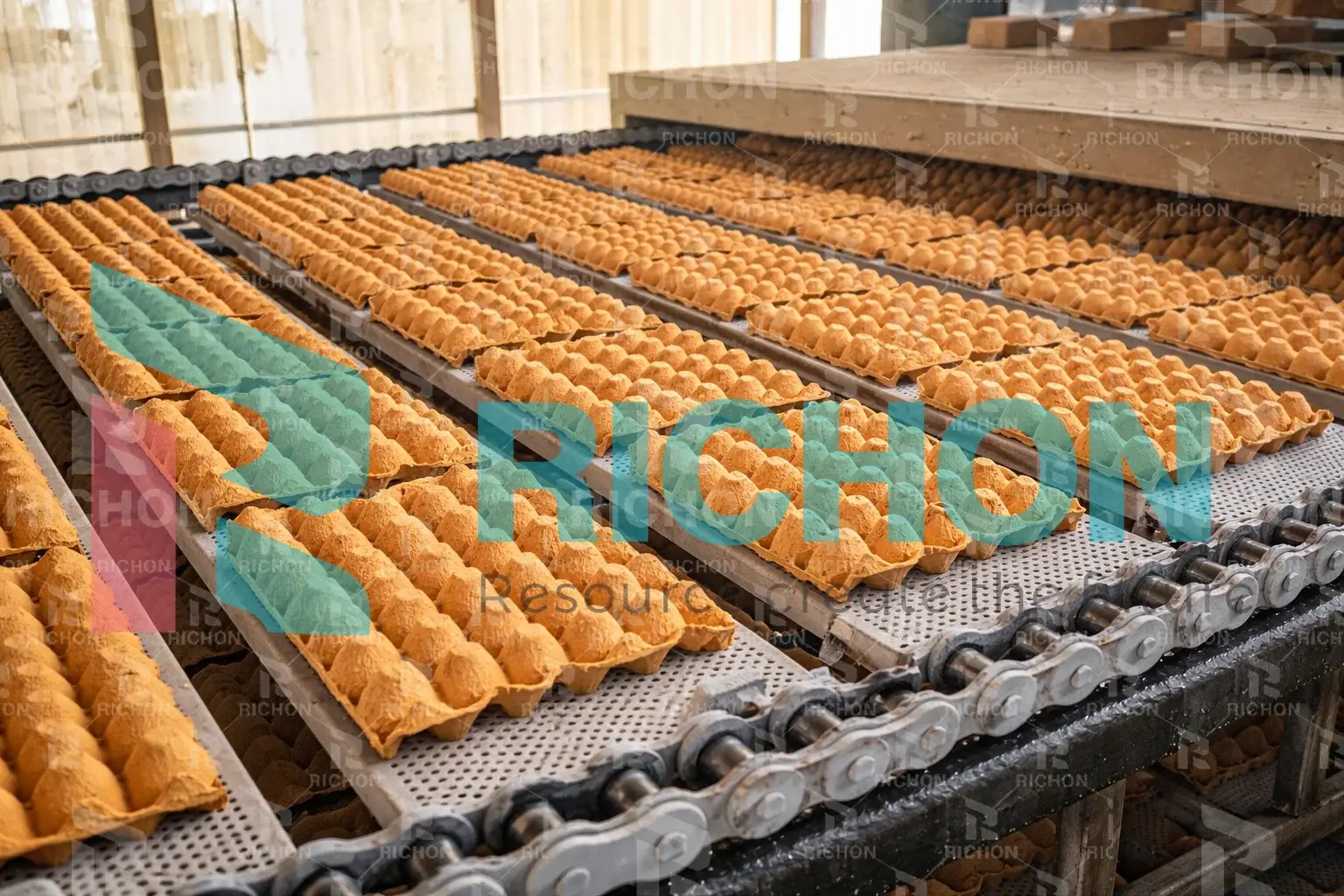
Трансфер и, при необходимости, горячее прессование.
После формования влажные лотки переносятся из формовочной формы на следующий этап. Этот шаг кажется простым, но он оказывает существенное влияние на деформацию, растрескивание, повреждение кромок и процент брака.
На некоторых линиях по производству лотков для яиц применяется горячее прессование для улучшения гладкости поверхности, жесткости лотков, точности размеров и штабелирования. Этот метод часто используется, когда местный рынок требует более аккуратного внешнего вида или упаковки премиум-класса.
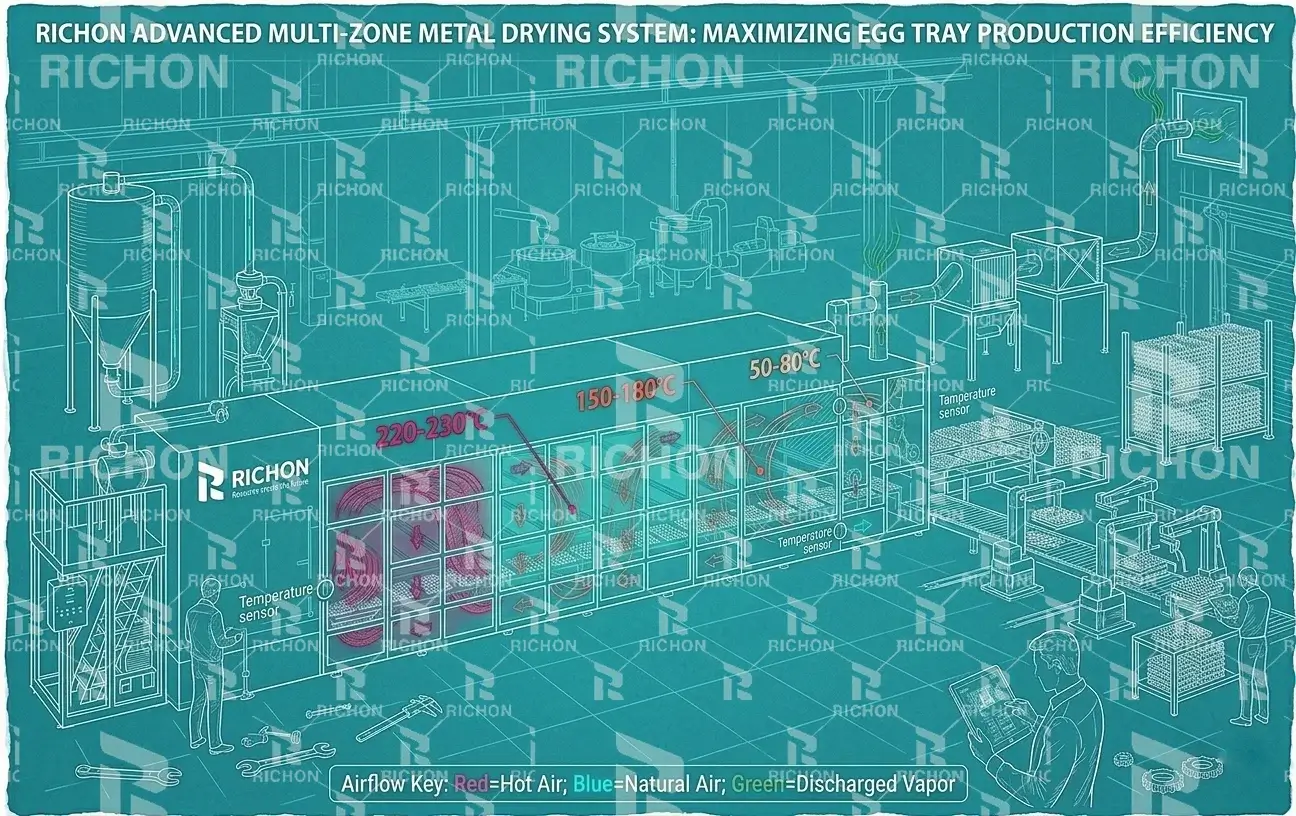
Система сушки
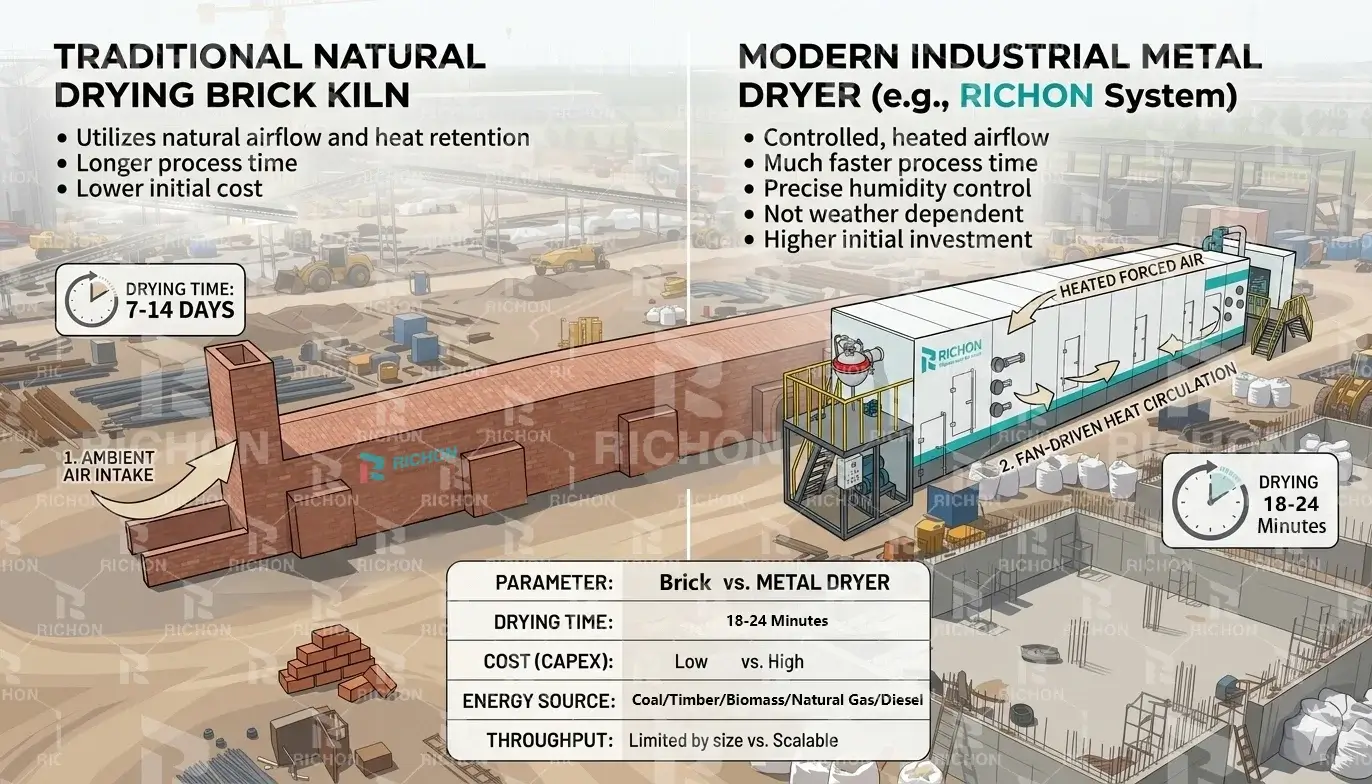
Сушка, как правило, является наиболее энергоемким этапом в процессе переработки макулатуры в лотки для яиц. Метод сушки определяет площадь фабрики, потребность в рабочей силе, стоимость топлива, тепловую эффективность и максимальную устойчивую производительность.
Влажные лотки можно сушить естественным способом, с помощью кирпичной сушилки или металлической сушильной системы. Качество сушки зависит от контроля температуры, распределения воздушного потока, скорости удаления влаги и времени укладки после сушки.
Сравните варианты: Сравнение систем сушки
Поиск неисправностей: Проблемы с качеством лотков для яиц
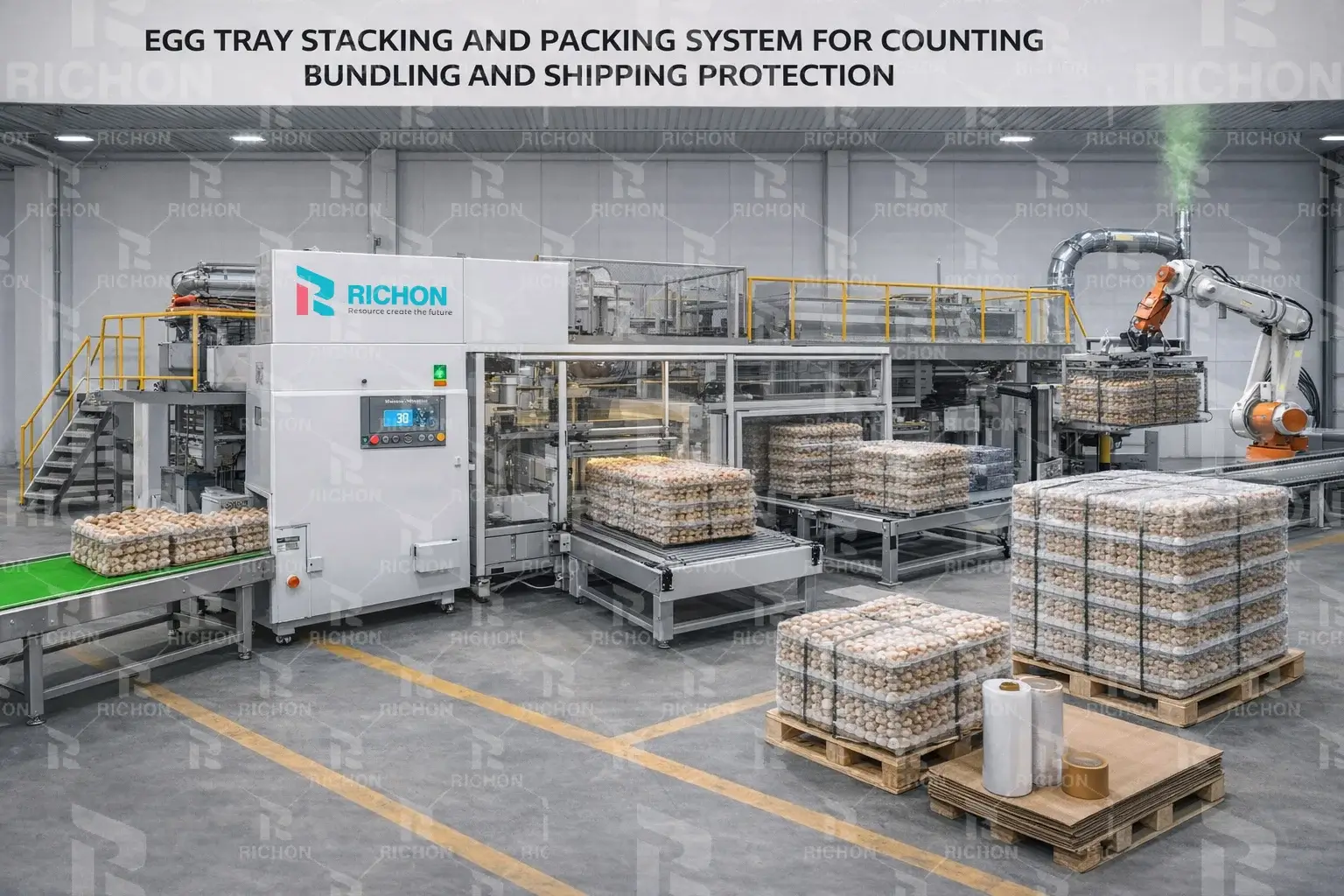
Укладка, подсчет и упаковка
После сушки готовые бумажные лотки для яиц проверяются, складываются в стопки, подсчитываются и упаковываются для хранения или доставки. Автоматизация повышает эффективность труда и снижает повреждения при погрузке и разгрузке.
Если вы продаете продукцию дистрибьюторам, птицефермам или покупателям упаковки, единообразие упаковки становится видимым показателем качества. Однородные связки уменьшают повреждения при транспортировке, улучшают обработку на складе и снижают количество жалоб клиентов.
Ознакомьтесь с комплексными решениями: Линия по производству лотков для яиц
Варианты комплектации машины: Машина для изготовления бумажных лотков для яиц
Выбор сушильной машины (подберите подходящую сушилку)
Сушка — наиболее энергоемкий этап и распространенное узкое место в производственных мощностях. Используйте этот селектор для сравнения вариантов в зависимости от производственной мощности, занимаемой площади, инвестиций и доступного источника тепла.
Правила быстрого выбора (инженерная логика)
- Низкая производительность / низкий бюджет: Простые решения для сушки могут сработать, если есть рабочая сила и подходящий климат.
- Средняя вместимость: Стабильность процесса сушки имеет большее значение; автоматизация повышает производительность и снижает риск деформации.
- Большая вместимость: Предпочтительнее автоматизированная зонированная сушка с регулируемым потоком воздуха и стабильным теплоснабжением.
Лучше всего подходит для
Производство очень малых объемов или опытно-конструкторское производство, где инвестиции должны быть минимальными, а климатические условия позволяют обеспечить стабильную сушку.
- Самая низкая стоимость оборудования
- Простое управление
- Легко начать с малого.
- Нестабильная пропускная способность
- Большая площадь основания
- Качество, зависящее от климата
Когда следует избегать
Если вам необходимо гарантировать ежедневный объем производства, работать в многосменном режиме или продавать продукцию клиентам со строгими требованиями к качеству.
Лучше всего подходит для
Проекты со стабильной площадкой и достаточным пространством, где приемлемо традиционное решение и имеется источник тепла.
- Способен обеспечить непрерывное производство.
- Прочный после постройки
- Широко известная операция
- Высокая стоимость строительных работ
- Трудно переехать
- Энергоэффективность варьируется.
Техническое предупреждение
Сушка кирпича в печи может показаться недорогой с точки зрения оборудования, но общая стоимость проекта включает в себя землю, строительство и время. Если в дальнейшем планируется масштабирование мощностей, планировка может ограничить возможности модернизации.
Лучше всего подходит для
Производство среднего и крупного масштаба, где требуется стабильная производительность, автоматизация и контролируемое качество сушки.
- Стабильная сушка и качество.
- Потенциал повышения эффективности теплоотдачи
- Поддерживает масштабирование и многосменную работу.
- Более высокие первоначальные инвестиции
- Требуется стабильное энергоснабжение.
- Требуется надлежащая пусконаладка.
Рекомендуемый следующий шаг
Используйте справочник по выбору сушильных машин, чтобы подобрать модель, соответствующую вашей вместимости, источнику тепла и размерам вашего предприятия. Это позволит избежать покупки сушильных машин недостаточной мощности или чрезмерных инвестиций.
Панель мониторинга ключевых показателей эффективности процесса (что отслеживать для обеспечения стабильного результата)
Эти ключевые показатели эффективности (KPI) помогут вам поддерживать стабильность производства и снижать количество дефектов. Используйте их в качестве ежедневного контрольного списка для управления процессами, устранения неполадок и планирования производственных мощностей.
Консистенция мякоти
Если меняются показатели однородности, веса лотка и толщины стенок, вы увидите слабые углы и большее количество брака.
Вакуумная стабильность
Колебания вакуума приводят к неравномерному осаждению волокон и дефектам по краям. Необходимо сбалансировать вакуумные линии и поддерживать герметичность.
Влага после высыхания
Неравномерная влажность приводит к размягчению лотков или их деформации. Для предотвращения образования узких мест процесс сушки должен соответствовать производительности формования.
Время цикла
Время цикла определяет производительность. Если сушка происходит медленнее, чем формовка, линия будет накапливать влажные лотки или простаивать.
Основные технические параметры производства бумажных лотков для яиц
В процессе производства лотков для яиц из макулатуры стабильная производительность зависит от чистоты сырья, консистенции целлюлозы, вакуумной формовки, контроля сушки и соответствия производственной мощности. Точные параметры должны корректироваться в зависимости от веса лотка, состава волокон, конструкции пресс-формы, метода сушки и планировки завода.
| Параметр | Типичный диапазон | Почему это важно |
|---|---|---|
| Чистота сырья | Отсортированная переработанная бумага, картон OCC, картонные коробки и офисная бумага. | Чистое сырье снижает нагрузку на просеивание, защищает пресс-формы и насосы, а также улучшает качество поверхности лотков для яиц из бумажной массы. |
| Консистенция мякоти | 3% – 5% | Обеспечивает стабильность толщины стенок, уменьшает количество слабых мест в углах и повышает повторяемость процесса производства бумажных лотков для яиц. |
| Отбор и уточнение | Корректировка зависит от качества сырья и требований к лоткам. | Уменьшает количество примесей, улучшает дисперсию волокон и способствует более равномерному формированию целлюлозы на поверхности формы для лотков для яиц. |
| Вакуумное давление | от -0,04 до -0,06 МПа | Улучшает осаждение волокон, качество поверхности, удаление влаги и целостность кромок в процессе вакуумного формования. |
| Температура сушки | 160°C – 220°C | Слишком низкая температура может привести к размягчению подносов; слишком высокая температура увеличивает риск деформации, хрупкости, растрескивания и неравномерного удаления влаги. |
| Планирование мощностей | 1000–8000 шт./час | Требуется согласование цикла формования, производительности сушки, эффективности штабелирования, организации труда и планировки завода. |
Контроль качества в процессе производства бумажных лотков для яиц
В процессе производства лотков для яиц из макулатуры большинство проблем с качеством вызваны совокупностью факторов, связанных с сортировкой сырья, консистенцией целлюлозы, вакуумным формованием, дренажем из формы, перемещением влажных лотков и контролем сушки. Стабильный технологический процесс помогает снизить количество брака и поддерживать стабильное качество лотков для яиц из бумажной массы.
Тонкие стены / слабые углы
Причина: Нестабильная консистенция целлюлозы, плохое распределение волокон, недостаточное просеивание, неравномерное вакуумное всасывание или засорение дренажных отверстий плесени.
Исправить: стабилизировать консистенцию пульпы, улучшить просеивание и рафинирование, очистить дренажные воды из форм и проверить балансировку вакуумного трубопровода перед увеличением скорости машины.
Деформация после сушки
Причина: неравномерный поток воздуха, зоны перегрева, быстрая потеря влаги, нестабильная перекладка влажных лотков или неправильное время штабелирования после сушки.
Исправить: Оптимизировать распределение воздушного потока, регулировать температурные зоны сушки, улучшить поддержку лотков во время транспортировки и контролировать влажность перед штабелированием.
Шероховатая поверхность / некачественная отделка
Причина: Загрязненная переработанная бумага, песок или пластик, недостаточная очистка, изношенная поверхность формы или нестабильное качество суспензии.
Исправить: Улучшить сортировку макулатуры, внедрить более эффективные методы просеивания, регулярно проводить техническое обслуживание пресс-форм и корректировать время рафинирования в зависимости от качества сырья.
Трещины по краям / деформация лотка
Причина: Слабая прочность влажного лотка, смещение формы, нестабильное движение при переносе, чрезмерно высокая температура сушки или преждевременная обработка лотка до того, как он стабилизируется.
Исправить: Проверить выравнивание пресс-формы, стабилизировать механизм переноса, улучшить поддержку влажного лотка и отрегулировать влажность на выходе из сушилки, чтобы избежать хрупкости краев лотка.
Лоток прилипает после штабелирования.
Причина: высокая остаточная влажность, недостаточное время сушки, плохая вентиляция после сушки или слишком ранняя укладка готовых лотков в стопку.
Исправить: Увеличьте время сушки, улучшите циркуляцию горячего воздуха, проверьте конечную влажность лотков и дайте лоткам остыть перед плотной укладкой и упаковкой.
Нестабильный вес подноса
Причина: Колебания концентрации пульпы, нестабильное водоснабжение, непостоянное вакуумное всасывание или плохое перемешивание суспензии в резервуаре для пульпы.
Исправить: контролировать консистенцию пульпы, поддерживать стабильную циркуляцию суспензии, контролировать вакуумное давление и избегать резких изменений в составе сырья во время производства.
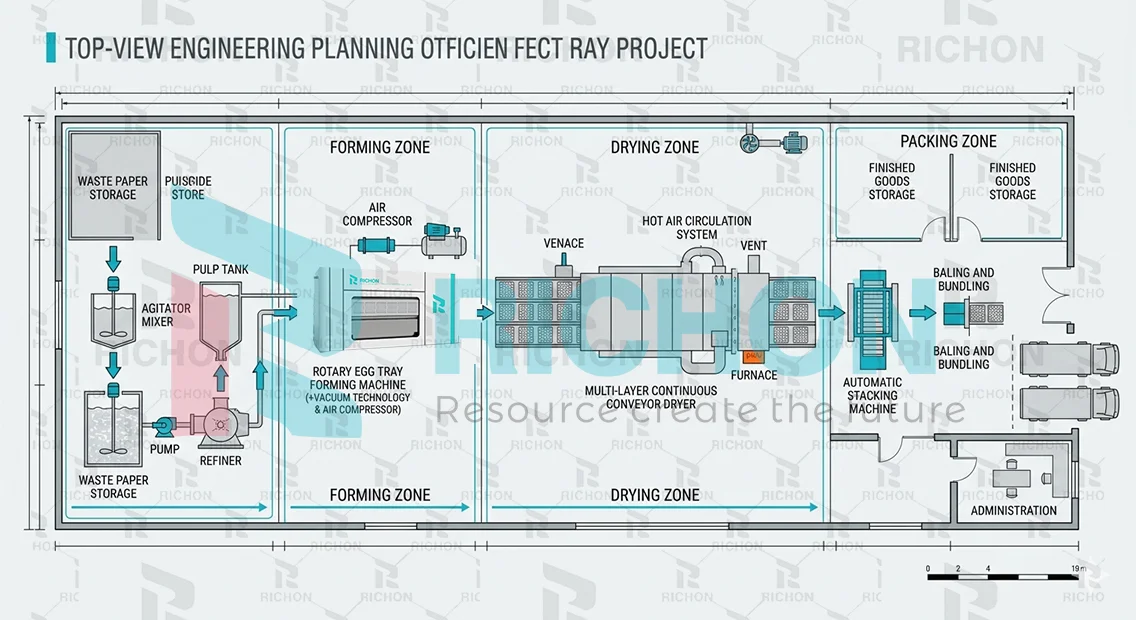
Планировка линии по производству бумажных лотков для яиц и размещение инженерных коммуникаций.
Практичная компоновка линии по производству бумажных лотков для яиц должна соответствовать процессу переработки макулатуры в лотки, включая хранение сырья, измельчение, формование, сушку, штабелирование, упаковку, рециркуляцию воды, электроснабжение и планирование источников тепла.
Логика компоновки фабрики по переработке макулатуры в лотки для яиц.
Стабильная планировка завода предполагает четкий поток материалов: прием макулатуры → измельчение и просеивание → вакуумная формовка → перемещение влажных лотков → сушка → штабелирование и упаковка → склад готовой продукции.
Зона влажной обработки должна располагаться вблизи источников водоснабжения, канализации и резервуаров для пульпы. Зона сушки должна быть спланирована рядом с источником тепла, системой вентиляции и зоной обработки готовых лотков, чтобы сократить ненужные перемещения и трудозатраты.
- Оставьте зарезервированное пространство для технического обслуживания вокруг гидропульпера, резервуаров для пульпы, насосов и трубопроводов.
- Чтобы уменьшить деформацию и повреждение краев, следует сократить длину пути переноса жидкости через лоток для влажной воды.
- Размещайте зоны сушки и упаковки в направлении, перпендикулярном потоку воды.
- Планируйте размещение оборудования для автоматизации в будущем, если вы планируете увеличить его вместимость в дальнейшем.
Контрольный список необходимых принадлежностей для настройки машины для изготовления бумажных лотков для яиц.
Перед выбором машины для производства бумажных лотков для яиц необходимо сначала убедиться в наличии необходимых инженерных коммуникаций на заводе. Вода, электричество, источник тепла, канализация и вентиляция напрямую влияют на выбор оборудования, метод сушки, инвестиционные затраты и долгосрочную стабильность производства.
Часто задаваемые вопросы: Как сделать лотки для яиц из бумаги
Часто задаваемые вопросы о процессе производства бумажных лотков для яиц, сырьевых материалах, методах сушки, планировании производственных мощностей и организации работы завода.
Как сделать лотки для яиц из бумаги?
Какую бумагу используют для изготовления лотков для яиц?
Сколько макулатуры необходимо для производства лотков для яиц?
В чём заключается основное узкое место в процессе производства бумажных лотков для яиц?
Какая система сушки лучше всего подходит для изготовления бумажных лотков для яиц?
Что определяет производственную мощность по выпуску лотков для яиц?
Нужно ли использовать горячий пресс для формования лотков для яиц?
Какая машина используется для изготовления бумажных лотков для яиц?
Планируете проект по производству бумажных лотков для яиц?
Инженеры компании Richon помогут вам спланировать подходящую машину для производства бумажных лотков для яиц, схему производственной линии, систему сушки и стратегию окупаемости инвестиций, исходя из ваших потребностей в макулатурном сырье, целевой мощности, местных затрат на электроэнергию, производственных площадей и рыночного спроса.
Консультации по проекту
Необходимо уточнить вместимость, схему сушки или инвестиционный план?
Сообщите вам целевые показатели производительности, условия производства и предпочтения по сушке. Инженеры Richon помогут подобрать подходящую конфигурацию линии по производству лотков для яиц для вашего проекта.