


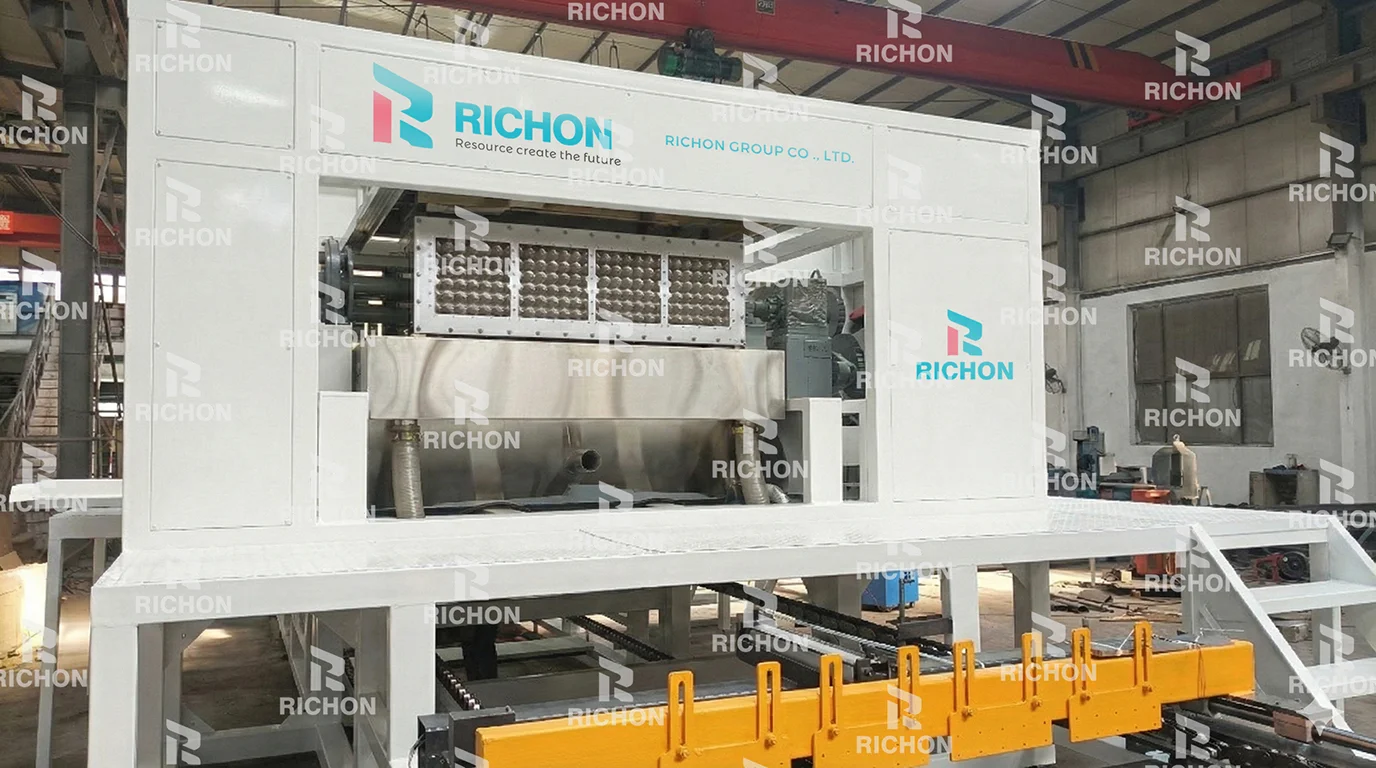
Производственная линия по выпуску лотков для яиц производительностью 4000 шт./час.
Сбалансированное решение средней мощности для инвесторов, которым необходима стабильная суточная производительность, практичное планирование энергопотребления и планировка завода, позволяющая масштабироваться без немедленного перехода к более крупным автоматизированным системам.
Кому следует выбрать линию по производству лотков для яиц производительностью 4000 штук в час?
Такие мощности часто выбирают покупатели, которым нужна более стабильная производственная база, чем у линий начального уровня, но которые не хотят слишком рано вкладывать средства в более крупную инвестиционную структуру. Если вы все еще сравниваете производственные мощности, вы также можете ознакомиться с нашими предложениями. 3000 шт./час раствора и более широкий руководство по выбору мощности.
Подходит для
- Заводы переходят от мелкосерийного опытного производства к регулярным коммерческим поставкам.
- Инвесторы со стабильными источниками поставок макулатуры и более четкими ежедневными целевыми показателями продаж.
- Проекты, требующие более сбалансированного процесса формования и сушки.
- Покупатели планируют долгосрочное расширение, но контролируют инвестиционные риски на первом этапе.
Обычно не подходит для
- Очень небольшие пилотные проекты с ограниченной практической поддержкой.
- Покупатели, которые в значительной степени полагаются на естественную сушку и нестабильные погодные условия
- Проекты, которые с самого начала требуют гораздо большей ежедневной производительности.
- Заводы без четкой планировки или непрерывности поставок сырья.
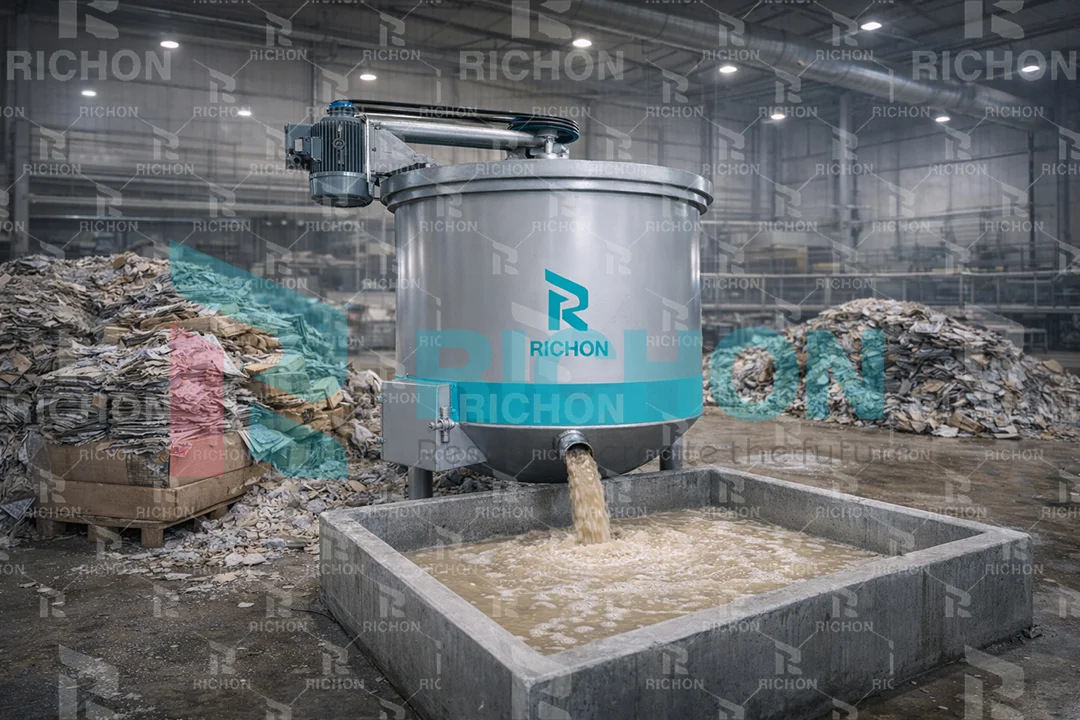
Стабильность целлюлозы имеет решающее значение, прежде чем можно будет доверять ее формовочной способности.
Линия по производству лотков для яиц производительностью 4000 шт./час не может полагаться только на скорость формования. Если подготовка макулатуры нестабильна, консистенция суспензии колеблется, а примеси не контролируются должным образом, формовочная секция не сможет обеспечить стабильное качество лотков, даже если машина технически способна работать с заданной производительностью.
Именно поэтому планирование обработки сырья должно осуществляться совместно с остальной частью производственной линии. Покупатели, сравнивающие варианты мощности, должны учитывать не только... Линия по производству лотков для яиц сам по себе, а также логика исходного материала, объясненная в нашем руководство по сырью и переработке.
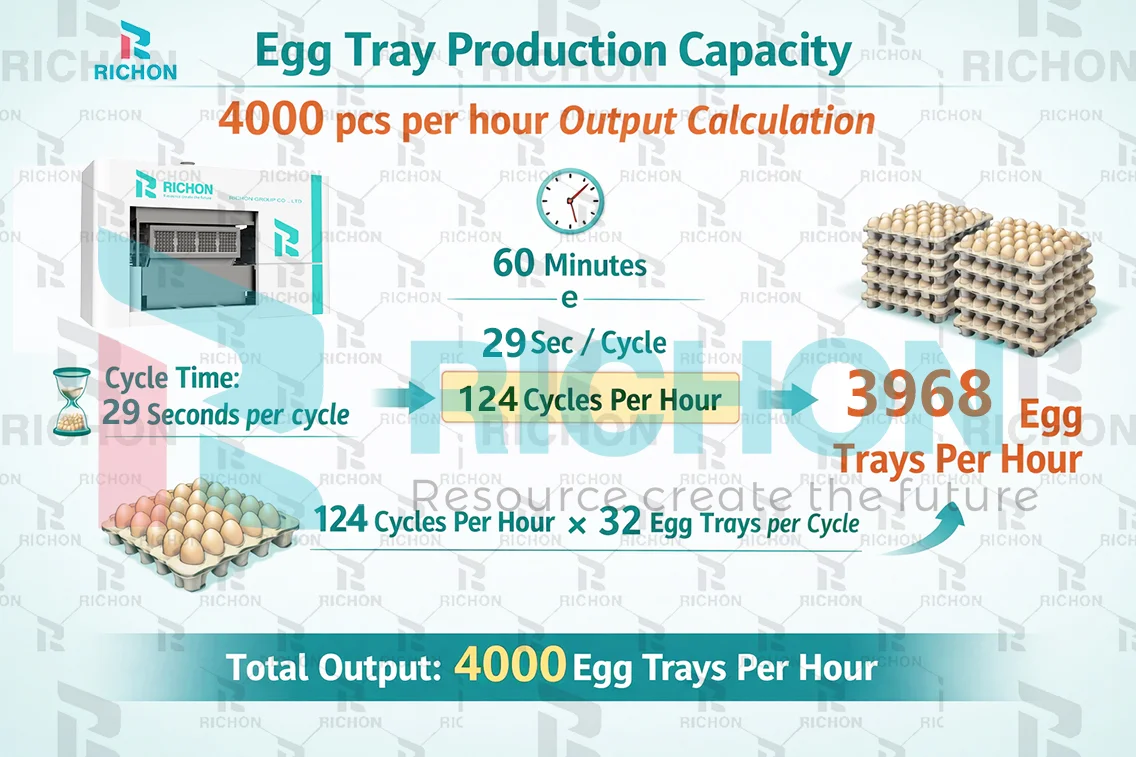
4000 шт./час — это ориентировочная производительность, а не гарантия прибыли.
В реальных условиях работы завода почасовая производительность — это лишь один из факторов, влияющих на принятие решений. Линия производительностью 4000 шт./час может выглядеть простой на бумаге, но фактическая суточная производительность зависит от времени работы, стабильности формования, эффективности сушки, состояния пресс-формы и дисциплины оператора.
Именно поэтому мы рекомендуем оценивать производственную мощность в совокупности с себестоимостью производства, энергопотреблением и узкими местами на последующих этапах, а не рассматривать один показатель как окончательный ответ. Для более подробного сравнения различных диапазонов см. наш статья о сравнении мощностей и анализ реальных производственных затрат.
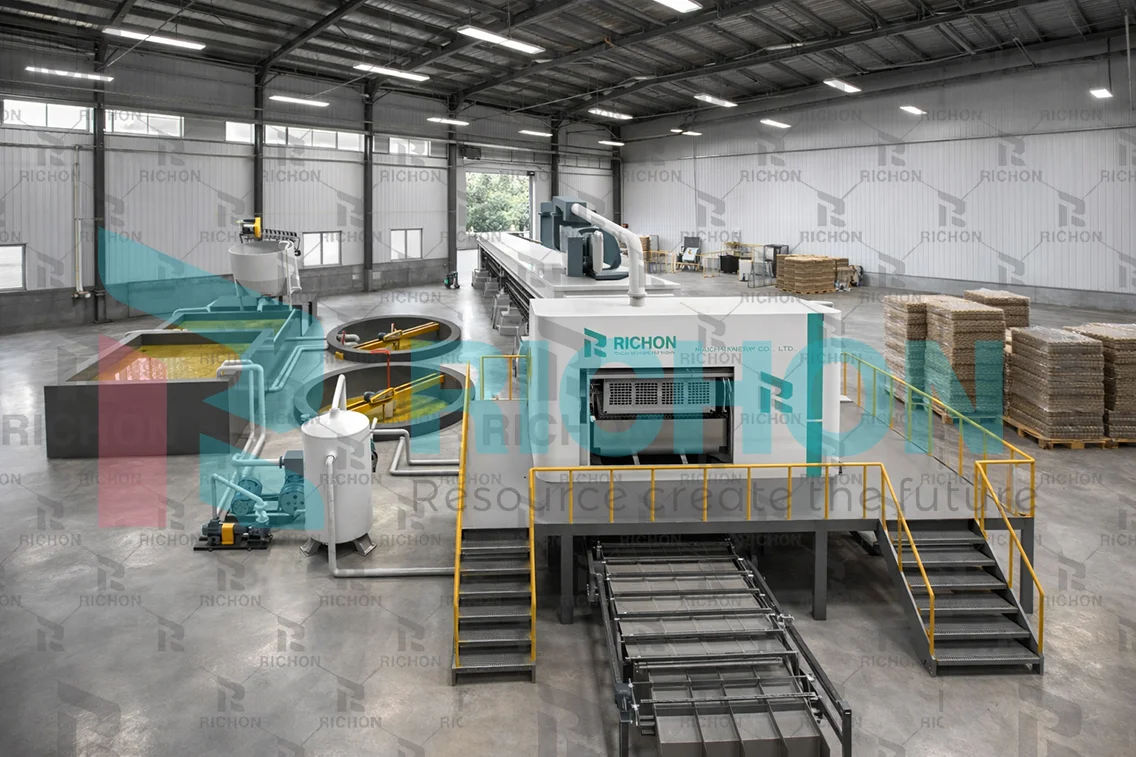
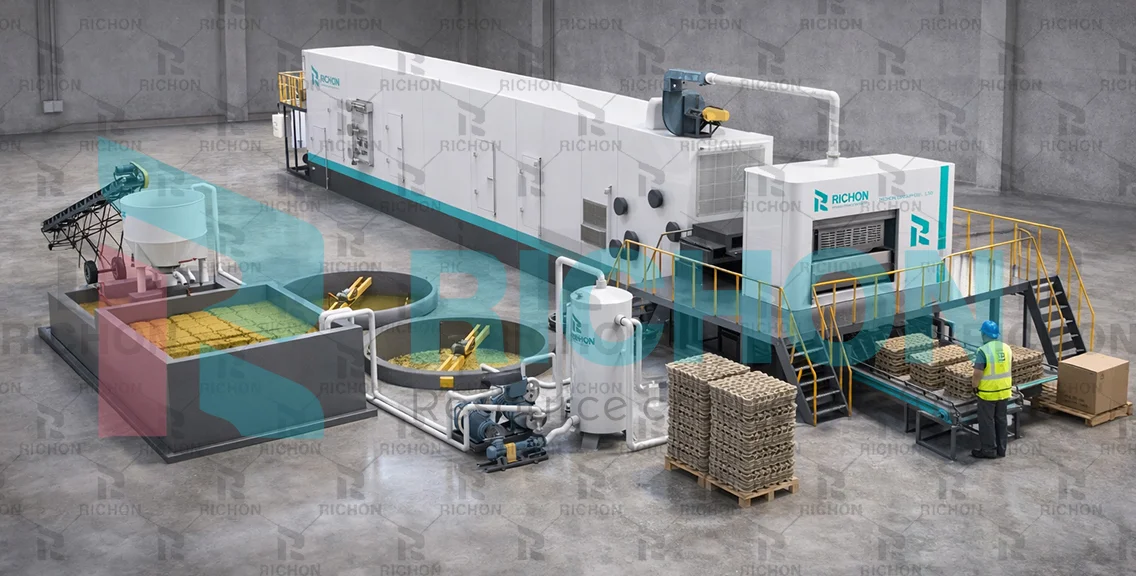
Типичная конфигурация системы для завода по производству лотков для яиц производительностью 4000 шт./час.
При таком уровне производительности выбор оборудования уже не сводится только к тому, может ли машина работать. Более важный вопрос заключается в том, достаточно ли хорошо согласованы процессы измельчения, формования, сушки и упаковки, чтобы избежать скрытых производственных потерь. Вы также можете рассмотреть более широкий спектр вопросов. Обзор производственной линии и наши страница о машине для изготовления лотков для яиц для получения полной информации о системе.
Формовочная машина должна работать как часть сбалансированной линии.
Формовочная машина, производительностью 4000 шт./ч, является одной из наиболее заметных частей производственной линии, но стабильная производительность зависит не только от скорости формования. Точность пресс-формы, эффективность вакуумной обработки, перемещение мокрых лотков и координация с сушкой — все это влияет на то, обеспечивает ли линия стабильное коммерческое производство.
При сравнении конструкций оборудования полезно рассмотреть обе модели. страница о машине для изготовления лотков для яиц и более широкий Обзор производственной линии вместо того, чтобы оценивать проект только по одному изображению оборудования или одному показателю производительности.
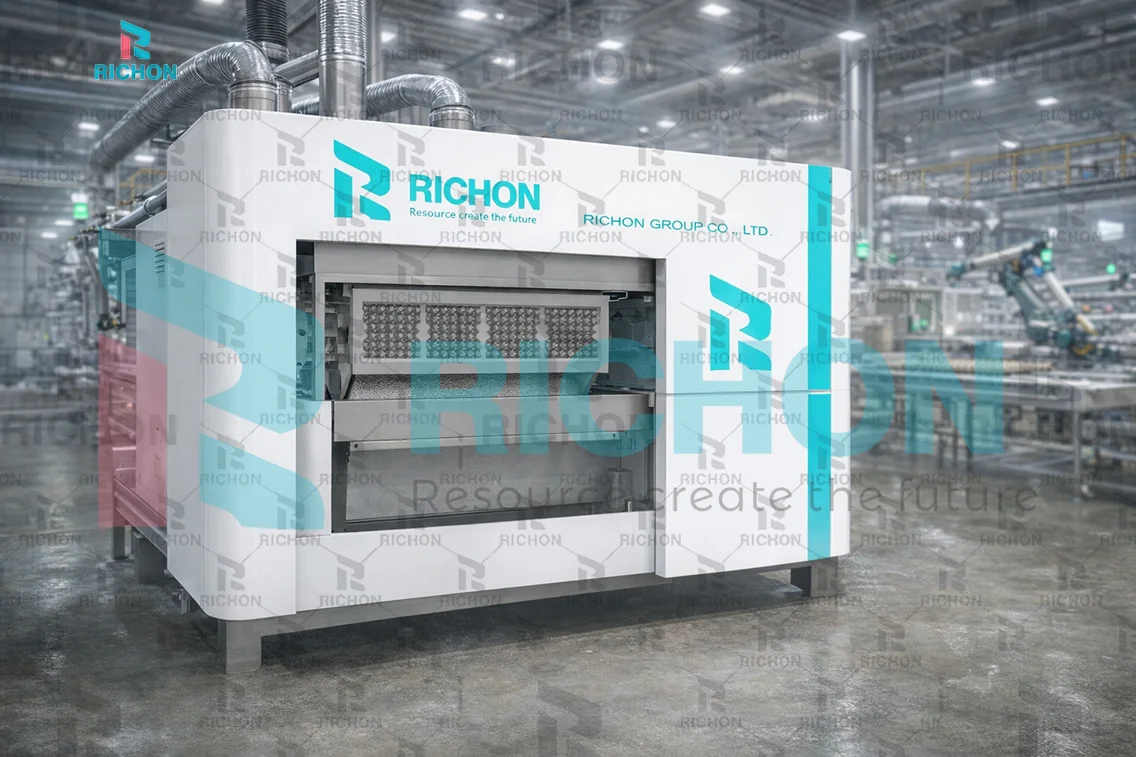
Точность пресс-формы
Стабильное качество пресс-формы помогает поддерживать форму лотка, контролировать вес и обеспечивать легкое извлечение готовой продукции.
Вакуумная координация
Эффективность вакуумной обработки влияет на консистенцию при влажном формовании и стабильность переноса до сушки.
Сопоставление систем
Формовочный цех следует оценивать совместно с цехами варки целлюлозы, сушки и организации труда.
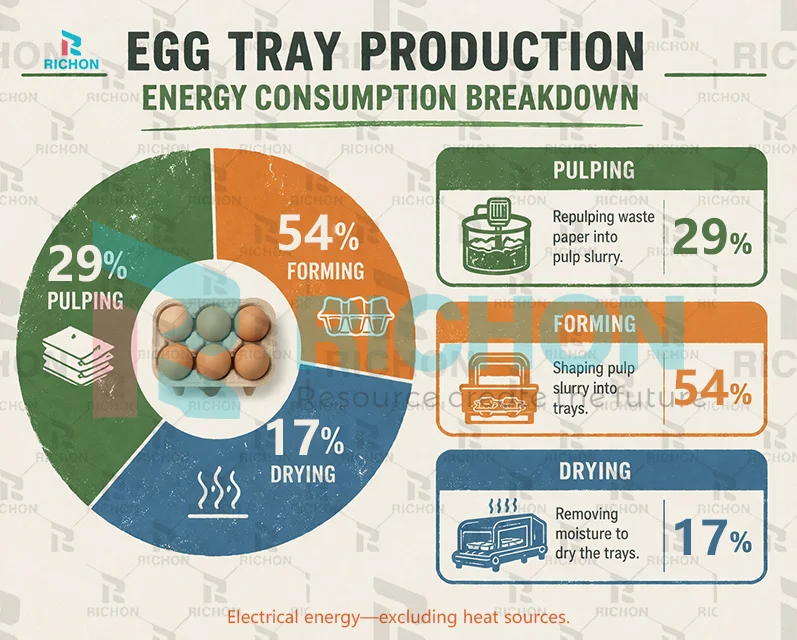
Планирование энергоснабжения имеет значение, но энергия, используемая для сушки, обычно имеет большее значение.
Покупатели часто в первую очередь спрашивают о мощности оборудования, но при производительности 4000 шт./час более важным вопросом является общая структура производства. Электрическая нагрузка помогает в планировании цеха, однако реальная экономика производства обычно в большей степени определяется методом сушки, источником тепла, качеством изоляции и балансировкой линии.
Если вы хотите сравнить стоимость электроэнергии более подробно, ознакомьтесь с нашей информацией. руководство по энергопотреблению. Для более широкого инженерного понимания источников затрат на коммунальные услуги см. анализ энергопотребления страница и наша статья о стоимость системы сушки лотков для яиц.
Электротехническое планирование
Используется для расчета сечения кабелей в мастерской, планирования размещения шкафов управления и согласования инженерных коммуникаций.
Тепловое планирование
Как правило, оказывает большее влияние на ежедневные эксплуатационные расходы, чем только заявленная мощность оборудования.
Правило принятия решения
Не следует сравнивать две линии только по общей установленной мощности, не проверяя структуру сушки.
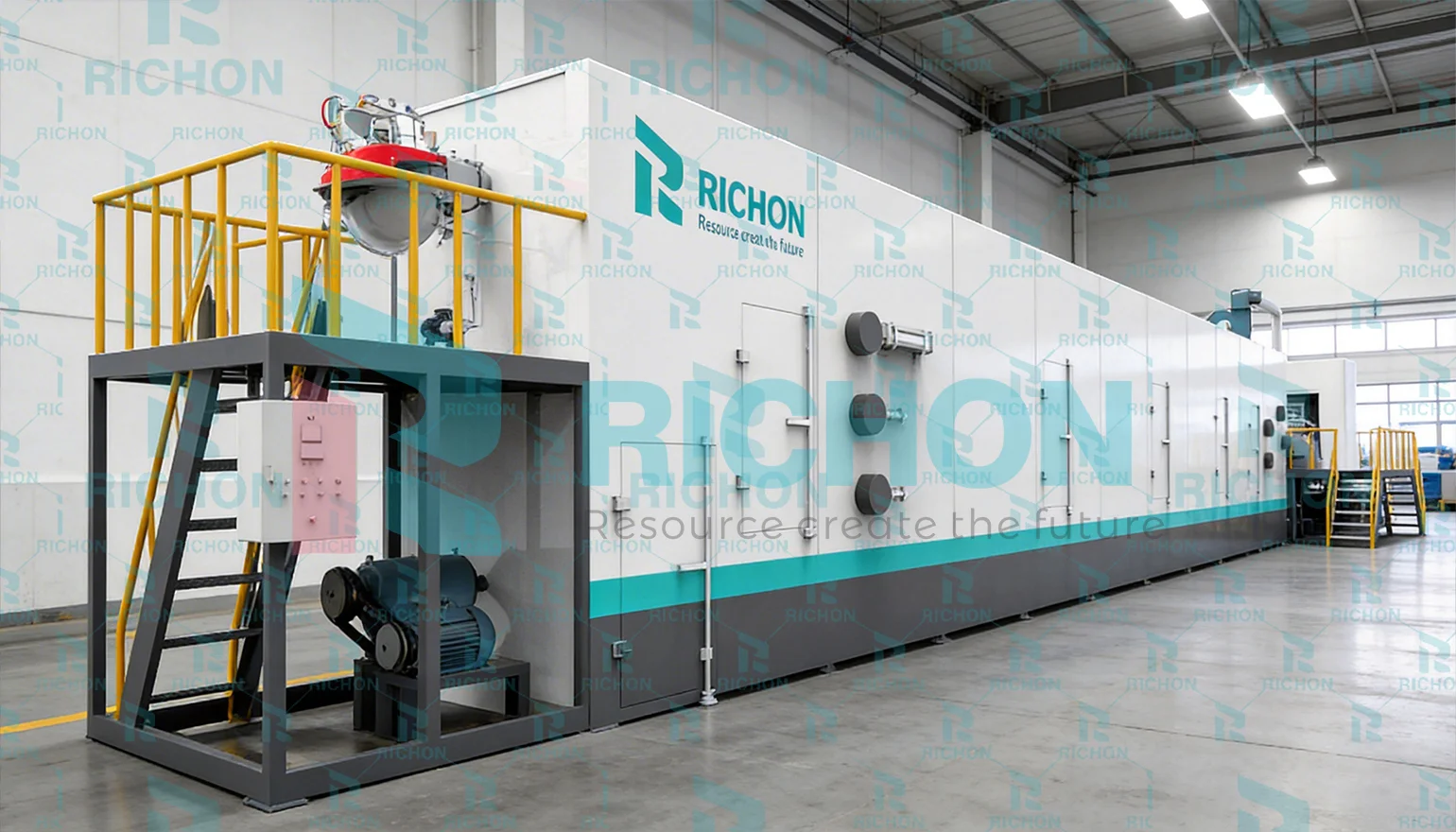
Планировка производственного цеха должна соответствовать технологическому процессу, а не просто представлять собой пустое пространство.
Для линии производительностью 4000 шт./час обычно требуется более продуманная планировка, чем для линии начального уровня, поскольку обработка материалов, перемещение влажных лотков, подбор сушилок и перемещение готовой продукции начинают влиять на ритм работы и эффективность цеха.
Когда покупатели планируют строительство, ориентируясь только на доступную площадь здания, они часто недооценивают прокладку коммуникаций, пространство для технического обслуживания и площадь сушильной зоны. Для получения более подробных рекомендаций по планированию ознакомьтесь с нашими рекомендациями. руководство по компоновке завода, то макет страницы центра знаний, и планирование проекта.
Рентабельность инвестиций зависит не только от цены оборудования.
Проект производительностью 4000 шт./час часто привлекателен, поскольку позволяет достичь практического баланса между размером инвестиций и амбициозными планами по объему производства. Однако окупаемость инвестиций определяется не только ценой оборудования. Доступность сырья, стоимость коммунальных услуг, выбор метода сушки, организация труда, местная цена продажи лотков и соблюдение правил бесперебойной работы — все это влияет на реальную окупаемость.
Для более детального сравнения коммерческой логики ознакомьтесь с нашей статьей. Руководство по ценам и рентабельности машин для производства лотков для яиц, анализ затрат и инвестиций, и статья о что определяет реальную себестоимость производства.
Объем инвестиций
Оборудование — это лишь одна часть проекта. Коммунальные услуги, переоборудование мастерской, конструкция сушилки и перемещение материалов могут существенно изменить окончательный бюджет.
Структура операционных затрат
Затраты на рабочую силу, тепловую энергию, электроэнергию, техническое обслуживание и контроль брака следует оценивать совместно, а не как отдельные статьи расходов.
Сопоставление продаж
Оптимально рассчитанная производственная линия показывает наилучшие результаты, когда ее мощность соответствует реальному местному спросу, а не только прогнозируемым объемам производства.
Стабильность производственных мощностей должна привести к выпуску пригодных для использования готовых лотков для яиц.
Производственная линия имеет коммерческий смысл только тогда, когда после сушки и упаковки можно поставлять стабильную готовую продукцию. Для многих заводов реальный вопрос заключается не в том, может ли машина работать быстро в течение короткого периода времени, а в том, остается ли качество лотков достаточно стабильным для ежедневной отгрузки и удовлетворения потребностей клиентов.
Именно поэтому покупателям следует связывать планирование объемов производства со стабильностью процесса сушки, контролем брака и анализом затрат. Для более широкого инвестиционного обзора вы также можете ознакомиться с нашими материалами. Руководство по ценам и рентабельности машин для производства лотков для яиц и статья о реальная себестоимость производства.
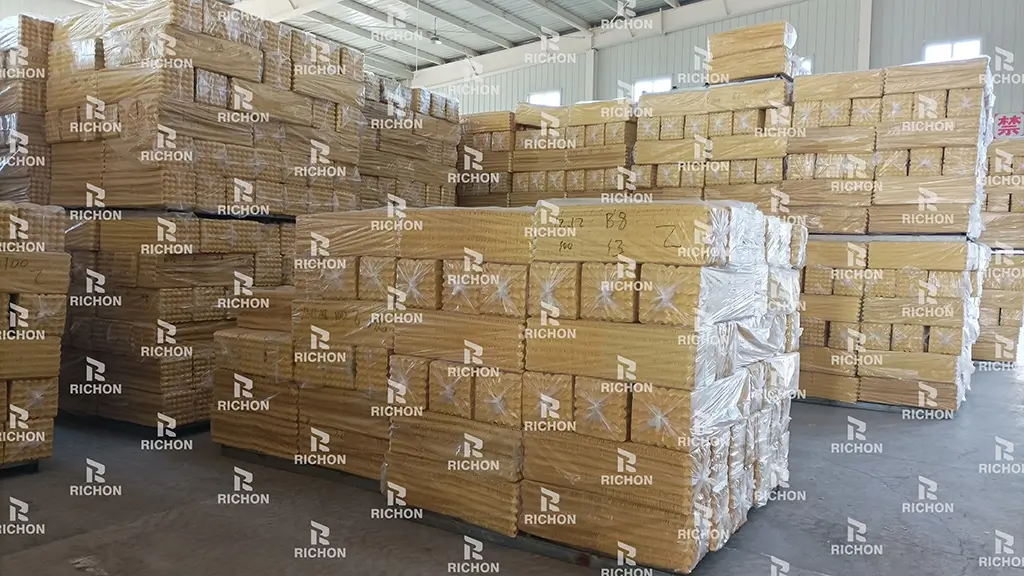
Упаковка должна способствовать потоку продукции, а не замедлять его.
В проекте производительностью 4000 шт./час упаковка часто рассматривается как простой заключительный этап, но плохая организация упаковки может нарушить рабочий ритм, увеличить потери при обработке и создать ненужные заторы после сушки. Хорошая компоновка линии должна оставлять достаточно места для укладки, подсчета, перемещения и подготовки к отгрузке.
Именно поэтому планирование производства не должно ограничиваться только габаритами основного оборудования. Вы можете подключить этот модуль к нашему руководство по компоновке завода и страница планирования проекта при организации заключительного этапа семинара.
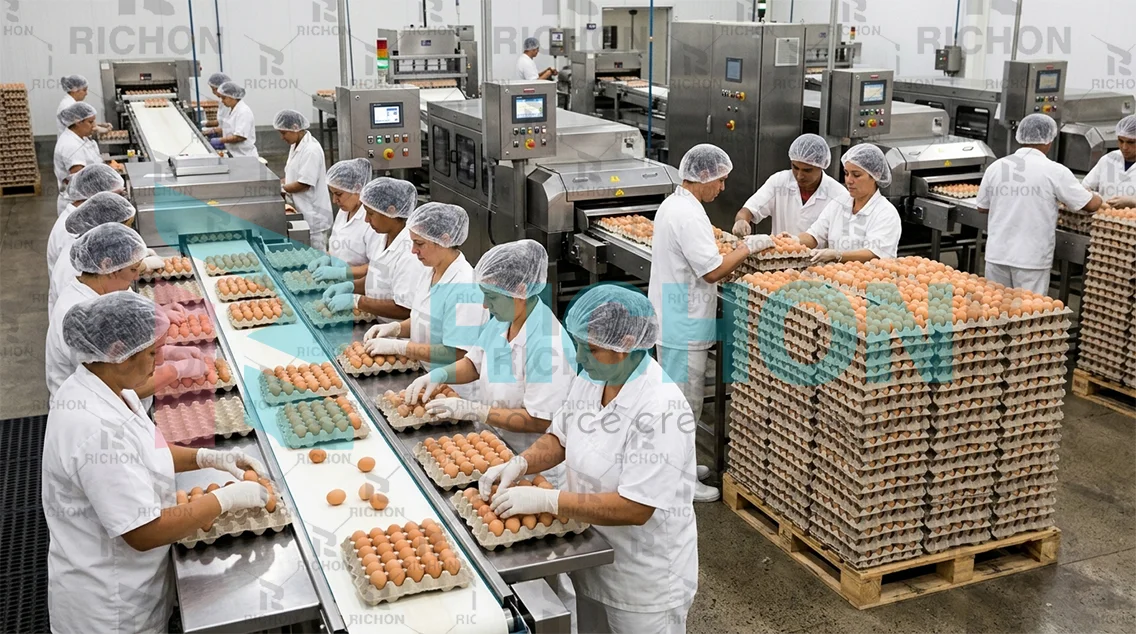
Сравните эти возможности с соответствующими инженерными и инвестиционными темами.
Для принятия обоснованного решения о производительности в 4000 шт./час необходимо учитывать понимание продукта, логику компоновки, планирование энергопотребления и анализ затрат, а не полагаться только на одну таблицу цен.
Часто задаваемые вопросы о производстве лотков для яиц производительностью 4000 штук в час
Является ли производительность в 4000 штук/га достаточной для первого коммерческого проекта по производству лотков для яиц?
Это может быть практичным выбором для покупателей, которые уже имеют стабильные поставки сырья, более четкий местный спрос на продукцию и достаточное планирование производственных процессов для обеспечения баланса между формовкой и сушкой.
Означает ли производственная линия производительностью 4000 шт./час всегда одинаковую суточную производительность?
Нет. Реальная суточная производительность зависит от количества отработанных часов, эффективности сушки, состояния плесени, управления персоналом и общей стабильности процесса.
Почему сушка так важна при такой производительности?
Поскольку, как только объем производства достигает среднего уровня, именно на участке сушки часто определяется, сможет ли линия поддерживать стабильный темп производства.
Следует ли сравнивать линии только по мощности машины?
Нет. Установленная мощность полезна для планирования электроснабжения, но на общие эксплуатационные расходы чаще всего больше влияют метод сушки, состав топлива, организация труда и контроль за браком.
Где я могу узнать больше, прежде чем выбрать эту линейку продукции?
Вы можете просмотреть страница линии по производству лотков для яиц, то центр знаний, и наши руководство по вместимости.
Нужна помощь в проверке, подходит ли производительность 4000 шт./час для вашего проекта?
Мы не рекомендуем выбирать мощность, исходя только из бюджета. Практичный выбор должен учитывать состояние сырья, схему сушки, инфраструктуру, планировку завода и ваши реальные целевые показатели выпуска продукции.
Консультации по проекту
Необходимо уточнить вместимость, схему сушки или инвестиционный план?
Сообщите вам целевые показатели производительности, условия производства и предпочтения по сушке. Инженеры Richon помогут подобрать подходящую конфигурацию линии по производству лотков для яиц для вашего проекта.