


Рентабельность лотков для яиц: сколько вы действительно можете заработать? (Полный анализ рентабельности инвестиций)
Начать бизнес по производству лотков для яиц может быть очень прибыльным — но только если вы четко понимаете суть дела. реальная структура затрат, отпускная цена и операционная эффективность за проектом.
Многих инвесторов привлекает растущий спрос на экологичную упаковку, но они по-прежнему задают те же практические вопросы:
- Какую прибыль может получать фабрика по производству лотков для яиц в день?
- Какова реальная прибыль с 1000 подносов?
- Сколько времени потребуется для окупаемости инвестиций в оборудование?
- Какой участок производственной линии оказывает наибольшее влияние на рентабельность?
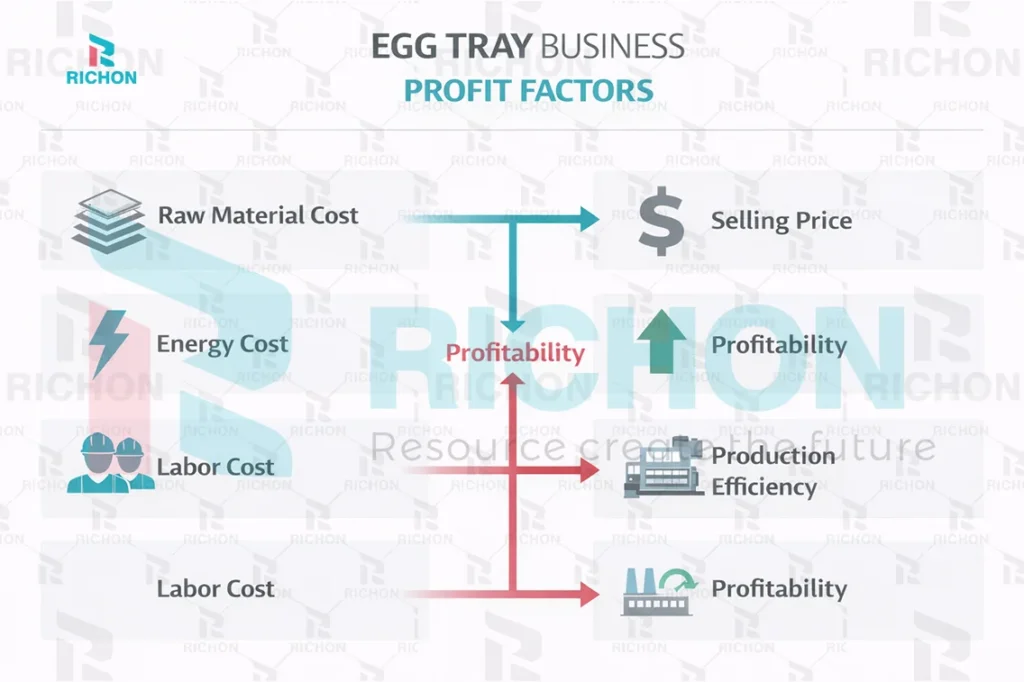
Истина проста: Рентабельность лотков для яиц определяется не только ценой оборудования.. Это зависит от сочетания таких факторов, как стоимость сырья, потребление энергии на сушку, эффективность труда, планировка предприятия и стабильность производства.
В этом руководстве мы подробно разберем реальную логику получения прибыли на линии по производству лотков для яиц, включая:
- Прибыль с 1000 подносов
- Ежедневный и ежемесячный заработок
- Разбивка затрат по основным операционным подразделениям
- Оценка рентабельности инвестиций в зависимости от масштаба производства
- Способы повышения рентабельности в реальных производственных условиях.
Для инвесторов, торговых компаний и проектировщиков производства именно здесь бизнес-решения становятся более реалистичными.
Что определяет рентабельность производства лотков для яиц?
Рентабельность производства лотков для яиц определяется пятью основными факторами. Если хотя бы один из них оценен неверно, весь расчет рентабельности инвестиций может оказаться ошибочным.
1. Стоимость сырья
Макулатура обычно является самой большой или второй по величине статьей производственных затрат после энергии на сушку. Местные запасы газет, картона, офисных отходов или смешанной переработанной бумаги напрямую влияют на вашу себестоимость 1000 лотков.
Если вы хотите понять, как тип бумаги, соотношение целлюлозы и стратегия закупок влияют на экономику производства, прочтите:
Сырье для производства лотков для яиц: виды макулатуры, соотношение целлюлозы и руководство по себестоимости.
2. Стоимость энергии
В большинстве проектов электроэнергия важна, но реальная статья расходов часто составляет тепловая энергия, используемая для сушки. Многие покупатели, приобретающие жилье впервые, недооценивают, насколько сильно система сушки влияет на общую рентабельность.
Подробную информацию об электроснабжении см. в:
Сколько электроэнергии потребляет машина для изготовления лотков для яиц? Руководство по энергопотреблению.
Подробную информацию о стоимости сушки см. в:
Стоимость системы сушки лотков для яиц: сравнение энергопотребления, расхода топлива и окупаемости инвестиций.
3. Стоимость рабочей силы
Линия, в значительной степени зависящая от ручной транспортировки, ручной укладки или нестабильного контроля сушки, обычно имеет более низкую рентабельность, чем линия с более плавной автоматизацией и меньшей трудоемкостью.
4. Производственная мощность и коэффициент использования
Более крупная производственная линия не обязательно более прибыльна. Важно, насколько стабильно работает линия и соответствует ли её мощность местному рынку. Избыточная мощность при недостаточном объеме заказов приводит к низкой загрузке и слабой рентабельности.
Для планирования мощностей см.:
Как выбрать подходящую линию по производству лотков для яиц с оптимальной производительностью (1000–8000 шт./час)
5. Цена продажи и рыночный спрос
Рентабельность также зависит от того, где и как продаются лотки. Если завод поставляет продукцию птицефермам, предприятиям по упаковке фруктов или местным дистрибьюторам со стабильным постоянным спросом, прибыль, как правило, более предсказуема.
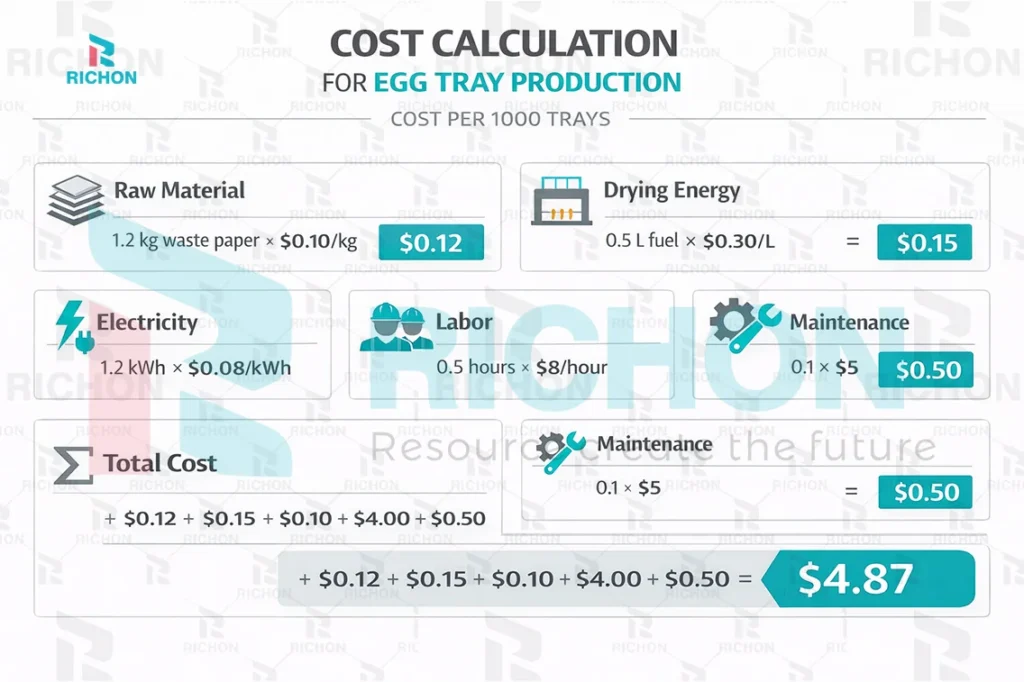
Прибыль с 1000 лотков для яиц: практический расчет.
Чтобы понять реальную рентабельность, лучше начать с простого расчета на единицу продукции.
Ниже приведён типичный диапазон рекомендуемых значений для производства стандартных лотков для яиц.
Типичная стоимость за 1000 лотков
| Компонент затрат | Типичная стоимость за 1000 лотков |
|---|---|
| Сырье | $12–18 |
| Электроэнергия + сушка топлива | $8–15 |
| Труд | $5–10 |
| Техническое обслуживание + расходные материалы + прочее | $3–5 |
Общая стоимость на 1000 подносов
Предполагаемое общее количество: $28–48
Типичная продажная цена за 1000 лотков.
Ориентировочная рыночная цена: $45–70
Типичная валовая прибыль на 1000 подносов
Предполагаемая прибыль: $10–30
Этот диапазон показывает, почему одни заводы работают очень хорошо, а другие испытывают трудности. Даже если два завода продают похожие лотки, их маржа может сильно отличаться в зависимости от источников бумаги, выбора топлива для сушки и контроля за оплатой труда.
Фабрика, использующая более дешевую местную макулатуру и более эффективную сушилку, может добиться гораздо более высокой рентабельности, чем фабрика, использующая дорогую бумагу и сушку с большим количеством дизельного топлива.
Почему стоимость сушки оказывает огромное влияние на прибыль
Среди всех производственных процессов сушка обычно оказывает наибольшее влияние на рентабельность. Именно поэтому анализ прибыли ни в коем случае не следует отделять от выбора системы сушки.
Во многих реальных проектах:
- Формирование в основном зависит от электричества.
- Сушка в основном зависит от тепловой энергии.
- Тепловая энергия зачастую составляет наибольшую статью эксплуатационных расходов.
Именно поэтому покупатели, сравнивающие только цены на оборудование, часто принимают неверное инвестиционное решение. Более дешевая машина с неэффективной сушкой может снизить долгосрочную прибыль. Немного большие первоначальные инвестиции могут обеспечить лучшую общую окупаемость, если эксплуатационные расходы будут ниже.
Чтобы понять, как тип топлива влияет на долгосрочную доходность, прочтите:
Кирпичная или металлическая сушилка: какая лучше подходит для производства яичных лотков?
А вот логика выбора сушилки с точки зрения стоимости:
Стоимость системы сушки лотков для яиц: сравнение энергопотребления, расхода топлива и окупаемости инвестиций.
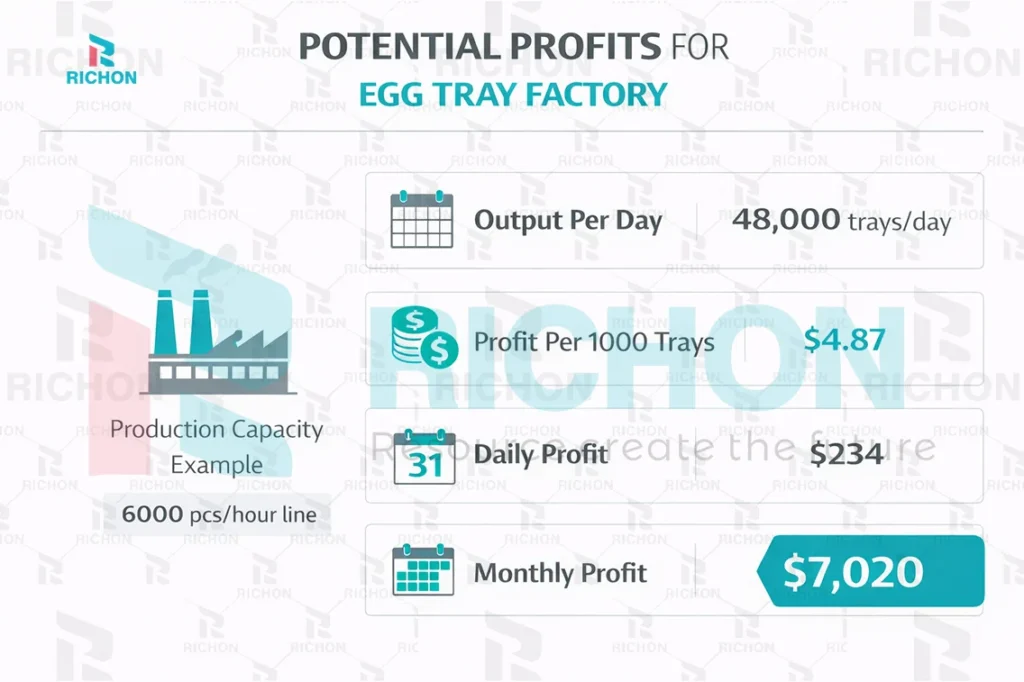
Оценка ежедневной и ежемесячной прибыли
Прибыль на единицу продукции приобретает большее значение, если перевести ее в ежедневную и ежемесячную прибыль.
В качестве примера возьмем линию средней шкалы.
Пример: производственная линия производительностью 6000 шт./час.
Предположения:
- Эффективное время работы: 20 часов в сутки
- Суточная производительность: 120 000 лотков.
- Прибыль с 1000 лотков: $15
Ежедневная прибыль
120 000 лотков ÷ 1000 × $15 = $1,800/день
Ежемесячная прибыль
Предположим, что в месяце 26 рабочих дней:
$1,800 × 26 = $46,800/месяц
Если отпускная цена выше или операционные расходы лучше контролируются, ежемесячная прибыль может увеличиться. Если же сырье подорожает или стоимость топлива для сушки резко возрастет, прибыль может быстро упасть.
Именно поэтому рентабельность всегда должна рассчитываться с учетом местных условий, а не копироваться из общих онлайн-смет.
Разные уровни мощности означают разную логику получения прибыли.
Одна и та же формула расчета прибыли не применима в равной степени ко всем диапазонам мощности.
Линии малой пропускной способности
Небольшие системы обычно требуют меньших первоначальных инвестиций, но их себестоимость производства часто выше. Они подходят для стартапов, проектов по локальному снабжению или клиентов, тестирующих рынок.
Линии средней пропускной способности
Зачастую это наиболее сбалансированный диапазон для инвесторов. Инвестиции в оборудование, трудозатраты и объемы производства легче контролировать. Для многих рынков этот диапазон обеспечивает хороший баланс между риском и доходностью.
Линии большой пропускной способности
Крупные производственные линии могут обеспечить снижение себестоимости единицы продукции при стабильной работе, но они также требуют более надежных поставок сырья, более стабильного рыночного спроса и более эффективного планирования энергоснабжения.
Если вы хотите более наглядно сравнить масштабы производства, прочитайте:
Производственная линия по выпуску лотков для яиц: 3 тыс., 5 тыс., 8 тыс. и 10 тыс. штук: в чем разница?
Здесь вы также можете ознакомиться со структурой инвестиций в оборудование:
Стоимость автоматов для производства лотков для яиц в 2026 году: подробный анализ затрат и руководство по окупаемости инвестиций.
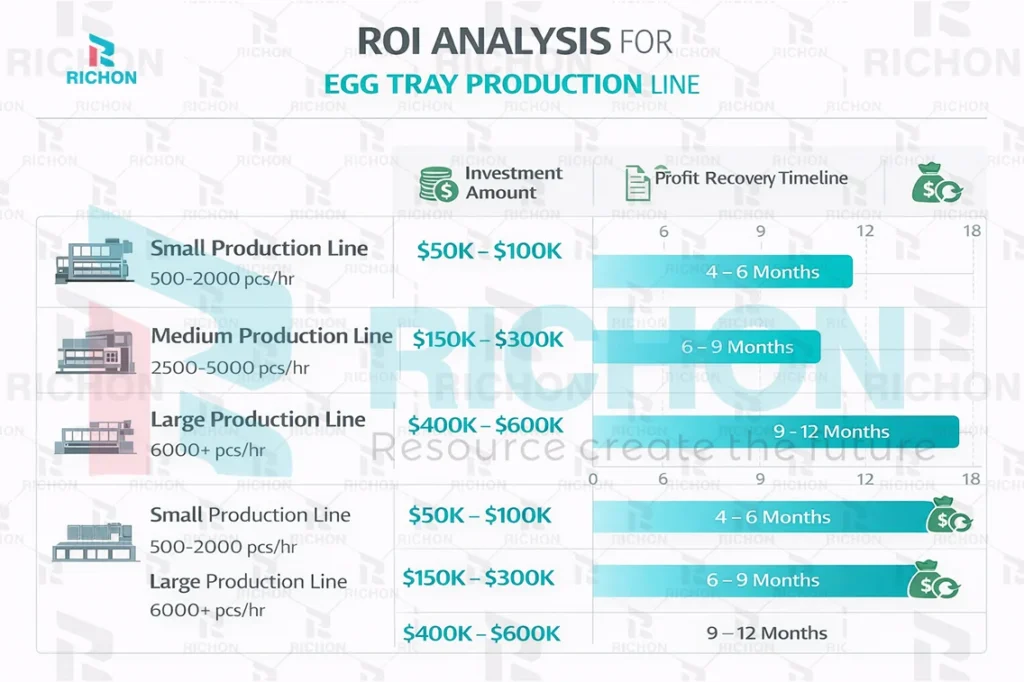
Анализ рентабельности инвестиций: сколько времени потребуется для окупаемости вложений?
Показатель рентабельности (profit margin) показывает, сколько вы можете заработать. Показатель рентабельности инвестиций (ROI) показывает, сколько времени потребуется для окупаемости капитала.
Типичные диапазоны инвестиций могут выглядеть следующим образом:
| Емкость | Типичный диапазон инвестиций |
|---|---|
| Небольшой объем производства (около 1000 шт./час) | $30,000–50,000 |
| Средний (около 3000–4000 шт./час) | $60,000–120,000 |
| Крупномасштабное производство (более 6000 шт./час) | $150,000–300,000 |
Типичный срок окупаемости
| Емкость | Типичный срок окупаемости |
|---|---|
| Маленький | 6–12 месяцев |
| Середина | 4–8 месяцев |
| Большой | 3–6 месяцев |
Эти цифры являются лишь ориентировочными диапазонами. В реальных проектах рентабельность инвестиций зависит от:
- Цена на макулатуру
- Цены на топливо и электроэнергию
- Цена продажи подноса
- Использование мощности
- эффективность планировки завода
- простои на техническое обслуживание
Хорошо сбалансированная система со стабильным объемом заказов может окупить инвестиции гораздо быстрее, чем более крупный, но плохо спланированный проект.
Для ознакомления с факторами планирования производства, влияющими на стабильность производства и себестоимость, читайте:
Сколько места необходимо для фабрики по производству лотков для яиц? Схема размещения.
Высокодоходный сценарий против низкодоходного сценария
Разница между успешным и слабым проектом зачастую не бросается в глаза на бумаге, но становится очевидной на практике.
Высокодоходный сценарий
Для прибыльного проекта по производству лотков для яиц обычно характерны следующие особенности:
- Стабильные источники поставок макулатуры
- Более дешевое или подходящее топливо для сушки
- Плавная координация формования и сушки
- Разумное соглашение о труде
- Высокое качество подносов и низкий процент брака.
- Рыночный спрос, способный поглотить объем производства
Сценарий с низкой прибылью
Проект с низкой рентабельностью часто имеет следующие особенности:
- Высокая стоимость сырья
- Дорогое топливо, такое как дизельное топливо, в условиях неблагоприятных ценовых условий.
- Избыточные мощности для местного рынка
- Частые простои
- Низкая эффективность сушки
- Слабая стабильность технологического процесса и непостоянство качества продукции.
Вот почему прибыльность не следует рассматривать исключительно как финансовый вопрос. Это также и инженерный вопрос.
Чтобы лучше понять, как обеспечивается стабильность производства на технологическом уровне, прочтите:
Процесс производства лотков для яиц: пошаговое руководство по изготовлению.
А информацию о факторах, влияющих на качество продукции, см. в следующем разделе:
Ключевые особенности технологического процесса производства лотков для яиц, влияющие на качество продукции.
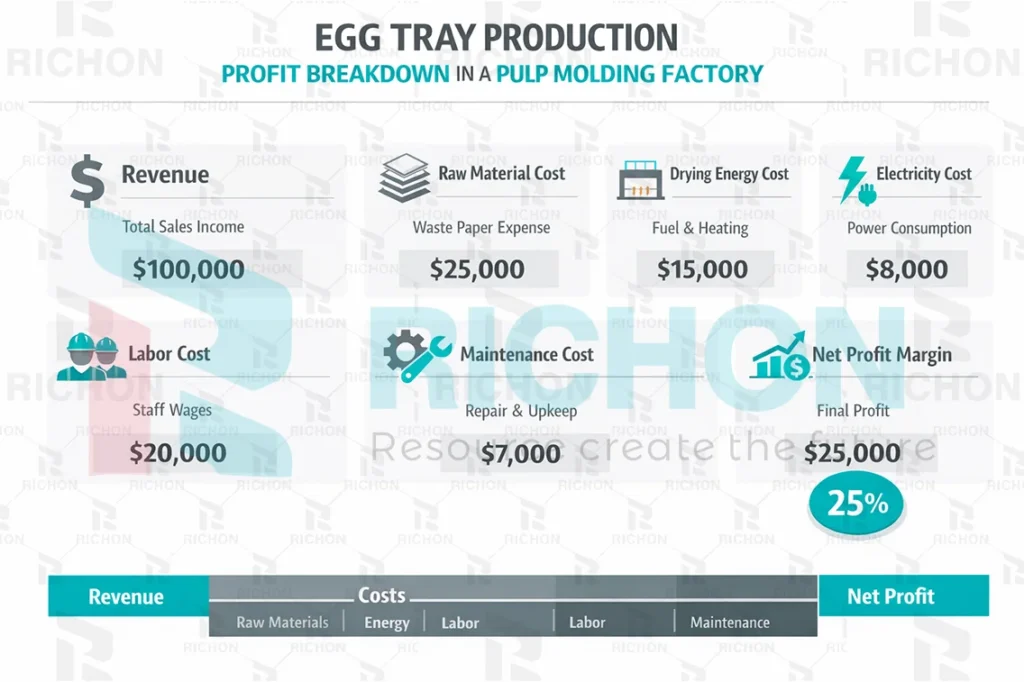
Как увеличить прибыль от продажи лотков для яиц
Повышение рентабельности — это не только продажа по более высокой цене. Во многих случаях более надежным методом является сокращение излишних затрат и повышение эффективности производства.
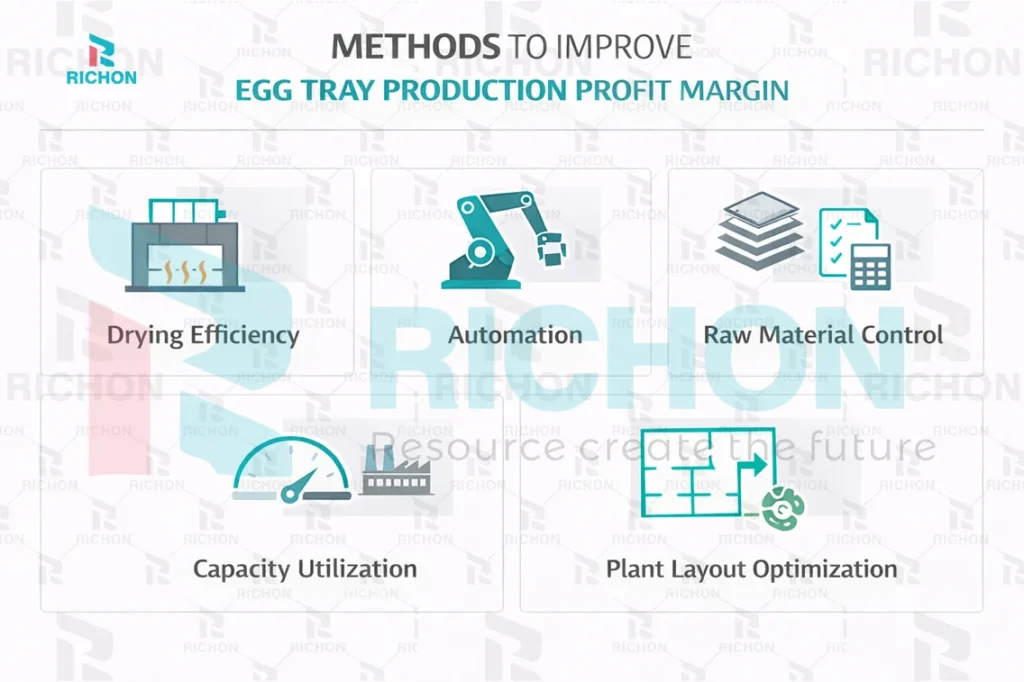
Оптимизация эффективности сушки
Качество сушки часто определяет, будет ли завод работать с высокой рентабельностью. Улучшенная теплоизоляция, более подходящий вид топлива и более грамотный выбор сушильных машин могут изменить экономические показатели всей производственной линии.
Повышение эффективности использования мощностей
Линия, работающая со стабильной производительностью, обычно показывает лучшие результаты, чем линия большей мощности, работающая с перебоями. Подбор оборудования в соответствии с реальным спросом важнее, чем выбор самой мощной модели.
Контролируйте потребление воды и электроэнергии.
Хотя сушка является основным фактором, влияющим на затраты, вода и электроэнергия по-прежнему влияют на эффективность работы и баланс системы.
Для планирования водопользования ознакомьтесь с информацией по следующим пунктам:
Сколько воды необходимо для производства лотков для яиц? Полное руководство по потреблению.
Для планирования энергоснабжения ознакомьтесь с информацией по следующим пунктам:
Сколько электроэнергии потребляет машина для изготовления лотков для яиц? Руководство по энергопотреблению.
Улучшить планировку завода.
Излишняя перегрузка материалов, неудачная организация сушильного участка или слабое планирование инженерных сетей — все это может снизить реальную рентабельность.
Здесь вы можете ознакомиться с логикой компоновки:
Сколько места необходимо для фабрики по производству лотков для яиц? Схема размещения.
Выберите подходящий фундамент для оборудования
Понимание структуры оборудования также помогает инвесторам оценить долгосрочные затраты на техническое обслуживание, запасные части и стабильность производства.
Для получения общего представления о конструкции машины, ознакомьтесь с информацией по ссылке:
Основные компоненты машины для изготовления лотков для яиц
Останется ли производство лотков для яиц прибыльным в 2026 году?
Да, но не автоматически.
Рыночные возможности по-прежнему высоки, поскольку спрос на упаковку из формованного волокна продолжает расти благодаря перерабатываемым и менее пластиковым упаковочным решениям. Однако прибыльность зависит от качества исполнения.
Заводы, обладающие строгим контролем над поставками сырья, энергетической структурой и стабильными каналами сбыта, все еще могут достигать привлекательной доходности. Заводы, которые сосредотачиваются только на низкой закупочной цене, игнорируя операционные издержки, часто сталкиваются с результатами хуже, чем ожидалось.
Именно поэтому серьезные инвесторы сравнивают не только цены на оборудование, но и всю экономическую целесообразность производственной линии в целом.
Если вы все еще выбираете между прямым сотрудничеством с заводом и работой через торговую структуру, этот подход также может оказаться полезным:
Фабрика или торговая компания?
Часто задаваемые вопросы: Рентабельность лотков для яиц
Будет ли бизнес по производству лотков для яиц прибыльным в 2026 году?
Да. На многих рынках производство лотков для яиц остается прибыльным при условии грамотного управления поставками сырья, энергозатратами на сушку и спросом на продукцию.
Какова средняя рентабельность?
Практический диапазон обычно составляет около 20% до 40%, Однако это зависит от рынка, типа подноса, стоимости топлива и эффективности производства.
Что больше всего влияет на прибыль от продажи лотков для яиц?
Как правило, наиболее значимым фактором являются затраты на энергию для сушки, за которыми следуют стоимость сырья, эффективность труда и фактическая загрузка производственных мощностей.
Может ли небольшая фабрика по производству лотков для яиц приносить прибыль?
Да. Небольшие заводы могут быть прибыльными, но обычно у них более высокая себестоимость единицы продукции и более длительный срок окупаемости, чем у хорошо организованных средних производственных линий.
Является ли цена оборудования наиболее важным фактором рентабельности инвестиций?
Нет. Цена оборудования имеет значение, но долгосрочные эксплуатационные расходы и эффективность системы зачастую оказывают большее влияние на общую прибыль.
Заключительные мысли
Производство лотков для яиц может приносить привлекательную прибыль, но реальная прибыль не получается из простой оценки стоимости оборудования или приблизительной оценки рыночной конъюнктуры.
Это достигается благодаря пониманию всей логики проекта:
- стоимость сырья
- энергетическая структура
- соответствие мощности
- эффективность труда
- планирование планировки
- стабильность процесса
- рыночная цена продажи
Если все эти элементы будут согласованы, линия по производству лотков для яиц может стать надежной промышленной инвестицией со значительным циклом окупаемости.
Если их интересы не совпадают, один и тот же проект может выглядеть прибыльным в теории, но оказаться неэффективным на практике.
Именно поэтому анализ рентабельности всегда должен быть связан с реальными инженерными решениями на заводе.
Если вы планируете новый проект, выбираете производственные мощности или сравниваете окупаемость инвестиций в условиях местного энергоснабжения и сырьевых ресурсов, компания Richon поможет вам оценить более реалистичное решение.
Нужны рекомендации по пропускной способности для вашего рынка?
Укажите желаемую производительность, местные условия влажности/энергопотребления и тип лотка. Наши инженеры предложат подходящий вариант. 3000–8000 шт./час конфигурация и решение для сушки.
- Контрольный список планировки и инженерных коммуникаций завода
- Оценка узких мест сушки
- Справочная информация по оценке затрат и рентабельности инвестиций.
Получите быструю инженерную проверку.
Ответ в течение 24 часов (рабочих дней).
Связаться с нашими инженерами →