


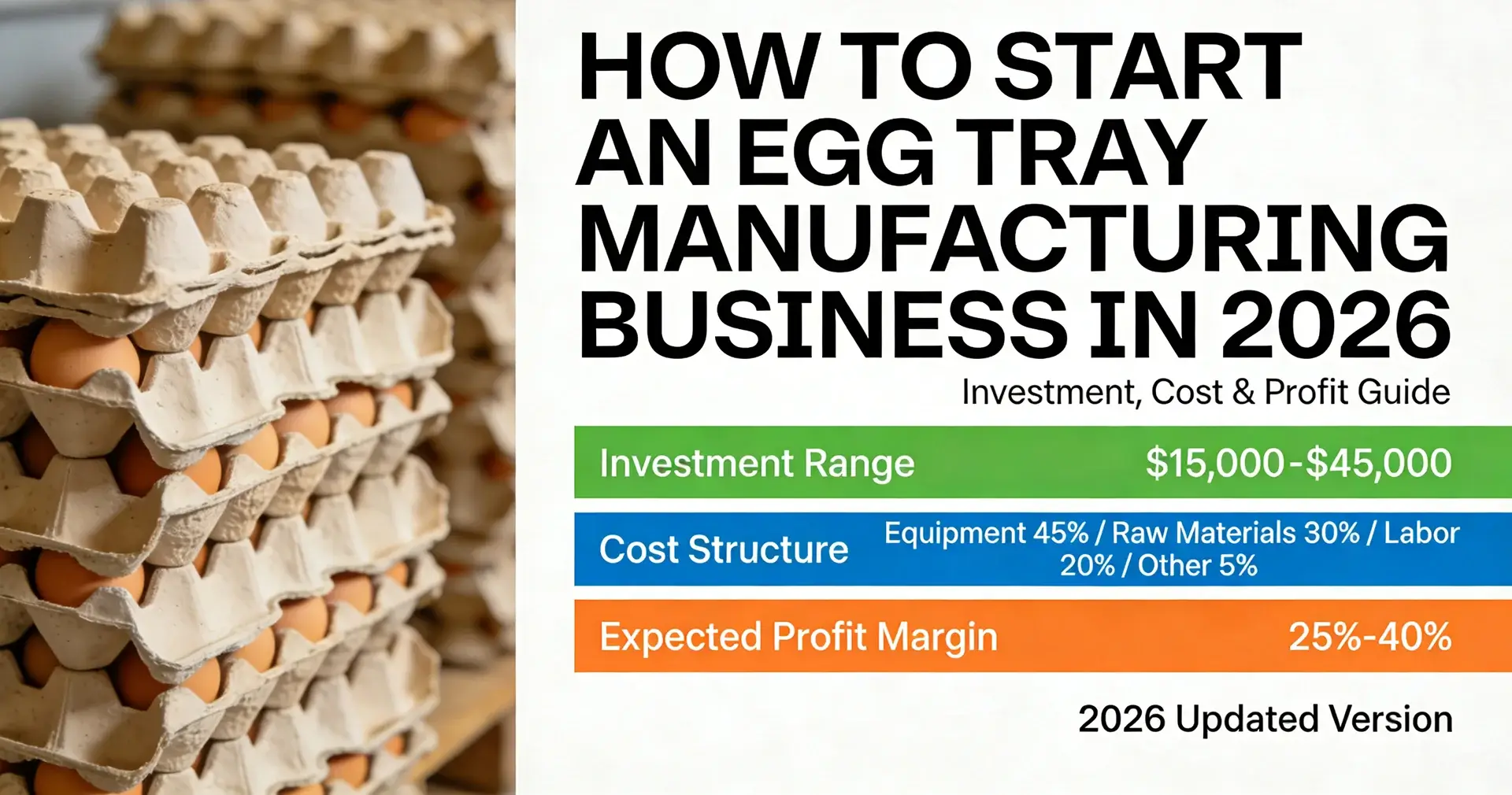
Как начать бизнес по производству лотков для яиц в 2026 году: руководство по инвестициям, затратам и прибыли.
Производство лотков для яиц стало перспективным направлением инвестиций во многих регионах, где растет птицеводство, производство переработанной бумаги и спрос на экологически чистую упаковку.
Однако запуск фабрики по производству лотков для яиц — это не просто покупка оборудования. Для успешного проекта необходимы соответствующие производственные мощности, планирование сырья, выбор системы сушки, планировка фабрики, контроль затрат и надежная техническая поддержка.
В этом руководстве объясняется, как начать бизнес по производству лотков для яиц в 2026 году, включая планирование инвестиций, выбор оборудования, себестоимость производства, логику получения прибыли и основные ошибки, которых следует избегать.
1. Почему производство лотков для яиц — это растущая отрасль?
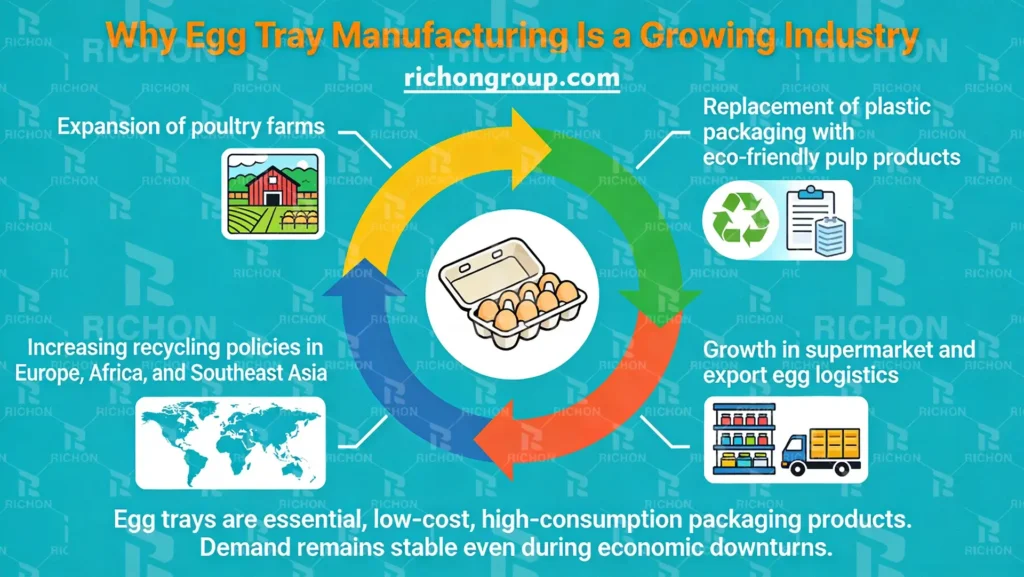
Лотки для яиц являются важным упаковочным материалом для птицеферм, дистрибьюторов яиц, супермаркетов и экспортных рынков. Поскольку яйца нуждаются в защите во время хранения и транспортировки, спрос на лотки для яиц остается относительно стабильным на многих рынках.
Росту производства лотков для яиц способствуют несколько тенденций:
- Расширение птицеводства
- Растущий спрос на упаковку из переработанной бумаги.
- Замена пластиковой упаковки в некоторых регионах.
- Развитие логистики по доставке яиц в супермаркеты и на экспорт.
- Растущий интерес к недорогому местному производству
Бумажные лотки для яиц изготавливаются в основном из переработанной макулатуры, что делает этот бизнес привлекательным в регионах с доступными ресурсами макулатуры и растущим потреблением яиц.
Инвесторы, сравнивающие упаковочные материалы, также могут ознакомиться с нашей статьей. Сравнение лотков для яиц и пластиковых лотков.
Шаг 1: Оцените свой местный рынок
Прежде чем выбирать оборудование, инвесторам следует сначала разобраться в местном рынке лотков для яиц.
Ключевые вопросы включают:
- Сколько птицеферм находится поблизости?
- В настоящее время лотки для яиц импортируются или производятся на местном уровне?
- Какова обычная продажная цена за поднос?
- Клиенты используют бумажные подносы, пластиковые подносы или и те, и другие?
- Спрос носит сезонный характер или стабилен в течение всего года?
- Какой уровень качества требуется рынку?
Многие новички совершают ошибку, выбирая производственную мощность оборудования до подтверждения перспектив рынка сбыта. Более разумный подход — сначала оценить ежемесячный спрос, а затем выбрать производственную линию, соответствующую реалистичным объемам продаж.
Например, небольшому местному рынку на начальном этапе может не понадобиться высокопроизводительная автоматическая линия. Для среднего регионального рынка может быть оправдана линия производительностью 3000–5000 шт./час. Для проектов, ориентированных на экспорт, может потребоваться более стабильная сушка, укладка и контроль качества.
Для более подробного плана инвестиций ознакомьтесь с нашей информацией. руководство по бизнес-планированию лотков для яиц.
Шаг 2: Выберите подходящую производственную мощность
Производственная мощность линии по выпуску лотков для яиц должна соответствовать рыночному спросу, инвестиционному бюджету, производственной площади и планам будущего расширения.
К распространенным диапазонам вместимости относятся:
| Диапазон вместимости | Подходящий тип проекта |
|---|---|
| 1000–1500 шт/час | Небольшой стартовый проект |
| 2000–3000 шт/час | Производство для местного рынка |
| 3000–5000 шт/час | Средний коммерческий завод |
| 5000–8000 шт/час | Промышленное производство |
| 8000+ шт./час | Крупный автоматизированный проект |
Для многих начинающих инвесторов выбор наибольшей мощности не всегда является лучшим решением. Если рыночный спрос нестабилен, большая производственная линия может создать дополнительную нагрузку из-за более высоких инвестиций, затрат на электроэнергию, организации труда и требований к планировке завода.
С другой стороны, выбор слишком узкой товарной линейки может ограничить потенциальную прибыль и затруднить снабжение крупных клиентов.
Если вы сравниваете разные уровни производительности, ознакомьтесь с нашей информацией. руководство по производительности линии по производству лотков для яиц.
Вы также можете сравнить весы разных заводов в нашем сервисе. Сравнение производственных линий по выпуску лотков для яиц: 3 тыс., 5 тыс., 8 тыс. и 10 тыс..
Шаг 3: Оценка инвестиционного бюджета
Общий объем инвестиций зависит от мощности оборудования, уровня автоматизации, системы сушки, строительства завода, монтажа, транспортировки и подготовки местных коммуникаций.
Базовый диапазон инвестиций можно определить следующим образом:
Маломасштабная линия: 1000–1500 шт./час
Обычно подходит для небольших местных производств или начинающих.
Типичные характеристики:
- Полуавтоматическое или просто автоматическое формование
- Ручная обработка
- Естественная сушка или простой способ сушки
- Снижение инвестиционного давления
Ориентировочный диапазон инвестиций:
$8,000 – $25,000+Диапазон цен обычно сильно зависит от конфигурации и от того, включены ли в стоимость сушильное оборудование, установка, доставка и заводская подготовка.
Линия среднего масштаба: 2000–4000 шт./час
Это один из наиболее распространенных диапазонов начальных значений для местного коммерческого производства.
Типичные характеристики:
- Автоматическая система формования
- В зависимости от местных условий можно использовать кирпичную, естественную или металлическую сушилку.
- Умеренные трудозатраты
- Более стабильный выходной сигнал, чем у небольших ручных систем.
Ориентировочный диапазон инвестиций:
$30,000 – $80,000+Полностью автоматизированная линия: производительность 5000 шт./час и выше.
Подходит для промышленных предприятий, крупных дистрибьюторов яиц или предприятий, ориентированных на экспорт.
Типичные характеристики:
- Более высокий уровень автоматизации
- Система непрерывной сушки
- Автоматические параметры штабелирования
- Более стабильное производство и меньшая зависимость от рабочей силы.
Ориентировочный диапазон инвестиций:
$80,000 – $200,000+Приведенные цифры являются лишь общими ориентировочными диапазонами. Окончательная цена должна рассчитываться с учетом производственной мощности, количества пресс-форм, системы сушки, уровня автоматизации, монтажа, доставки и условий на объекте.
Для более подробного объяснения ценообразования оборудования ознакомьтесь с нашей информацией. прайс-лист на машины для изготовления лотков для яиц.
Чтобы понять суть долгосрочных операционных расходов, см. Что определяет реальную себестоимость производства на линии по изготовлению лотков для яиц?.
Шаг 4: Выберите подходящую конфигурацию оборудования.
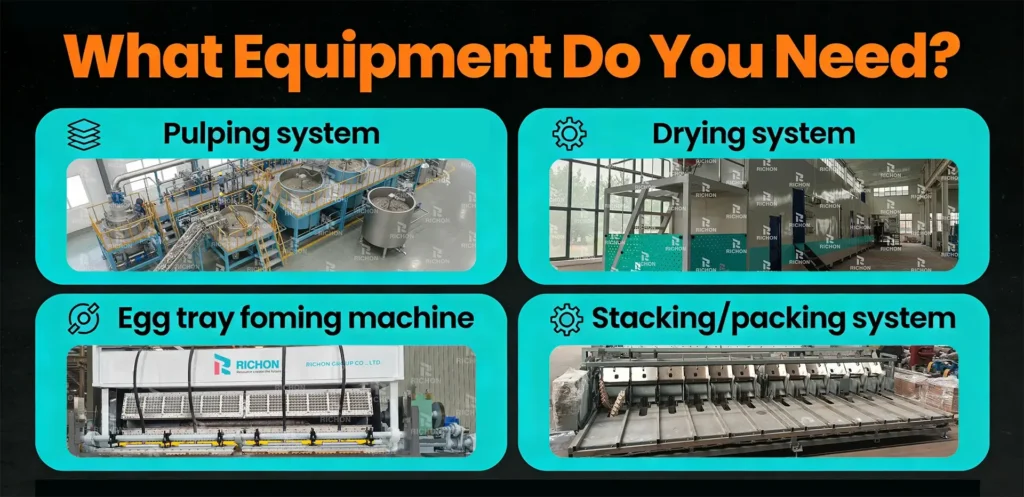
Полная линия по производству лотков для яиц обычно включает в себя:
- Система пульпирования
- Машина для формования лотков для яиц
- Система сушки
- Система штабелирования и упаковки
- Система циркуляции воды
- Электрическая система управления
- Пресс-формы и вспомогательное оборудование
Производственный процесс, как правило, протекает следующим образом:
Макулатура → Измельчение → Формование → Сушка → Складирование → УпаковкаКонфигурация оборудования должна соответствовать не только целевой мощности, но и местным условиям эксплуатации.
Например:
Если требуется стабильное качество и непрерывный объем производства, система сушки металла может быть предпочтительнее.
Если местная рабочая сила доступна по цене, полуавтоматическая обработка может быть приемлемой.
Если затраты на рабочую силу высоки, автоматическая укладка становится более ценной.
Если топливо легкодоступно, а стоимость строительства низка, сушка кирпича может быть практичным решением.
Вы можете ознакомиться с полными вариантами системы на нашем сайте. Линия по производству лотков для яиц страница.
Чтобы разобраться в каждой секции станка, ознакомьтесь с нашим руководством. основные компоненты машины для изготовления лотков для яиц.
Шаг 5: Выберите подходящую систему сушки
Сушка — одно из важнейших решений в бизнесе по производству лотков для яиц. Она влияет на инвестиционные затраты, стабильность производства, расход топлива, планировку цеха и качество конечной продукции.
К распространенным способам сушки относятся:
Естественная сушка
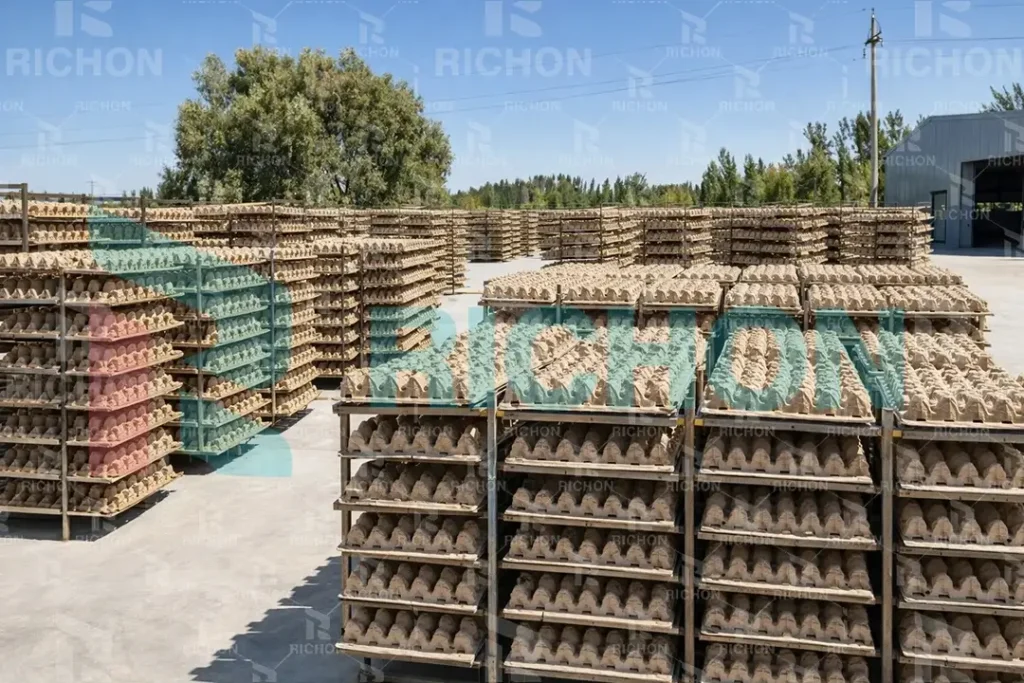
Подходит для очень небольших проектов или регионов со стабильным солнечным светом и низкой влажностью.
Преимущества:
- Самые низкие затраты на электроэнергию
- Простая настройка
Ограничения:
- Зависит от погоды
- Требуется большое пространство для сушки.
- Нестабильная скорость производства
Система сушки кирпича
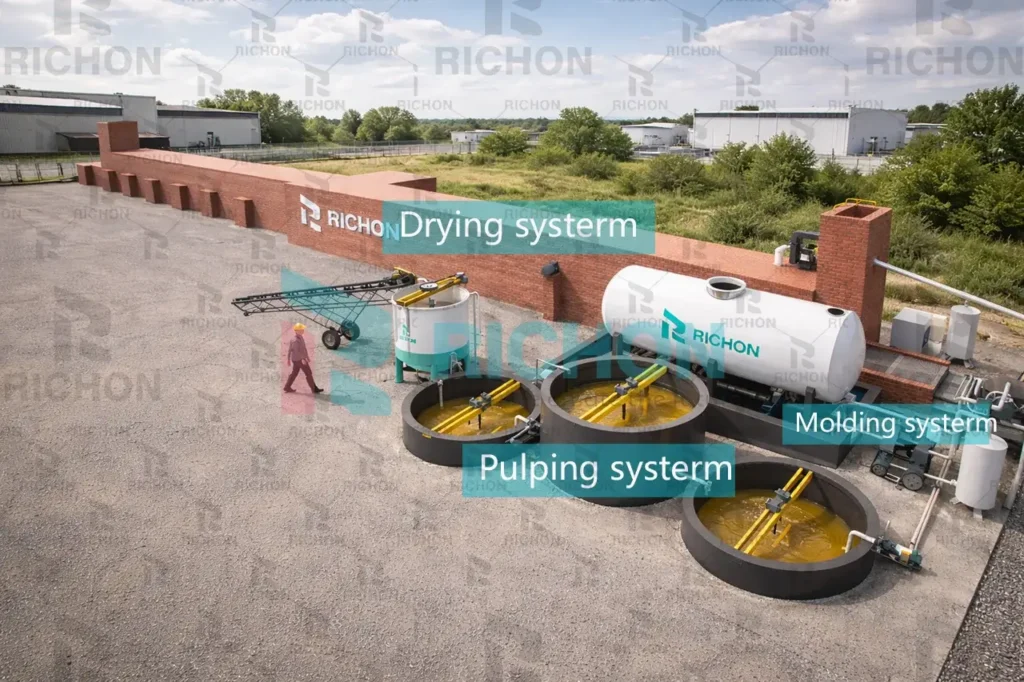
Подходит для многих проектов производительностью 2000–3000 шт./час и проектов среднего масштаба, особенно там, где целесообразно проводить местные строительные работы и использовать местное топливо.
Преимущества:
- Более низкие первоначальные инвестиции, чем у металлических сушилок.
- Гибкие варианты топлива
- Упрощенное местное обслуживание
- Подходит для практичных начинающих предприятий.
Ограничения:
- Требуется хорошая конструкция системы вентиляции.
- Обычно требует больше ручного управления.
- Равномерность сушки зависит от конструкции и режима работы.
система сушки металла
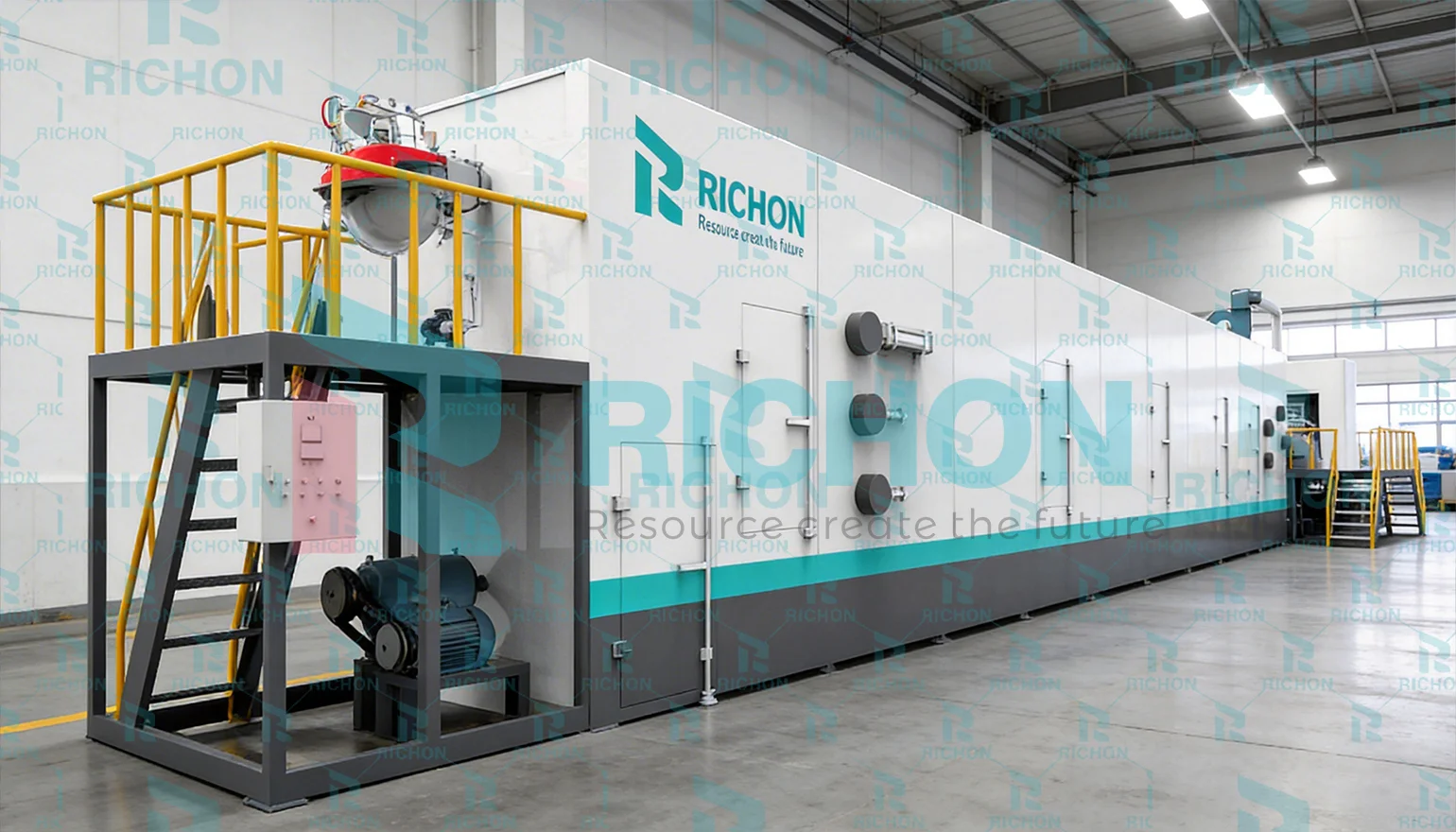
Подходит для высокопроизводительных или более автоматизированных производственных линий.
Преимущества:
- Стабильная непрерывная сушка
- Улучшенная автоматизация
- Более подходит для больших объемов производства.
- Упрощенный контроль производства
Ограничения:
- Повышенные требования к топливу и техническому обслуживанию.
- Более высокие инвестиции
Для сравнения цен на топливо и энергоносители ознакомьтесь с нашей информацией. Анализ стоимости системы сушки лотков для яиц.
Если вы сравниваете сушильные конструкции, см. кирпичная сушилка против металлической сушилки для производства лотков для яиц.
Шаг 6: Планирование сырья и производственных затрат.

В качестве основного сырья для производства лотков для яиц используются:
- Макулатура
- Старые газеты
- картонные коробки OCC
- Переработанный картон
- Вода
- Дополнительные добавки, выбираемые по желанию, в зависимости от требований к продукту.
Затраты на сырье являются одной из крупнейших статей долгосрочных операционных расходов. Однако точный процент варьируется в зависимости от региона, качества бумаги, метода сушки, стоимости рабочей силы и эффективности производства.
Во многих проектах операционные расходы обычно включают в себя:
- Стоимость сырья
- Стоимость топлива для сушки
- Стоимость электроэнергии
- Стоимость воды
- затраты на рабочую силу
- затраты на техническое обслуживание
- Стоимость упаковки и транспортировки
Для реалистичного расчета стоимости бизнеса инвесторам следует запрашивать не только цену оборудования. Им необходимо рассчитать себестоимость одного лотка.
Стоимость одного подноса = Общие почасовые эксплуатационные расходы ÷ Почасовая производительность
Подробную информацию о выборе материалов и соотношении целлюлозы см. в нашей статье. руководство по выбору сырья для лотков для яиц.
Для планирования коммунальных услуг см. наш раздел руководство по потреблению электроэнергии машинами для изготовления лотков для яиц.
Вы также можете оставить отзыв. Сколько воды необходимо для производства лотков для яиц?.
Шаг 7: Планирование производственных площадей и компоновка.
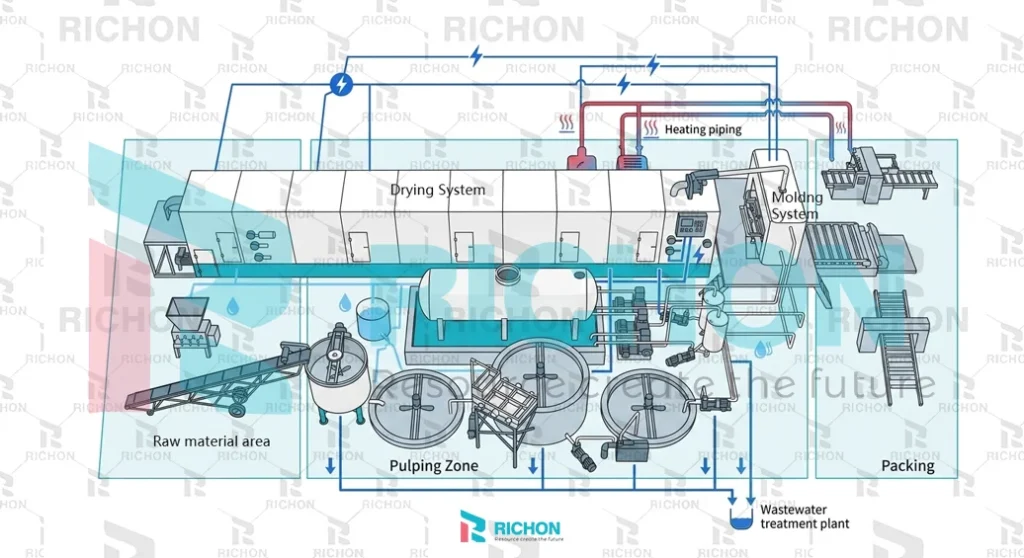
Планировка завода влияет на эффективность производства, перемещение рабочей силы, обработку материалов, качество сушки и перспективы расширения.
Типичная компоновка должна обеспечивать бесперебойный рабочий процесс:
Зона сырья → Зона целлюлозообразования → Зона формования → Зона сушки → Зона упаковки → Зона готовой продукцииК важным аспектам планировки относятся:
- Достаточно места для хранения сырой бумаги.
- Плавное взаимодействие между варкой пульпы и формованием.
- Правильное местоположение сушилки
- Движение за безопасных работников
- склад готовой продукции
- Пространство для технического обслуживания вокруг оборудования
- Возможность расширения для увеличения производственных мощностей в будущем.
Неудачная планировка фабрики может увеличить затраты на рабочую силу, замедлить производство и создать ненужные проблемы с обработкой грузов.
Для планирования планировки ознакомьтесь с нашими рекомендациями. Руководство по планировке и размещению производственных площадей на заводе по производству лотков для яиц..
Шаг 8: Рассчитайте прибыль и рентабельность инвестиций.
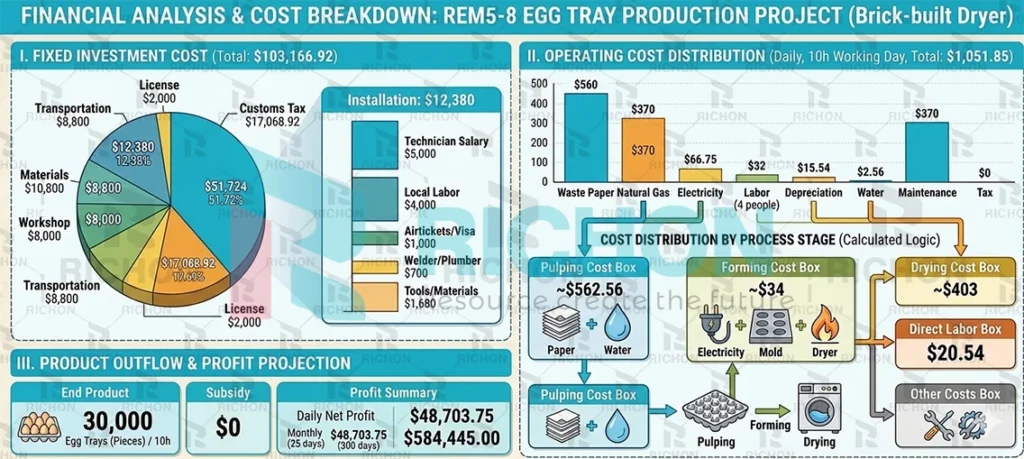
Рентабельность бизнеса по производству лотков для яиц зависит от трех основных показателей:
- Цена продажи за поднос
- себестоимость производства одного лотка
- Стабильный ежемесячный объем производства
Например, линия производительностью 3000 шт./час, работающая 8 часов в день и 26 дней в месяц, может производить:
3000 × 8 × 26 = 624 000 подносов в месяцЕсли продажная цена составляет $0.03 за лоток:
Ежемесячная выручка = 624 000 × $0,03 = $18 720После вычета стоимости сырья, топлива для сушки, электроэнергии, рабочей силы, затрат на техническое обслуживание и амортизации, чистая прибыль зависит от местных условий себестоимости и продажной цены.
Во многих регионах вполне осуществимый проект может достичь чистой прибыли в размере около 20–351 тыс. трлн триллионов рупий, но эти расчеты всегда должны основываться на реальных местных данных.
Типичный срок окупаемости инвестиций может составлять от 8 до 18 месяцев, в зависимости от масштаба инвестиций, стабильности производства, рыночной цены и контроля затрат.
Для получения подробной финансовой модели ознакомьтесь с нашей статьей. анализ рентабельности лотков для яиц.
Шаг 9: Выберите подходящего производителя
Выбор надежного поставщика имеет решающее значение, поскольку производство лотков для яиц — это не просто покупка оборудования. Это целостная производственная система.
При оценке поставщиков проверьте следующее:
- Реальные производственные возможности
- Инженерный опыт
- Возможность проектирования производственных линий в полном объеме.
- Поддержка планирования системы сушки
- Инструкция по установке
- Наличие запасных частей
- Обучение операторов
- Послепродажное обслуживание
- Техническая документация
Низкая цена оборудования может показаться привлекательной на первый взгляд, но слабая инженерная поддержка может привести к более высоким долгосрочным затратам из-за простоев, нестабильного качества продукции и низкой энергоэффективности.
Перед покупкой ознакомьтесь с нашим руководством по... Фабрика или торговая компания: как определить настоящего производителя машин для производства лотков для яиц..
Шаг 10: Избегайте распространенных ошибок при создании стартапа.
Многие начинающие инвесторы теряют деньги не потому, что бизнес по производству лотков для яиц плох, а потому, что принимают неверные решения на начальном этапе.
К распространённым ошибкам относятся:
- Выбирайте только самый дешевый вариант.
- Без учета стоимости системы сушки
- Выбор неправильной мощности
- Недооценка планировки завода
- Использование нестабильного сырья
- Завышенная оценка продажной цены
- Игнорирование планирования технического обслуживания
- Выбор ненадежного поставщика
Эти ошибки могут увеличить производственные затраты и снизить рентабельность.
Чтобы избежать распространенных рисков, ознакомьтесь с нашей информацией. buyer checklist for verifying an egg tray equipment supplier.
Небольшие масштабы или полная автоматизация: что лучше для начинающих?
Единого оптимального варианта для всех инвесторов не существует.
Небольшая или полуавтоматическая линия может быть предпочтительнее, если:
- Капитал ограничен.
- Местный рынок все еще находится на стадии тестирования.
- Стоимость рабочей силы низкая
- Естественная сушка или сушка кирпичей — практичный вариант.
Полностью автоматизированная линия может быть предпочтительнее, если:
- Спрос уже подтвержден.
- Стоимость рабочей силы высока.
- Требуется стабильный выходной сигнал.
- Планируется экспорт или поставки крупным клиентам.
- Инвестор заинтересован в повышении эффективности в долгосрочной перспективе.
Для многих новичков наиболее безопасной стратегией является начало с конфигурации, соответствующей подтвержденному спросу, а затем резервирование места и планирование будущего расширения.
Часто задаваемые вопросы
Выгодно ли заниматься производством лотков для яиц?
Да, это может быть прибыльно, если должным образом контролироваться стоимость сырья, затраты на электроэнергию, стабильность работы оборудования и рыночный спрос. Прибыль зависит от продажной цены, себестоимости одного лотка и стабильного объема производства.
Каков минимальный размер инвестиций для начала работы?
Небольшая линия начального уровня может стоить от $8 000 до $25 000 и более, в зависимости от конфигурации и комплектации. Более крупные автоматические линии требуют больших инвестиций.
Сколько времени требуется для возврата инвестиций?
Многие проекты могут окупить инвестиции в течение 8–18 месяцев, но фактическая рентабельность инвестиций зависит от местной отпускной цены, себестоимости производства, коэффициента использования мощностей и стоимости энергии.
Какие сырьевые материалы необходимы?
В качестве основного сырья используются макулатура, переработанный картон, старые газеты, вода, а иногда и добавки в зависимости от требований к продукту.
Какая система сушки лучше всего подходит для начинающих?
Для небольших и средних проектов в некоторых регионах более практичным может быть естественная сушка или сушка кирпичей. Для более высокой производительности и стабильного производства обычно больше подходит система сушки металла.
Заключительные мысли
Запуск бизнеса по производству лотков для яиц в 2026 году может стать практичной и масштабируемой возможностью, особенно в регионах с растущим птицеводством, наличием макулатуры и спросом на экологически чистую упаковку.
Однако успех зависит не только от цены оборудования.
Для того чтобы проект был прибыльным, необходимо:
- Реальный рыночный спрос
- Правильный выбор мощности
- Подходящая система сушки
- Стабильные поставки сырья
- Эффективная компоновка завода
- Надежный поставщик оборудования
- Четкий расчет затрат и прибыли
Прежде чем принимать инвестиционное решение, сравните не только цены на оборудование, но и долгосрочные производственные затраты, качество продукции, техническое обслуживание и потенциал для будущего расширения.
Ознакомьтесь с нашими Решения для производственных линий по выпуску лотков для яиц или Свяжитесь с инженерами компании Richon. для поддержки планирования проекта.
Нужны рекомендации по пропускной способности для вашего рынка?
Укажите желаемую производительность, местные условия влажности/энергопотребления и тип лотка. Наши инженеры предложат подходящий вариант. 3000–8000 шт./час конфигурация и решение для сушки.
- Контрольный список планировки и инженерных коммуникаций завода
- Оценка узких мест сушки
- Справочная информация по оценке затрат и рентабельности инвестиций.
Получите быструю инженерную проверку.
Ответ в течение 24 часов (рабочих дней).
Связаться с нашими инженерами →