


3k vs 5k vs 8k vs 10k Egg Tray Production Line: What’s the Difference?
For complete capacity planning and ROI analysis, read our full guide here.
Choosing the correct egg tray production capacity is one of the most critical decisions when starting a pulp molding project.
Many investors focus only on machine price. However, capacity selection determines:
- Total investment level
- Factory size requirement
- Dryer configuration
- Utility consumption
- Long-term profitability
- Expansion flexibility
Selecting the wrong output level can either limit your growth or increase financial pressure unnecessarily.
In this guide, we compare 3,000, 5,000, 8,000, and 10,000 pcs per hour production lines, and explain how to determine the most profitable capacity based on market demand, utilities, and ROI analysis.
Why Egg Tray Production Capacity Selection Matters
Egg tray manufacturing is a volume-based business. Profit depends on:
- Stable daily output
- Cost control per piece
- Local market absorption capacity
A mismatch between production capacity and market demand leads to:
- Overstock
- Cash flow pressure
- Inefficient equipment utilization
On the other hand, underestimating demand can result in lost contracts and limited scalability.
That’s why capacity planning must come before equipment purchase.
Standard Egg Tray Production Capacity Levels Explained
Most industrial egg tray production line models fall into four mainstream output levels.
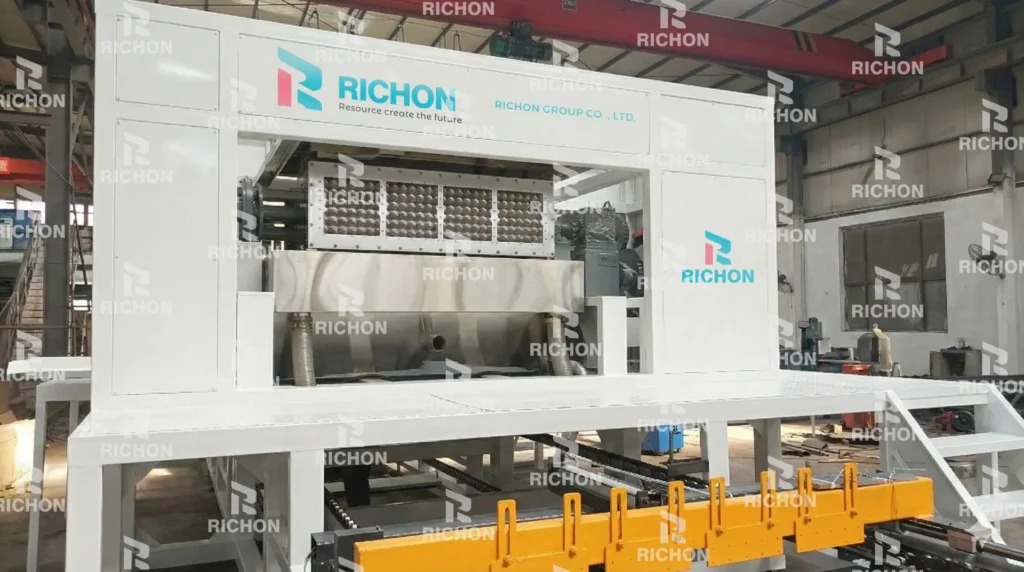
1. 3,000 pcs/h Egg Tray Machine
Best for:
- New investors
- Small regional markets
- Pilot projects
Typical configuration:
- 3–4 forming molds
- Semi-automatic stacking
- Natural drying or small metal dryer
Daily output (20 hours):
≈ 60,000 trays
Advantages:
- Lower investment risk
- Flexible installation
- Suitable for developing markets
Limitations:
- Limited scalability
- Higher labor dependency
2. 5,000 pcs/h Egg Tray Machine
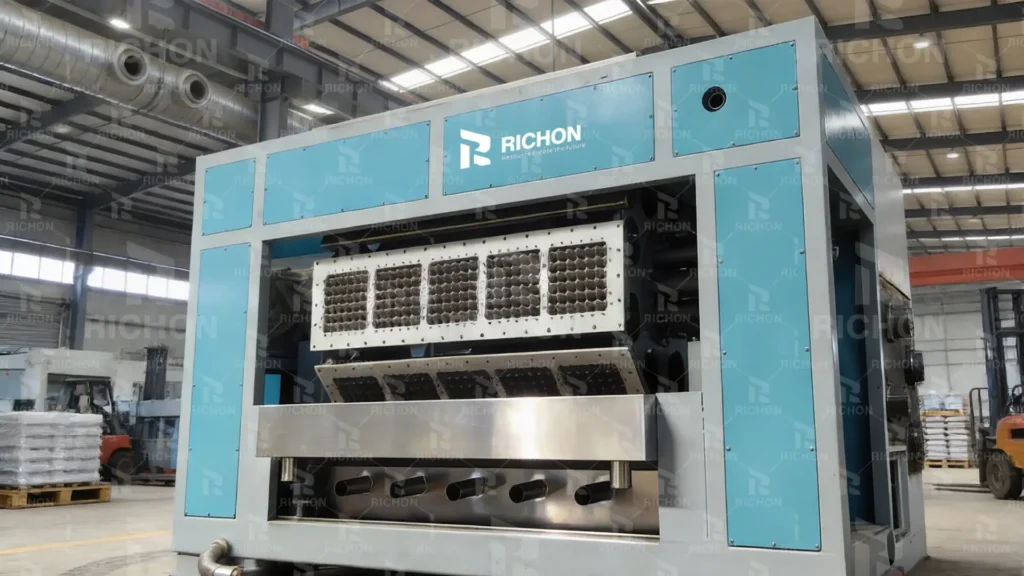
This is the most balanced and commonly selected capacity worldwide.
Best for:
- Medium-scale factories
- Supplying regional poultry farms
- Stable domestic markets
Daily output (20 hours):
≈ 100,000 trays
Typical configuration:
- 4–8 molds
- Automatic transfer system
- Metal dryer recommended
Investment level:
Moderate, with faster ROI compared to smaller systems.
This capacity offers the best balance between automation level and cost efficiency.
You can review complete configurations of different egg tray production line models here:
👉egg tray production line models
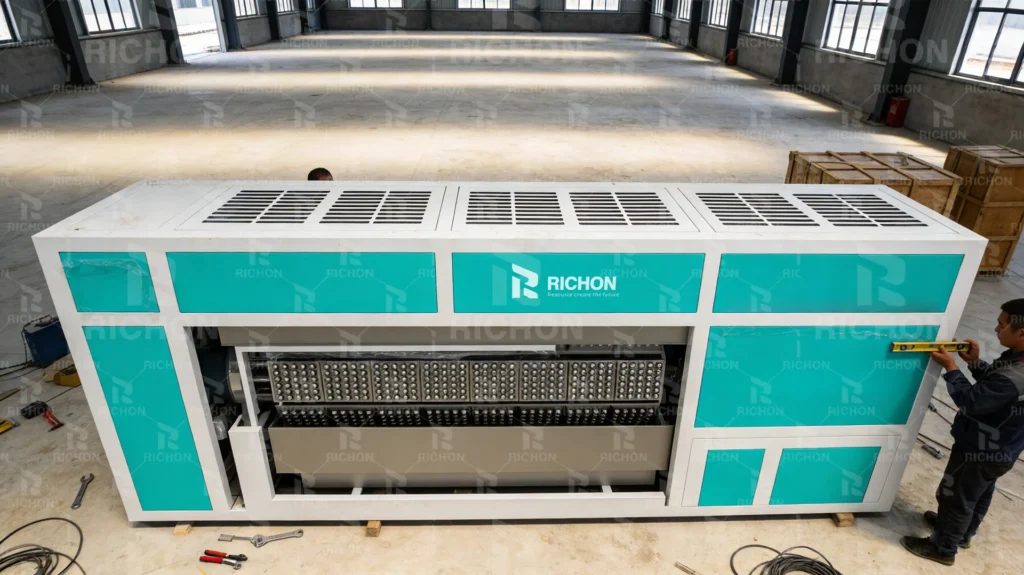
3. 8,000 pcs/h Egg Tray Production Line
Best for:
- Industrial-scale operations
- Large regional distribution
- Export-focused businesses
Daily output (20 hours):
≈ 160,000 trays
Requirements:
- Stable power supply
- Large drying capacity
- Higher automation level
Advantages:
- Lower unit production cost
- Higher production stability
However, market research must be solid before choosing this scale.
4. 10,000 pcs/h Egg Tray Production Line
This is a large commercial project capacity.
Best for:
- Strong distribution networks
- Government-backed projects
- Integrated poultry supply chains
Daily output (20 hours):
≈ 200,000 trays
Key considerations:
- Requires metal or brick drying system
- Large land area
- Higher capital commitment
Without stable sales channels, this capacity may create financial pressure.
Capacity Comparison Table
| Capacity | Daily Output (20h) | Workers | Dryer Type | Investment Level |
|---|---|---|---|---|
| 3,000 pcs/h | 60,000 | 4–6 | Natural / Metal / Brick | Low |
| 5,000 pcs/h | 100,000 | 4–6 | Metal / Brick | Medium |
| 8,000 pcs/h | 160,000 | 6–8 | Metal Dryer | Medium-High |
| 10,000 pcs/h | 200,000 | 6–10 | Metal Dryer | High |
Step 1: Calculate Market Demand First
Before selecting capacity, answer these questions:
- What is the daily egg production in your region?
- How many poultry farms exist within a 100 km radius?
- What is the current egg tray supply gap?
- Are you targeting wholesale markets or direct farms?
A simple estimation method:
If local demand is 120,000 trays per day,
A 5,000 pcs/h system running 20 hours can meet demand with buffer capacity.
Overproduction increases storage and working capital pressure.
Step 2: Utility Requirements by Capacity
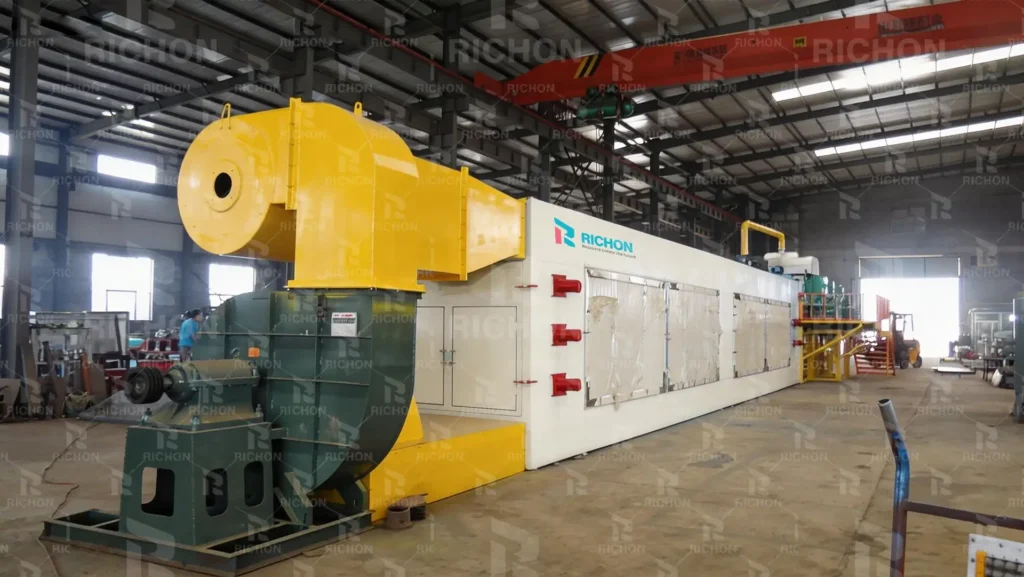
Capacity selection directly impacts utility consumption.
Electricity
- 3k: 40–60 kW
- 5k: 60–90 kW
- 8k: 100–150 kW
- 10k: 150+ kW
Water Consumption
Water recycling systems significantly reduce fresh water demand.
Larger systems require more stable water circulation management.
Land Area
Approximate land requirement:
- 3k: 300–500 m²
- 5k: 500–800 m²
- 8k: 800–1200 m²
- 10k: 1200+ m²
Drying System Selection
Drying choice is highly dependent on output capacity.
- 3k: Natural drying possible in warm climates
- 5k: Metal dryer recommended
- 8k & 10k: Brick or high-efficiency metal dryer required
You can compare drying systems in detail here:
👉compare drying systems here
Step 3: ROI and Payback Period Estimation
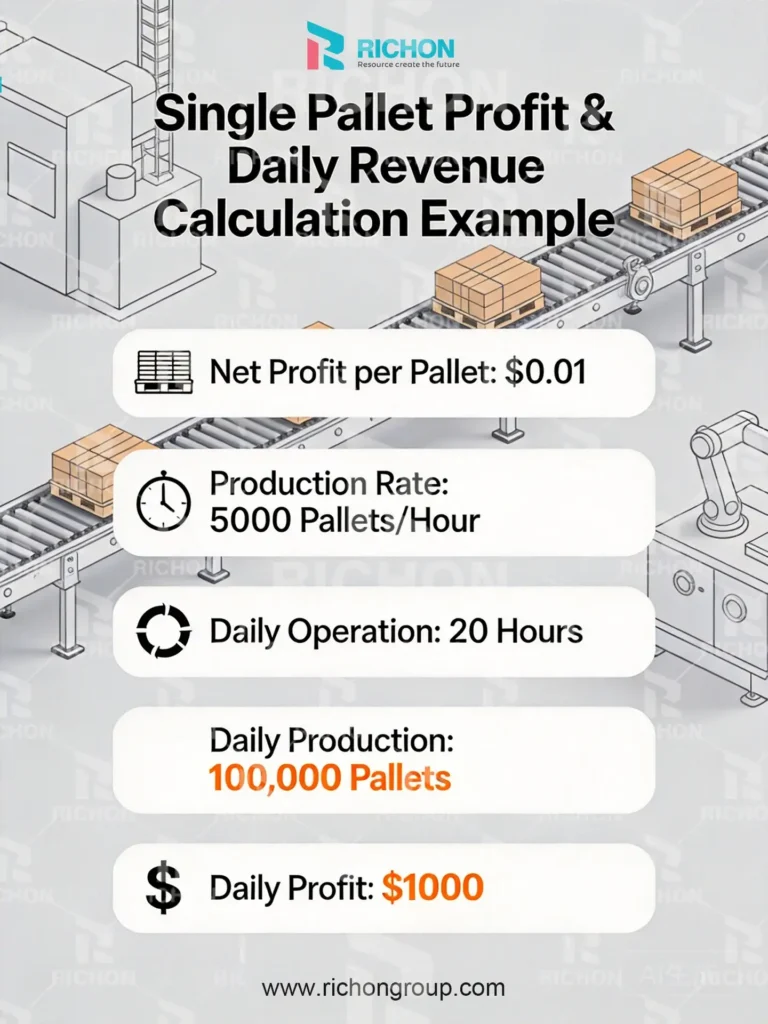
Profitability depends on:
- Raw material cost (waste paper)
- Electricity cost
- Labor cost
- Market selling price
Typical gross margin range:
20%–35% depending on region.
Example:
If net profit per tray = $0.01
5,000 pcs/h × 20h = 100,000 trays/day
Daily profit ≈ $1,000
Under stable operation, payback period for a medium system can range from 8–18 months.
For full cost breakdown and investment analysis:
👉 full cost and investment analysis
Step 4: Expansion Planning Strategy
Many experienced investors start with 5,000 pcs/h and expand later.
Why?
- Modular expansion possible
- Lower financial pressure
- Easier market validation
Upgrading mold precision and automation improves efficiency over time.
Learn more about precision mold technology here:
👉 precision mold technology
Engineer’s Recommendation (30 Years Industry Experience)
After decades in pulp molding equipment engineering, one pattern is clear:
Most failures are not due to machine quality.
They are caused by improper capacity planning.
If you are a new investor:
Start with 3k–5k.
If you already control distribution channels:
8k may be reasonable.
10k systems are suitable only when demand is already secured.
Capacity should follow market reality, not ambition.
Common Mistakes in Capacity Selection
- Choosing maximum capacity without sales contracts
- Ignoring electricity stability
- Underestimating drying bottlenecks
- Overlooking working capital requirements
- Failing to plan storage space
Avoid these mistakes to protect your investment.
Final Decision Checklist
Before confirming your egg tray production capacity:
- Market demand verified
- Utility supply confirmed
- Dryer type selected
- Land layout planned
- ROI calculated
- Expansion possibility evaluated
If all answers are clear, your capacity decision will be much safer.
FAQ
What is the most popular egg tray production capacity?
The 5,000 pcs/h model is the most commonly selected worldwide due to balanced investment and output.
Is 10,000 pcs per hour suitable for beginners?
Generally no. It is recommended only when strong sales channels already exist.
Can I upgrade from 3,000 pcs/h later?
Yes. Modular design allows expansion, especially when drying and utility systems are pre-planned.
How many workers are required for 5,000 pcs/h?
Typically 5–8 workers depending on automation level.
Conclusion
Selecting the correct egg tray production capacity is the foundation of a successful pulp molding business.
Instead of choosing the biggest machine, focus on:
- Market demand
- Utility capacity
- Financial sustainability
- Long-term scalability
With proper planning, even a mid-scale system can generate stable and profitable returns.
Need a Capacity Recommendation for Your Market?
Share your target output, local humidity/energy conditions, and tray type. Our engineers will suggest a suitable 3,000–8,000 pcs/h configuration and drying solution.
- Factory layout & utilities checklist
- Drying bottleneck evaluation
- Cost & ROI estimation reference
