

Technology Page · Drying System Comparison

Egg Tray Drying System Comparison

Compare natural drying, brick kiln dryers, and metal continuous dryers by site conditions, heat source, process control, maintenance, and expansion needs. The correct choice starts with the complete production plan, not one headline specification.
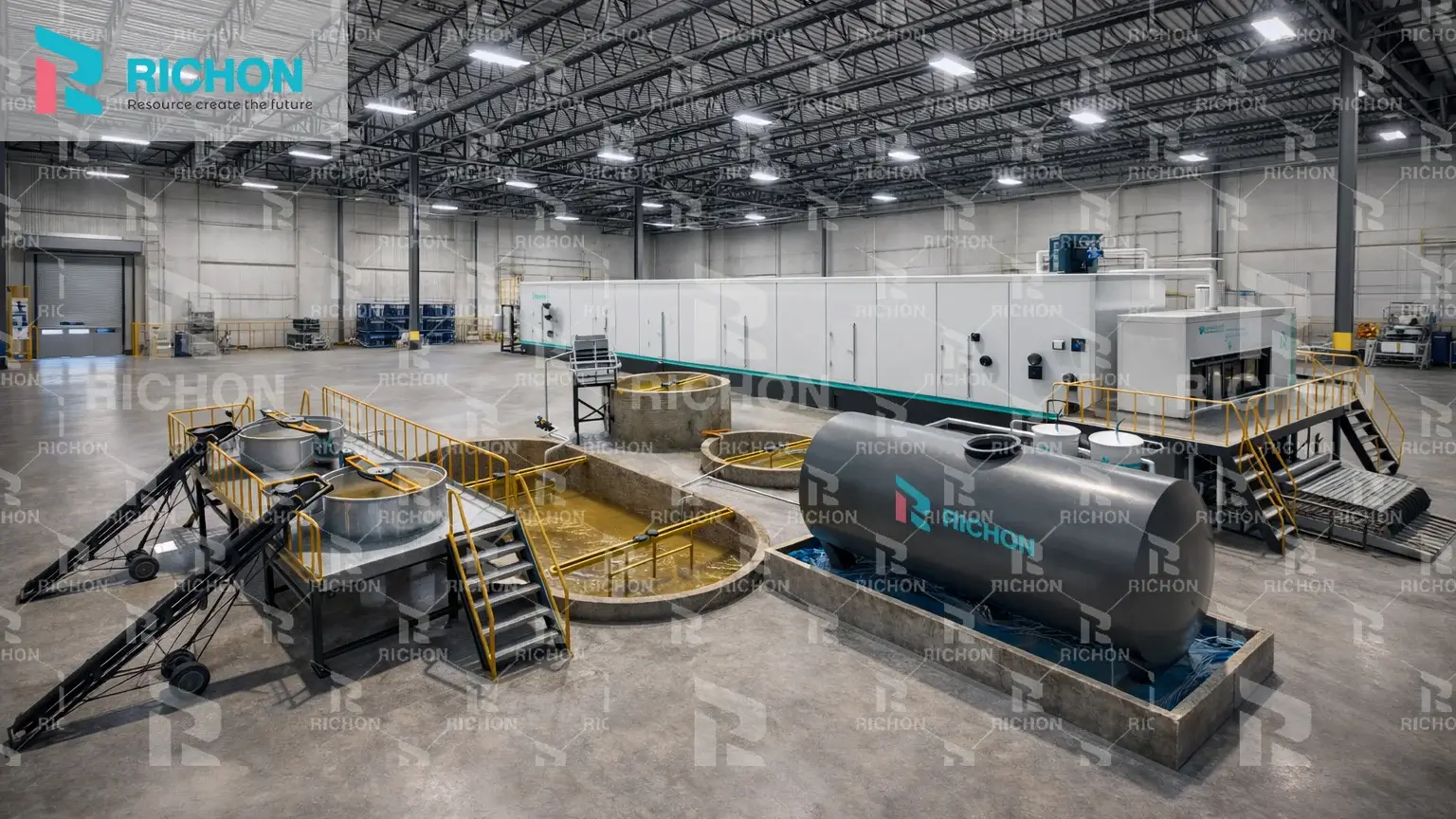
natural drying brick dryer and metal continuous dryer options for egg tray production
Quick Answer

Which Drying System Is Best for an Egg Tray Production Line?

There is no single best drying system for every egg tray factory.

  • Natural drying may fit small or trial projects where climate, space, labor, and delivery schedules allow weather-dependent operation.
  • Brick drying may fit a permanent site with sufficient land, practical civil construction, and an available heat source.
  • Metal continuous drying may fit projects that prioritize compact layout, standardized process control, automation, or future expansion.

Final selection depends on tray specification, actual forming output, factory space, local climate, available energy, labor, construction schedule, maintenance capability, environmental requirements, and the investment plan.

System Matching

Why the Drying System Matters

Wet trays must lose enough moisture to support handling, stacking, packing, storage, and transport. The acceptable inlet and outlet condition depends on tray weight, fiber mix, forming process, customer requirement, dryer configuration, and the project quality standard.

What Drying Affects

  • line continuity and usable output;
  • tray deformation, edge condition, and strength;
  • fuel or electricity consumption;
  • factory footprint and material flow;
  • labor and automation requirements;
  • stacking, packing, and delivery stability.

A dryer must be evaluated together with the forming section. If it cannot accept and dry trays at the real production rate, it becomes the line bottleneck.

For the complete manufacturing context, see the egg tray production process.
wet molded egg trays entering the drying stage before stacking

Moisture values and drying cycles should be confirmed from project testing, tray specifications, and commissioning records. They should not be treated as universal numbers.

Three Options

Types of Egg Tray Drying Systems

These options differ in weather dependence, construction method, factory footprint, process control, and future expansion. Capacity is confirmed from the final forming and drying configuration.

Natural Drying
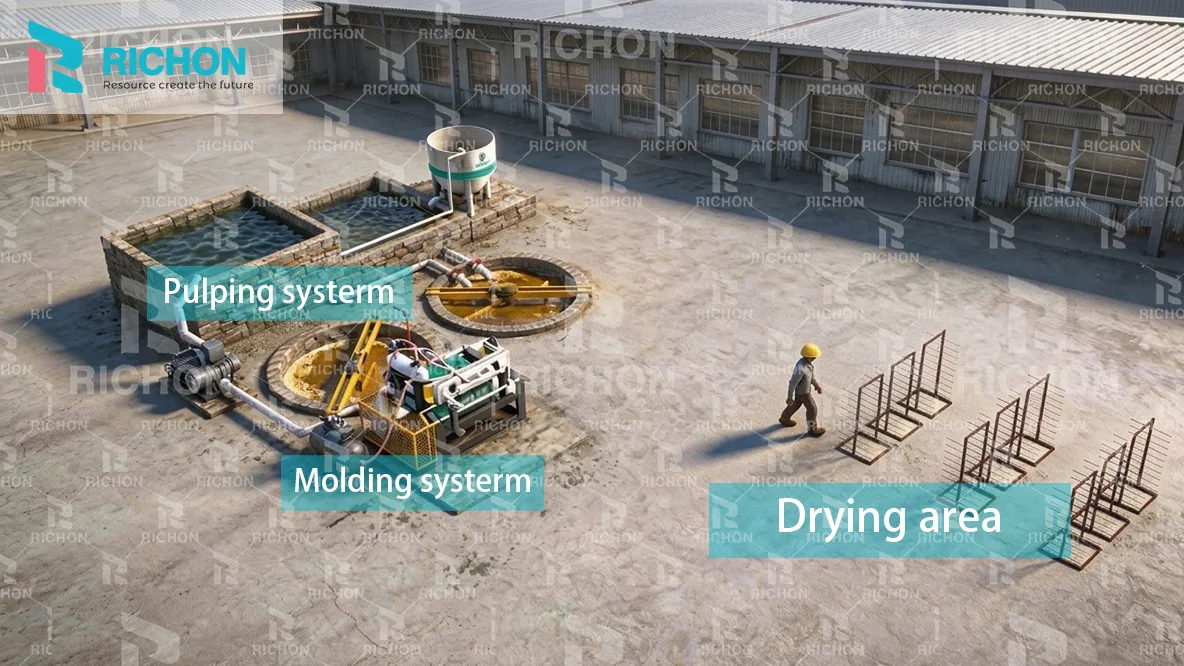
egg trays drying outdoors with weather dependent natural airflow

Natural drying uses sunlight and ambient airflow. It can reduce equipment requirements, but production depends strongly on weather, available space, labor, tray handling, and the delivery schedule.

Consider it when: the project can accept weather-dependent output and has suitable climate, space, and labor.

Avoid it when: all-weather continuity, tight delivery schedules, compact layout, or controlled product consistency is required.

Brick Kiln Dryer
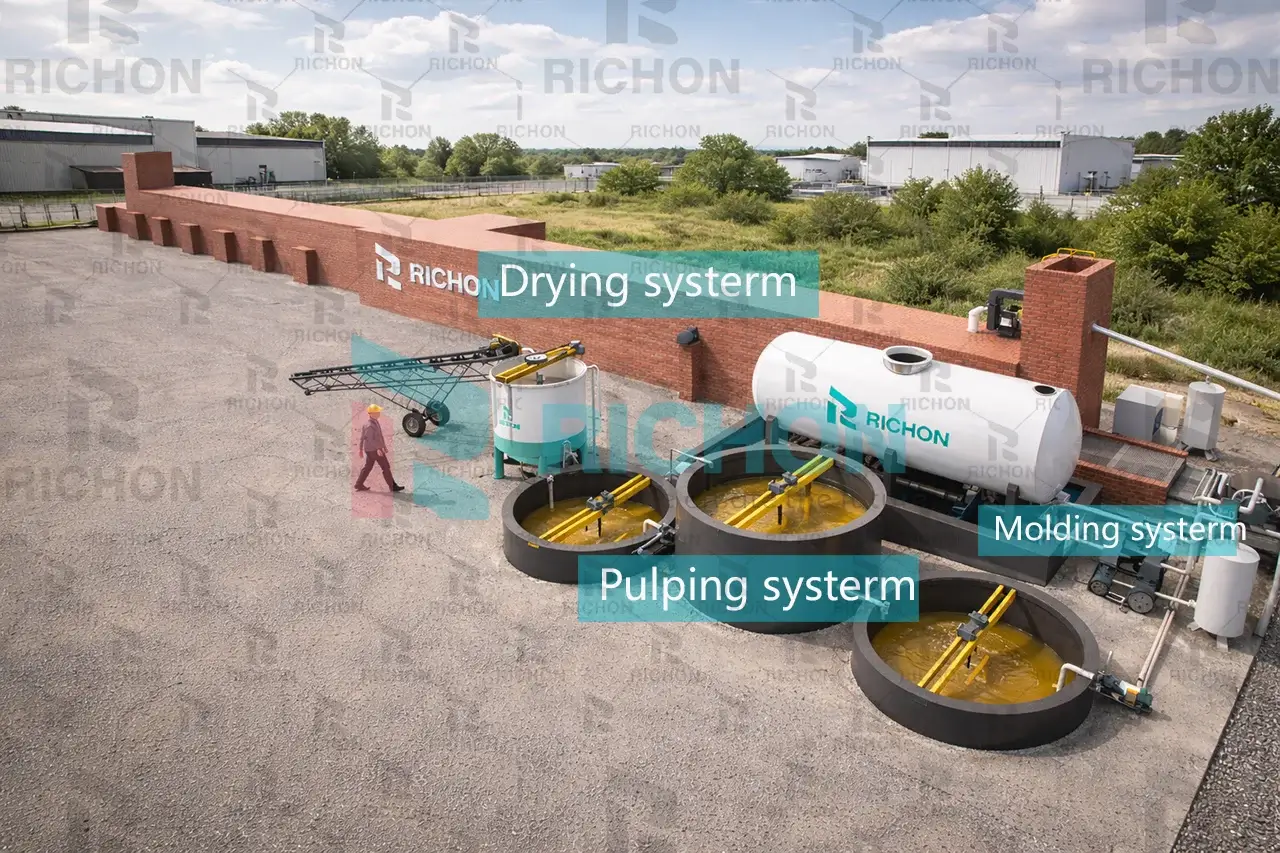
brick kiln dryer tunnel for a fixed egg tray production site

A brick dryer is a site-built tunnel and heating system integrated into a permanent factory. It requires coordinated civil construction, insulation, furnace planning, airflow design, maintenance access, and commissioning.

Consider it when: the site is permanent, land is available, local construction is practical, and the heat source can be managed reliably.

Avoid it when: rapid deployment, relocation, compact workshop planning, or frequent future changes are major requirements.

Metal Continuous Dryer
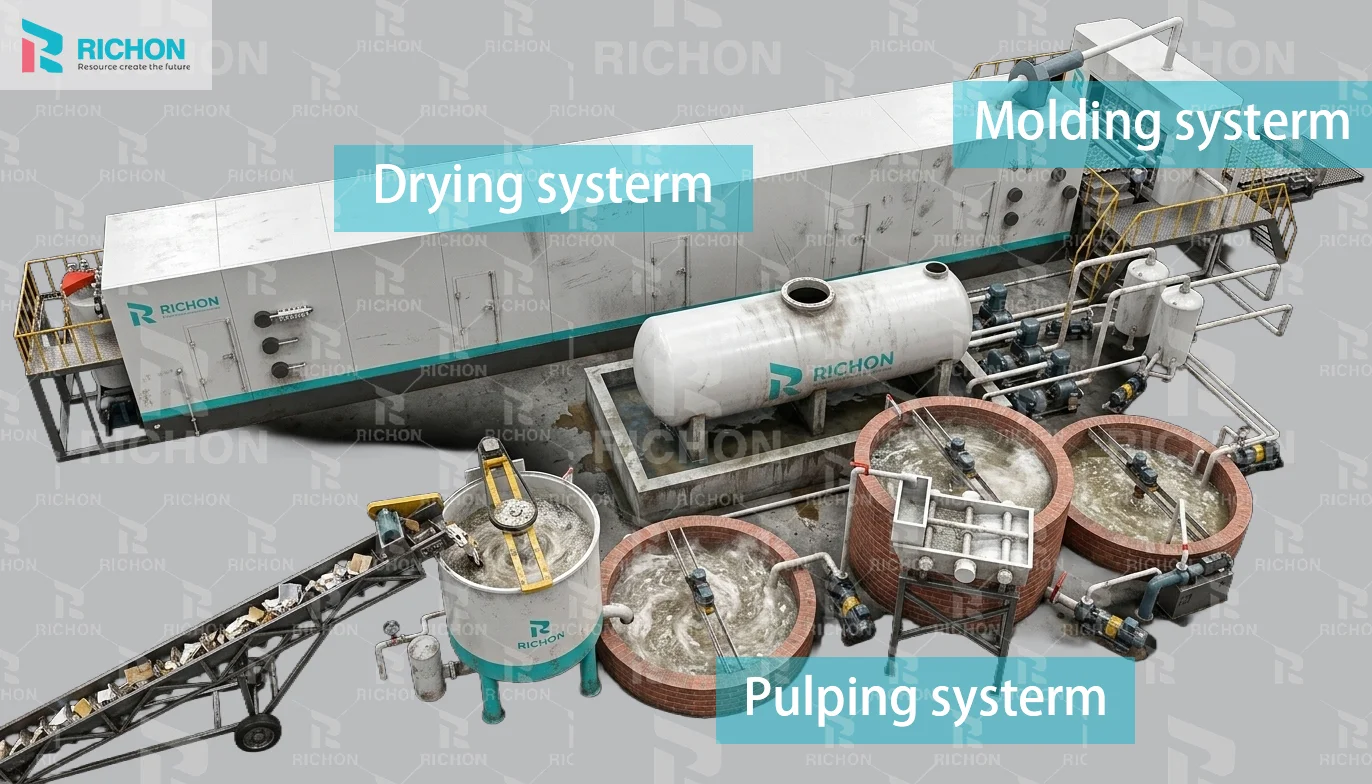
metal continuous dryer integrated with an egg tray production line

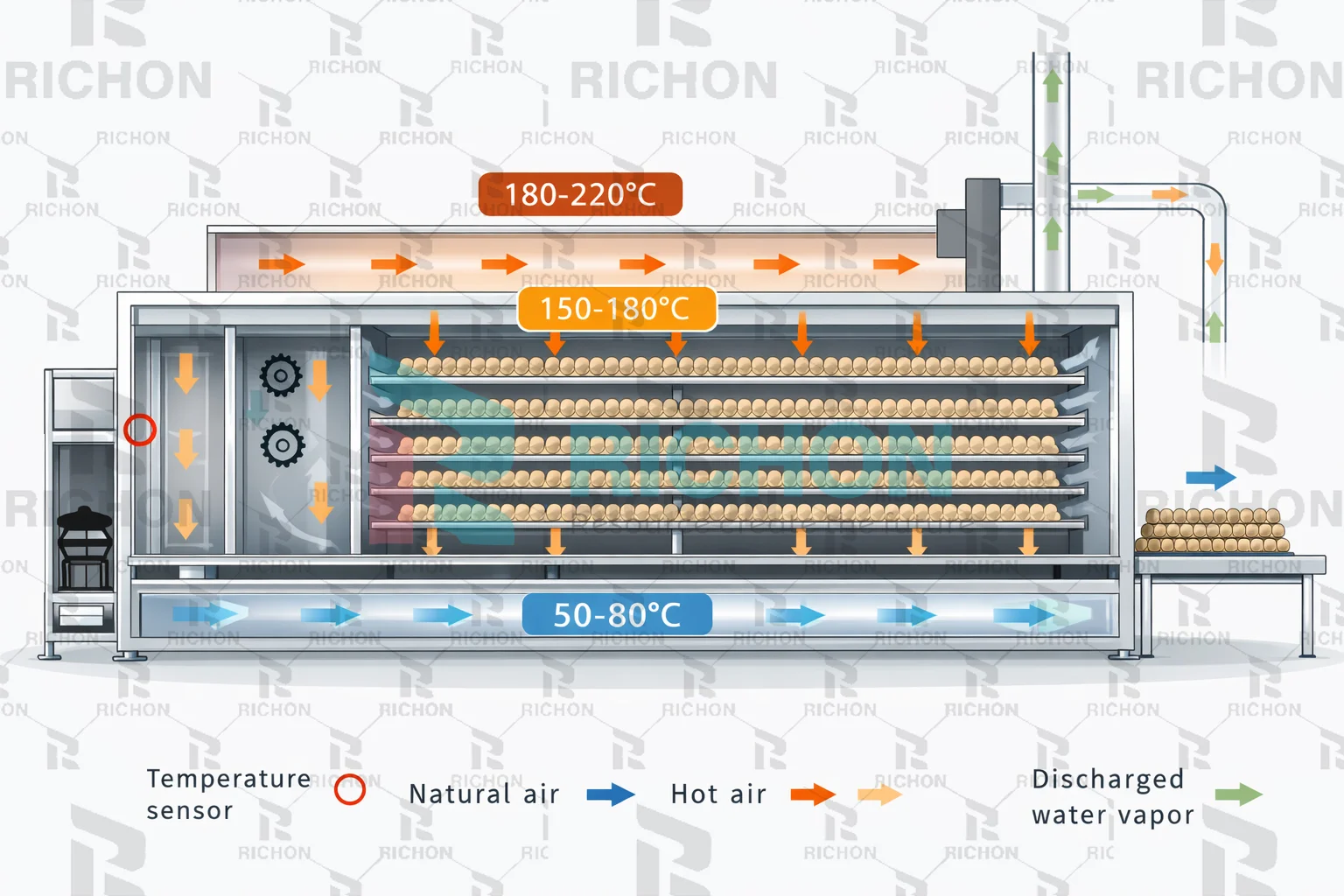
A metal continuous dryer is a prefabricated equipment system that can integrate conveyors, forced air circulation, temperature zones, monitoring, and automation.

Consider it when: compact layout, standardized control, automation, structured maintenance, or future expansion is important.

Avoid it when: the project is choosing only by the lowest initial equipment price without evaluating utilities, maintenance, and total installed cost.

Early Screening

Brick Dryer vs Metal Dryer: Summary

Both systems can support industrial production. The difference lies in how they are built, installed, controlled, maintained, and expanded.

FactorBrick dryerMetal dryer
Project formSite-built civil structurePrefabricated equipment system
Site requirementBetter suited to a permanent site with sufficient landBetter suited to compact or standardized workshop planning
InstallationCivil construction and site coordinationEquipment assembly, utilities, and commissioning
Process controlDepends more on construction quality, furnace operation, and operator adjustmentEasier to integrate zoning, monitoring, and automation
Future changeCivil modification may be requiredEquipment-level changes may be easier, subject to final design

This is an early screening summary. For construction, airflow, heat control, maintenance, total project cost, and expansion decisions, read the brick dryer vs metal dryer comparison.

Do not assume one structure always uses less energy or has a lower total cost. Results depend on thermal design, insulation, airflow, heat source, production load, maintenance, and operation.

Commissioning Check

Drying Time and Process Stability

Drying time cannot be confirmed from the dryer structure alone. It depends on incoming moisture, tray weight and thickness, loading density, airflow, temperature profile, heat source, ambient conditions, dryer length, conveyor setting, and the required outlet condition.

Confirm During Trial Operation

  • the dryer accepts the real forming output without repeated waiting;
  • trays dry evenly across the working width and production period;
  • settings do not create warping, brittleness, soft areas, or uneven color;
  • discharge, cooling, stacking, and packing remain compatible with dryer output.

Plan the Full Line

The drying section should be planned with forming, wet-tray transfer, stacking, workshop zoning, and utility access. Review the factory layout guide before the arrangement is fixed.

Forming outputWet-tray transferAirflowDischargeStacking
Operating Boundary

Energy Consumption and Operating Cost

Operating cost depends on the complete drying system, not only on whether the structure is brick or metal.

Items to Evaluate

  • local fuel or electricity price and supply reliability;
  • heat-source efficiency and environmental requirements;
  • insulation, leakage, exhaust, and hot-air circulation;
  • tray loading, operating hours, and interruptions;
  • incoming wet-tray condition and required outlet condition;
  • labor, cleaning, maintenance, and replacement parts;
  • factory climate and seasonal conditions.
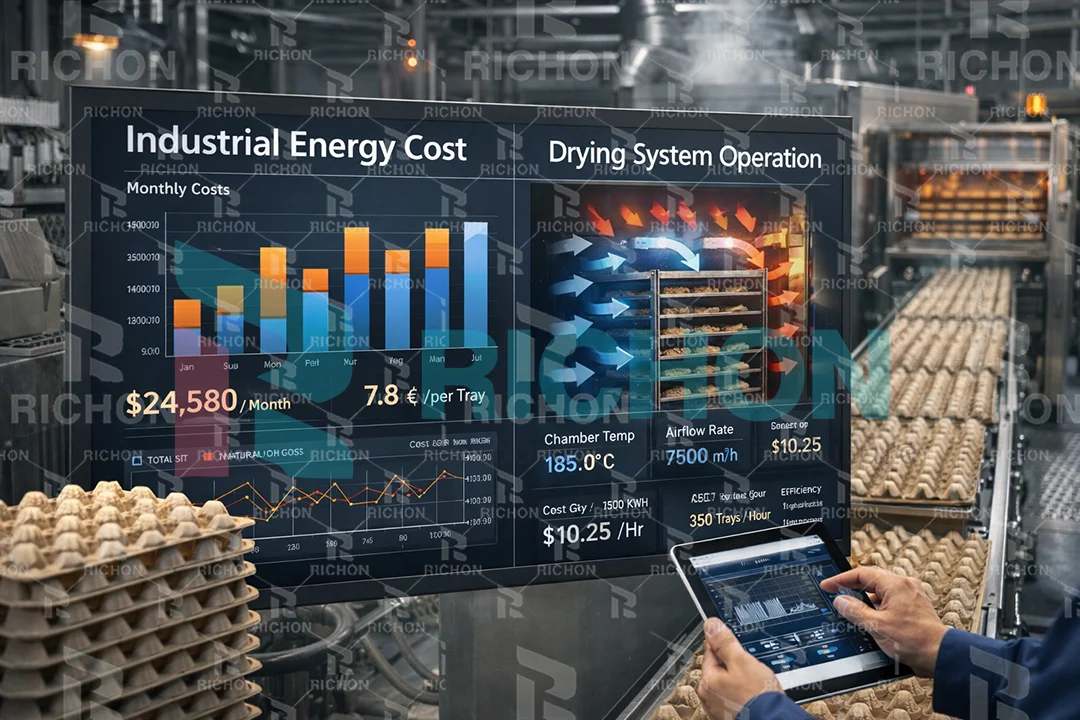
energy and operating cost factors for an egg tray drying system

Two systems using the same heat source can produce different results when airflow, insulation, loading, maintenance, or operation differs. Use project-specific calculations after the dryer configuration and production plan are defined.

See the egg tray drying system cost guide for the cost categories that should be included.

Decision Matrix

How to Choose the Right Drying System

Use this table to identify which option to evaluate first. It is not a final equipment recommendation.

Project conditionFirst option to evaluateRequired confirmation
Weather-dependent production is acceptableNatural dryingClimate, land, labor, tray handling, and delivery schedule
Permanent site with available landBrick dryerCivil construction, furnace, insulation, airflow, and expansion space
Compact factory layoutMetal dryerUtilities, maintenance access, conveyor integration, and controls
Fast standardized deploymentMetal dryerFoundation, energy interface, installation, and commissioning schedule
Lowest initial investment is the main concernCompare all threeDo not omit land, civil works, labor, utilities, or operating cost
Stable industrial production is requiredBrick or metal dryerMatch forming output, heat source, process control, and maintenance capability
Future automation or expansion is expectedMetal dryer or expansion-ready brick layoutReserve space, utilities, and downstream handling capacity

Final selection requires the project layout, heat source, tray specification, output target, and operating conditions. The dryer must be confirmed as part of the complete egg tray production line.

Buyer Questions

Frequently Asked Questions

These answers define the engineering boundary for early project discussions.

What is the best drying system for egg tray production?

The best system is the one that matches the actual forming output, tray specification, site, climate, available energy, labor, maintenance capability, construction schedule, automation target, and operating plan.

How long does egg tray drying take?

Drying time depends on tray condition, loading, airflow, temperature profile, heat source, dryer configuration, and required outlet condition. Confirm the working cycle during project design and commissioning.

Which fuel can be used?

Possible heat sources vary by dryer design and local conditions. Selection must consider local price, supply stability, equipment compatibility, environmental requirements, and safe operation.

What is the difference between a brick dryer and a metal dryer?

A brick dryer is mainly a site-built civil structure, while a metal dryer is mainly a prefabricated equipment system. Their practical differences involve land, construction, process control, maintenance, installation, and future expansion.

Which system is more energy efficient?

No universal answer applies. Compare the final insulation, airflow, heat source, exhaust, production load, maintenance, and control strategy rather than using construction material as the only indicator.

Can natural drying support commercial production?

It can support some projects where climate, space, labor, product handling, and delivery expectations allow weather-dependent production. It is less suitable when stable all-weather output is required.

Engineering Review

Choose the Dryer from the Project Conditions

Send Richon your target tray, expected output, workshop dimensions, climate, available heat source, labor conditions, and automation plan. Our engineers can review the dryer, transfer path, utilities, maintenance access, and expansion allowance before the layout is finalized.

Contact Richon Engineers Review Dryer Systems

contact-us