 English
Egg Tray Production Process
An engineering-focused guide to how pulp molded egg trays are manufactured — from waste paper pulping to vacuum forming, drying, stacking, and packing.
Planning a project? Explore our Egg Tray Production Line solutions or request configuration advice from our engineers.
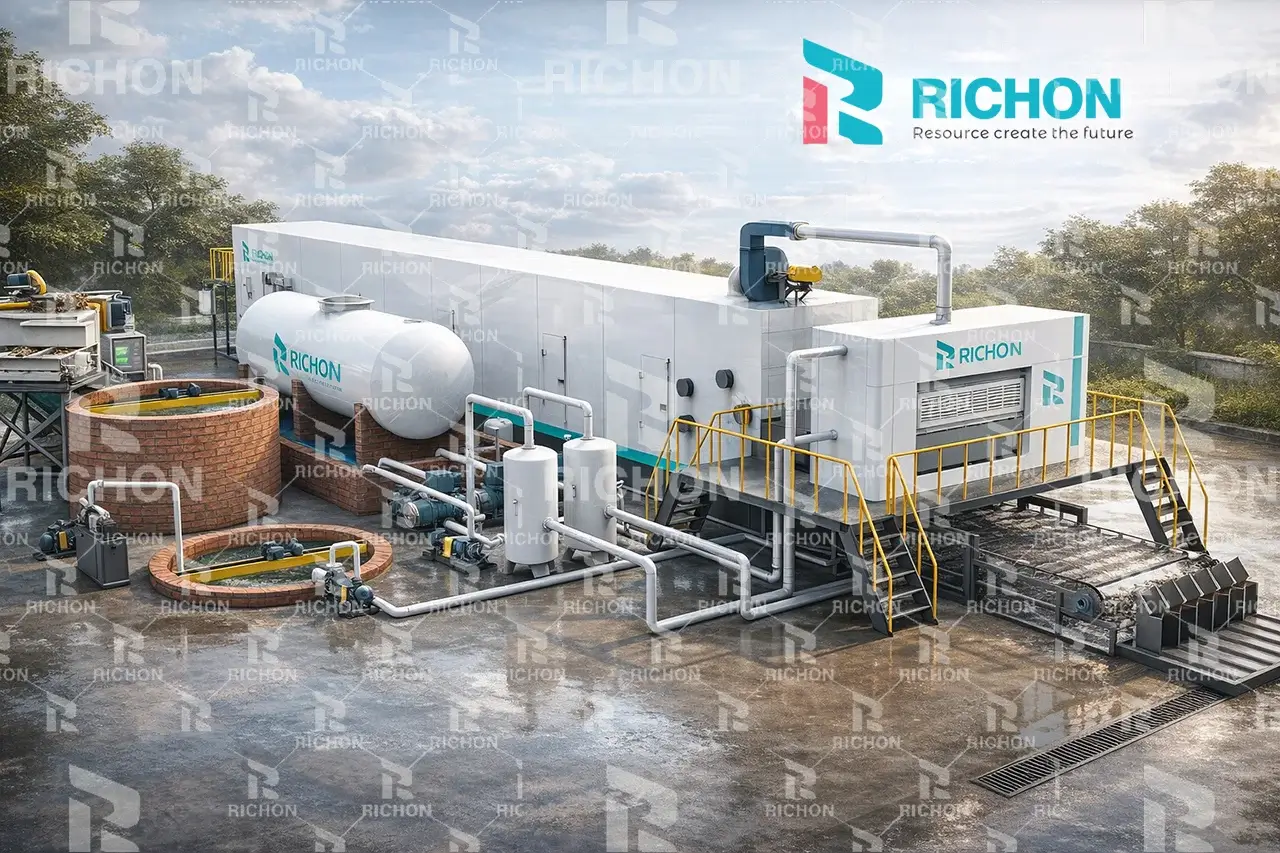
How to Make Egg Trays from Papers
The egg tray production process converts recycled waste paper into pulp, forms wet trays on molds through vacuum suction, and dries them into strong molded fiber packaging. This paper egg tray production process is widely used for farms, egg distributors, packaging factories, and recycling-based manufacturing projects.
Waste Paper Sorting
Recycled newspapers, OCC cardboard, paper cartons, and office paper are sorted to remove plastic, metal, and other impurities before pulping. Stable raw material selection helps improve finished tray strength and appearance.
Pulping and Mixing
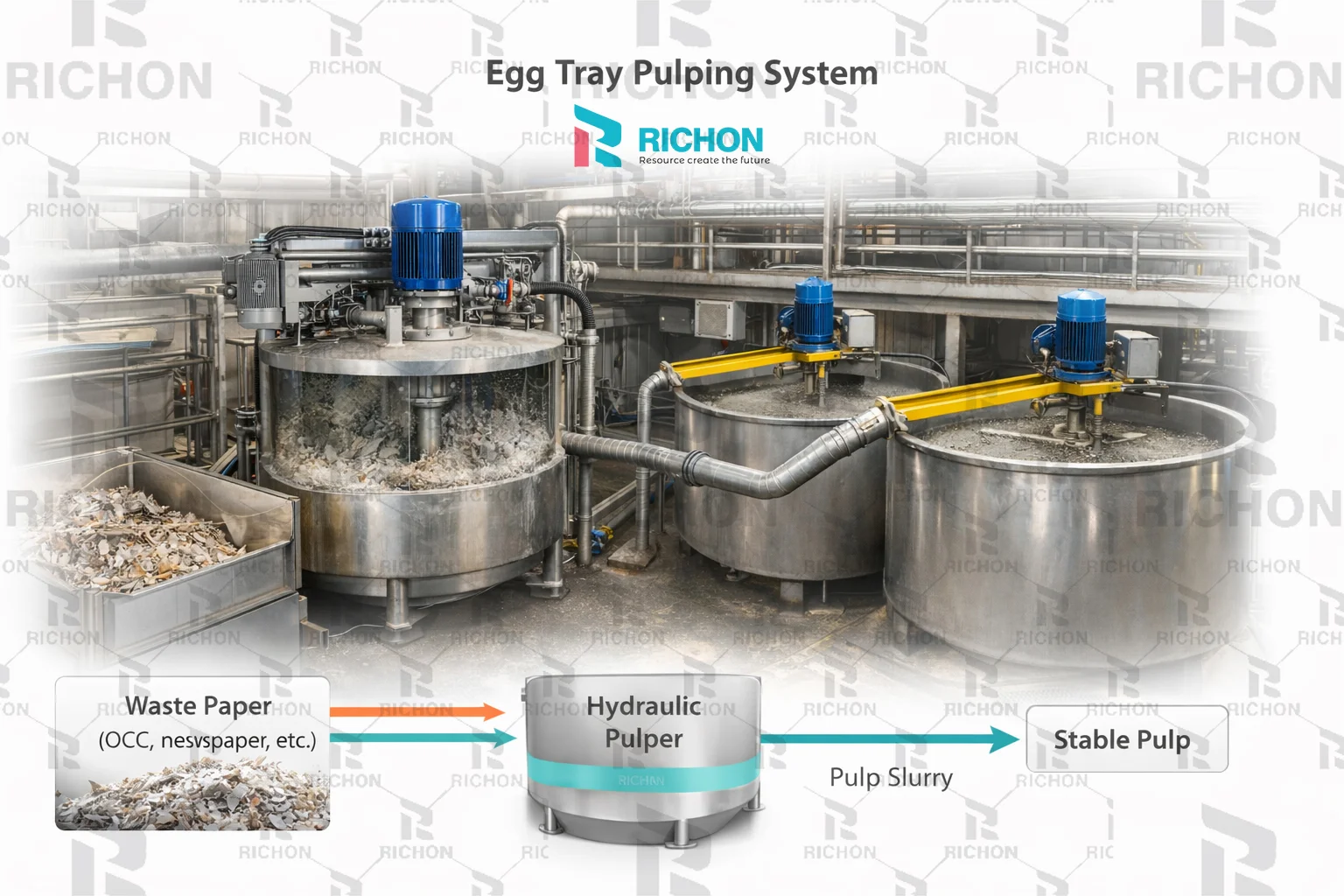
Waste paper is mixed with water in a hydrapulper to create a uniform slurry. Proper pulp consistency helps improve tray weight control, forming stability, and production efficiency.
Screening and Refining
The pulp is screened and refined to reduce impurities, improve fiber dispersion, and protect molds, pumps, pipelines, and the forming system during continuous production.
Vacuum Forming
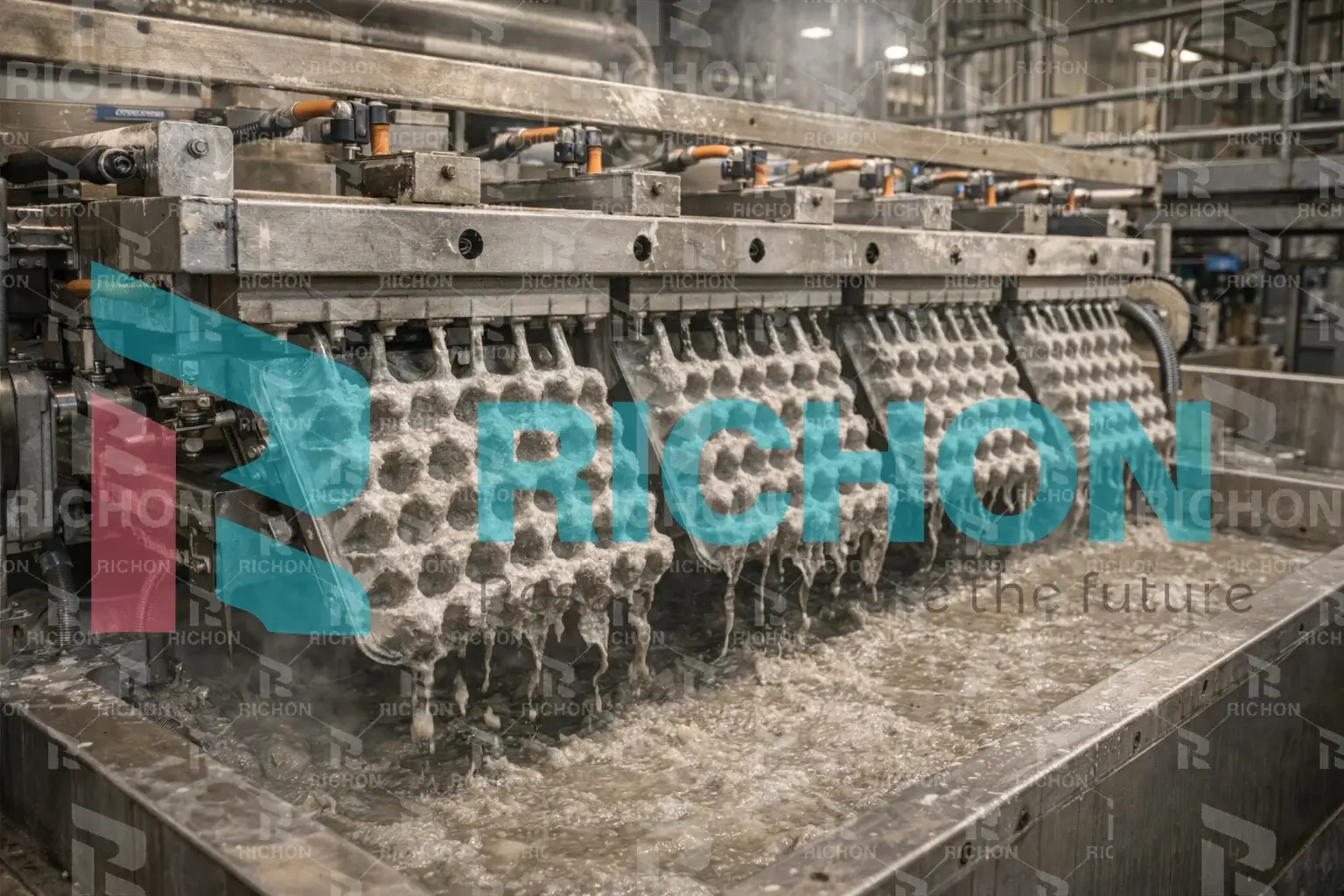
The paper pulp egg tray shape is formed when vacuum suction pulls fibers onto the mold surface and removes part of the water from the wet tray before transfer.
Drying
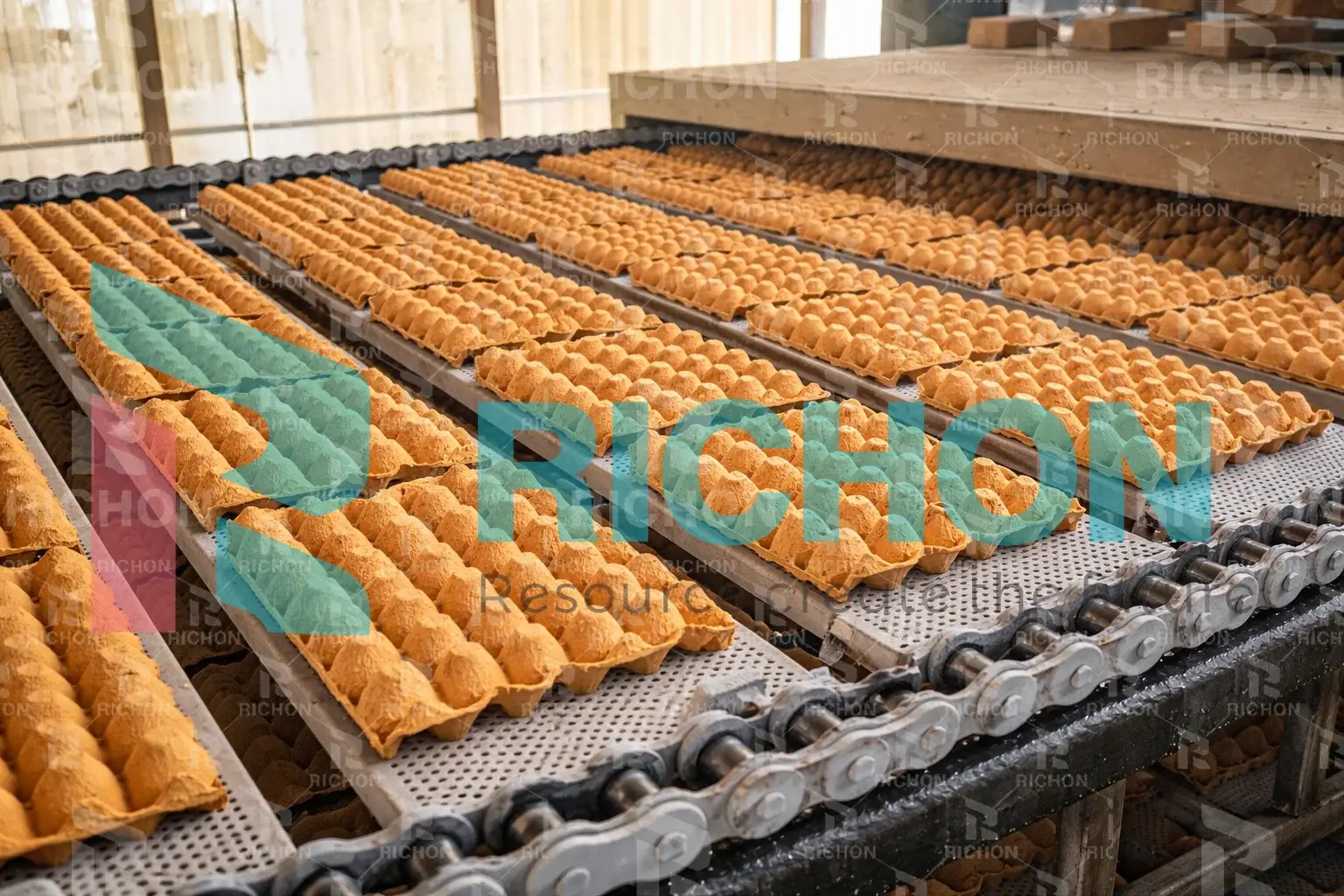
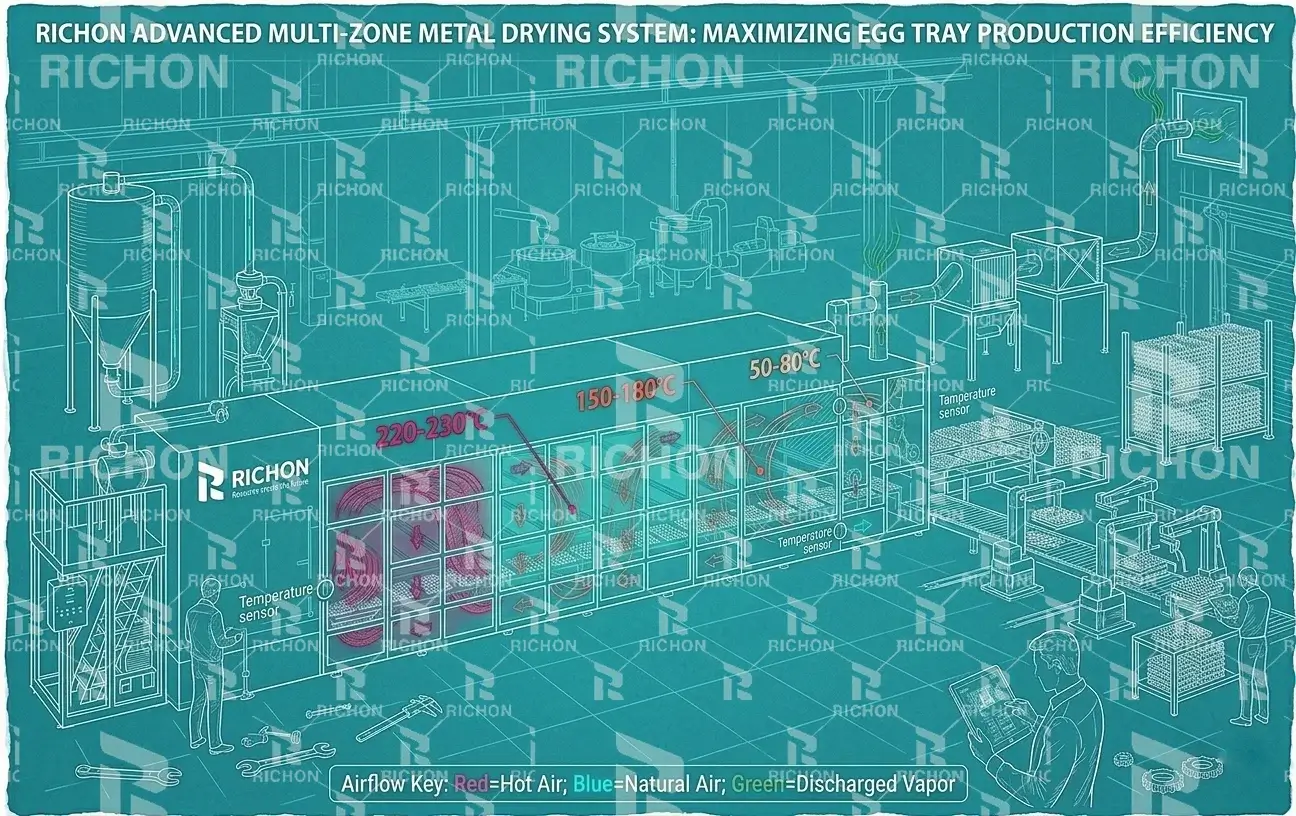
Wet trays can be dried by natural drying, brick dryer, or metal drying system. Drying efficiency directly affects daily output, labor cost, energy use, and tray quality.
Stacking and Packing
Finished egg trays are inspected, stacked, counted, and packed for storage or delivery. Consistent stacking and packing helps reduce damage during transportation.
Egg Tray Production Process Overview
The paper egg tray manufacturing process converts recycled waste paper into molded fiber egg trays through pulping, screening, vacuum forming, drying, stacking, and packing. This process requires stable pulp consistency, forming, water removal, and drying. Mold precision and operating control also affect output and tray quality.
What this page helps you decide
- How recycled paper is converted into paper pulp egg trays step by step
- Which stage limits your capacity and how cycle time impacts ROI
- Which drying solution fits your output target, climate, fuel, and site conditions
- Which process parameters help reduce cracking, deformation, sticking, and reject rate
Related technology hubs: Production Line · Drying Comparison · Mold Technology
Typical raw materials for paper egg tray production
Most egg tray factories use recycled fiber sources such as newspapers, OCC cardboard, paper cartons, and office paper. Raw material cleanliness affects screening load, refining needs, vacuum forming stability, tray surface quality, and the long-term performance of the pulp molding production line.
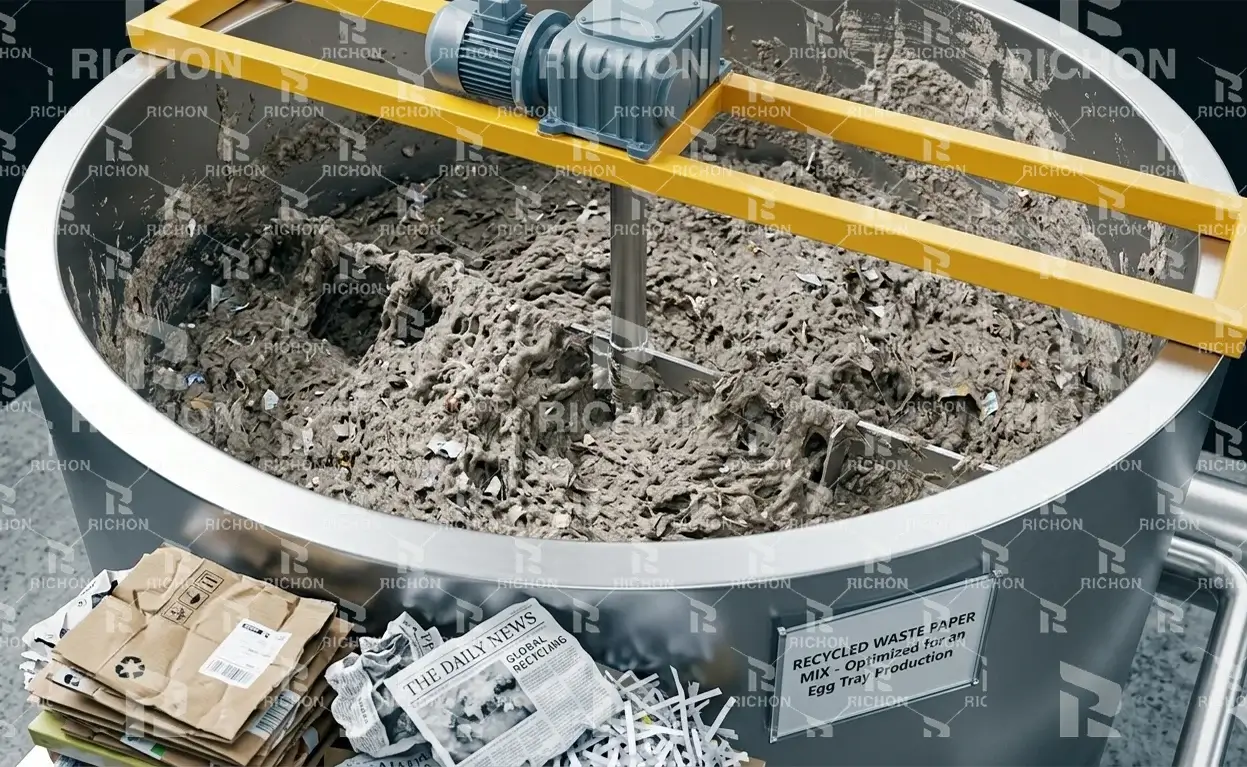
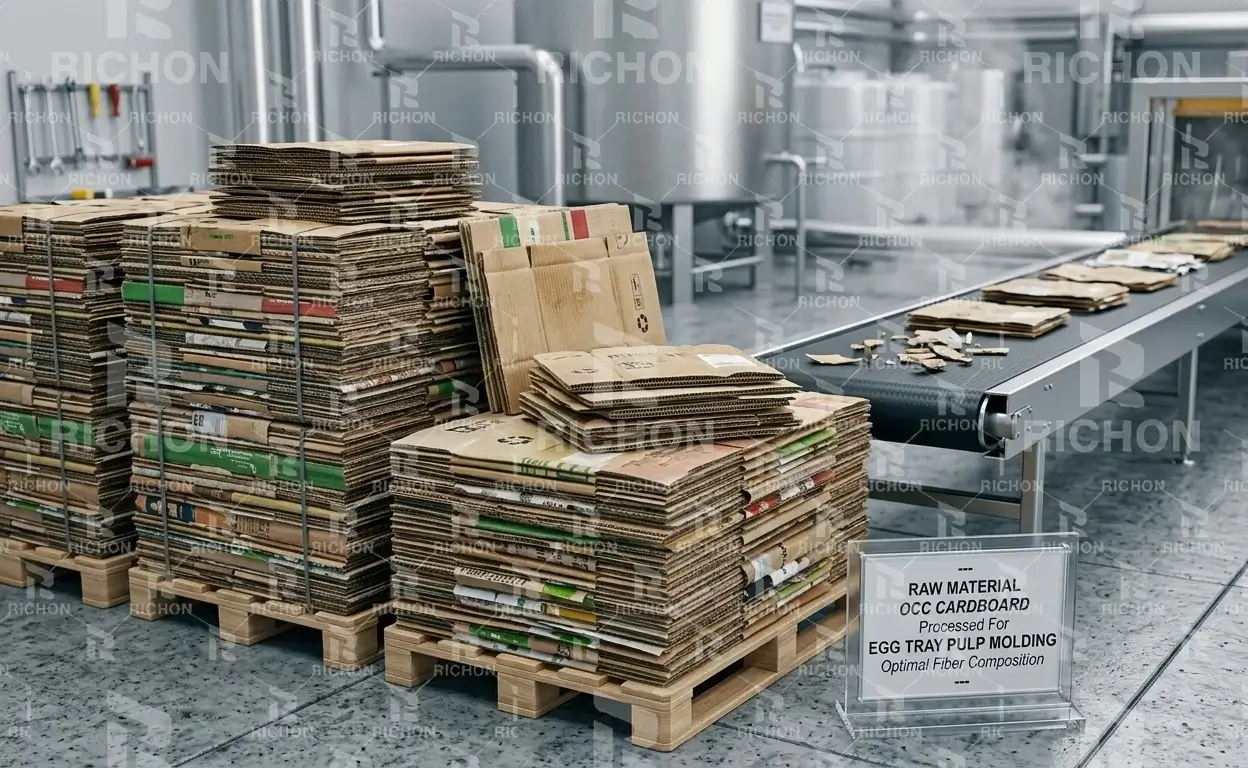
Waste Paper to Egg Tray Production Process Flow
This paper egg tray production process shows how recycled waste paper is converted into molded fiber egg trays through pulping, screening, vacuum forming, drying, stacking, and packing.
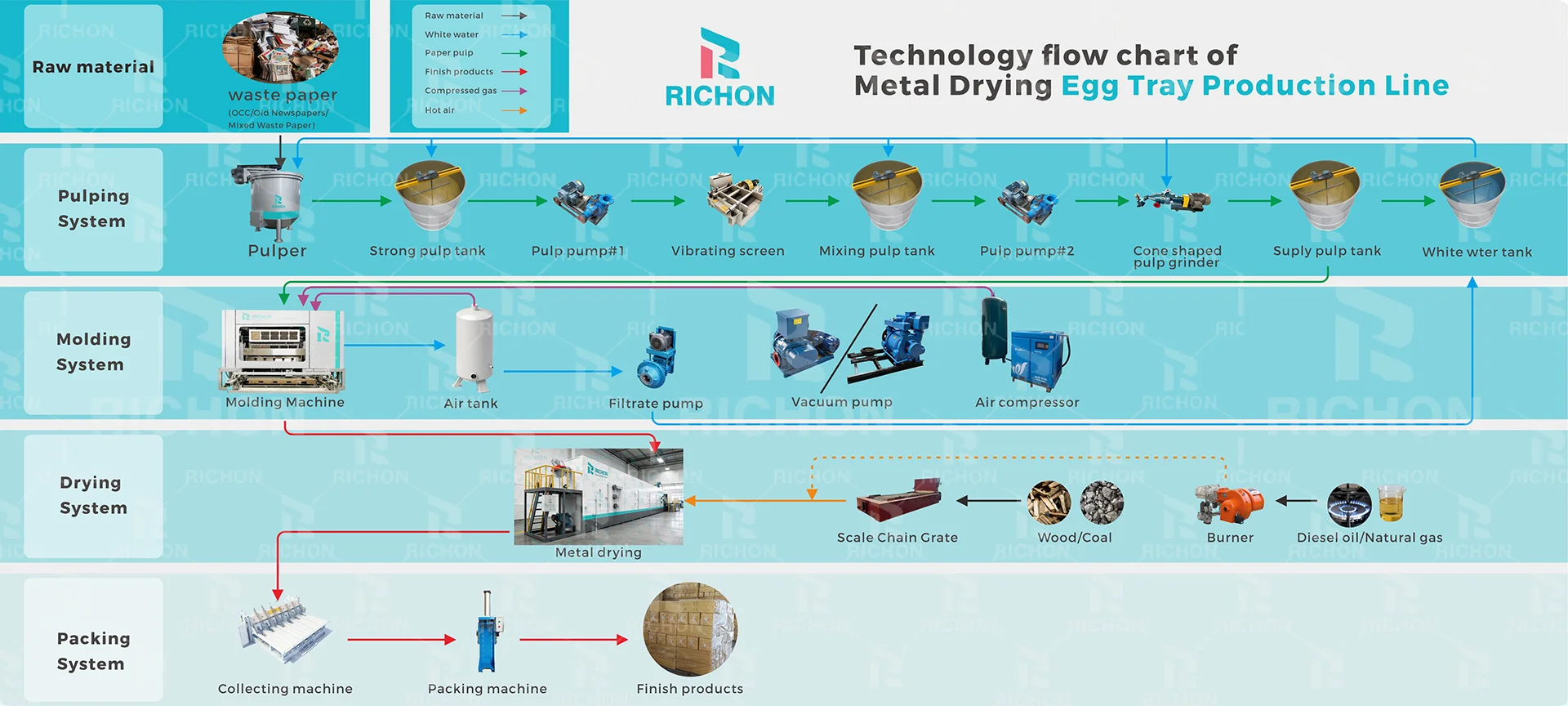
Egg Tray Production Process Guide vs Production Line Workflow
This page explains the complete manufacturing process, including process principles, operating controls, quality problems, troubleshooting, and factory planning.
For equipment-level handoff logic, use the egg tray production line workflow guide. It explains how the pulping system, forming machine, wet-tray transfer, dryer, and stacking section connect as one line.
The two guides support different decisions. This page explains how egg trays are manufactured. The workflow guide explains how the equipment systems hand material from one stage to the next.
See the Egg Tray Production Process in Uzbekistan
This on-site footage connects the process steps on this page with visible production activity. It shows pulp preparation, forming and wet tray transfer, continuous drying equipment, and visual inspection of finished egg trays.
What the Footage Shows
Evidence boundary: The footage verifies visible production stages only. It does not by itself verify rated capacity, energy consumption, acceptance results, or the final configuration of the project.
Step-by-Step Egg Tray Production Process
This section explains how to make egg trays from papers in real factory operation, including raw material preparation, pulping, vacuum forming, drying, stacking, and packing.
Waste Paper Sorting, Pulping & Refining
The waste paper to egg tray process starts with recycled paper sorting. Newspapers, OCC cardboard, paper cartons, and office paper should be checked to remove plastic, metal, stones, and other impurities before entering the pulping system.
After sorting, the waste paper is mixed with water in a hydrapulper and converted into a uniform slurry. Screening and optional refining help improve fiber dispersion, reduce impurities, and prepare stable pulp for the next forming stage.
Vacuum Forming
Vacuum forming is the core stage of the paper egg tray manufacturing process. Vacuum pumps create negative pressure, pulling fibers onto the mold surface and removing part of the water from the wet tray.
Mold design and machining accuracy influence cycle time, tray strength, edge integrity, surface finish, and forming repeatability. Stable forming requires consistent pulp supply, balanced vacuum distribution, and reliable mold sealing.
Related: Mold Technology
Transfer & Optional Hot Pressing
After forming, wet trays are transferred from the forming mold to the next stage. This step looks simple, but it has a major impact on deformation, cracking, edge damage, and reject rate.
Some egg tray production lines add hot pressing to improve surface smoothness, tray stiffness, dimensional tolerance, and stacking performance. It is often used when the local market requires a cleaner appearance or premium packaging quality.
Drying System
Drying is usually the most energy-intensive stage in the waste paper to egg tray process. The drying method determines factory footprint, labor requirement, fuel cost, heat efficiency, and maximum sustainable output.
Wet trays can be dried by natural drying, brick dryer, or metal drying system. Drying quality depends on temperature control, airflow distribution, moisture removal speed, and stacking timing after drying.
Compare options: Drying System Comparison
Troubleshooting: Egg Tray Quality Problems
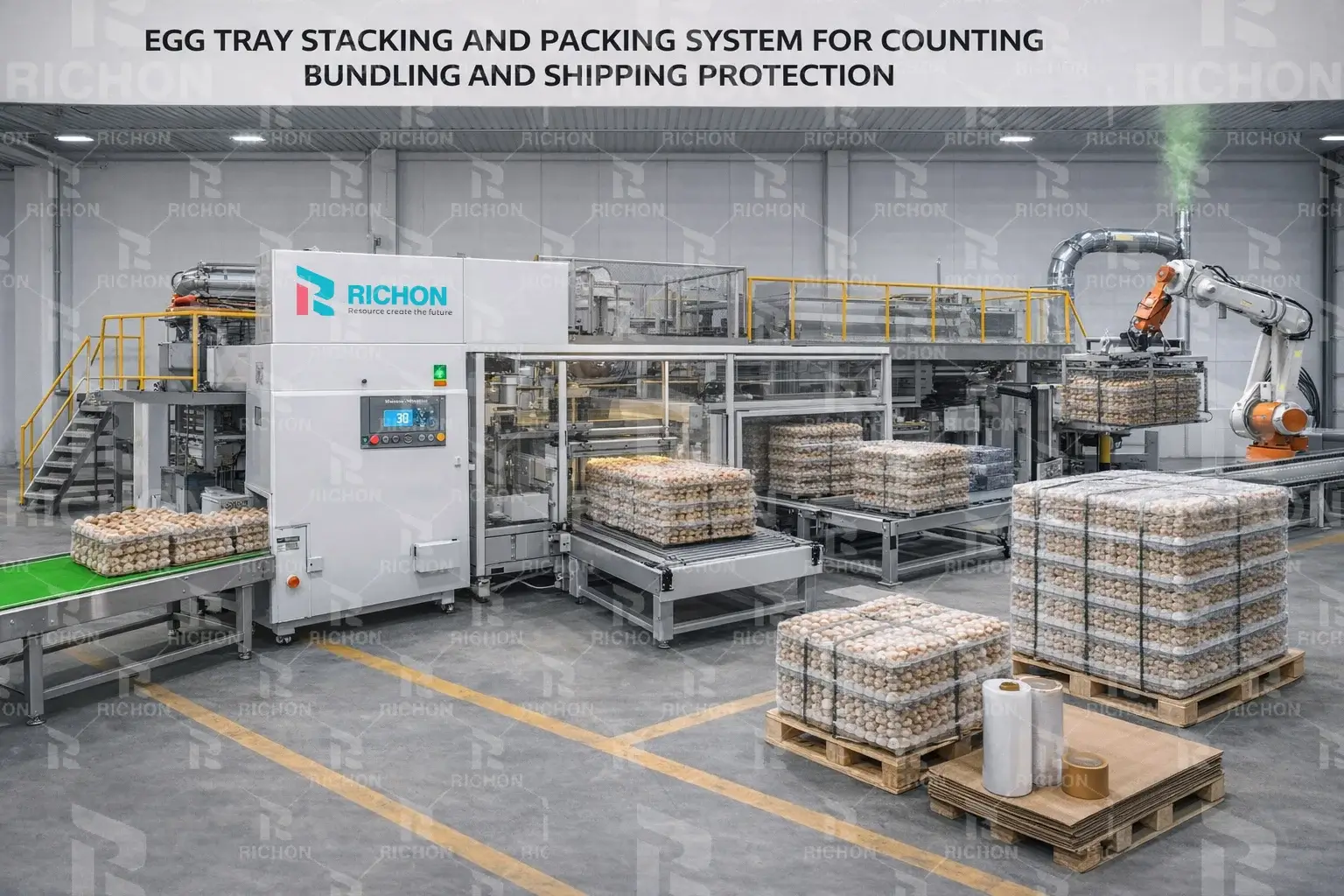
Stacking, Counting & Packing
After drying, finished paper egg trays are inspected, stacked, counted, and packed for storage or delivery. Automation improves labor efficiency and reduces damage during handling.
If you sell to distributors, egg farms, or packaging buyers, packing consistency becomes a visible quality signal. Uniform bundles reduce transportation damage, improve warehouse handling, and lower customer complaints.
Explore complete solutions: Egg Tray Production Line
Machine options: Paper Egg Tray Making Machine
Process KPI Dashboard
Use these control points to diagnose changes in tray weight, edge quality, transfer stability, drying consistency, and usable line output. The approved limits come from the selected equipment and project commissioning record.
Pulp Consistency
Confirm the approved range for the selected fiber mix, tray weight, mold, and forming setup. Monitor stability rather than copying a universal value.
Vacuum Stability
Keep suction stable within the commissioned machine setting. Investigate pump condition, leakage, valves, piping, and mold sealing when results fluctuate.
Moisture After Drying
Confirm the acceptable condition for stacking, packing, and customer requirements. Check consistency across the batch.
Cycle Time
Evaluate the complete line. Forming, transfer, drying, and stacking must remain compatible during continuous operation.
Key Process Control Points
Exact operating values depend on raw material, tray design, mold, machine configuration, dryer, and site conditions. Use the commissioned project settings rather than treating a general guide as an operating specification.
| Control point | How to confirm it | Why it matters |
|---|---|---|
| Raw material cleanliness | Incoming-paper inspection and screening result | Protects pumps, pipelines, and mold drainage while improving surface consistency. |
| Pulp consistency | Approved pulp formula and forming test | Affects fiber deposition, tray weight, and repeatability. |
| Vacuum and sealing | Commissioned machine setting and leak inspection | Affects water removal, edges, and transfer stability. |
| Drying control | Dryer configuration, tray specification, and site commissioning | Affects deformation, residual moisture, and line continuity. |
| Line capacity | Continuous production test across forming, drying, and stacking | Confirms usable output rather than one machine’s nominal speed. |
Quality Control in the Egg Tray Production Process
In the waste paper to egg tray process, most quality problems are caused by combined issues in raw material sorting, pulp consistency, vacuum forming, mold drainage, wet tray transfer, and drying control. A stable process helps reduce rejects and keep paper pulp egg tray quality consistent.
Thin walls / weak corners
Cause: unstable pulp consistency, poor fiber dispersion, insufficient screening, uneven vacuum suction, or blocked mold drainage holes.
Fix: stabilize pulp consistency, improve screening and refining, clean mold drainage, and check vacuum pipeline balance before increasing machine speed.
Warping after drying
Cause: uneven airflow, over-temperature zones, fast moisture loss, unstable wet tray transfer, or incorrect stacking timing after drying.
Fix: optimize airflow distribution, adjust drying temperature zones, improve tray support during transfer, and control moisture before stacking.
Rough surface / poor finish
Cause: dirty recycled paper, sand or plastic contamination, insufficient refining, worn mold surface, or unstable slurry quality.
Fix: improve waste paper sorting, add better screening, maintain molds regularly, and adjust refining time according to raw material quality.
Edge cracks / tray deformation
Cause: weak wet tray strength, mold misalignment, unstable transfer movement, excessive drying temperature, or early handling before the tray becomes stable.
Fix: check mold alignment, stabilize transfer mechanism, improve wet tray support, and adjust drying exit moisture to avoid brittle tray edges.
Tray sticking after stacking
Cause: high residual moisture, insufficient drying time, poor ventilation after drying, or stacking finished trays too early.
Fix: extend drying time, improve hot air circulation, check final tray moisture, and allow trays to cool before tight stacking and packing.
Unstable tray weight
Cause: fluctuating pulp concentration, unstable water supply, inconsistent vacuum suction, or poor slurry mixing in the pulp tank.
Fix: control pulp consistency, keep slurry circulation stable, monitor vacuum pressure, and avoid sudden changes in raw material mix during production.
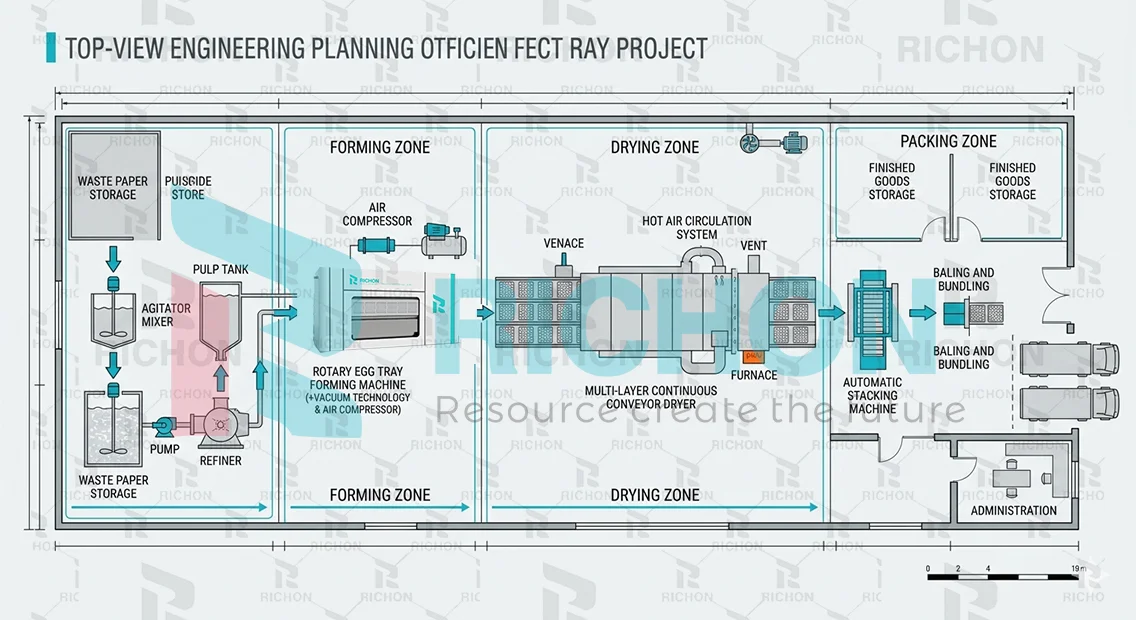
Paper Egg Tray Production Line Layout & Utilities Planning
A practical paper egg tray production line layout should match the waste paper to egg tray process, including raw material storage, pulping, forming, drying, stacking, packing, water recycling, power supply, and heat source planning.
Layout logic for the waste paper to egg tray factory
A stable factory layout follows a clear material flow: waste paper receiving → pulping and screening → vacuum forming → wet tray transfer → drying → stacking and packing → finished product warehouse.
The wet process area should stay close to water supply, drainage, and pulp tanks. The drying area should be planned near the heat source, ventilation system, and finished tray handling area to reduce unnecessary movement and labor cost.
- Reserve maintenance space around hydrapulper, pulp tanks, pumps, and pipelines
- Keep the wet tray transfer path short to reduce deformation and edge damage
- Place drying and packing areas in a smooth downstream direction
- Plan future automation space if you may upgrade capacity later
Utilities checklist for paper egg tray making machine setup
Before choosing a paper egg tray making machine, confirm the factory utilities first. Water, electricity, heat source, drainage, and ventilation directly affect equipment selection, drying method, investment cost, and long-term production stability.
FAQ: How to Make Egg Trays from Papers
Common questions about the paper egg tray production process, raw materials, drying methods, capacity planning, and factory setup.
How do you make egg trays from papers?
What paper is used to make egg trays?
How much waste paper is needed to produce egg trays?
What is the main bottleneck in the paper egg tray production process?
Which drying system is best for making paper egg trays?
What determines egg tray production capacity?
Do I need hot pressing for egg trays?
What machine is used to make paper egg trays?
Planning a Paper Egg Tray Production Project?
Richon engineers help you plan a suitable paper egg tray making machine, production line layout, drying system, and ROI strategy based on your waste paper raw materials, target capacity, local energy cost, factory space, and market demand.
Project Consultation
Need to confirm capacity, drying layout, or investment plan?
Share your target output, factory conditions, and drying preference. Richon engineers will help review a suitable egg tray production line configuration for your project.