 English
Egg Tray Molds Engineered from 30 Years of Pulp Molding Production Experience
In industrial egg tray manufacturing, molds are not interchangeable accessories. They are precision forming tools that directly define tray strength, dimensional stability, fiber efficiency, and long-term production cost. Our egg tray molds are designed based on real factory operation data accumulated over three decades of pulp molding engineering.
What Defines a High-Quality Egg Tray Mold in Industrial Production
A high-quality egg tray mold controls how pulp fibers are distributed, how water drains during vacuum forming, and how stable the tray remains during transfer and drying.
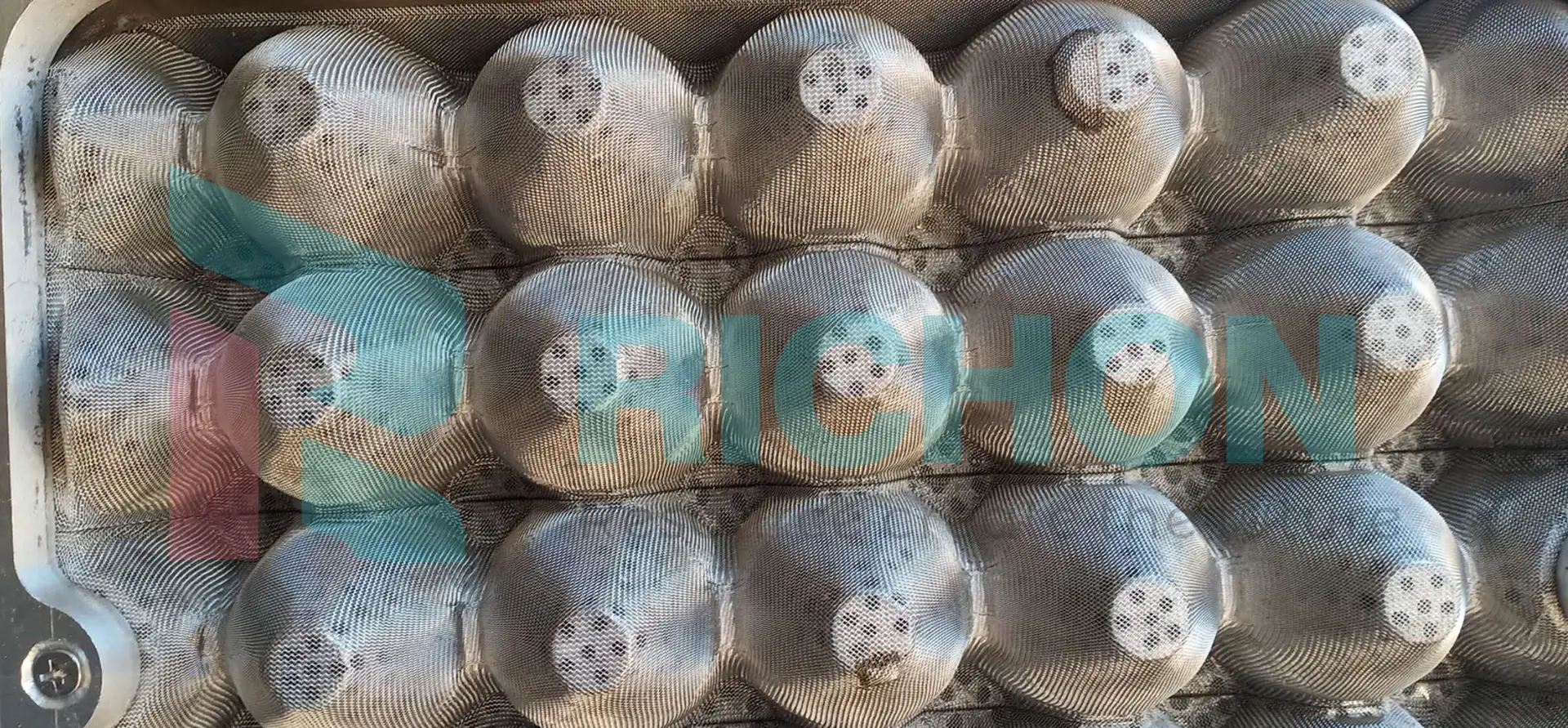
From long-term factory observation, poor mold design typically leads to: uneven wall thickness, weak egg pockets, frequent deformation, excessive fiber consumption, and unstable production efficiency.
These issues do not appear immediately — they accumulate over months of operation, increasing energy, labor, and raw material costs.
Egg Tray Mold Manufacturer Focused on Finished Product Quality
As a pulp molding equipment manufacturer with over 30 years of experience, we design our egg tray molds based on the requirements of continuous production, not short-term trials. Our mold designs are aimed at ensuring molding accuracy and structural stability during long-term operation.
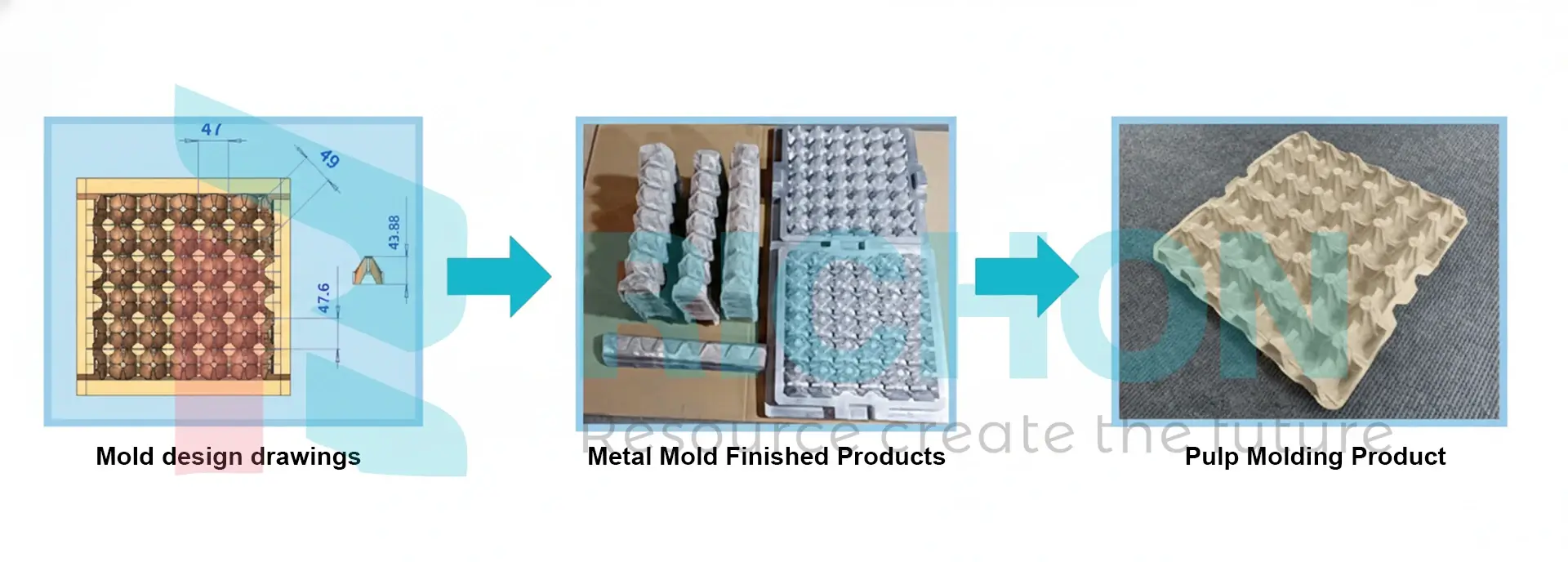
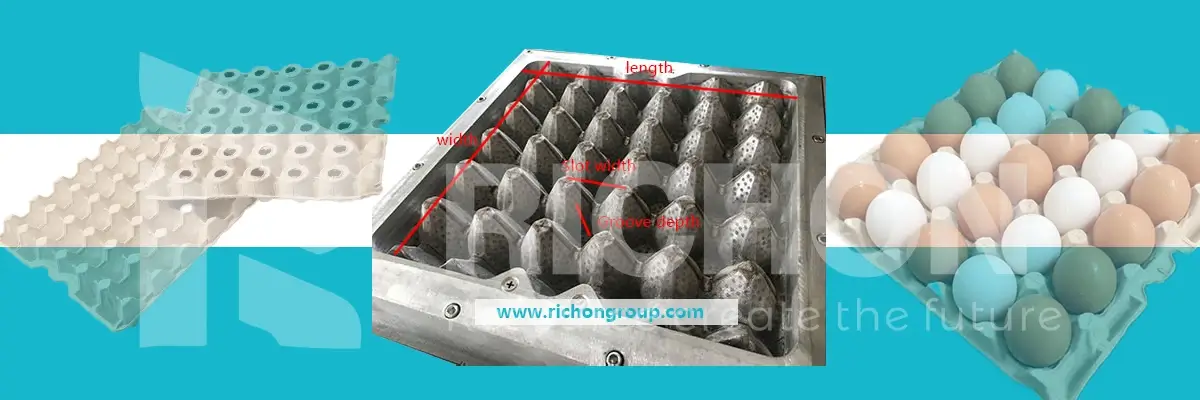
We strictly control and design our molds according to sample dimensions to ensure that the final paper egg trays meet the customer’s size and structural requirements.
Pulp Molding Molds and Materials for Egg Tray Production
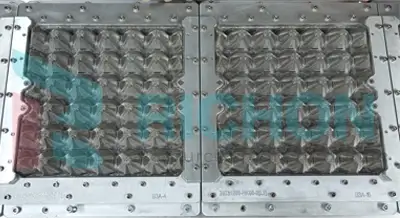
Aluminum Egg Tray Molds
Stable forming accuracy for automatic egg tray machines.
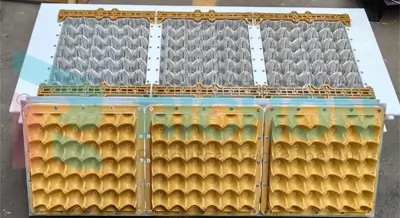
Plastic Egg Tray Molds
Cost-effective solution for semi-automatic production lines.
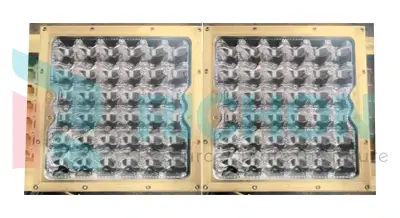
Reinforced Mold Frames
Designed for long-term high-vacuum forming cycles.
Egg Tray Mold Design Based on Real Production Experience
Egg tray mold design should be based on real forming performance, pulp drainage behavior, demolding stability, and recycled paper variation. A well-designed mold helps improve tray consistency and reduce quality problems during continuous production.
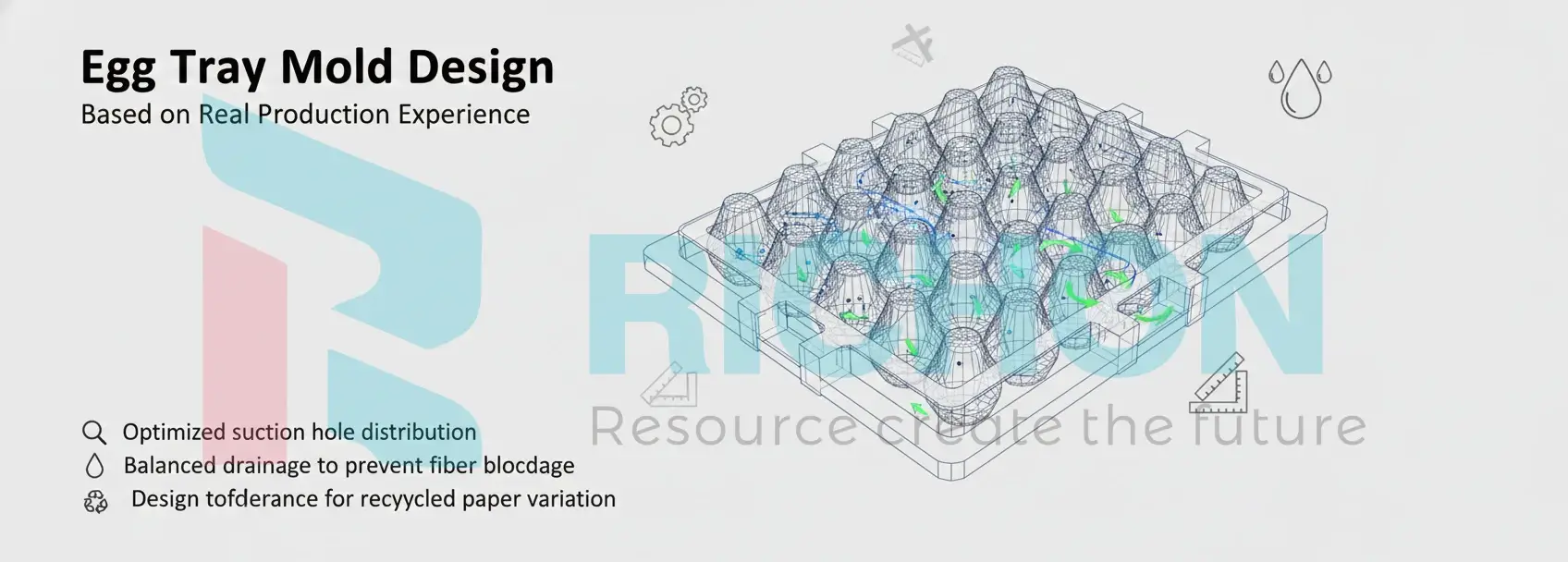
- Optimized suction hole distribution
- Balanced drainage to prevent fiber blockage
- Stable draft angles for smooth demolding
- Design tolerance for recycled paper variation
Egg Tray Molds for Automatic and Semi-Automatic Egg Tray Machines
Richon egg tray molds can be designed for different forming structures, including rotary forming machines and reciprocating forming machines. Mold matching should consider machine capacity, forming plate size, vacuum distribution, transfer method, and the final egg tray specification.
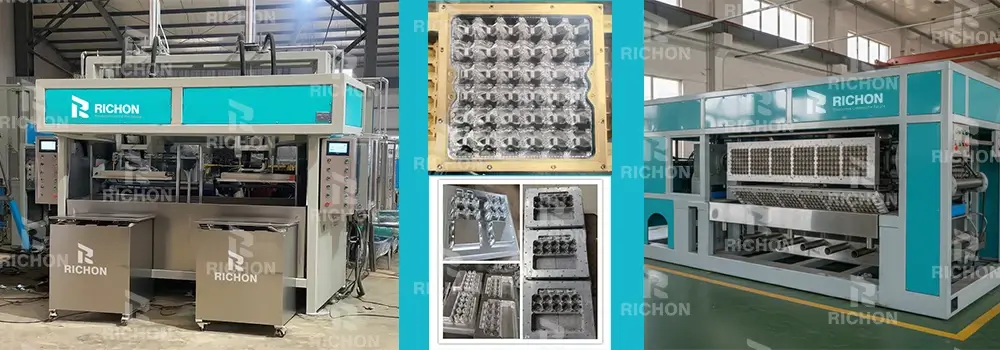
- Compatible with rotary and reciprocating forming machines
- Designed for different standard and customized production capacity ranges
- Suitable for recycled paper pulp forming systems
- Matched to forming accuracy, drainage performance, and wet tray transfer stability
Egg Tray Mold FAQs
These questions help buyers confirm whether an egg tray mold should be customized, replaced, or adjusted together with the forming machine and production line configuration.
Can Richon make egg tray molds based on my tray sample or drawing?
Yes. Richon can evaluate tray samples, drawings, egg pocket structure, stacking requirements, and finished tray dimensions before mold design. Final feasibility depends on the forming machine structure and project configuration.
Which is better, aluminum egg tray mold or plastic egg tray mold?
There is no single answer for every project. Aluminum molds are commonly selected for stable long-term production, while plastic molds may suit some lower-investment or semi-automatic applications. The final choice should consider operating hours, tray structure, budget, and maintenance expectations.
Can a new mold fit my existing egg tray machine?
It may be possible, but the mold interface, vacuum connection, forming station size, transfer position, and demolding method must be checked first. A mold should not be treated as a universal replacement part without confirming machine details.
What information is needed before designing an egg tray mold?
Useful information includes tray sample or drawing, egg count per tray, machine type, target capacity, raw material condition, automation level, and drying method. For complete project planning, you can also review Richon’s egg tray production line solutions.
Does mold design affect tray cracking, deformation, or drying quality?
Yes. Mold drainage, suction distribution, forming thickness, and wet tray release can affect moisture balance before drying. If the wet tray is already uneven before entering the dryer, drying may amplify deformation or cracking risks.
Related Egg Tray Production Resources
Mold performance is connected with the forming machine, raw material preparation, production process, and full line configuration. These pages help you evaluate the complete production system before confirming mold requirements.
Discuss Your Egg Tray Mold Requirements with Our Engineers
Our engineers will recommend the most suitable egg tray mold solution based on your raw materials, capacity, and automation level.
Contact Our Engineering TeamProject Consultation
Need to confirm capacity, drying layout, or investment plan?
Share your target output, factory conditions, and drying preference. Richon engineers will help review a suitable egg tray production line configuration for your project.