


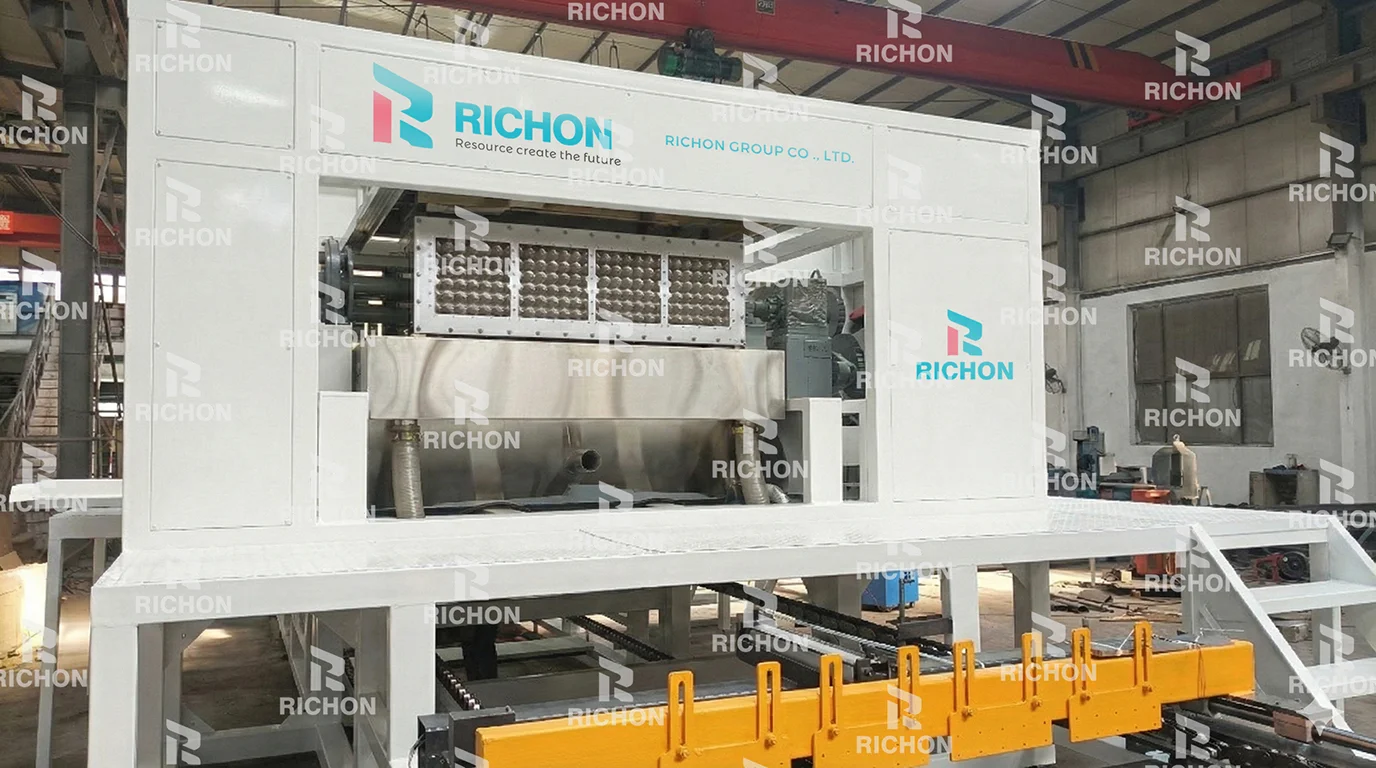
4000 pcs/h Egg Tray Production Line
A balanced mid-capacity solution for investors who need stable daily output, practical energy planning, and a factory layout that can scale without jumping immediately to larger automated systems.
Who Should Choose a 4000 pcs/h Egg Tray Line?
This capacity is often selected by buyers who need a more stable production base than entry-level lines but do not want to jump too early into a larger investment structure. If you are still comparing production ranges, you can also review our 3000 pcs/h solution and the broader capacity selection guide.
Suitable For
- Factories moving from small trial production to regular commercial supply
- Investors with stable waste paper sourcing and clearer daily sales targets
- Projects that need better output balance between forming and drying
- Buyers planning long-term expansion but controlling first-stage investment risk
Usually Not Ideal For
- Very small pilot projects with limited utility support
- Buyers who rely heavily on natural drying and unstable weather conditions
- Projects that actually need much higher daily output from the beginning
- Factories with no clear layout planning or raw material continuity
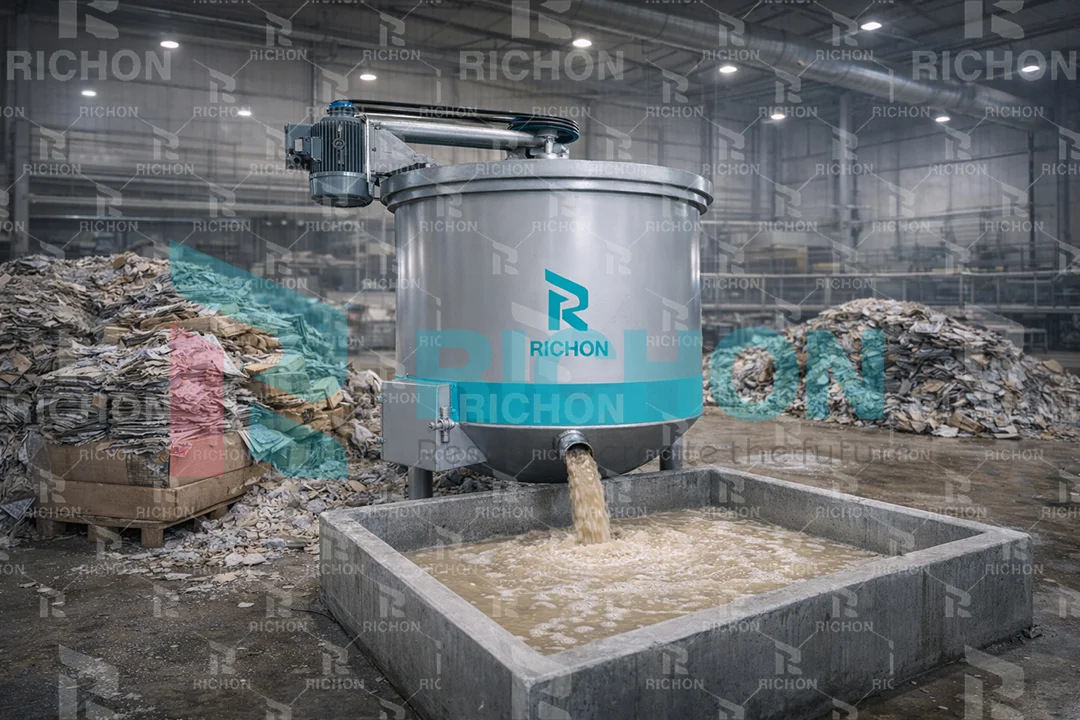
Pulping Stability Matters Before Forming Capacity Can Be Trusted
A 4000 pcs/h egg tray line cannot rely on forming speed alone. If waste paper preparation is unstable, slurry consistency fluctuates, and impurities are not controlled properly, the forming section will not deliver repeatable tray quality even when the machine is technically capable of running at the target output.
This is why raw material handling should be planned together with the rest of the line. Buyers comparing capacity options should review not only the egg tray production line itself, but also the upstream material logic explained in our raw material and recycling guide.
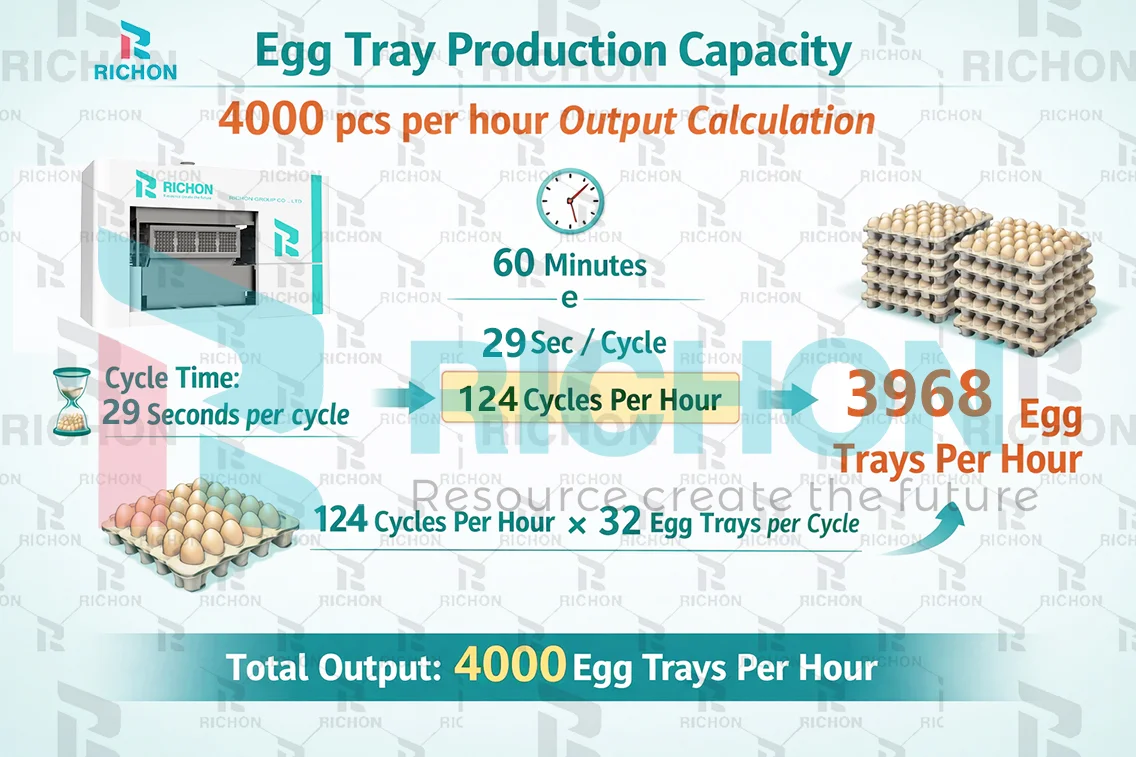
4000 pcs/h Is a Capacity Reference, Not a Profit Guarantee
In real factory operation, hourly output is only one part of decision-making. A 4000 pcs/h line may look simple on paper, but actual daily output depends on operating hours, forming stability, drying performance, mold condition, and operator discipline.
That is why we recommend reading capacity together with production cost, energy use, and downstream bottlenecks rather than treating one number as the final answer. For a wider comparison across different ranges, see our capacity comparison article and real production cost analysis.
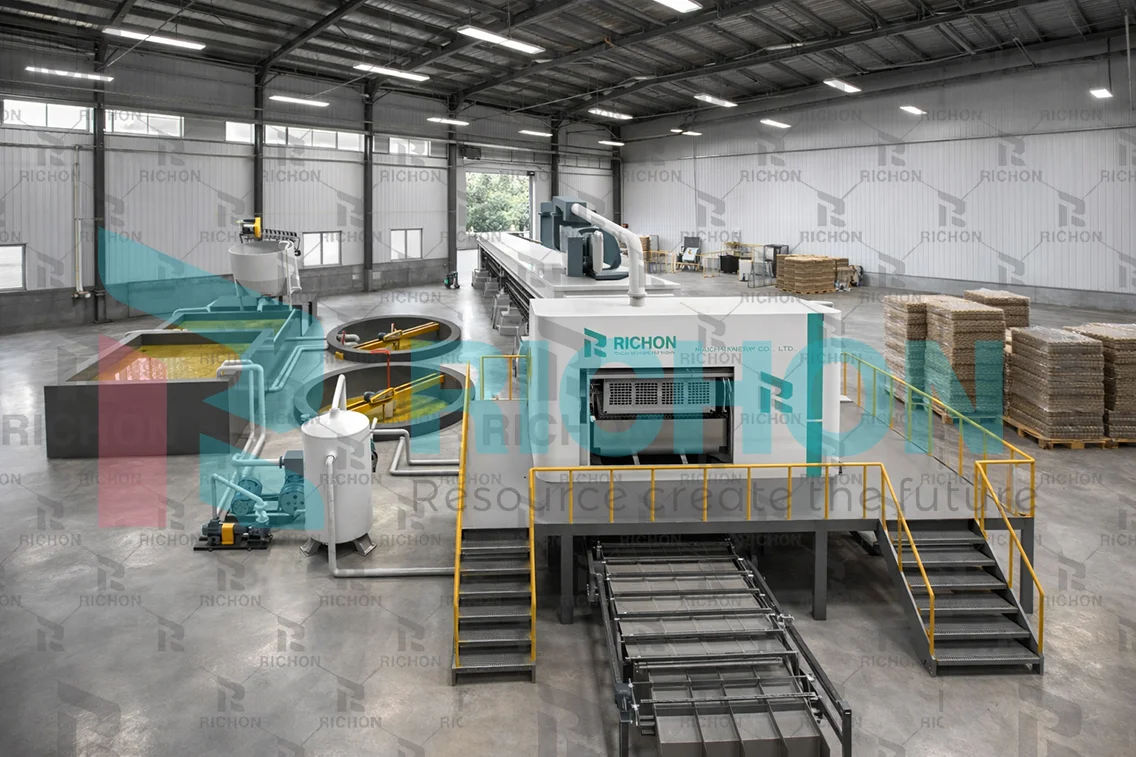
Typical System Configuration for a 4000 pcs/h Egg Tray Plant
At this capacity level, equipment selection is no longer only about whether the machine can run. The more important question is whether pulping, forming, drying, and packing are matched well enough to avoid hidden production loss. You can also review the broader production line overview and our egg tray machine page for full system context.
The Forming Machine Must Work as Part of a Balanced Line
At 4000 pcs/h, the forming machine is one of the most visible parts of the production line, but stable output depends on more than forming speed alone. Mold precision, vacuum performance, wet tray transfer, and coordination with drying all influence whether the line delivers consistent commercial production.
If you are comparing equipment structures, it is useful to review both the egg tray machine page and the broader production line overview rather than judging the project only by one machine picture or one capacity number.
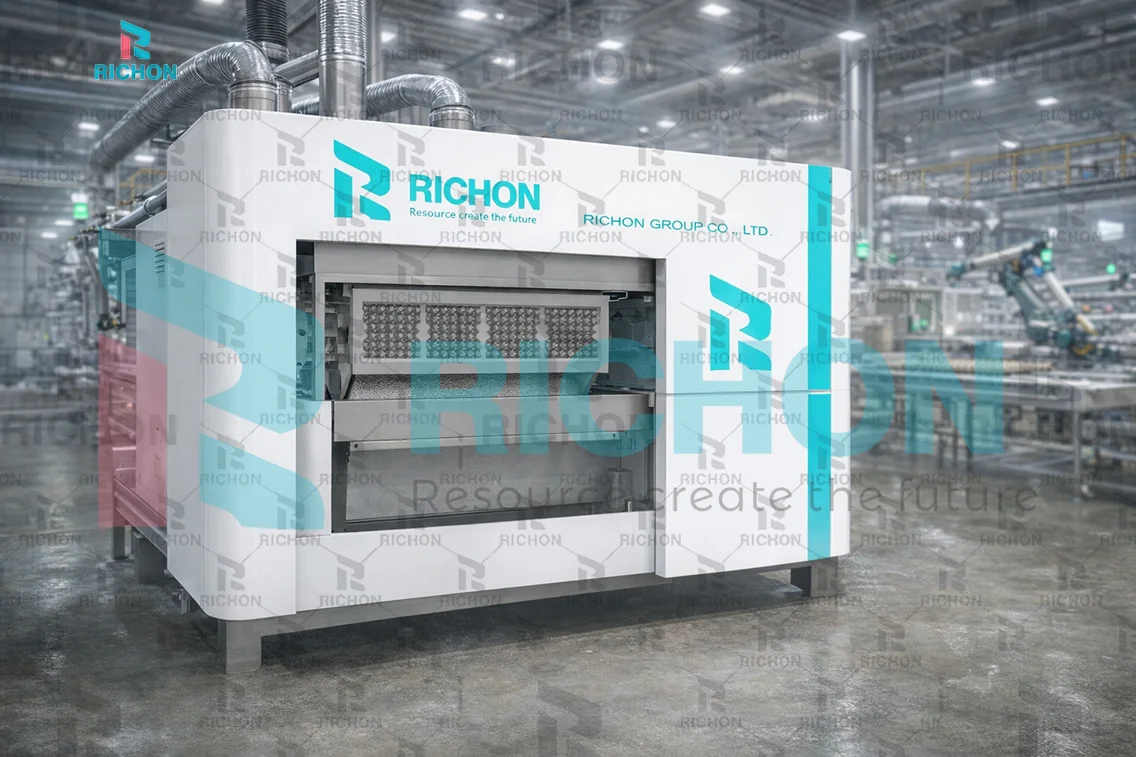
Mold Accuracy
Stable mold quality helps maintain tray shape, weight control, and release performance.
Vacuum Coordination
Vacuum efficiency affects wet forming consistency and transfer stability before drying.
System Matching
The forming section should be evaluated together with pulping, drying, and labor flow.
Power Planning Matters, but Drying Energy Usually Matters More
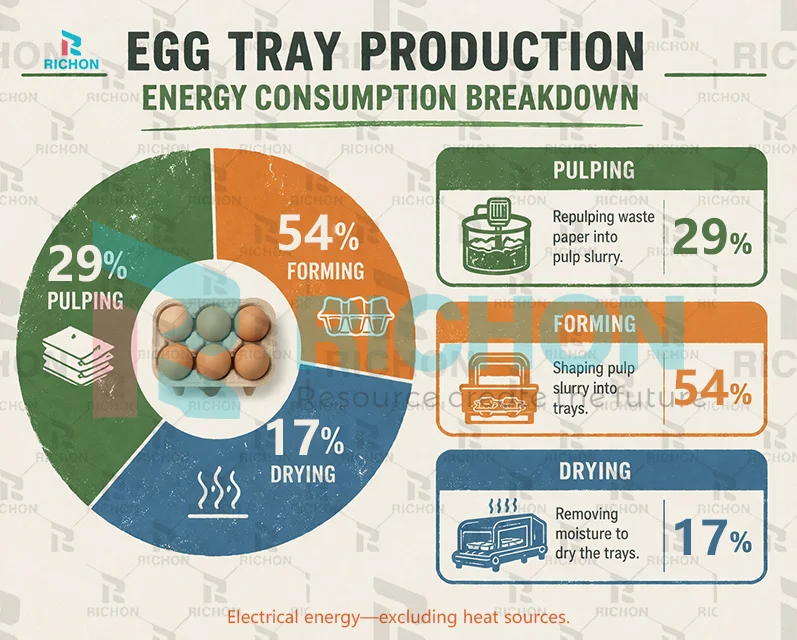
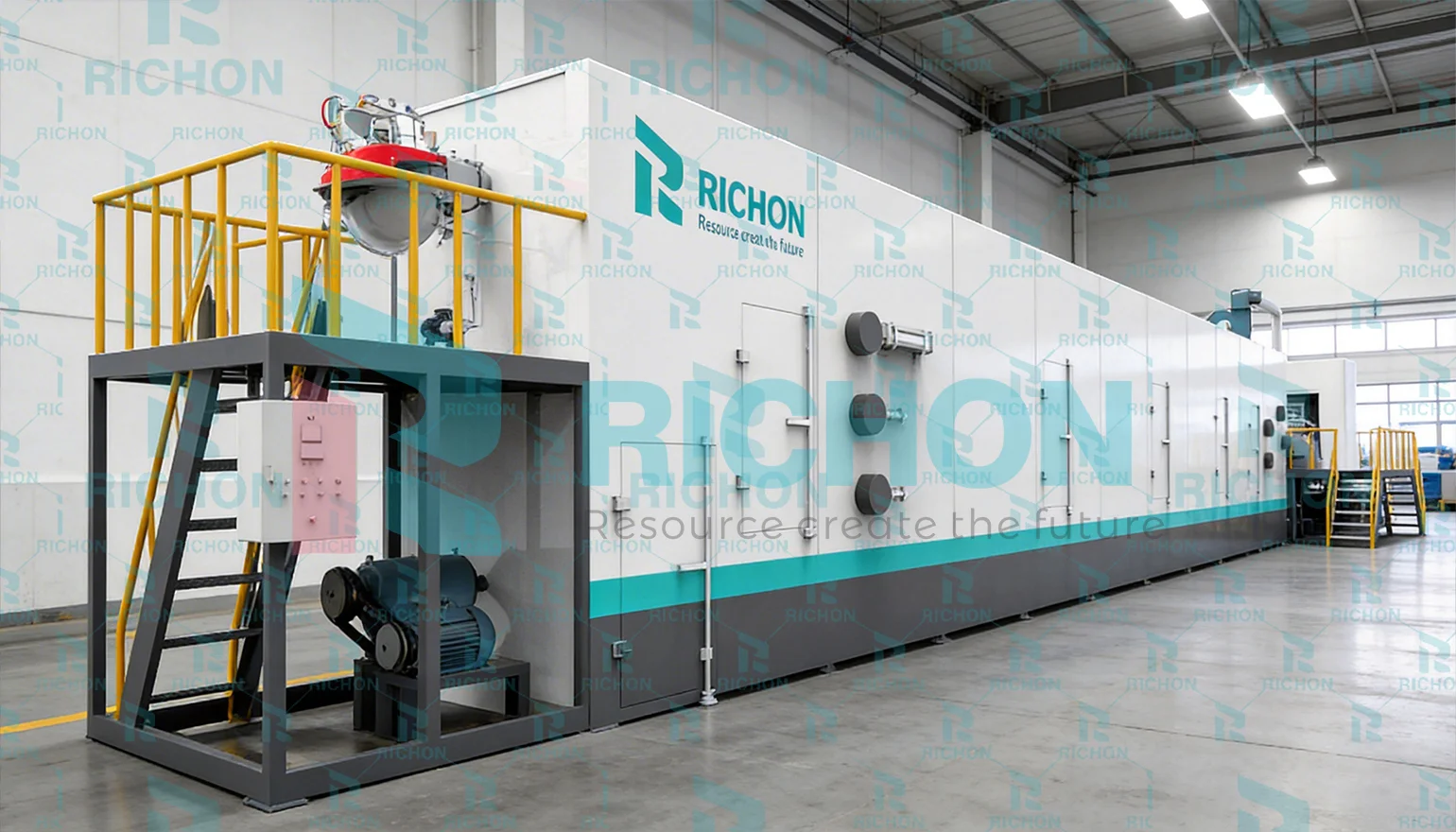
Buyers often ask for machine power first, but at 4000 pcs/h the more important issue is the total operating structure. Electrical load helps with workshop planning, yet real production economics are usually shaped more heavily by drying method, heat source, insulation quality, and line balance.
If you are comparing electricity cost in more detail, read our power consumption guide. For a broader engineering view of where utility cost comes from, see the energy consumption analysis page and our article on egg tray drying system cost.
Electrical Planning
Used for workshop cable sizing, control cabinet planning, and utility matching.
Thermal Planning
Usually has greater impact on daily operating cost than headline machine power alone.
Decision Rule
Do not compare two lines only by total installed power without checking drying structure.
Factory Layout Should Follow Process Flow, Not Just Empty Space
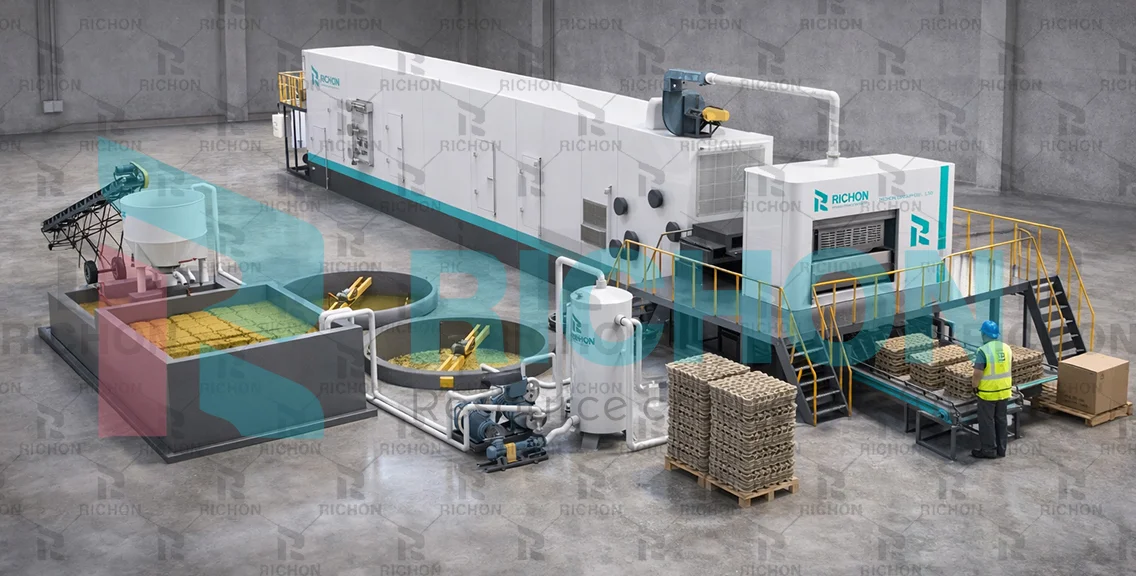
A 4000 pcs/h line normally requires more disciplined layout thinking than entry-level capacity because material handling, wet tray transfer, dryer matching, and finished product movement all start to affect labor rhythm and workshop efficiency.
When buyers plan only by available building area, they often underestimate utility routing, maintenance clearance, and drying section footprint. For deeper planning guidance, review our factory layout guide, the knowledge center layout page, and project planning.
ROI Depends on More Than Machine Price
A 4000 pcs/h project is often attractive because it can create a practical balance between investment size and output ambition. But return on investment is shaped by more than equipment quotation. Raw material availability, utility cost, drying choice, labor organization, local tray selling price, and uptime discipline all affect the real payback story.
To compare commercial logic in more detail, review our egg tray machine price and ROI guide, cost investment analysis, and the article on what determines real production cost.
Investment Scope
Equipment is only one part of the project. Utilities, workshop adaptation, dryer structure, and material movement can change the final budget significantly.
Operating Cost Structure
Labor, thermal energy, electricity, maintenance, and reject control should be assessed together instead of as isolated cost lines.
Sales Matching
A well-sized line performs best when capacity is matched to real local demand instead of headline output expectations only.
Stable Capacity Should End with Usable Finished Egg Trays
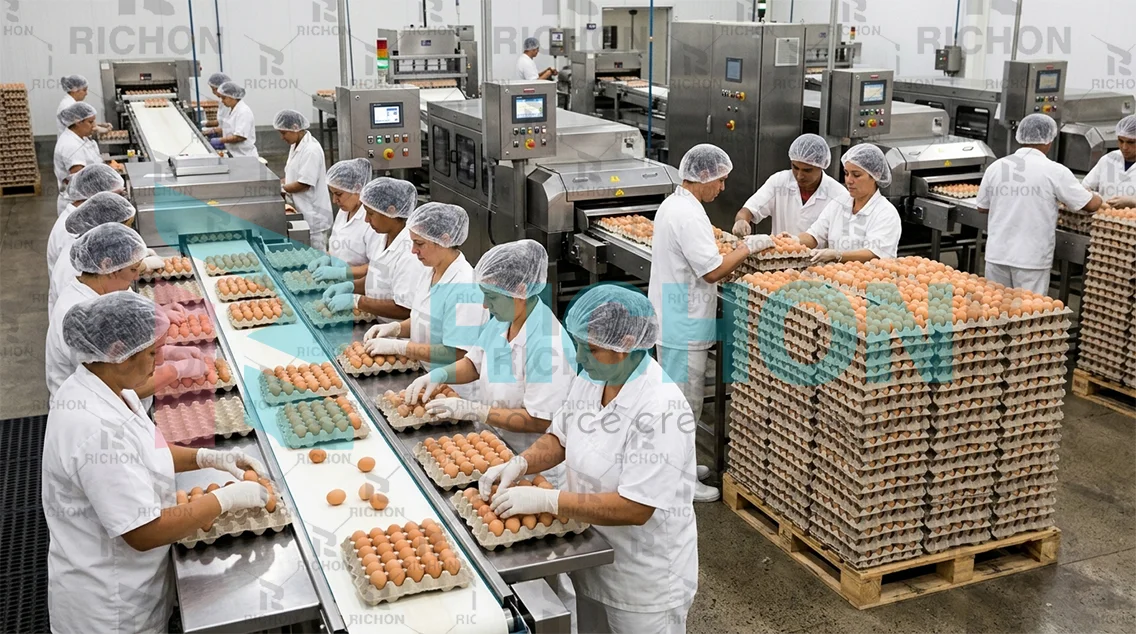
A production line is only commercially meaningful when stable finished products can be delivered after drying and packing. For many factories, the real question is not whether the machine can run fast for a short period, but whether tray quality remains consistent enough for daily shipment and customer acceptance.
This is why buyers should link output planning with drying stability, reject control, and cost analysis. For a broader investment perspective, you can also review our egg tray machine price and ROI guide and the article on real production cost.
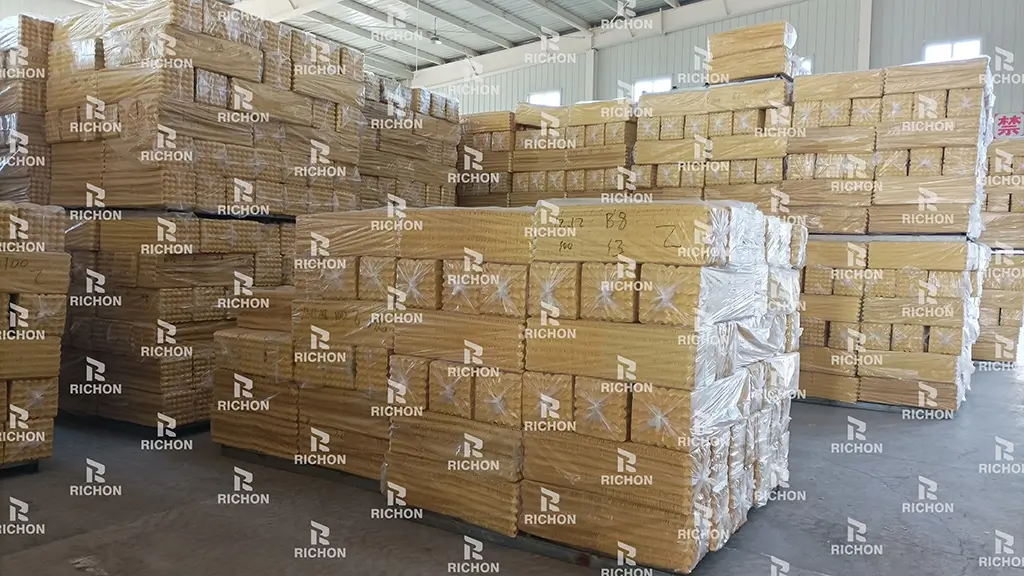
Packing Should Support Output Flow Instead of Slowing It Down
In a 4000 pcs/h project, packing is often treated as a simple final step, but poor packing organization can still disturb labor rhythm, increase handling loss, and create unnecessary congestion after drying. A good line layout should leave enough room for stacking, counting, transfer, and shipment preparation.
This is also why factory planning should not stop at the main machine footprint. You can connect this module with our factory layout guide and project planning page when arranging the final workshop flow.
Compare This Capacity with Related Engineering and Investment Topics
A good 4000 pcs/h decision should be supported by product understanding, layout logic, energy planning, and cost analysis rather than one quotation table alone.
Common Questions About 4000 pcs/h Egg Tray Production
Is 4000 pcs/h a good capacity for a first commercial egg tray project?
It can be a practical choice for buyers who already have stable raw material supply, clearer local sales demand, and enough workshop planning to support forming and drying balance.
Does a 4000 pcs/h line always mean the same daily output?
No. Real daily output depends on working hours, drying efficiency, mold condition, operator management, and overall process stability.
Why is drying so important at this capacity?
Because once output moves into the mid-capacity range, drying often becomes the section that decides whether the line can maintain a stable production rhythm.
Should I compare lines only by machine power?
No. Installed power is useful for electrical planning, but total operating cost is often more influenced by drying method, fuel structure, labor organization, and reject control.
Where can I learn more before choosing this line?
You can review the egg tray production line page, the knowledge center, and our capacity guide.
Need Help Checking Whether 4000 pcs/h Fits Your Project?
We do not recommend capacity only by budget. A practical selection should match raw material condition, drying route, utility support, factory layout, and your real output target.
Contact Us
Get in touch with our team for any inquiries about our egg tray machines and services.
Project Scope
Do you need a complete project solution or a partial solution? Our team can customize the perfect setup for your specific needs and budget constraints.
Product Expectations
What kind of finished product do you expect, and what quality standards are important to you?
Project Timeline
What is your expected timeline for project implementation and operation?
Budget Range
What is the approximate budget range for your project procurement?
Send Us Your Information
Accurate project information will help us provide the perfect solution for your needs.