


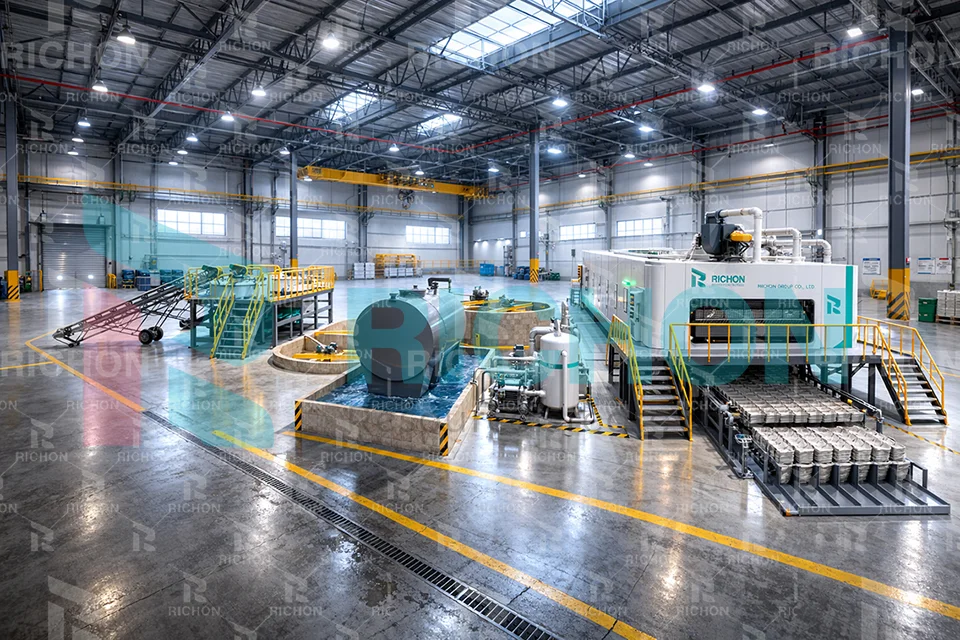
5000 pcs/h Egg Tray Production Line
A practical step-up solution for manufacturers who need higher daily output, stronger drying coordination, and a production layout that supports commercial growth without moving too early into oversized investment.
Who Should Choose a 5000 pcs/h Egg Tray Line?
A 5000 pcs/h solution is usually selected by manufacturers who have moved beyond entry-level planning and now need stronger daily output, more disciplined workshop flow, and better drying coordination. If you are still comparing nearby ranges, you can also review our 4000 pcs/h solution and the broader capacity selection guide.
Suitable For
- Factories expanding from medium output to more stable commercial volume
- Projects with clearer raw material sourcing and stronger local sales demand
- Buyers who need better balance between forming speed and drying capacity
- Manufacturers planning a more scalable investment structure
Usually Not Ideal For
- Small pilot projects with weak utility support
- Factories relying mainly on unstable natural drying conditions
- Buyers without workshop planning for material flow and dryer footprint
- Projects that only focus on machine quotation without operating cost logic
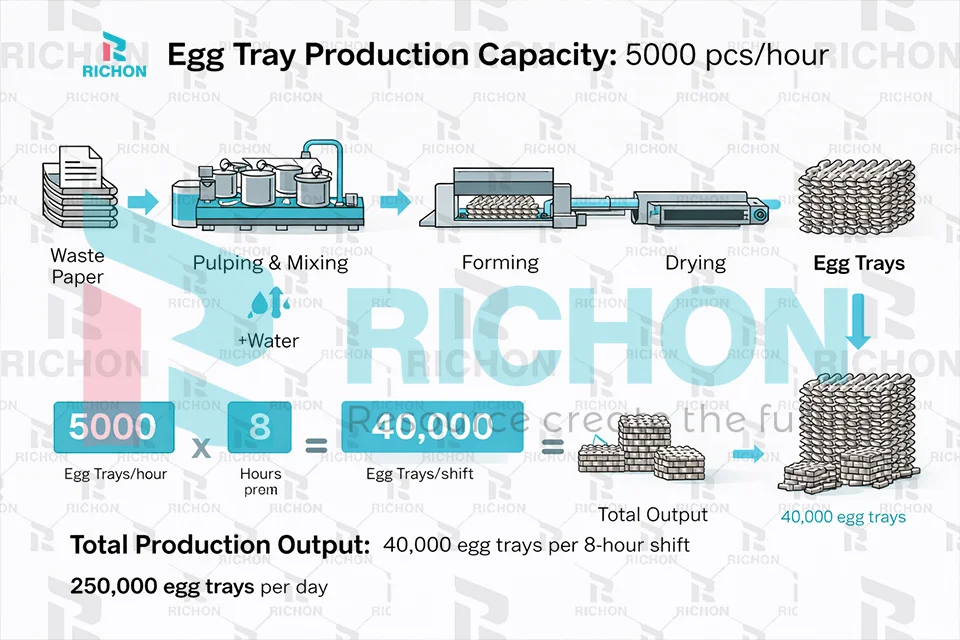
5000 pcs/h Means More Than a Bigger Number
At this level, output planning starts to depend even more on system coordination. A 5000 pcs/h line can offer stronger commercial potential, but real factory performance still depends on uptime, drying rhythm, mold condition, maintenance discipline, and labor organization.
That is why production line selection should never be based on one headline capacity figure alone. It should be checked together with energy structure, drying route, factory layout, and actual cost control. For wider comparison, review our capacity comparison article and real production cost analysis.
Typical System Configuration for a 5000 pcs/h Egg Tray Plant
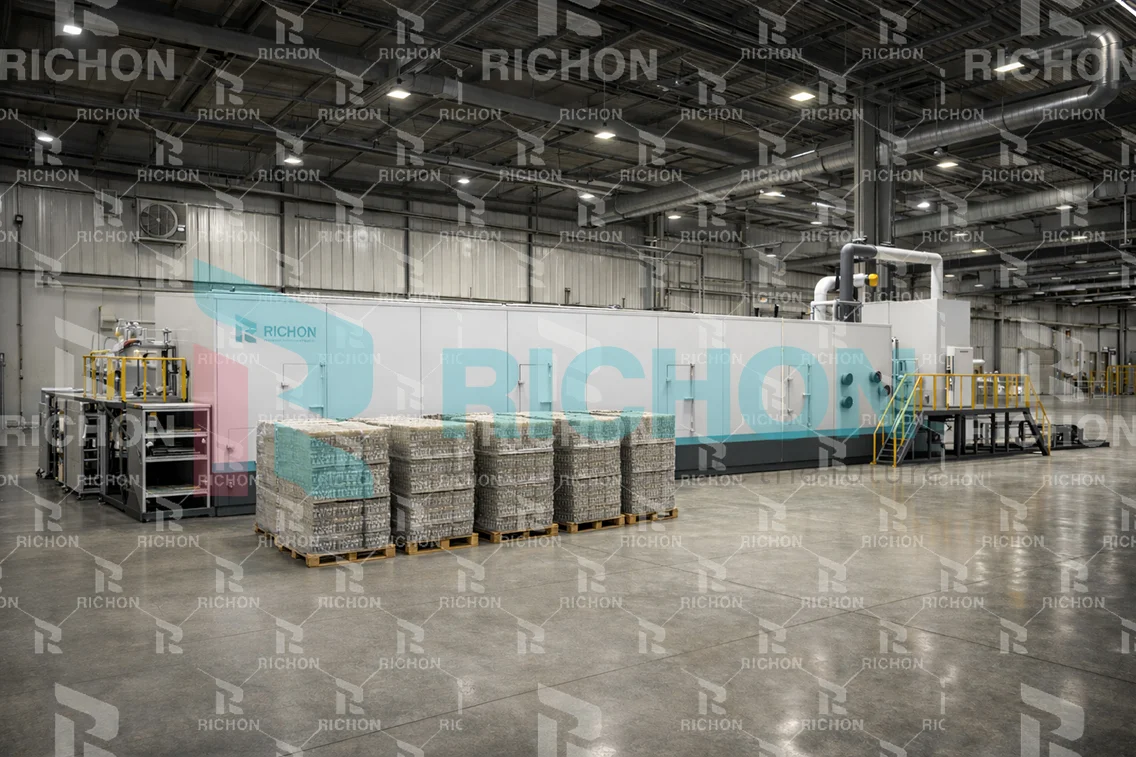
Once production moves to 5000 pcs/h, equipment matching becomes more sensitive. Pulping consistency, forming reliability, drying coordination, and finished tray handling all need to work together to avoid hidden losses. You can also review the broader production line overview and our egg tray machine page for wider system context.
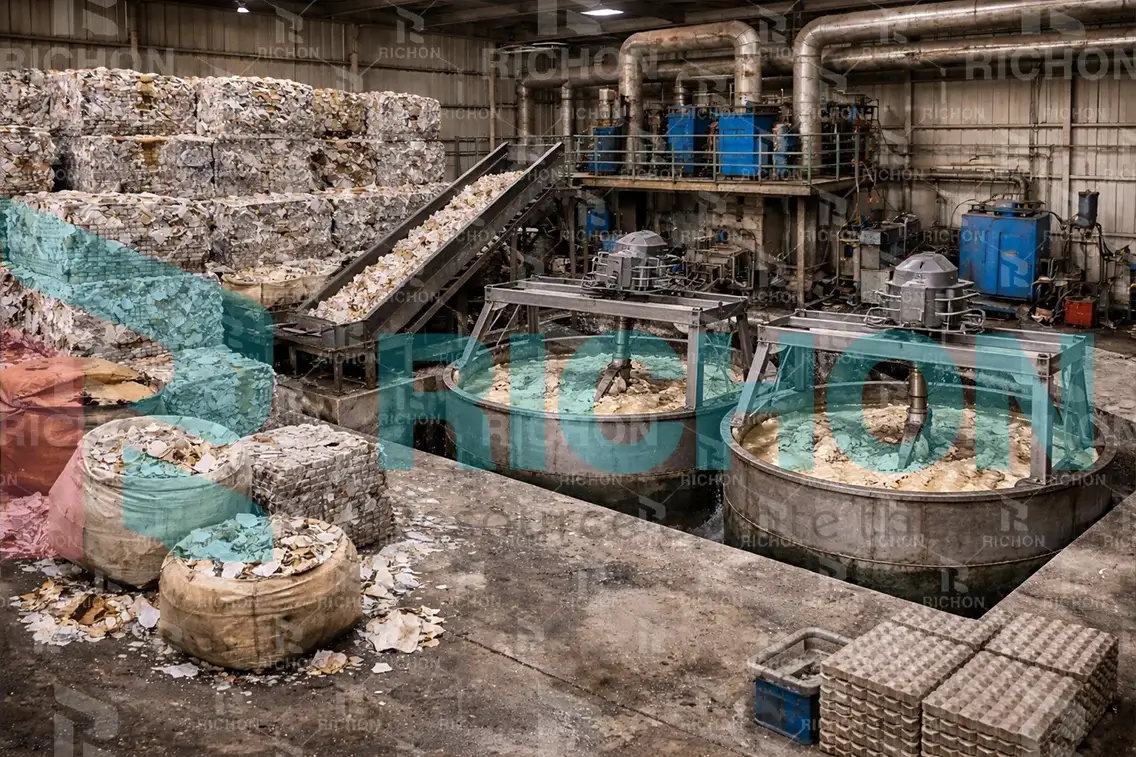
Stable Raw Material Preparation Supports Stable Tray Output
For a 5000 pcs/h egg tray production line, raw material preparation is not just an upstream step. It directly affects slurry stability, tray weight consistency, forming behavior, and downstream drying performance. Poor pulping discipline often shows up later as unstable product quality, excessive moisture variation, or higher reject rates.
If you want to understand how waste paper selection affects line operation, you can also review our raw material guide, knowledge center raw material page, and the production process guide.
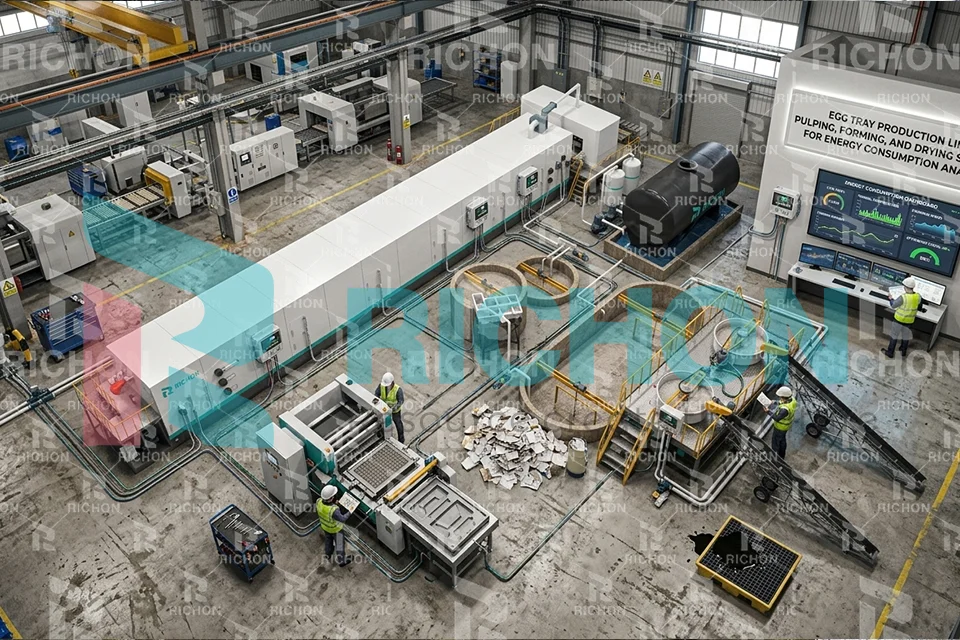
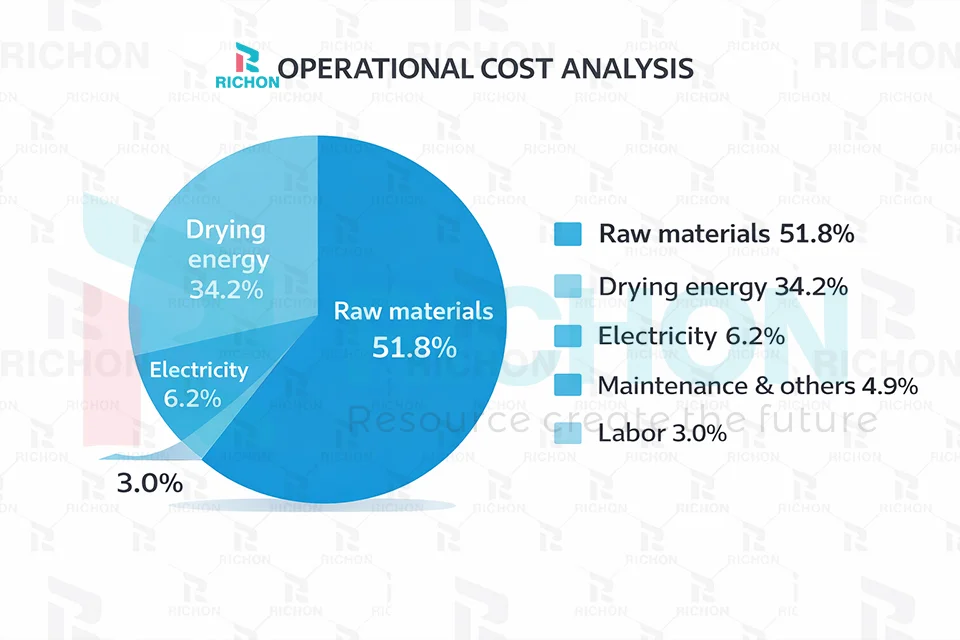
At 5000 pcs/h, Energy Planning Should Be Checked as a Full Operating System
Buyers often start by asking about machine power, but for a 5000 pcs/h project the more useful question is how electricity, drying energy, workshop utilities, and production rhythm work together. A line can look acceptable in quotation form while still creating unnecessary cost pressure if its drying route and layout are not matched correctly.
For deeper electricity discussion, review our power consumption guide. For a wider engineering view of cost structure, see the energy consumption analysis page and our article on egg tray drying system cost.
Electrical Load
Important for workshop planning, cable sizing, and control system preparation.
Thermal Energy
Often has greater impact on operating economics than installed electrical power alone.
Real Comparison
Capacity decisions should compare total process cost, not just one power number.
Factory Layout Must Support Higher Throughput, Not Just Fit the Machine
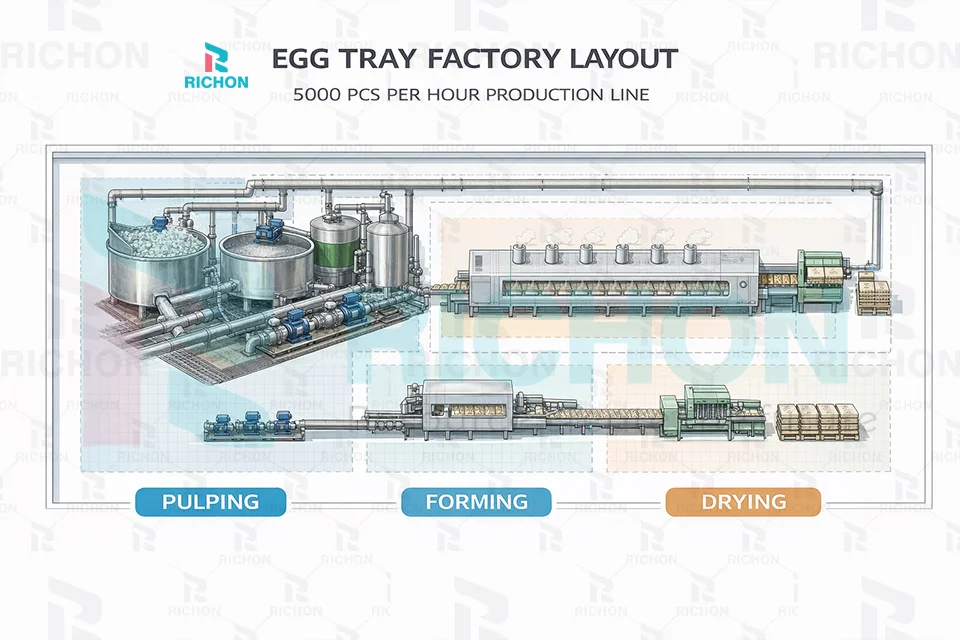
A 5000 pcs/h line usually demands better process flow than smaller capacity pages because raw material movement, wet tray handling, drying footprint, and finished product transfer all start to influence labor rhythm and production efficiency more directly.
Planning only by workshop size is not enough. Buyers also need to consider maintenance clearance, utility routing, drying section coordination, and packing area flow. For deeper planning logic, review our factory layout guide, the knowledge center layout page, and project planning.
5000 pcs/h Is Often a Growth Decision, Not Just a Machine Purchase
A 5000 pcs/h project usually attracts buyers who want to move into a stronger commercial production stage. But return on investment still depends on more than the equipment quotation. Raw material cost, fuel choice, labor arrangement, utility planning, tray selling price, and workshop discipline all affect the real payback result.
To review the business side in more detail, see our egg tray machine price and ROI guide, cost investment analysis, and the article on real production cost.
Investment Structure
Equipment cost is only one part of the decision. Workshop adaptation, dryer choice, utilities, and material handling also affect total investment.
Operating Cost Logic
Daily economics should be checked through labor, energy, maintenance, reject control, and stable output rhythm together.
Commercial Matching
The best ROI usually comes from matching capacity to stable local demand instead of choosing a bigger line too early.
Final Stacking and Packing Should Match the Production Rhythm
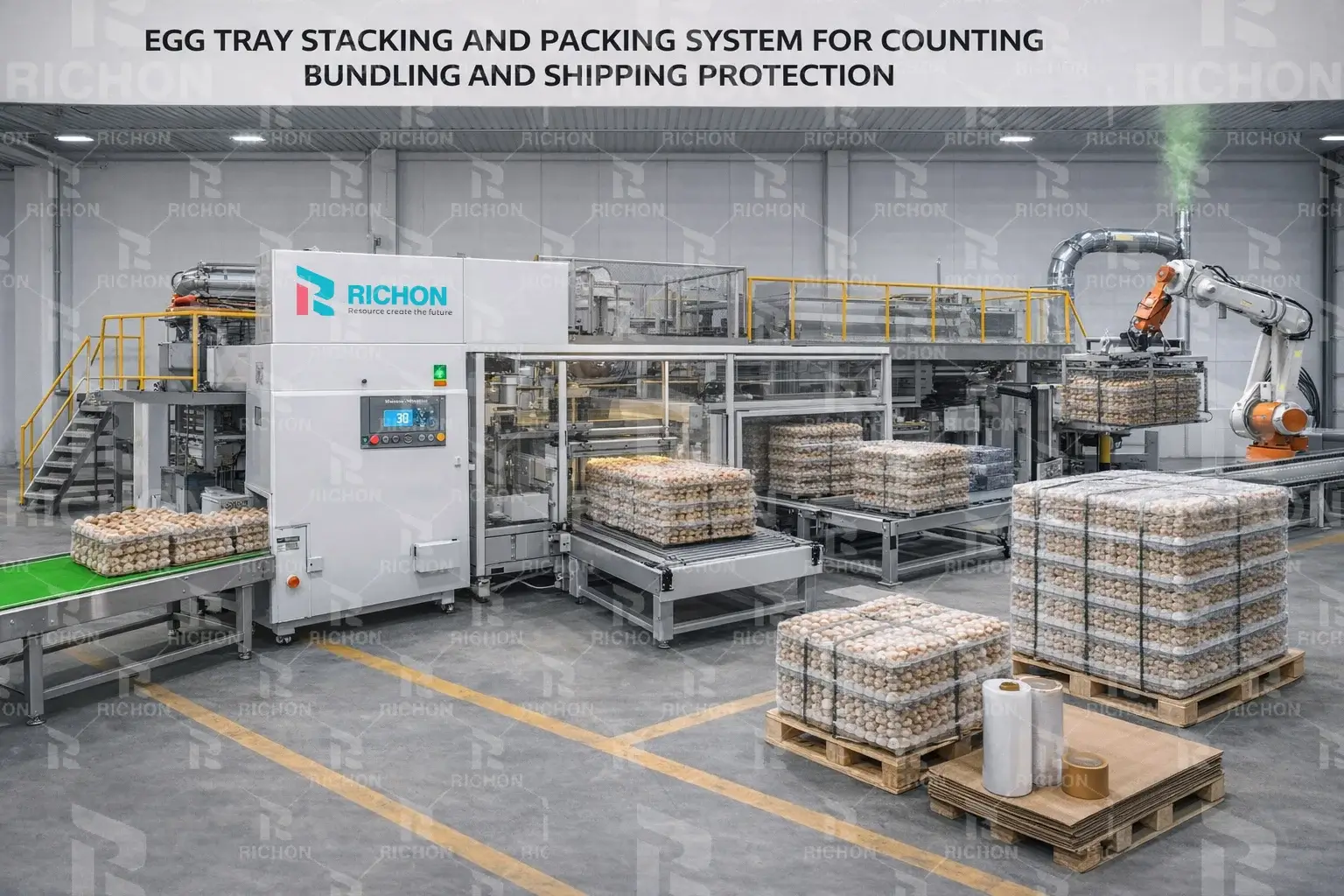
At 5000 pcs/h, the finished product section should not be treated as a minor afterthought. Once trays leave the dryer, counting, stacking, temporary storage, and shipment preparation all affect daily production rhythm. If the downstream handling section is poorly organized, it can reduce the practical value of otherwise stable upstream production.
Finished tray handling should be planned together with the full egg tray production line, the factory layout guide, and the broader project planning page.
Compare This Capacity with Related Engineering and Investment Topics
A strong 5000 pcs/h decision should be supported by layout planning, drying logic, utility understanding, and realistic investment comparison.
Common Questions About 5000 pcs/h Egg Tray Production
Is 5000 pcs/h suitable for a growing egg tray factory?
Yes, this capacity is often suitable for factories that already have clearer market demand, stronger raw material support, and a more organized production planning structure.
Does a 5000 pcs/h line always deliver the same daily output?
No. Actual daily output still depends on uptime, drying coordination, mold condition, labor discipline, and overall workshop management.
Why is drying more important as capacity increases?
Because higher forming speed puts more pressure on the drying section, which often becomes the key factor in maintaining a stable production rhythm.
Should I choose 5000 pcs/h only because it seems more profitable?
Not always. A larger capacity only makes sense when it matches raw material supply, workshop conditions, operating cost logic, and local tray demand.
Where can I compare this line with other capacity options?
You can review the capacity guide, the 4000 pcs/h page, and the knowledge center.
Need Help Checking Whether 5000 pcs/h Fits Your Project?
We do not recommend production capacity only by headline output. A practical decision should match raw material continuity, drying route, utility support, factory layout, and your real local sales target.
Contact Us
Get in touch with our team for any inquiries about our egg tray machines and services.
Project Scope
Do you need a complete project solution or a partial solution? Our team can customize the perfect setup for your specific needs and budget constraints.
Product Expectations
What kind of finished product do you expect, and what quality standards are important to you?
Project Timeline
What is your expected timeline for project implementation and operation?
Budget Range
What is the approximate budget range for your project procurement?
Send Us Your Information
Accurate project information will help us provide the perfect solution for your needs.