


Egg Tray Production Process: Step-by-Step Manufacturing Guide
Introduction
Egg trays are widely used for protecting and transporting eggs during storage and distribution. Most egg trays are produced using pulp molding technology, which recycles waste paper into environmentally friendly packaging products.
The egg tray manufacturing process involves several coordinated systems, including:
- Waste paper recycling and pulping
- Vacuum forming using molds
- Drying systems to remove moisture
- Automatic stacking and packing
A well-designed production line ensures stable output, consistent product quality, and efficient use of raw materials.
This article explains the complete egg tray production process step by step, based on real industrial production lines.
If you want to understand equipment configurations, you can also explore our Egg Tray Production Line overview.
Overview of the Egg Tray Production Process
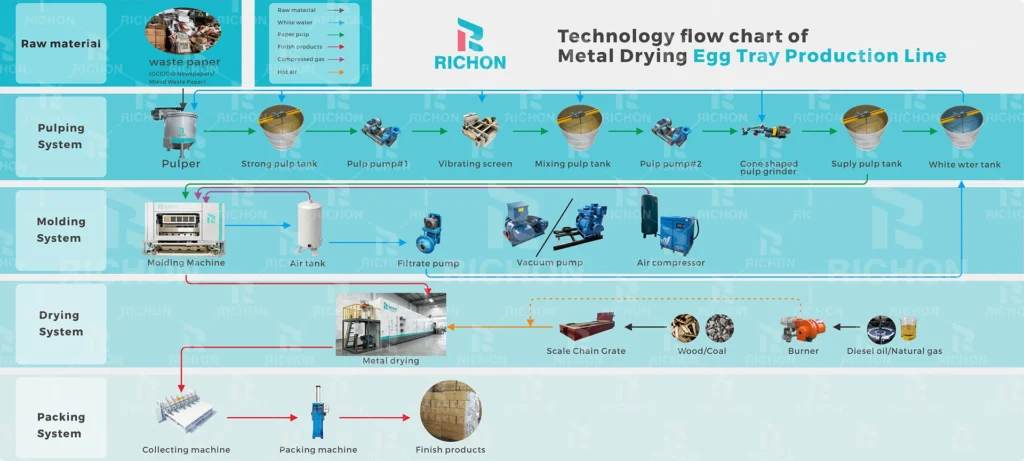
Typical egg tray production follows a continuous workflow:
Waste Paper → Pulping → Forming → Drying → Stacking → Packing
Each stage plays an important role in ensuring stable product quality and efficient production.
Step 1: Waste Paper Preparation
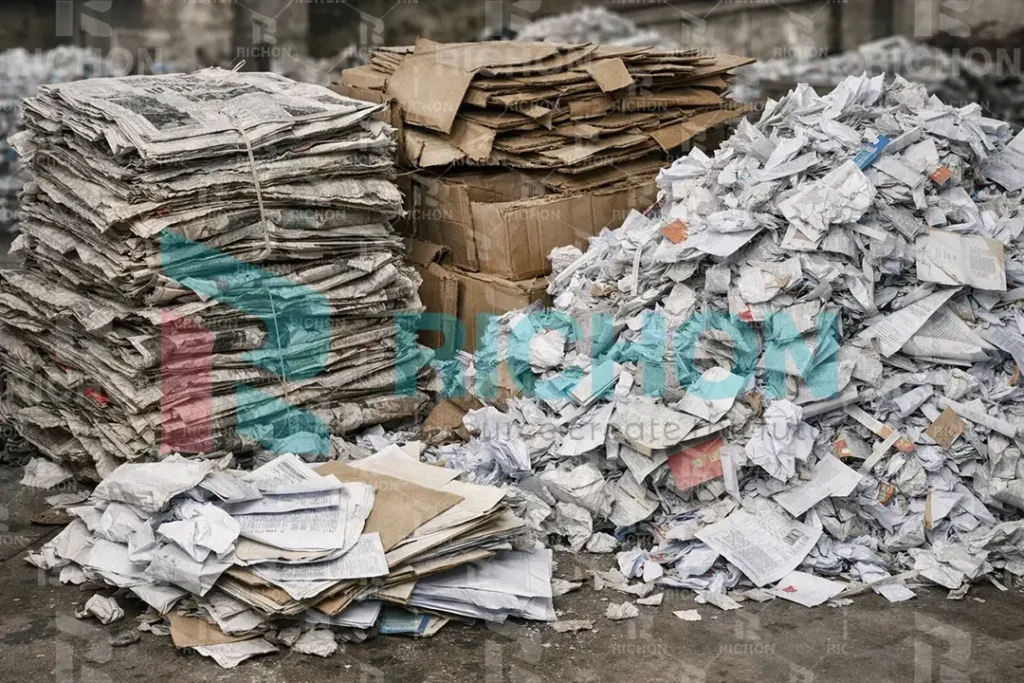
The main raw material used in egg tray production is recycled waste paper.
Common waste paper types include:
- Old newspapers (ONP)
- Old corrugated cartons (OCC)
- Office paper waste
- Mixed recycled paper
Waste paper is first sorted to remove impurities such as plastic, metal, and sand.
The quality of raw materials directly affects:
- Egg tray strength
- Production efficiency
- Pulp preparation stability
You can learn more about raw materials in our guide: Raw Materials for Egg Tray Production
Step 2: Pulping System
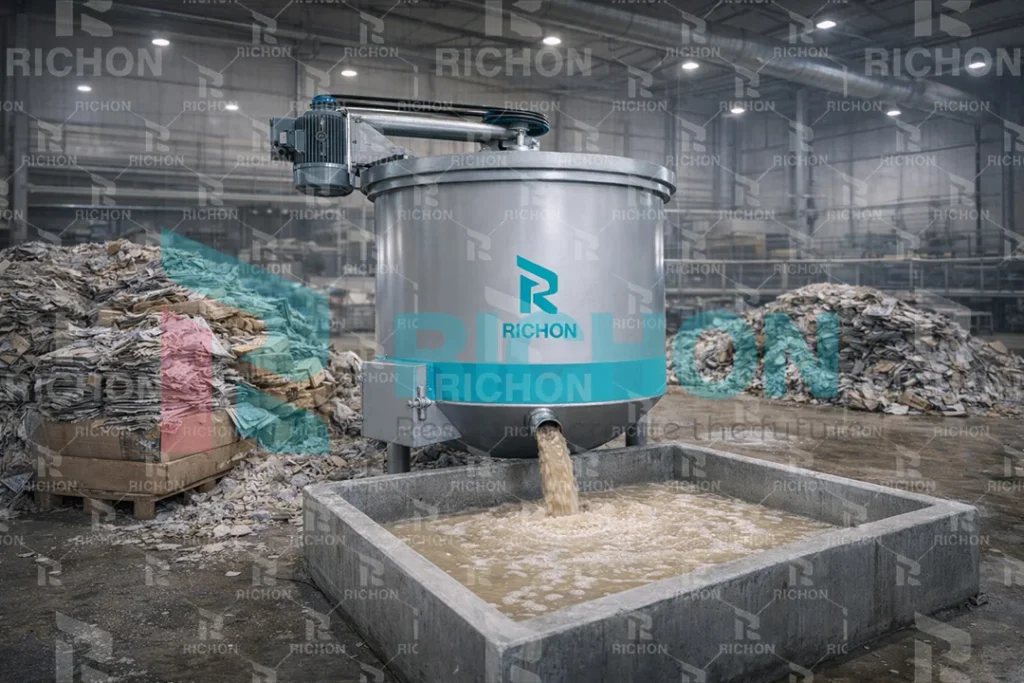
In the pulping stage, waste paper is mixed with water and processed in a hydraulic pulper.
The pulper breaks down paper into fiber slurry.
Typical pulp preparation system includes:
- Hydraulic pulper
- Pulp storage tanks
- Mixing tanks
- Pumps and pipelines
The pulp concentration is usually controlled between:
3% – 5%
This ensures stable forming and proper fiber distribution.
Step 3: Egg Tray Forming Process
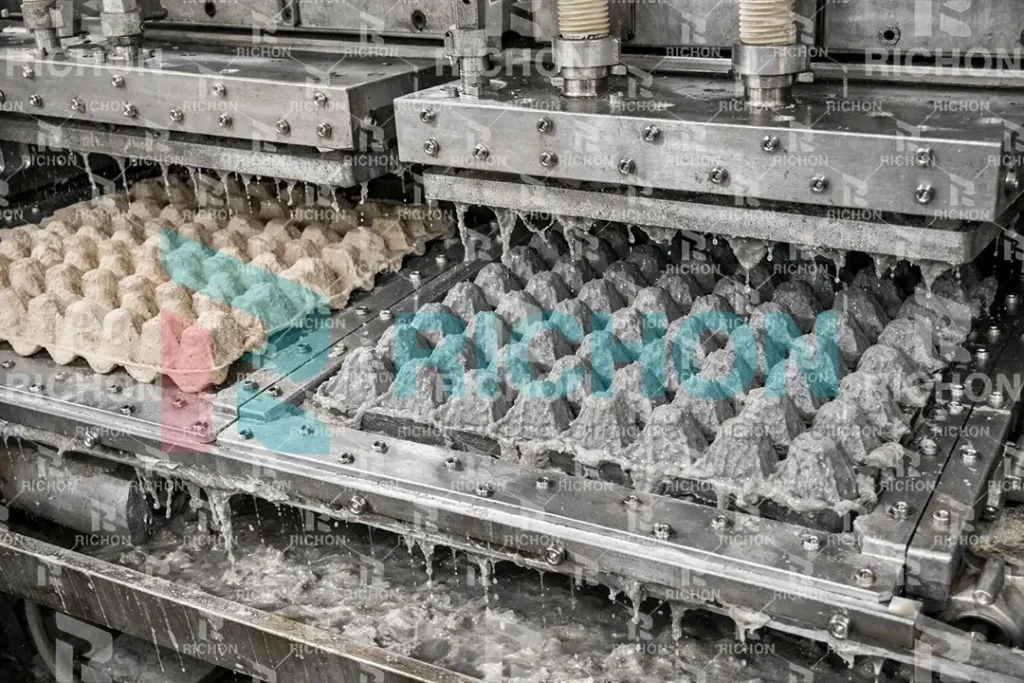
The forming stage is the core of the egg tray production process.
During forming:
- Molds are submerged into the pulp tank
- A vacuum system draws pulp fibers onto the mold surface
- Excess water is removed through the mold
The fiber layer forms the shape of the egg tray.
After forming, the wet trays are transferred to the next stage using a transfer system.
The mold design and forming cycle time directly influence production capacity.
Learn more about mold design here: Mold Technology
Step 4: Egg Tray Drying Process
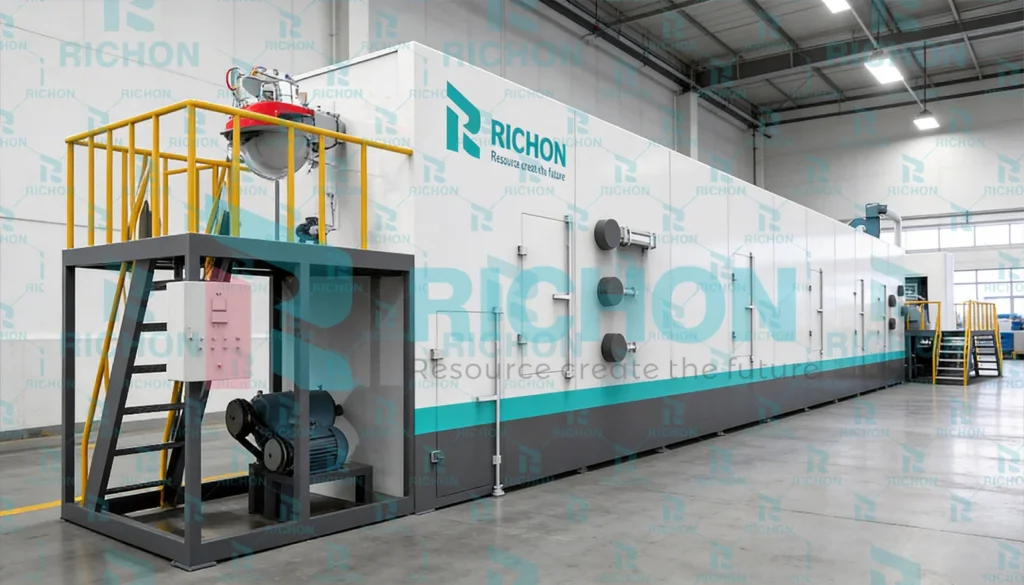
Freshly molded trays contain about 70% moisture, so drying is necessary.
There are three common drying methods:
Natural Drying
- Sun drying
- Low investment
- Requires large outdoor space
Brick Kiln Dryer
- Traditional drying method
- Uses coal, wood, or biomass
Metal Continuous Dryer
- Fully automated drying system
- Stable temperature control
- Suitable for large capacity production
You can read a full comparison here: Drying System Comparison
Step 5: Stacking and Packing
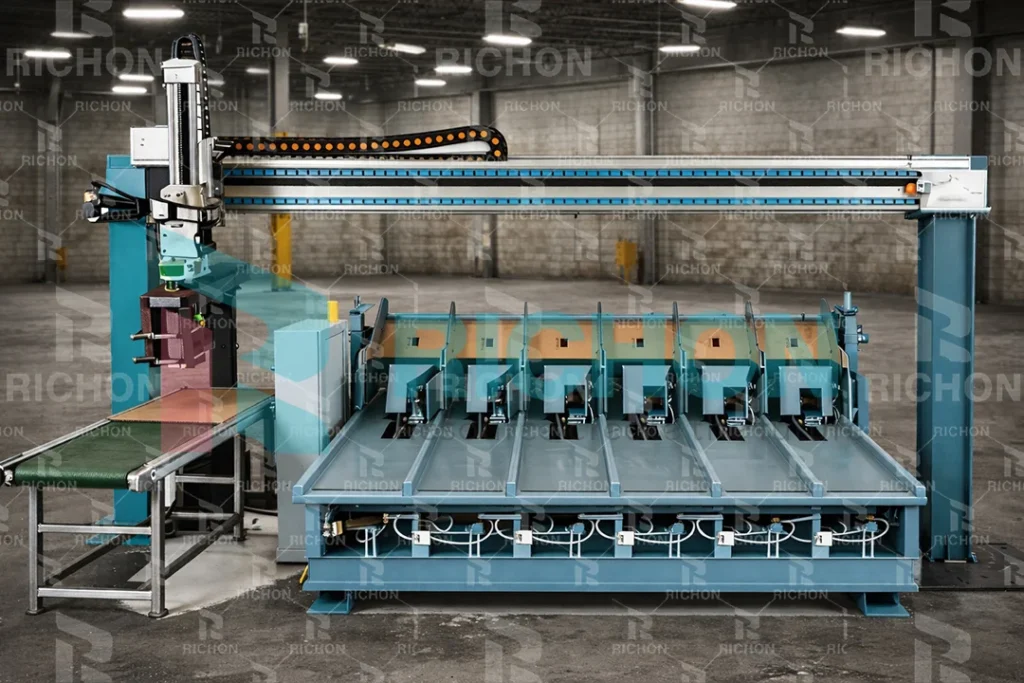
After drying, egg trays are automatically stacked.
The stacking system typically performs:
- Counting trays
- Compressing stacks
- Bundling for transportation
Finished trays are then stored in the warehouse or shipped to customers.
Because egg trays are lightweight but bulky, factories usually design storage areas for high-volume stacking.
Complete Egg Tray Production Workflow
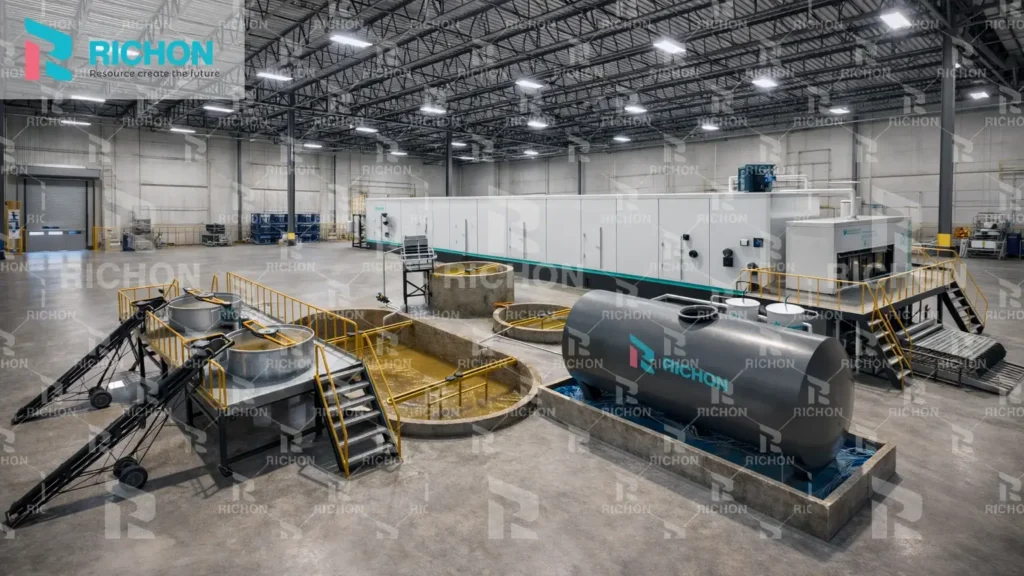
A typical egg tray production line includes the following integrated systems:
| System | Function |
|---|---|
| Pulping system | Waste paper recycling |
| Forming machine | Tray shaping |
| Vacuum system | Fiber forming |
| Drying system | Moisture removal |
| Stacking system | Product handling |
Modern egg tray production lines are designed for continuous automated operation, improving efficiency and reducing labor requirements.
Engineering Considerations for Egg Tray Production
From an engineering perspective, stable egg tray production requires:
Proper pulp concentration control
Maintains product consistency.
High-precision molds
Ensures uniform tray shape and strength.
Efficient drying systems
Reduces energy consumption and increases productivity.
Optimized factory layout
Minimizes material transportation and improves workflow.
A well-designed production line combines these factors to achieve stable long-term production.
You can explore different machine configurations in our Egg Tray Production Line page.
Conclusion
The egg tray production process converts recycled waste paper into practical packaging products through a series of controlled manufacturing stages.
The key steps include:
- Waste paper preparation
- Pulping system
- Vacuum forming
- Drying process
- Stacking and packing
With proper equipment configuration and factory planning, egg tray production can achieve high efficiency, stable quality, and strong environmental benefits.
If you are planning to start an egg tray manufacturing project, our engineering team can provide equipment recommendations and factory layout guidance.
You can contact us through our Contact page for more information.
Need a Capacity Recommendation for Your Market?
Share your target output, local humidity/energy conditions, and tray type. Our engineers will suggest a suitable 3,000–8,000 pcs/h configuration and drying solution.
- Factory layout & utilities checklist
- Drying bottleneck evaluation
- Cost & ROI estimation reference
