


How Much Water Is Needed for Egg Tray Production? Complete Consumption Guide
Introduction
Water is one of the most critical resources in egg tray production.
It is used throughout the entire process—from pulp preparation to forming and equipment cleaning.
Many investors ask:
How much water is required to run an egg tray factory?
The answer depends on:
- Production capacity
- Pulp concentration
- Water recycling system
- Equipment configuration
In this guide, we explain actual water consumption in egg tray production, including how water is used, how much is required, and how to reduce water usage through system design.
For a complete overview of the manufacturing process, see Egg Tray Production Process
Where Is Water Used in Egg Tray Production?
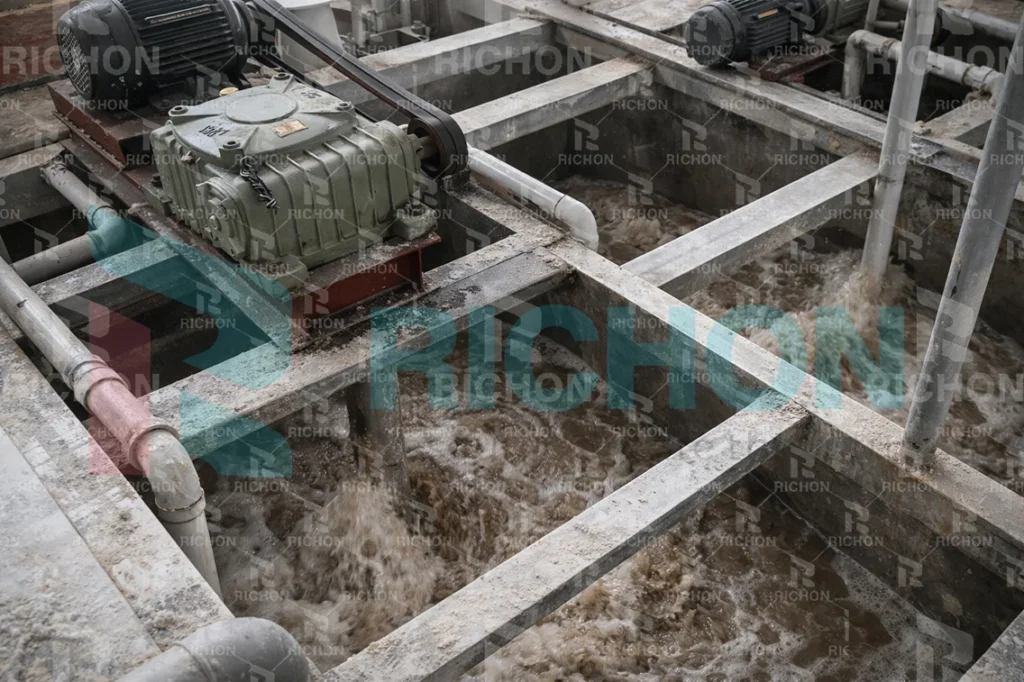
Water is used in several key stages:
1️⃣ Pulping System
- Waste paper is mixed with water
- Paper fibers are broken down into slurry
- Typical pulp consistency: 3%–5%
👉 This stage consumes the largest volume of water
2️⃣ Forming Process
- Water carries fibers to the mold
- Vacuum removes excess water
- Most water is recycled back into the system
3️⃣ Equipment Cleaning
- Pipes and tanks require periodic flushing
- Prevents blockage and contamination
Typical Water Consumption by Production Capacity
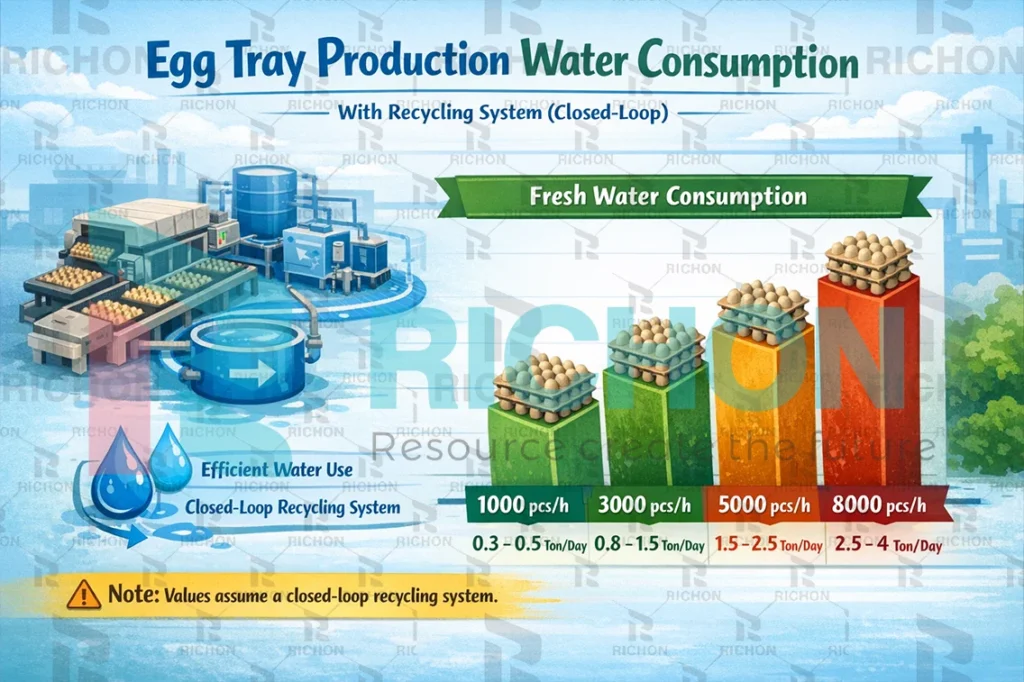
Water consumption varies by capacity.
Reference Values (with recycling system)
| Capacity | Fresh Water Consumption |
|---|---|
| 1000 pcs/h | 0.3 – 0.5 ton/24h |
| 3000 pcs/h | 0.8 – 1.5 ton/24h |
| 5000 pcs/h | 1.5 – 2.5 ton/24h |
| 8000 pcs/h | 2.5 – 4 ton/24h |
⚠️ Important:
These values assume a closed-loop water recycling system.
Without recycling, consumption can increase by:
5–10 times
Why Water Consumption Is Lower Than Expected
Many beginners assume egg tray production uses large amounts of water.
In reality, most modern production lines use:
Closed-Loop Water Recycling
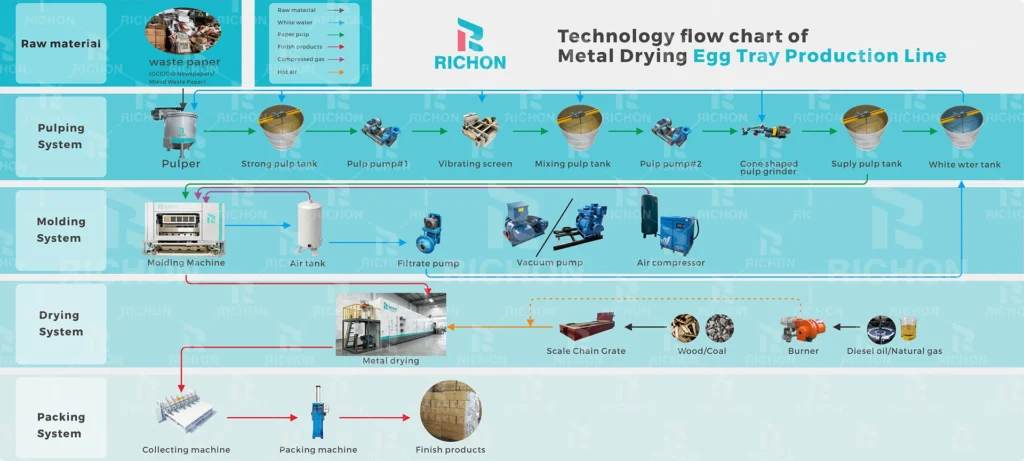
In a standard system:
- Water drained from molds is collected
- Returned to pulp tanks
- Reused continuously
Typical recycling rate:
80% – 90%
This significantly reduces fresh water demand.
Water Balance in Egg Tray Production
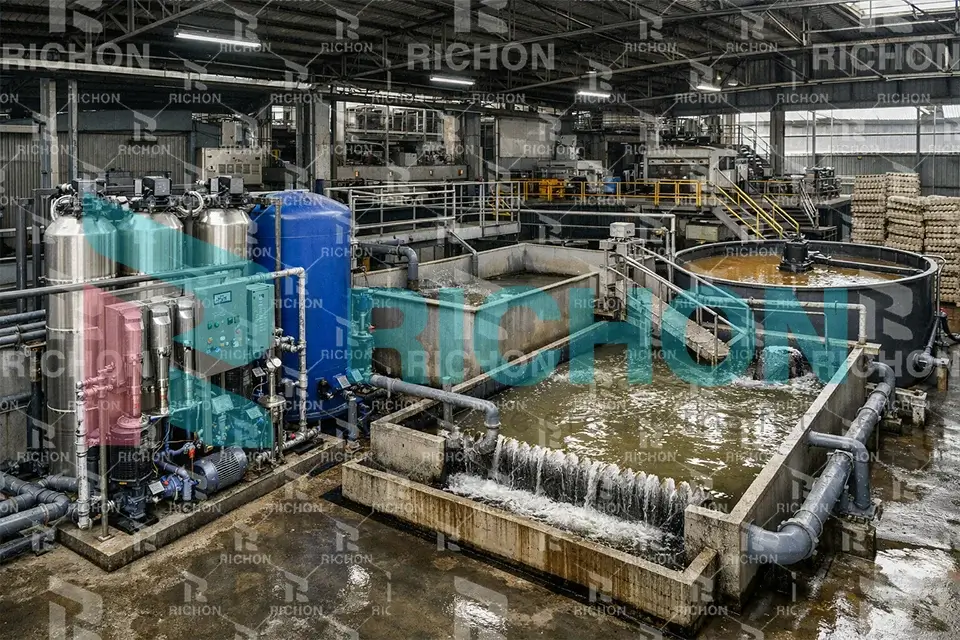
To understand water usage, consider this simplified balance:
Input water → Pulp system → Forming → Recovery → Reuse
Water loss mainly occurs due to:
- Evaporation during drying
- Minor system leakage
- Sludge discharge
Actual fresh water is mainly used to:
- Compensate evaporation
- Maintain system stability
Water Treatment Requirements

Although water is recycled, basic treatment is required:
Common systems include:
- Sedimentation tanks
- Filtration systems
- Sludge removal
Proper water treatment helps:
- Improve product quality
- Extend equipment life
- Reduce maintenance issues
How to Reduce Water Consumption
From an engineering perspective, water consumption can be optimized through:
1️⃣ Stable Pulp Concentration
Maintaining 3%–5% consistency reduces excess water usage.
2️⃣ Efficient Vacuum System
Better vacuum performance:
- Improves water recovery
- Reduces water loss
3️⃣ Optimized Pipeline Design
Reduces leakage and unnecessary water circulation loss.
4️⃣ Proper Maintenance
Prevents:
- Blockage
- Water overflow
- System inefficiencies
Relationship Between Water, Energy, and Cost
Water consumption is closely linked to:
- Energy usage (pumps, vacuum systems)
- Production cost
- Factory layout
For example:
- More water → higher pumping energy
- Poor recycling → higher operating cost
You can also read:
👉 Egg Tray Machine Price Guide
👉 Egg Tray Factory Layout Guide
Engineering Recommendation
Based on real project experience:
- Always design a closed-loop water system
- Reserve space for water tanks and treatment systems
- Ensure stable water supply and drainage
In most cases, water availability is not a limiting factor, as long as recycling is properly implemented.
Conclusion
Water plays a key role in egg tray production, but actual consumption is much lower than many investors expect.
Key takeaways:
- Most water is recycled (80–90%)
- Fresh water demand is relatively low
- Proper system design significantly reduces consumption
Understanding water usage helps investors better plan factory infrastructure and operating costs.
If you are planning a project, you can explore our Egg Tray Production Line
for equipment configurations and system design.
Or contact our engineering team via Contact for customized solutions.
Need a Capacity Recommendation for Your Market?
Share your target output, local humidity/energy conditions, and tray type. Our engineers will suggest a suitable 3,000–8,000 pcs/h configuration and drying solution.
- Factory layout & utilities checklist
- Drying bottleneck evaluation
- Cost & ROI estimation reference
