


How Much Electricity Does an Egg Tray Machine Use? Power Consumption Guide
Introduction: Why Electricity Consumption Matters in Egg Tray Production
For investors planning to start an egg tray manufacturing business, one of the most common questions is: how much electricity does an egg tray machine use?
Electricity consumption is an important part of the operating cost of molded fiber packaging production. Although waste paper raw materials are inexpensive, energy consumption can significantly affect long-term factory profitability. Understanding the electricity requirements of an egg tray production line helps factory owners estimate operating costs and select the most suitable equipment configuration.
A complete egg tray manufacturing line includes several systems that consume electricity, including the pulping system, forming machine, vacuum pumps, air compressors, and drying system fans. Each stage of the production process contributes to the overall energy consumption.
By understanding where electricity is used and how to estimate the cost, factory investors can better plan budgets and improve operational efficiency.
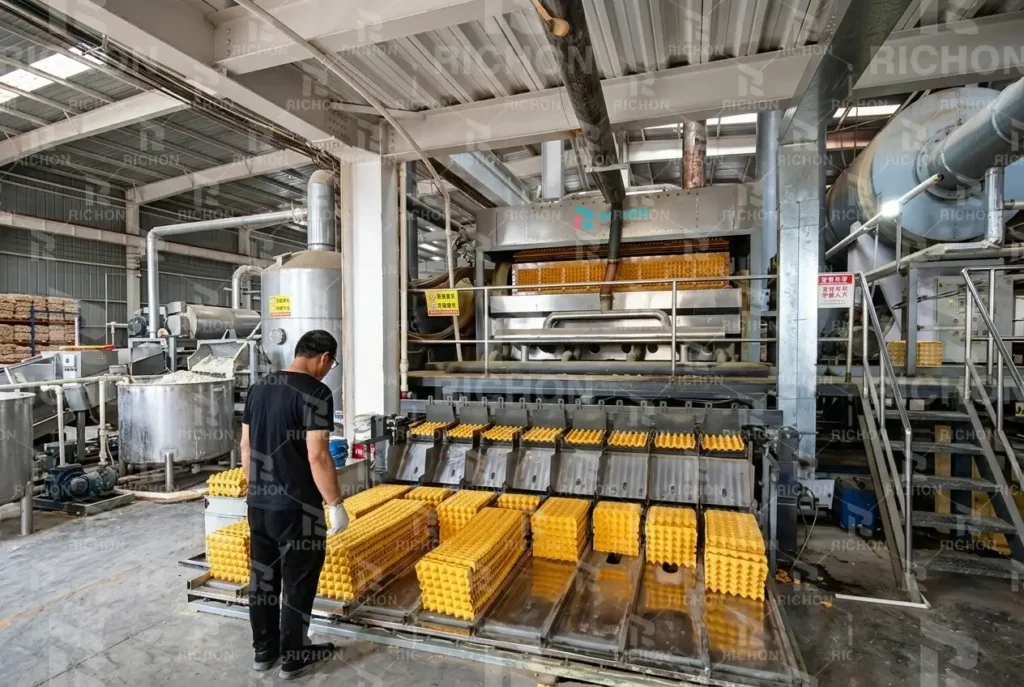
Typical Power Consumption of Egg Tray Machines
The electricity consumption of egg tray machines mainly depends on production capacity, machine design, and automation level.
Small semi-automatic machines require relatively low installed power, while fully automatic high-capacity production lines require more electricity due to additional motors, conveyors, and control systems.
Typical power ranges for egg tray machines are shown below:
| Production Capacity | Installed Power | Average Electricity Usage |
|---|---|---|
| 1000 pcs/h | 35–45 kW | 25–35 kW |
| 2000 pcs/h | 45–60 kW | 35–45 kW |
| 3000–4000 pcs/h | 60–85 kW | 45–60 kW |
| 5000–6000 pcs/h | 80–110 kW | 60–80 kW |
| 7000–8000 pcs/h | 100–140 kW | 75–100 kW |
It is important to distinguish between installed power and actual electricity consumption. Installed power refers to the maximum rated capacity of all motors combined, while actual operating consumption is usually lower during normal production.
Choosing the correct machine size is important for balancing energy consumption and output. Our guide on how to choose the right egg tray production line capacity explains how production capacity affects equipment efficiency.
Main Equipment That Consumes Electricity in an Egg Tray Production Line
The total electricity consumption of an egg tray factory is distributed across several key pieces of equipment.
Hydraulic Pulper
The pulper breaks waste paper into pulp fibers. A typical pulper motor consumes 11–45 kW, depending on the size of the pulp tank and processing capacity.
Forming Machine
The egg tray forming machine shapes the pulp into trays using vacuum suction. The forming machine itself requires relatively little electricity, but the vacuum system connected to it consumes a significant amount of power.
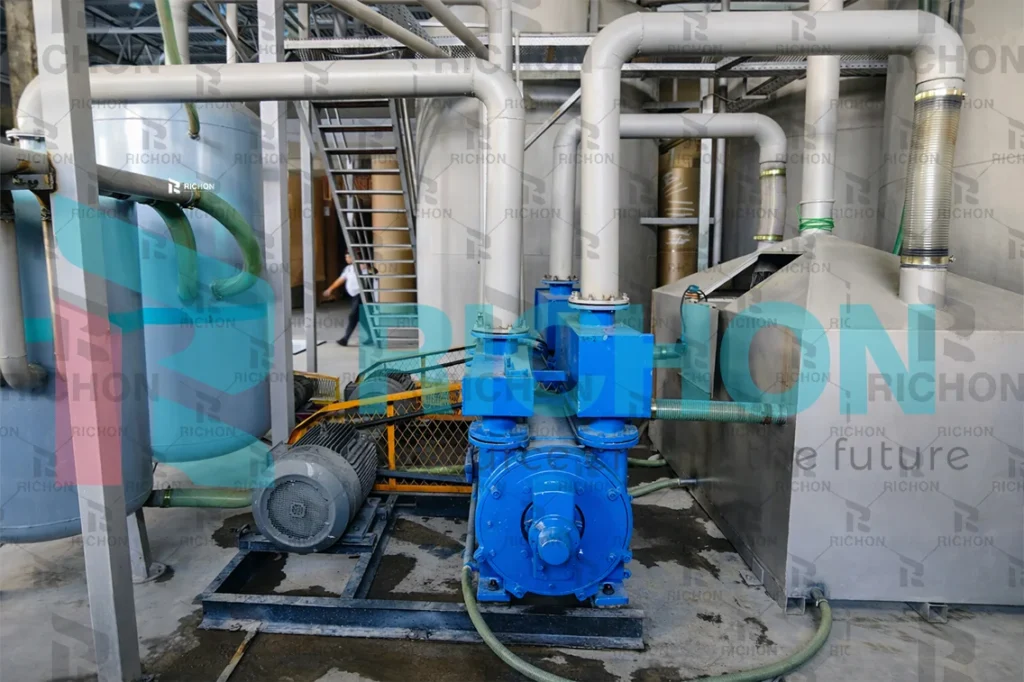
Vacuum Pump System
Vacuum pumps create suction to form wet trays. Depending on machine capacity, vacuum pumps typically consume 15–55 kW and represent one of the largest electricity loads in the system.
Air Compressor
Compressed air helps release the molded trays from the molds and supports mechanical movements. Air compressors typically consume 11–30 kW.
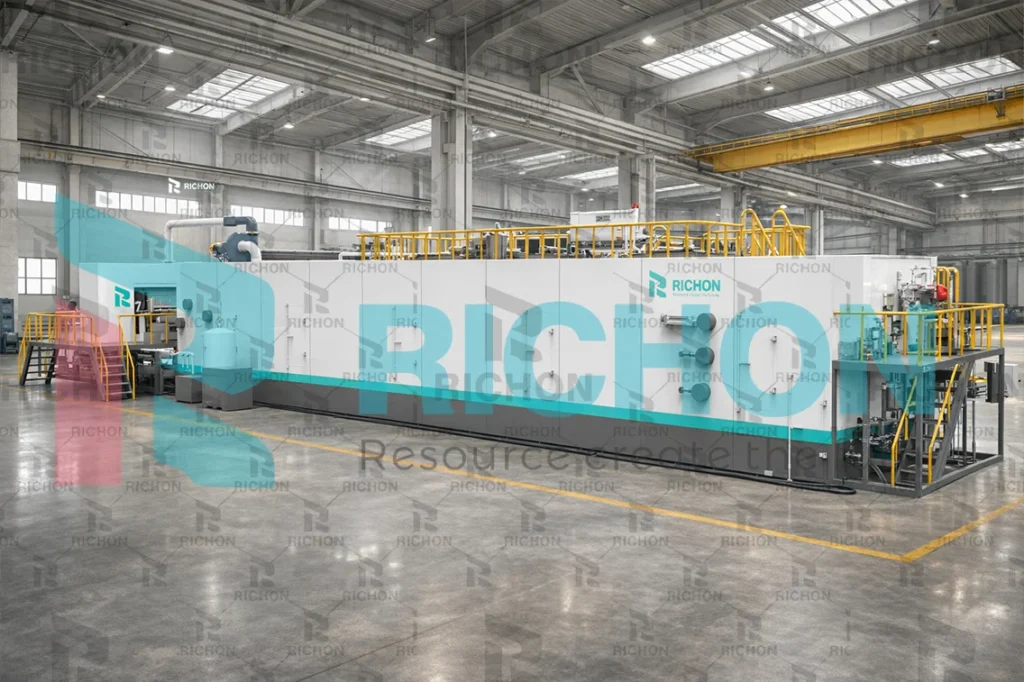
Drying System Fans
In fully automated production lines, hot air circulation fans are used in the drying system. A detailed comparison of drying technologies can be found in our guide to <a href=”/drying-system-comparison/”>egg tray drying systems</a>.
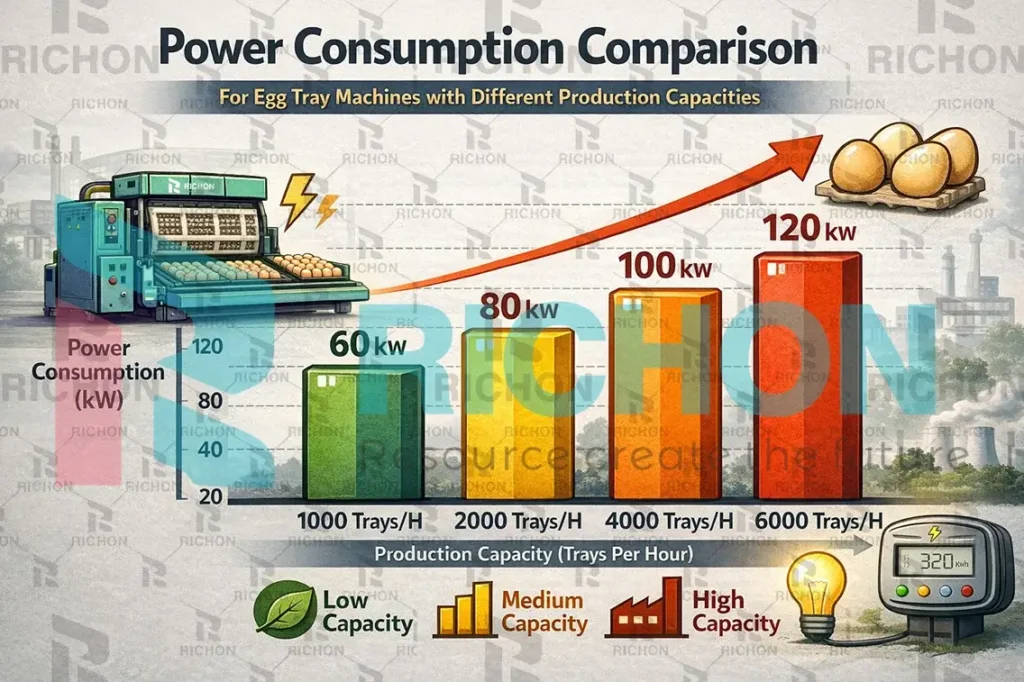
Electricity Consumption by Production Capacity
Electricity consumption generally increases with production capacity, but larger machines often consume less electricity per tray produced.
For example, a 4000 pcs/h egg tray production line typically operates with an average electricity load of approximately 50–60 kW.
If the machine operates for 20 hours per day:
Daily electricity consumption ≈ 50 kW × 20 hours
= 1000 kWh
If electricity costs $0.10 per kWh, the daily electricity expense would be:
1000 kWh × $0.10 = $100 per day
Because the machine produces large quantities of trays, the electricity cost per tray remains relatively low.
Real Factory Electricity Consumption Case
To better understand real energy usage, consider a typical egg tray factory operating a 4000 pcs/h production line.
Factory configuration:
• Capacity: 4000 trays per hour
• Operating time: 20 hours per day
• Average load: 55 kW
Daily electricity consumption:
55 kW × 20 hours = 1100 kWh
If electricity costs $0.10 per kWh, the daily electricity cost would be approximately:
1100 × $0.10 = $110
Daily production output:
4000 trays × 20 hours = 80,000 trays
Electricity cost per 1000 trays:
$110 ÷ 80 = $1.38
This example demonstrates that electricity cost is relatively small compared with other operating expenses such as drying fuel, labor, and factory management.
How to Calculate Electricity Cost for Egg Tray Production
Factory investors often estimate electricity cost using a simple formula:
Electricity Cost per 1000 Trays =
(Total Electricity Consumption per Hour × Electricity Price) ÷ Output per Hour
Example:
Machine capacity
4000 trays per hour
Electricity consumption
50 kW
Electricity price
$0.10 per kWh
Electricity cost per hour
50 × 0.10 = $5
Electricity cost per 1000 trays
$5 ÷ 4 = $1.25
Investors should also consider total project investment and equipment cost, which are explained in our article on egg tray machine price and ROI analysis.
Factors That Affect Egg Tray Machine Electricity Consumption
Several factors influence the energy consumption of egg tray machines.
Machine design
Modern pulp molding machines use optimized vacuum pipelines and high-efficiency motors that significantly reduce electricity usage.
Production capacity
Higher capacity machines distribute energy consumption across more products, reducing electricity cost per tray.
Automation level
Fully automatic production lines include additional conveyors, pumps, and motors that increase installed power but improve overall productivity.
Drying system design
The drying stage is closely related to the egg tray production process, including pulp forming and moisture removal stages.
Equipment maintenance
Poor maintenance, worn motors, or clogged pipelines can increase electricity consumption and reduce equipment efficiency.
Energy Saving Tips for Egg Tray Factories
Reducing electricity consumption can significantly improve long-term profitability.
Recommended energy-saving practices include:
• Using high-efficiency vacuum pumps
• Installing variable frequency drives (VFD) for motors
• Optimizing vacuum pipeline layout
• Regularly maintaining motors and bearings
• Improving airflow efficiency in drying systems
Even small improvements in machine efficiency can reduce operational costs in large-scale production.
Engineering Insight from Real Egg Tray Factory Projects
From an engineering perspective, electricity consumption in egg tray production is primarily determined by the efficiency of the vacuum system and the overall machine design. In many egg tray factory projects, we have observed that optimizing vacuum pipelines and selecting high-efficiency motors can reduce electricity consumption by 10–20%.
In real production environments, a well-designed egg tray production line not only improves product quality but also significantly reduces long-term operating costs. Modern pulp molding machines are designed to balance production capacity with energy efficiency, allowing factories to maintain stable production while minimizing electricity usage.
When planning a new egg tray manufacturing project, engineers typically evaluate the relationship between equipment capacity, drying system configuration, and electricity consumption. This approach helps investors achieve the best balance between production efficiency and operating cost.
Conclusion: Understanding Energy Consumption Before Investing
Electricity consumption is an important factor when evaluating the operating cost of an egg tray production line. Although installed power may appear high, the actual electricity cost per tray is relatively low due to the high productivity of pulp molding equipment.
By understanding how electricity is consumed in pulping, forming, and drying stages, factory investors can choose appropriate equipment and optimize factory operation.
Proper machine selection, efficient system design, and regular maintenance can significantly reduce energy consumption and improve the profitability of egg tray manufacturing projects.
Related Guides for Egg Tray Factory Planning
If you are planning to start an egg tray manufacturing business, the following guides provide more detailed technical and investment information:
- Egg Tray Production Line Overview
- Egg Tray Drying System Comparison: Brick Dryer vs Metal Dryer
- How to Choose the Right Egg Tray Production Line Capacity
- Egg Tray Machine Price and ROI Guide
- Egg Tray Production Process Explained
Frequently Asked Questions
How much electricity does an egg tray machine use?
Most egg tray machines consume between 35 kW and 150 kW, depending on production capacity and equipment configuration.
Which equipment consumes the most electricity?
The vacuum pump system and pulping system typically consume the largest portion of electricity.
Does the drying system use electricity?
Drying systems mainly use fuel or biomass for heating, while electricity powers fans and conveyors.
How can egg tray factories reduce electricity consumption?
Factories can reduce electricity usage by installing efficient vacuum pumps, optimizing pipelines, using VFD motors, and maintaining equipment regularly.
Need a Capacity Recommendation for Your Market?
Share your target output, local humidity/energy conditions, and tray type. Our engineers will suggest a suitable 3,000–8,000 pcs/h configuration and drying solution.
- Factory layout & utilities checklist
- Drying bottleneck evaluation
- Cost & ROI estimation reference
