


Egg Tray Factory Layout Design for Efficient Space, Flow, and Production Planning
Learn how to design an efficient egg tray factory layout with optimized production flow, workshop zoning, drying system arrangement, and utility planning. This guide helps you reduce cost, improve efficiency, and build a scalable pulp molding production plant.
Layout Design Key Factors
Why Factory Layout Matters in Egg Tray Production
Factory layout is not only a space arrangement issue. It directly affects raw material handling, slurry transfer distance, product transfer speed, drying efficiency, maintenance access, labor organization, and future line upgrades.
Production Efficiency
A logical layout reduces movement between pulping, forming, drying, and packing. Shorter transfer routes help improve line continuity and reduce idle time.
Energy Performance
Drying area position, heat source routing, and product transfer method influence overall thermal efficiency. Poor layout can increase fuel and power use.
Labor Organization
Clear zoning helps operators manage loading, machine operation, inspection, drying transfer, and packing without repeated crossing of work areas.
Future Expansion
A layout designed with reserved utility corridors and extension space is easier to scale from a smaller line to a higher-output production configuration.
Standard Production Flow Layout for an Egg Tray Factory
The best layout usually follows the actual production sequence. This reduces cross-traffic, lowers transfer distance, and makes utility connections easier to manage.
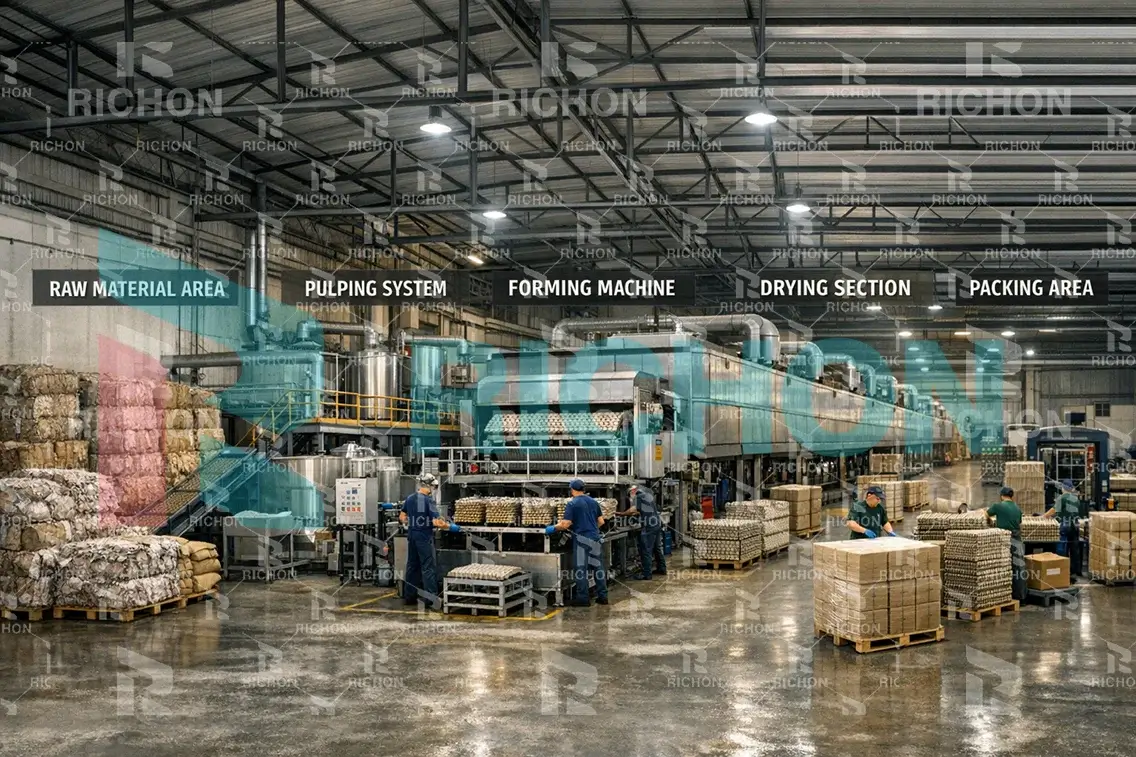
Core Functional Zones in an Egg Tray Factory Layout
A complete egg tray factory usually includes several linked functional zones. Each zone should have enough operating space, service access, and safe transfer paths.
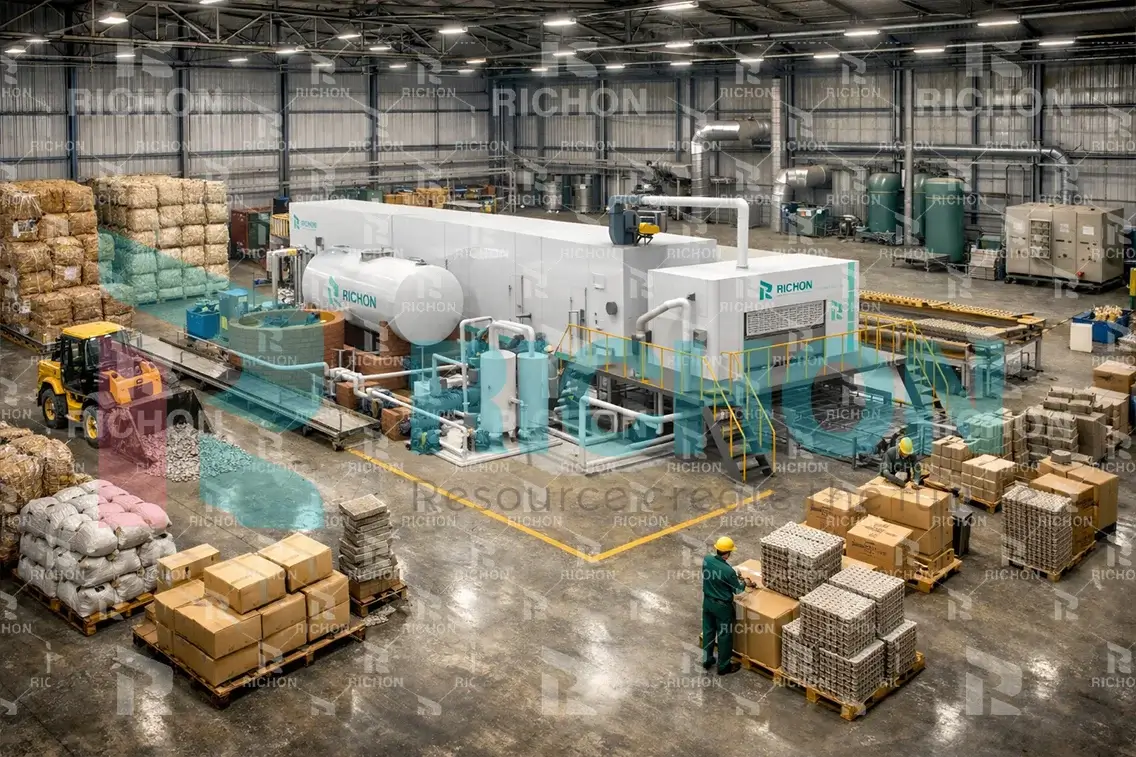
1. Raw Material Storage Area
This zone is used for waste paper storage, manual sorting, and feeding preparation. It should be close to the pulping area but separated enough to avoid dust and clutter in the wet-process workshop.
2. Pulping and Mixing Area
Includes pulper, slurry tanks, agitators, white water circulation, pumps, and pipe routing. This zone should support short piping distance and convenient maintenance access.
3. Forming and Molding Area
Houses the egg tray forming machine, vacuum equipment, compressed air system, and wet tray transfer point. Sufficient operator clearance should be reserved around the machine frame.
4. Drying Area
This is normally the largest and most energy-sensitive zone in the factory. Layout planning depends on whether the project uses natural drying, civil dryer, or metal continuous dryer.
5. Packing and Finished Goods Area
This section is used for drying discharge, inspection, counting, stacking, bundling, and temporary finished product storage before shipment.
6. Utility and Service Area
Includes electrical cabinet, control area, air compressor, vacuum pump, boiler, burner system, water tank, and maintenance tools. These systems should be accessible without interrupting production flow.
Factory Layout Differences by Production Capacity
The required workshop area and equipment arrangement vary according to output, automation level, drying method, and product handling approach. For detailed planning, you can also review how to choose the right egg tray production line capacity and the differences between 3k, 5k, 8k, and 10k egg tray production lines.
| Capacity Range | Typical Layout Features | Suggested Drying Solution | Typical Space Reference |
|---|---|---|---|
| 1000–2000 pcs/h | Compact production zone, simpler transfer path, more manual handling, smaller raw material and packing area | Natural drying in hot regions or compact drying setup | About 200–400 m², depending on storage and local climate conditions |
| 3000–5000 pcs/h | Balanced workshop layout, clearer functional separation, improved logistics route, more stable daily output | Brick kiln dryer or entry-level metal dryer | About 500–1000 m², depending on dryer type and utility arrangement |
| 6000–8000 pcs/h | Higher automation demand, longer drying section, stronger finished goods organization, wider forklift or conveyor routes | Continuous metal drying system | About 1000–1800 m², depending on line width and packaging method |
| 8000+ pcs/h | Integrated process planning, multi-zone organization, greater attention to heat management, maintenance corridor, and expansion reserve | Fully automatic continuous dryer with matching fuel system | About 1500–3000 m² or more, depending on storage, automation, and output target |
How to Estimate Space Requirement for an Egg Tray Factory
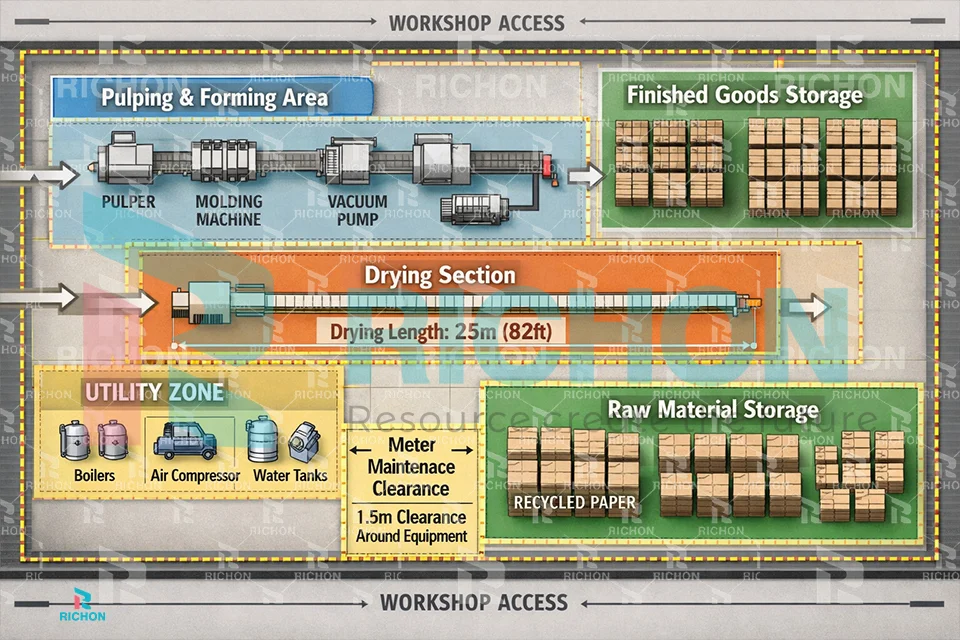
Factory area should be calculated from process demand, not from machine footprint alone. Drying zone, storage space, transfer aisle, maintenance clearance, and utility area all need to be included.
Basic Planning Formula
Total Factory Area = Production Area + Raw Material Storage + Finished Goods Area + Utility Area + Safety & Maintenance Clearance
- Production area includes pulping, forming, and drying sections
- Storage area depends on daily raw paper supply and shipment cycle
- Utility area includes pumps, tanks, compressor, vacuum unit, boiler, or burner equipment
- Additional aisle width is needed for labor movement, carts, or forklift access
Utility System Planning in Factory Layout Design
Good factory layout must also consider utility distribution. Water circulation, power supply, compressed air, vacuum piping, and heating system arrangement should follow the production sequence and reduce unnecessary routing distance.
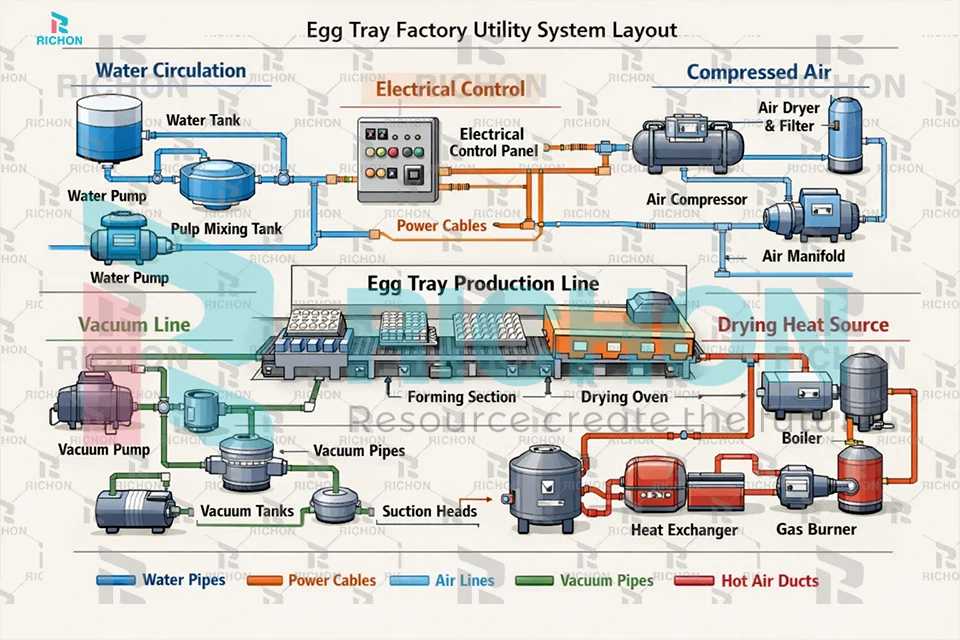
Water System
The pulping and forming sections require stable process water and white water return. Tank position should support gravity return where possible and reduce pipe complexity.
Related reading: Raw Material & Recycling Guide
To understand utility demand more clearly, see water consumption in egg tray production.
Power and Control
Main power cabinets, control panels, and cable routing should be arranged for safe maintenance access. Forming machine, pumps, vacuum equipment, and conveyor drives need coordinated electrical planning.
You can also review electricity consumption of an egg tray machine for power planning and operating load analysis.
Heat and Drying Utilities
Drying layout should match heat source type, burner position, duct direction, air circulation, and maintenance path. This is one of the most important decisions in overall plant planning.
Related reading: Drying System Comparison
For a more direct comparison of drying structure, see brick dryer vs metal dryer.
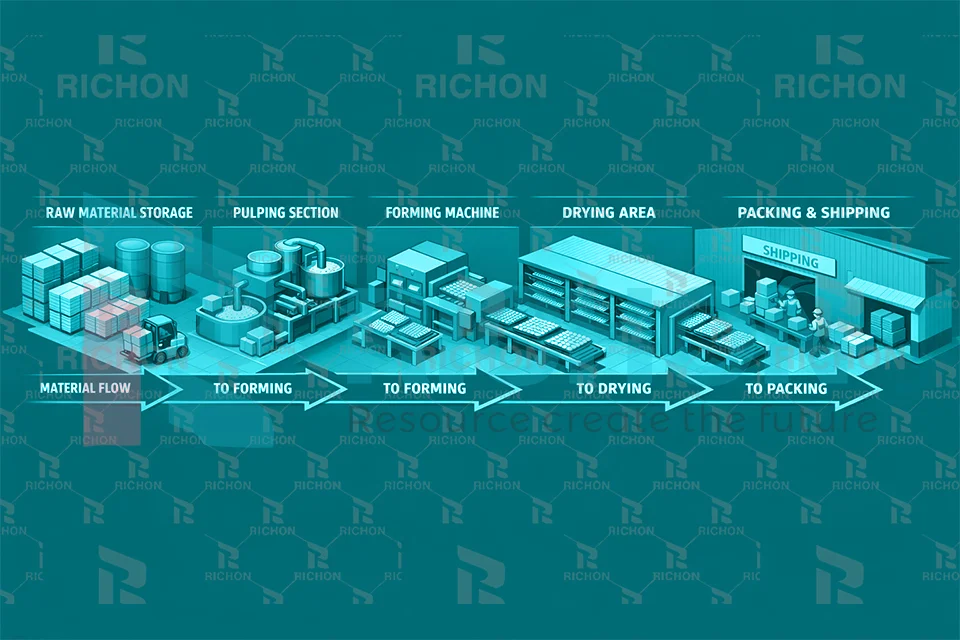
Material Flow and Internal Logistics Should Follow a Single Direction
The best factory layouts minimize backtracking. Waste paper should move toward pulping, wet trays should move toward drying, and finished goods should move toward the packing and shipping side without crossing incoming material routes.
Keep near paper storage and pulping preparation area.
Keep the route between forming and drying as short and direct as possible.
Arrange packing close to warehouse door or shipment side.
Avoid heavy traffic overlap with operating positions and maintenance zones.
Common Factory Layout Mistakes That Increase Cost and Reduce Efficiency
Many layout problems appear after installation, when moving utilities or changing transfer routes becomes expensive. Early planning helps avoid these avoidable losses.
Drying Area Too Far from Forming
A long wet product transfer route increases handling time, raises breakage risk, and complicates labor organization.
Insufficient Storage Space
Ignoring raw material or finished goods storage causes congestion around core production equipment and reduces operational order.
Utility Equipment in the Wrong Position
Poor placement of tanks, pumps, vacuum units, or boiler systems often creates extra pipe length, maintenance difficulty, and energy loss.
No Reserved Expansion Space
Projects that use all available space from day one often face difficulties when adding molds, extending dryer length, or upgrading packing automation.
Crossed Logistics Paths
When waste paper entry, wet product transfer, and finished product shipment cross each other, labor efficiency and workshop safety both suffer.
Maintenance Access Ignored
Machines may fit physically, but without maintenance gap and operating clearance, daily service becomes difficult and downtime risk grows.
Typical Factory Layout Reference for a Mid-Capacity Egg Tray Project
A medium-capacity line usually needs a practical balance between equipment footprint, dryer length, storage area, and internal transfer route.
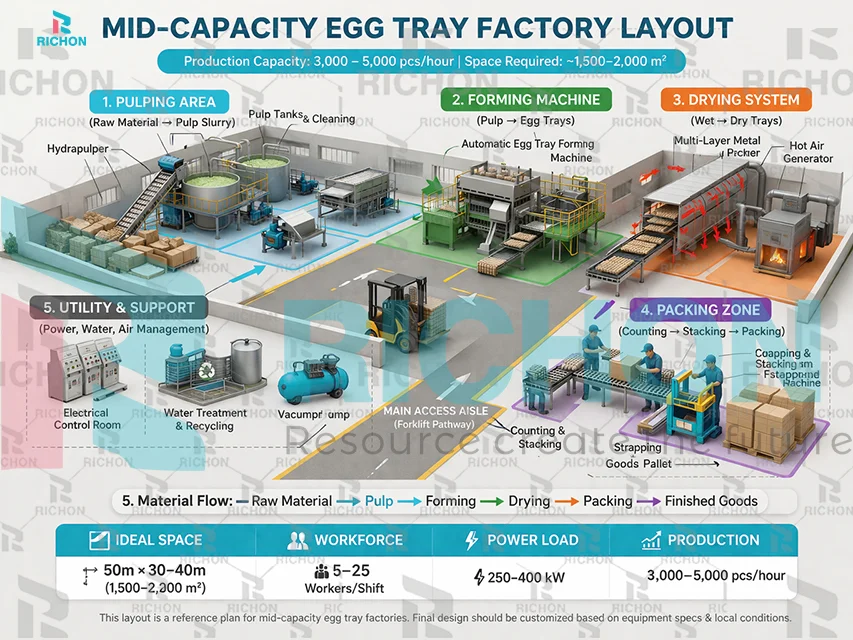
Reference Layout Logic
- Front-end zone for waste paper unloading and short-distance feeding into pulping area
- Pulping and mixing placed near water circulation and pump route
- Forming machine positioned between slurry system and drying entrance
- Drying zone arranged as the longest continuous process section
- Packing and finished goods located near outbound logistics side
- Utility equipment placed where service access does not interrupt the production path
In real project planning, the final layout should also be coordinated with local building dimensions, column spacing, door direction, climate, and the selected dryer structure.
Factory Layout Optimization Tips Before Finalizing the Project
Before confirming the final workshop arrangement, it is helpful to review the layout from operations, utilities, maintenance, and future expansion perspectives.
Leave Expansion Direction
Reserve possible extension space for a longer dryer, larger raw material storage area, or extra downstream packing equipment.
Separate Clean and Dusty Zones
Keep waste paper storage and sorting relatively independent from forming, drying discharge, and packing areas.
Reduce Wet Transfer Distance
Place forming output and drying entrance in a compact relationship to improve productivity and reduce handling difficulty.
Review Utility Corridors Early
Pipe racks, cable routing, exhaust, fuel line, and control access should be considered before civil work is finalized.
Factory Layout Guide FAQ
These questions cover the main issues buyers often evaluate when planning an egg tray production factory.
How much space is needed for an egg tray factory?
The required space depends on production capacity, drying method, raw material storage volume, finished goods storage, and utility equipment. Small projects may use a few hundred square meters, while medium and large lines require significantly more area, especially when using continuous dryers.
What is the best layout for an egg tray production line?
The best layout usually follows a single-direction process flow: raw material area, pulping, forming, drying, packing, and finished goods storage. This helps reduce crossing routes and improves workshop efficiency.
Why is the drying section so important in factory layout planning?
The drying section often occupies the largest area and has the strongest effect on heat routing, energy consumption, transfer distance, and safety clearance. It is normally the core spatial decision in the overall layout.
Should factory layout be planned together with utility design?
Yes. Layout planning should be coordinated with water circulation, electrical routing, compressed air, vacuum system, and heat source configuration. Separating layout from utilities often causes redesign and added cost later.
Can the same factory layout be used for different capacities?
Not directly. The layout logic may be similar, but higher-capacity projects usually need wider transfer routes, larger drying sections, stronger utilities, more storage area, and more expansion reserve.
Need Help Designing Your Egg Tray Factory Layout?
Richon can help evaluate your production target, workshop size, drying method, utility conditions, and layout direction for a more practical egg tray factory plan. You can also continue reading our Production Process, Raw Material & Recycling Guide, Mold Technology, and Energy Consumption Analysis pages for deeper planning support.
Contact Us
Get in touch with our team for any inquiries about our egg tray machines and services.
Project Scope
Do you need a complete project solution or a partial solution? Our team can customize the perfect setup for your specific needs and budget constraints.
Product Expectations
What kind of finished product do you expect, and what quality standards are important to you?
Project Timeline
What is your expected timeline for project implementation and operation?
Budget Range
What is the approximate budget range for your project procurement?
Send Us Your Information
Accurate project information will help us provide the perfect solution for your needs.