


Start Your Egg Tray Production Project
From waste paper recycling to stable industrial output, this engineering guide helps you plan an egg tray factory step by step — including raw material selection, equipment configuration, factory layout, commissioning, and production ramp-up.
How to Start an Egg Tray Production Project (Step-by-Step)
This roadmap follows real engineering logic: from raw material evaluation and capacity planning to equipment selection, factory setup, commissioning, and stable operation. Each step reduces risk and improves return on investment.
Raw Material & Site Assessment
Waste paper supply, utilities, and layout zoning
Evaluate available waste paper (OCC, newspaper, mixed paper) and confirm workshop conditions. Stable raw material supply and proper layout design are the foundation of long-term production stability.
- Confirm waste paper sourcing stability
- Define wet zone and dry zone separation
- Check water, power, and drainage conditions
Capacity Planning & Equipment Selection
Output target, automation level, ROI balance
Select the production capacity (e.g. 3,000–5,000 pcs/h) based on market demand and labor cost. Choose forming system, mold type, and drying configuration to balance investment and efficiency.
- Define daily output and shift plan
- Match automation level with labor cost
- Select drying system based on energy conditions
Installation & Commissioning
System setup, parameter tuning, stability
Commissioning converts equipment into a working system. Focus on pulp consistency, vacuum stability, forming cycle, and drying balance to achieve repeatable production.
- Utilities testing (water, vacuum, heating)
- Parameter tuning and logging
- Initial production trial and QC setup
Training & Stable Operation
SOP, maintenance, quality control
Long-term success depends on daily operation discipline. Establish SOPs, maintenance schedules, and QC routines to maintain stable output and reduce rejection rates.
- Operator training and SOP standardization
- Mesh cleaning and mold maintenance
- Quality tracking (weight, moisture, strength)
Recommended Configuration for 3,000–5,000 pcs/h
This is the most practical mid-size capacity for many first-time investors and expanding factories. The engineering target is clear: stable output + consistent tray strength, with an automation level that reduces labor pressure. Below is a configuration framework that works across different countries by adapting the drying strategy and utilities plan.
This configuration is the most common starting point for investors entering egg tray production, balancing capacity, labor cost, and investment risk.
Suggested Line Scope (Engineering Baseline)
Configure the line as a complete system: pulping stability → forming repeatability → drying throughput → packing rhythm.
For 3,000–5,000 pcs/h, we recommend a configuration that can run continuous production with manageable labor. The exact model depends on tray type, local waste paper quality, and energy cost. The scope below is the baseline for reliable industrial output.
- Pulping & recycling loop: hydrapulper + screening/cleaning + pulp tank circulation to stabilize consistency.
- Forming system: automatic forming with stable vacuum piping and mesh-friendly mold design.
- Drying system: sized to match forming output, using brick or multi-layer metal dryers based on climate and fuel.
- Stacking & packing: semi-automatic or automatic stacking to prevent congestion after drying.
- Commissioning pack: parameter log + QC sampling SOP + operator training routine.
Drying Strategy (Most Important)
In 3–5k lines, drying is often the bottleneck. Choose dryer type by climate and fuel, and match throughput to forming output.
- Humid climates: airflow + exhaust design matters
- Energy planning: gas/diesel/biomass/steam options
- Prevent warping: balanced temperature zones
Utilities & Workshop Readiness
Most delays happen before machines arrive. Workshop readiness makes installation and commissioning faster and safer.
- Drainage & non-slip wet area design
- Electrical room isolated from wet zones
- Vacuum & water loop routing kept short
Quality & Stability Control
Stable quality is a parameter issue, not a luck issue. Set simple QC sampling that operators can do daily.
- Thickness + weight trend monitoring
- Final moisture target for stackability
- Mesh cleaning schedule to reduce rejects
Request a 3–5k Configuration Proposal for Your Country Conditions
Send your target tray type, local waste paper quality, energy source, and workshop size. We will recommend a balanced configuration (forming + drying + utilities plan) and provide a commissioning checklist to reach stable output faster.
If you’re not sure whether 3–5k pcs/h is suitable for your market, we can recommend a configuration based on your raw materials, labor cost, and energy conditions.
Typical Timeline for a 3–5k pcs/h Project
This timeline is based on real commissioning logic: the fastest projects are the ones that prepare utilities and layout before shipment. Below is a practical roadmap from planning to stable production, with clear outputs at each stage.
Most successful projects reach stable production within 8–12 weeks when utilities and layout are prepared in advance.
From Planning to Stable Output
The goal is not machine arrival, but stable production. Commissioning and QC setup are critical for repeatable tray strength.
Layout & Utilities Planning
Confirm workflow zoning, utilities routing, and drying strategy matched to climate and energy conditions.
- Finalize layout: wet → forming → drying → clean packing
- Utilities checklist: power, water loop, vacuum, heat, ventilation
- Confirm tray type and mold configuration
Manufacturing & Pre-Shipment Checks
Equipment manufacturing plus internal checks help reduce onsite adjustment time and startup risk.
- Forming station alignment check
- Vacuum and piping plan confirmation
- Dryer zoning and airflow plan confirmation
Shipment & Site Readiness Finalization
While equipment ships, your team completes foundations, drainage, electrical routing, and workshop clearance.
- Foundation and drainage completed in wet zone
- Electrical room isolated from wet area
- Ventilation and exhaust prepared near dryer
Installation & Utilities Dry Run
Mechanical installation, pipe routing, and utilities testing before wet commissioning begins.
- Vacuum stability test and leak check
- Water circulation loop test
- Dryer heat and airflow response test
Wet Commissioning & Trial Production
System-level tuning: pulp consistency → forming cycle → drying balance → packing rhythm.
- Set baseline parameters and keep a tuning log
- Establish QC sampling: thickness, weight, moisture
- Operator SOP training for daily production routine
Ramp-Up to Stable Production
Most factories reach stable output after operators can run SOP consistently and troubleshoot by data.
- Daily inspection and weekly maintenance schedule
- Reject rate tracking and root-cause fixes
- Finalize spare parts plan for long-term uptime
Want a Timeline Matched to Your Workshop and Country Conditions?
Send your workshop size, climate, energy source, waste paper type, and target output (3k / 4k / 5k pcs/h). We’ll reply with a practical plan: layout notes, utilities checklist, and a commissioning roadmap for stable output.
Understanding the Egg Tray Production System
A standard molded pulp egg tray line is a four-system workflow: Pulping → Forming → Drying → Packing. The engineering goal is not only output speed, but stable tray strength, low rejection rate, and predictable operating cost.
Before finalizing your project plan, it’s important to understand how each system works together in the production line.
Pulping
Fiber disintegration and impurity removal to stabilize pulp quality before molding.
Forming
Vacuum dewatering and mold accuracy control tray thickness, shape, and repeatability.
Drying
Heat and airflow balance reduce moisture while protecting strength and minimizing deformation.
Packing
Stacking rhythm and bundling must match output to reduce labor pressure and product damage.
Engineering Control Points That Define Long-Term Output
Many lines can run fast during a demo. Industrial production requires repeatability. In practice, stable output comes from consistent pulp, predictable mold dewatering, and a drying system matched to capacity and climate.
If you want deeper technical details, use the dedicated pages on mold technology and drying system comparison.
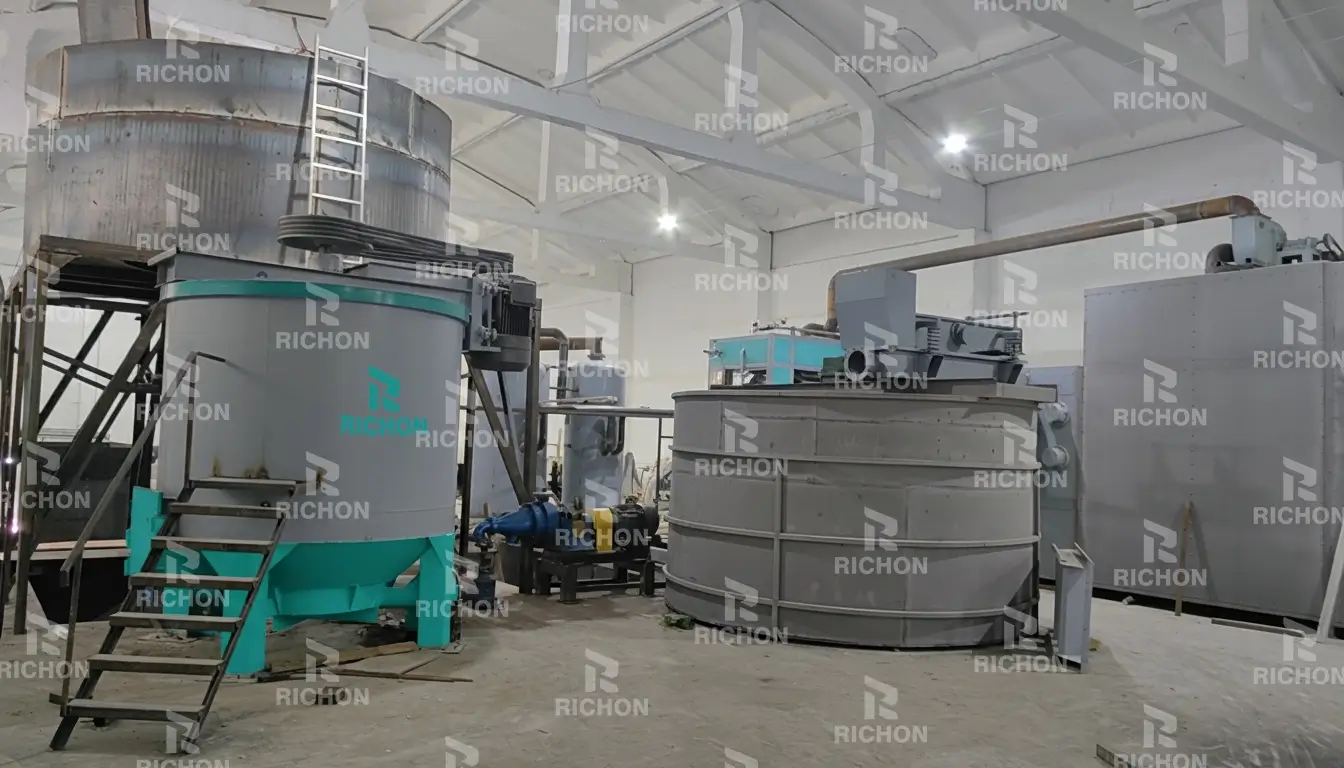
Waste Paper Pulping System
Fiber separation, cleaning, and refining to deliver stable pulp to the forming station.
What this system must achieve
- Fast fiber disintegration with hydrapulper
- High-consistency cleaning to remove impurities
- Refining for fiber quality and consistency stability
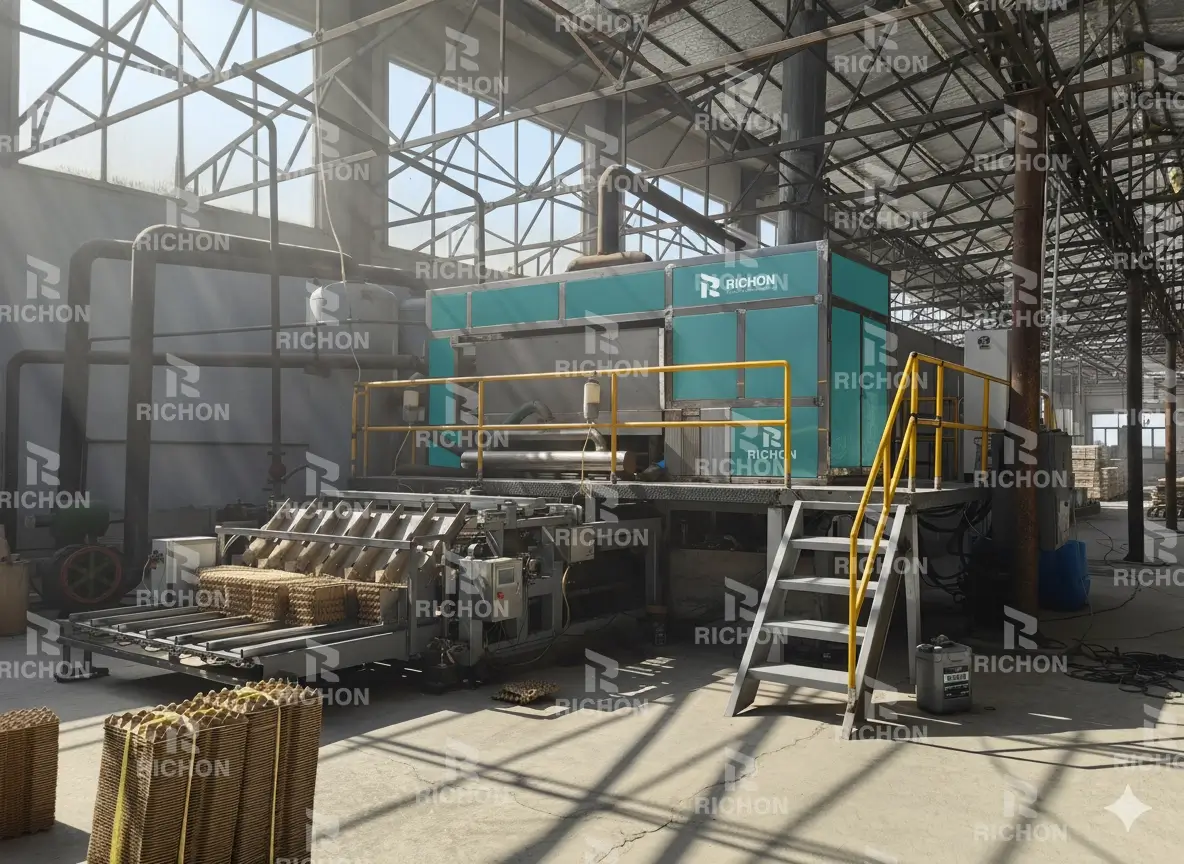
Egg Tray Forming & Molding System
Vacuum forming with precision molds to control tray thickness, surface, and strength.
Key engineering considerations
- Stable vacuum dewatering for repeatable cycle time
- Mold accuracy and mesh condition determine tray surface
- Quick-change molds for different tray types
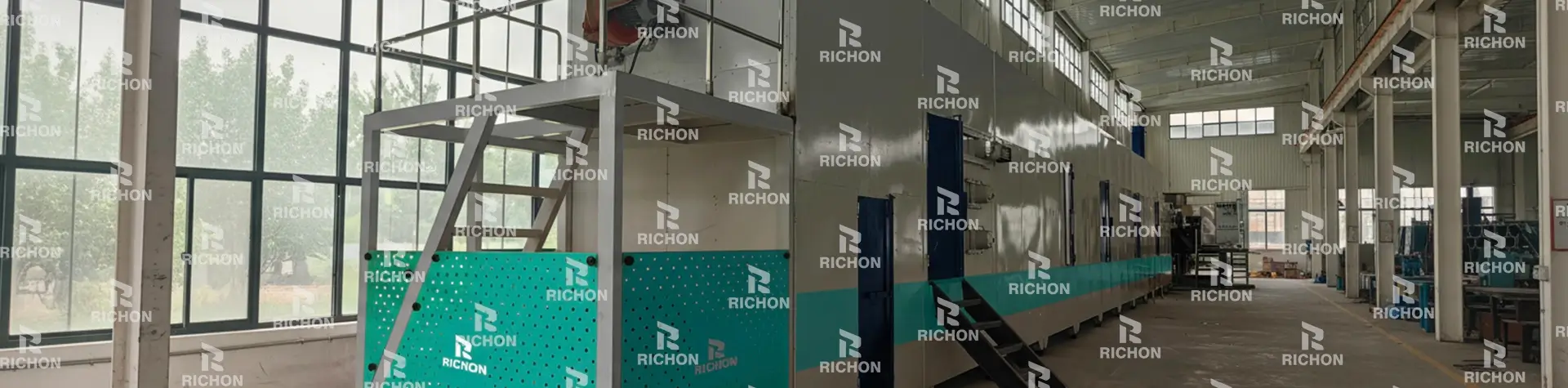
Drying System
Heat and airflow control to reach target moisture with consistent strength and low energy waste.
Drying is a system, not a heater
- Hot-air circulation for uniform moisture removal
- Time and temperature control for stable tray strength
- Throughput matched to forming capacity
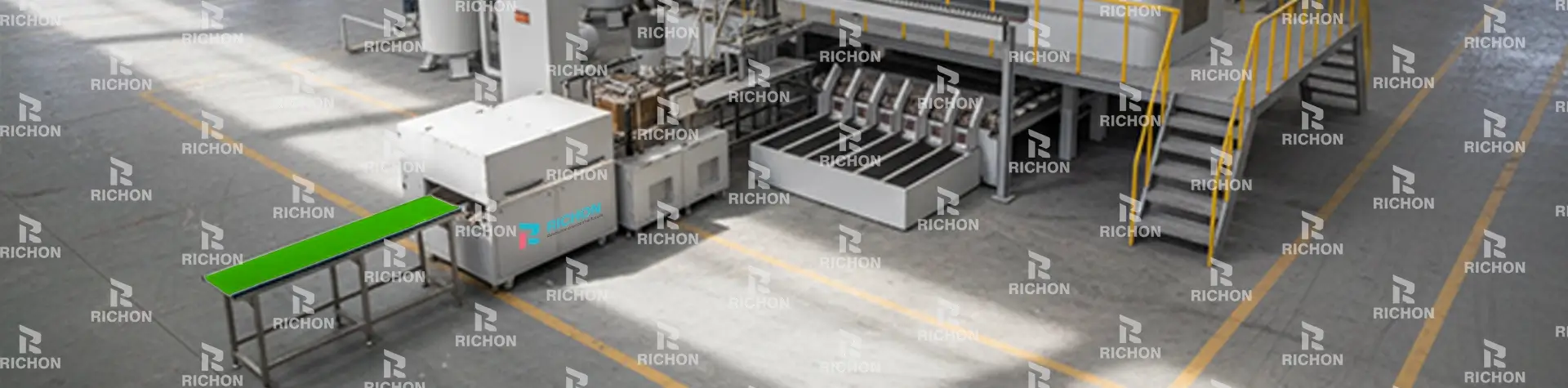
Stacking & Packaging System
Post-drying handling that protects product shape and matches line output rhythm.
Reduce labor and stabilize shipping quality
- Automatic stacking and bundling for consistent packs
- Packaging matched to tray size and logistics needs
- Workflow designed to prevent bottlenecks
Project Planning: Capacity, Layout, Energy, and ROI Drivers
Investment and payback depend on capacity level, automation scope, local waste paper cost, energy price, and drying strategy. For global buyers, the fastest way to reduce project risk is a complete system plan: layout, utilities, mold configuration, and drying throughput matched to target output.
Raw Material Selection & Fiber Preparation Engineering
Raw material selection directly affects product strength, production stability, and overall operating cost. In waste paper egg tray production, proper fiber preparation is the foundation of a reliable molded pulp system.
1. Waste Paper Selection Standards
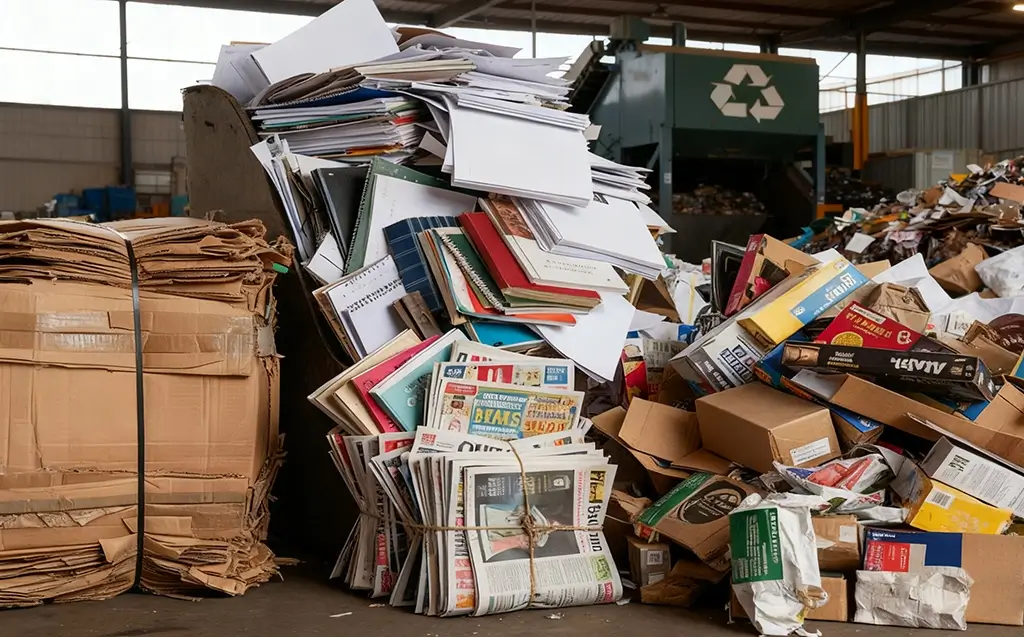
A stable egg tray production project requires controlled fiber composition and low contamination levels. The most common raw materials include OCC, office waste paper, newspapers, and mixed paperboard.
- OCC (Old Corrugated Cartons)
- Office waste paper
- Newspapers and magazines
- Mixed paperboard
Engineering Note
Excess wax, plastic film, or laminated coatings reduce vacuum dewatering efficiency and increase mold contamination. Proper sorting improves tray surface quality, mold cleanliness, and long-term operating stability.
Learn more about mold performance and production process control to understand how fiber quality influences the next production stages.
2. Recycling & Pulping System Engineering
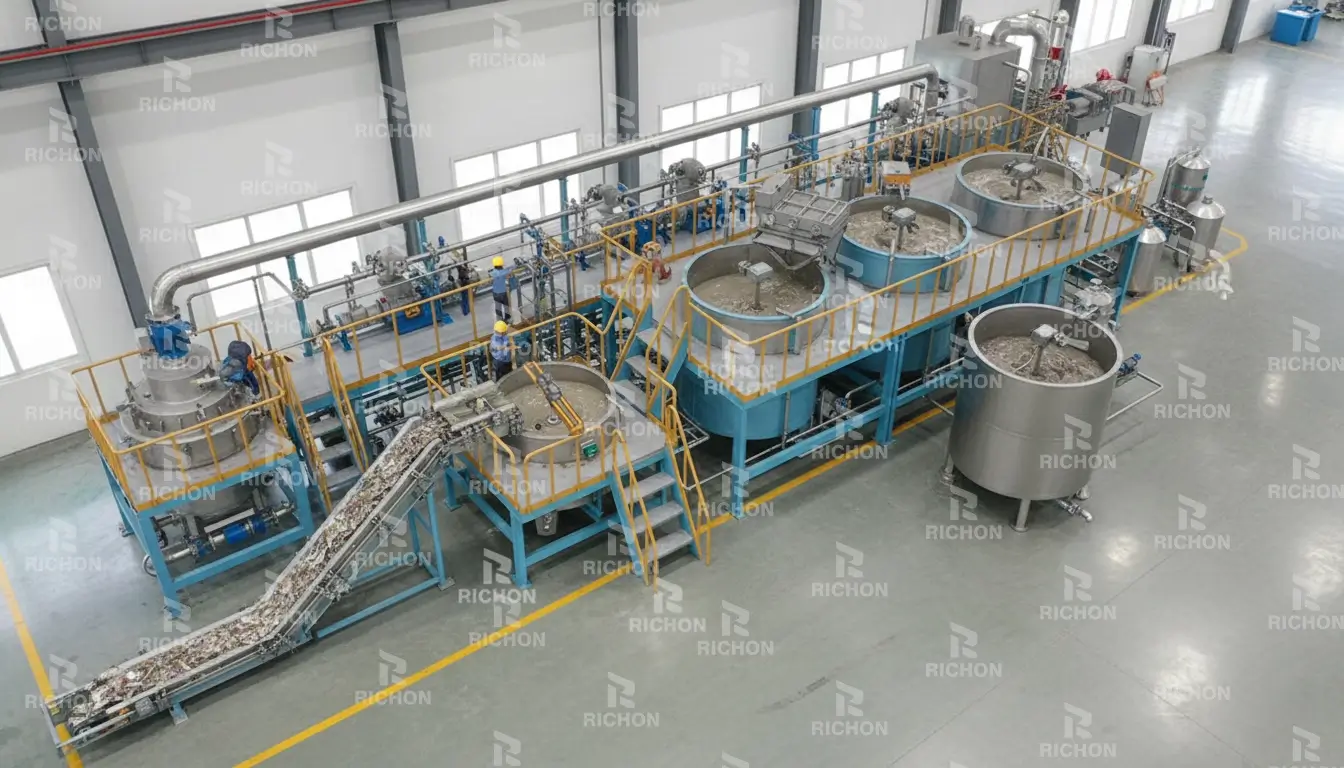
Fiber preparation includes mechanical pulping, screening, refining, and water recycling. A well-designed pulping system ensures uniform fiber suspension before entering the egg tray production line.
Key Technical Steps
- Sorting and impurity removal
- Hydrapulper fiber disintegration
- Pressure screening and refining
- Closed-loop water recycling system
System Optimization Insight
Stable pulp consistency and controlled fiber length distribution are critical for achieving consistent tray thickness and strength before entering the drying system.
If your local waste paper quality is mixed, stronger screening and cleaning become more important to protect mesh surfaces, reduce rejection rate, and maintain stable dewatering performance.
Need Help Matching Raw Material Quality to Production Stability?
Tell us what waste paper types are available in your market, and we can recommend a practical pulping, screening, and recycling configuration to support stable egg tray production.
Why Egg Tray Production Is Still Growing Globally
Driven by plastic reduction policies, agricultural packaging demand, and the practical value of waste paper recycling, egg tray production remains one of the most stable molded pulp business segments in many markets.
The Business Logic: Demand + Practical Manufacturing Conditions
Egg trays continue to see stable demand because they serve a basic agricultural logistics function: protecting eggs during collection, storage, and transportation. In many regions, molded pulp egg trays remain a preferred packaging format because they are low-cost, recyclable, stackable, and already accepted by poultry farms and distributors.
At the same time, pressure to reduce single-use plastics has pushed more packaging buyers toward biodegradable molded pulp products. For investors, egg trays are often a more practical entry point than other pulp products because the product structure is standardized, the process is mature, and raw materials are widely available.
Where the Growth Opportunity Comes From
Poultry Industry Demand
Egg trays are not a trend product. They are a repeat-use logistics product tied directly to the poultry supply chain, which makes demand more stable than many specialty packaging segments.
Waste Paper Recycling Value
Turning waste paper into molded pulp packaging supports both environmental positioning and raw material cost control, especially in markets with accessible recycled fiber streams.
Expandable Industrial Model
Many investors start with egg trays because the process is standardized and scalable. Capacity can be expanded by improving automation, drying, and plant organization.
Planning to Enter the Egg Tray Business in Your Market?
Share your local waste paper condition, target capacity, labor cost level, and energy source. We can help you evaluate whether an egg tray project is commercially practical and what kind of production configuration is most suitable.
Why Egg Tray Production Is Still Growing Globally
Driven by plastic reduction policies, agricultural packaging demand, and the practical value of waste paper recycling, egg tray production remains one of the most stable molded pulp business segments in many markets.
The Business Logic: Demand + Practical Manufacturing Conditions
Egg trays continue to see stable demand because they serve a basic agricultural logistics function: protecting eggs during collection, storage, and transportation. In many regions, molded pulp egg trays remain a preferred packaging format because they are low-cost, recyclable, stackable, and already accepted by poultry farms and distributors.
At the same time, pressure to reduce single-use plastics has pushed more packaging buyers toward biodegradable molded pulp products. For investors, egg trays are often a more practical entry point than other pulp products because the product structure is standardized, the process is mature, and raw materials are widely available.
Where the Growth Opportunity Comes From
Poultry Industry Demand
Egg trays are not a trend product. They are a repeat-use logistics product tied directly to the poultry supply chain, which makes demand more stable than many specialty packaging segments.
Waste Paper Recycling Value
Turning waste paper into molded pulp packaging supports both environmental positioning and raw material cost control, especially in markets with accessible recycled fiber streams.
Expandable Industrial Model
Many investors start with egg trays because the process is standardized and scalable. Capacity can be expanded by improving automation, drying, and plant organization.
Planning to Enter the Egg Tray Business in Your Market?
Share your local waste paper condition, target capacity, labor cost level, and energy source. We can help you evaluate whether an egg tray project is commercially practical and what kind of production configuration is most suitable.
Real Factory Case: 3–5k Egg Tray Line
Below is a real project reference showing how a mid-capacity egg tray production line operates under actual factory conditions, including raw material, drying solution, and production performance.
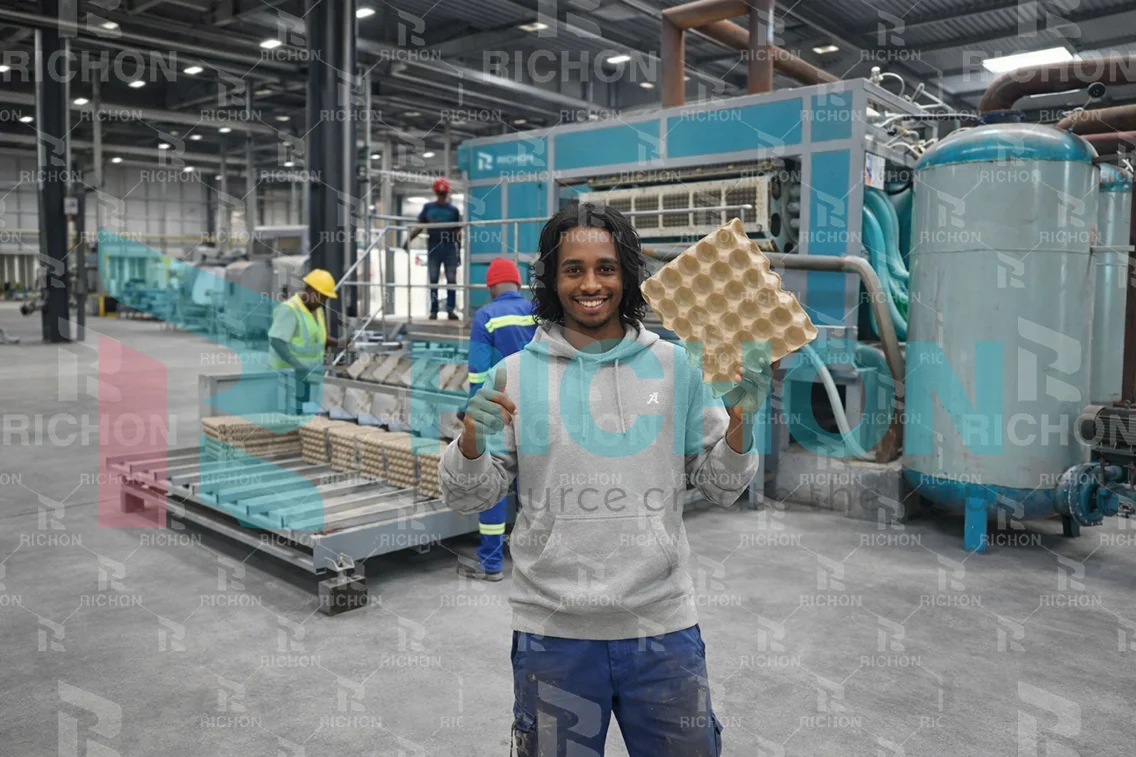
Project Overview
- Location: Southeast Asia
- Capacity: 4,000 pcs/h
- Raw Material: Mixed OCC + newspaper
- Drying Type: Multi-layer metal dryer (biomass fuel)
- Operators: 5 per shift
Production Performance
- Stable daily output: 65,000–75,000 trays
- Reject rate: < 3% after stabilization
- Moisture control: consistent stacking quality
- Energy cost optimized using biomass fuel
Engineering Key Points
- Balanced forming speed with drying capacity
- Improved airflow distribution in dryer
- Enhanced screening for mixed waste paper
- Clear SOP for operators reduced instability
Want a Similar Result in Your Country?
Every factory condition is different. We can design a configuration based on your raw materials, energy source, and workshop layout to achieve stable output.
Key Questions Before You Start the Project
These are the real questions investors ask before making a decision. The answers below focus on cost, return, and operational reality—not theory.
Investment varies significantly depending on the drying system, automation level, and local infrastructure cost. In most projects, the drying system is the largest cost difference.
A practical way to estimate investment is to evaluate:
- Drying type (natural / brick / metal dryer)
- Energy source (gas, diesel, biomass, electricity)
- Workshop construction and utilities
For system comparison, see drying system guide.
Most stable egg tray projects reach ROI within 6–18 months, depending on:
- Local selling price of trays
- Raw material cost (waste paper)
- Energy cost (critical factor)
- Production stability and reject rate
The fastest ROI projects are not always the cheapest machines—but the ones with balanced system design.
The main operating costs in egg tray production are:
- Energy (drying system) – largest cost in most factories
- Waste paper raw material
- Labor
- Maintenance and consumables
Learn more in energy consumption analysis.
Electricity and water consumption depend on capacity and system configuration.
- Electricity: mainly for pulping, vacuum, forming, and auxiliary systems
- Water: mostly recycled in a closed-loop system
With proper recycling design, fresh water consumption is relatively low.
Egg tray production is suitable for most regions, but feasibility depends on:
- Local egg production / poultry demand
- Availability of waste paper
- Energy cost and supply stability
- Labor cost level
A simple rule: if waste paper is available and eggs are transported in volume, the project is usually viable.
Want a Clear Answer Based on Your Real Conditions?
Send us your country, raw material situation, energy type, and target capacity. We will give you a practical investment and ROI evaluation.
Contact Us
Get in touch with our team for any inquiries about our egg tray machines and services.
Project Scope
Do you need a complete project solution or a partial solution? Our team can customize the perfect setup for your specific needs and budget constraints.
Product Expectations
What kind of finished product do you expect, and what quality standards are important to you?
Project Timeline
What is your expected timeline for project implementation and operation?
Budget Range
What is the approximate budget range for your project procurement?
Send Us Your Information
Accurate project information will help us provide the perfect solution for your needs.