


Egg Tray Production Line Cost & Investment Analysis
Understand the total investment behind an egg tray manufacturing project, including equipment configuration, drying system selection, factory setup, operating costs, and long-term return factors.
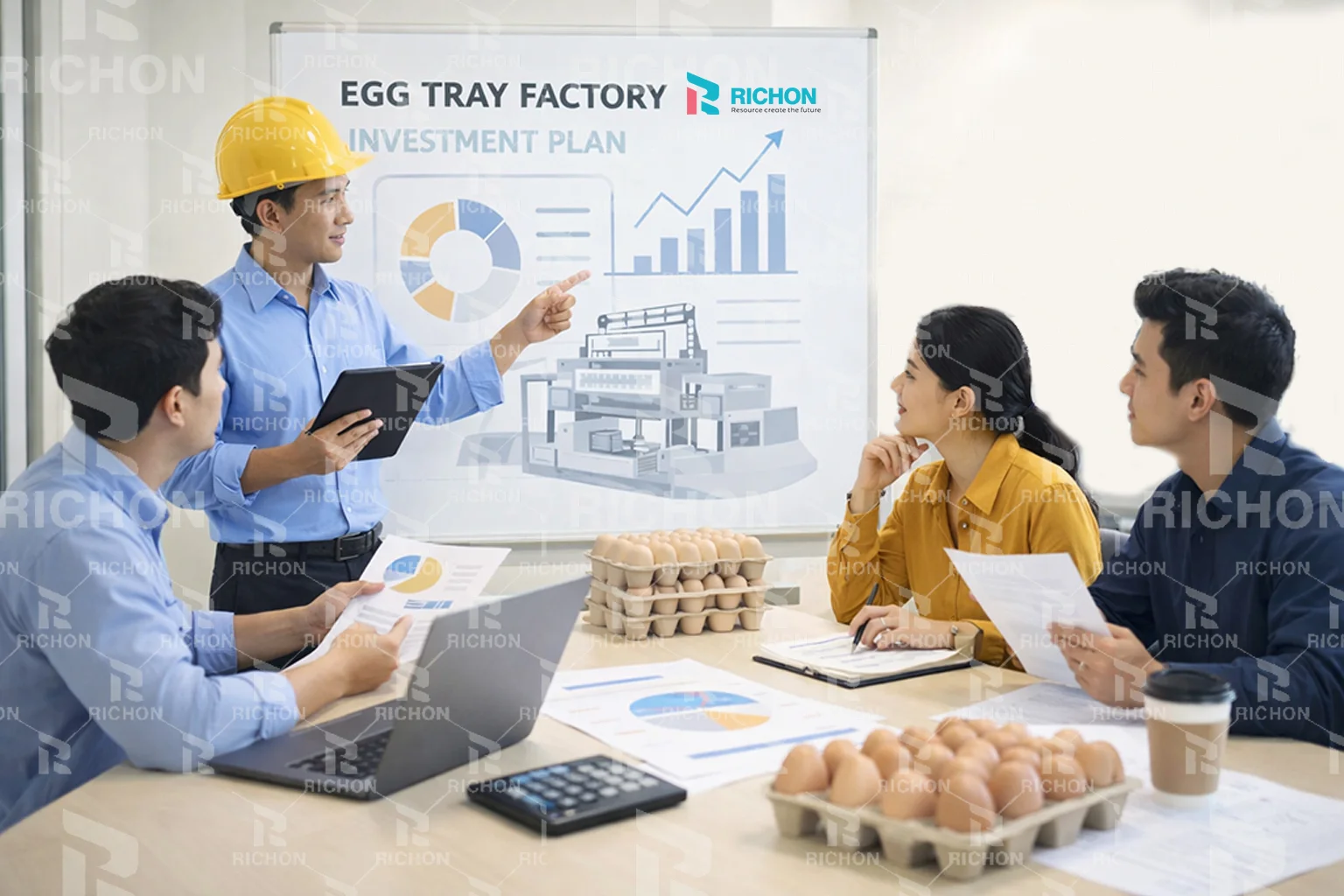
Why Investment Analysis Matters Before Buying
The equipment quotation is only one part of an egg tray project budget. Drying configuration, factory conditions, local labor cost, electricity supply, and utility preparation can all influence total investment.
A lower machine price does not always mean a lower total manufacturing cost. For many projects, long-term operating efficiency is more important than the initial quotation alone.
- Separate machine price from total project investment
- Understand how drying affects budget and scalability
- Evaluate workshop, utilities, and labor together
What Determines Egg Tray Production Line Cost?
Total investment is not a fixed number. It depends on project configuration, production goals, local utilities, and the level of automation required for stable operation.
Production Capacity
Higher output generally requires larger system configuration and more supporting equipment.
Automation Level
Semi-automatic and fully automatic lines differ in labor demand, system complexity, and investment scope.
Drying Method
Natural drying, brick kiln drying, and metal dryers have very different capital and operating characteristics.
Product Type & Mold Design
Tray structure, product dimensions, and mold quantity can influence tooling cost and production planning.
Factory Layout
Workshop dimensions, material flow, and storage planning affect project implementation and auxiliary budgeting.
Local Labor Cost
Regions with higher labor cost often benefit more from automation and lower manual dependence.
Energy Price
Electricity and fuel pricing can change both configuration decisions and long-term production economics.
Installation Scope
Commissioning, training, utility connection, and startup support should be considered in the full budget.
Main Investment Breakdown
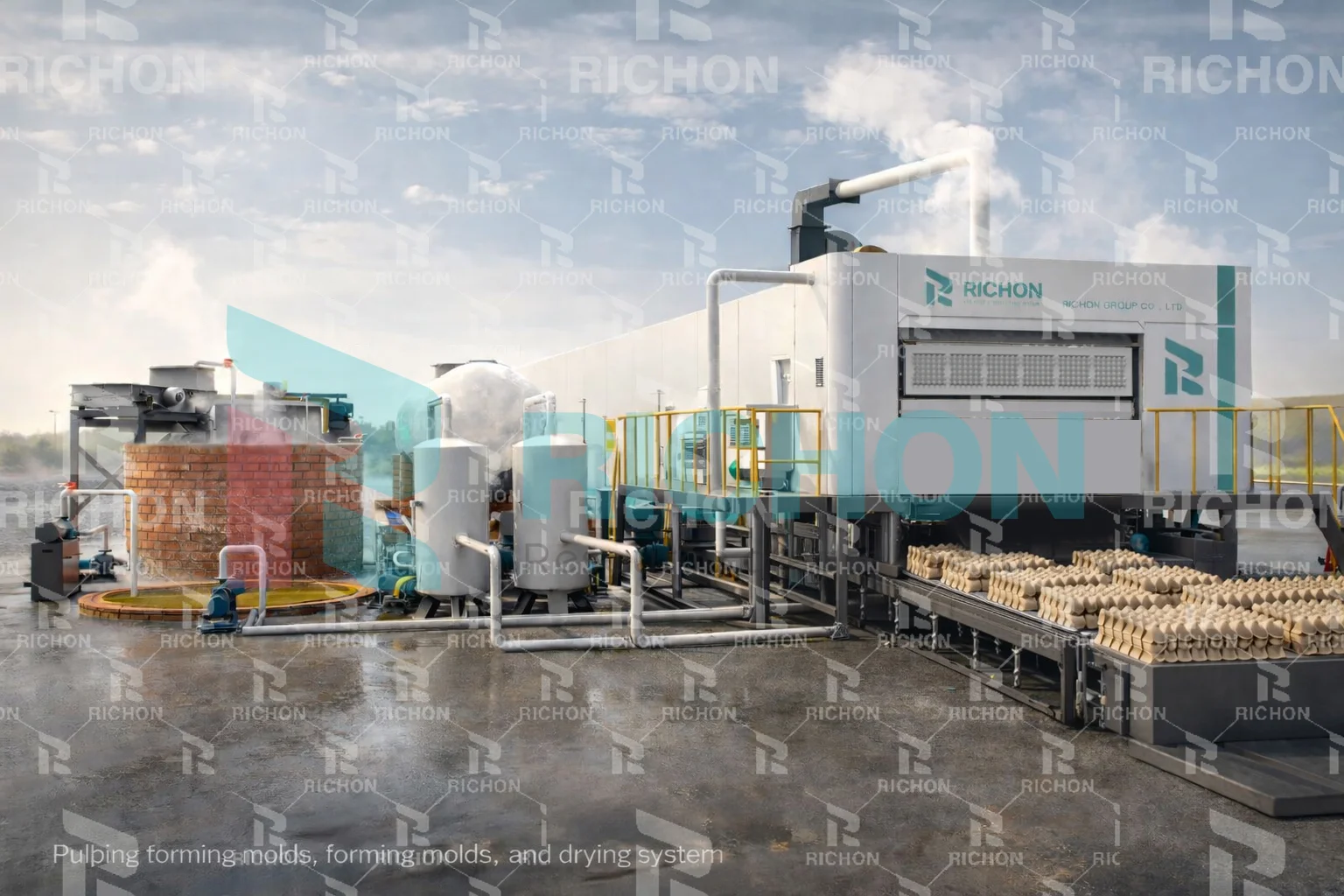
A complete project budget usually includes more than the forming machine itself. Understanding the main cost blocks helps investors evaluate quotations more accurately.
Factory Setup and Utility Requirements
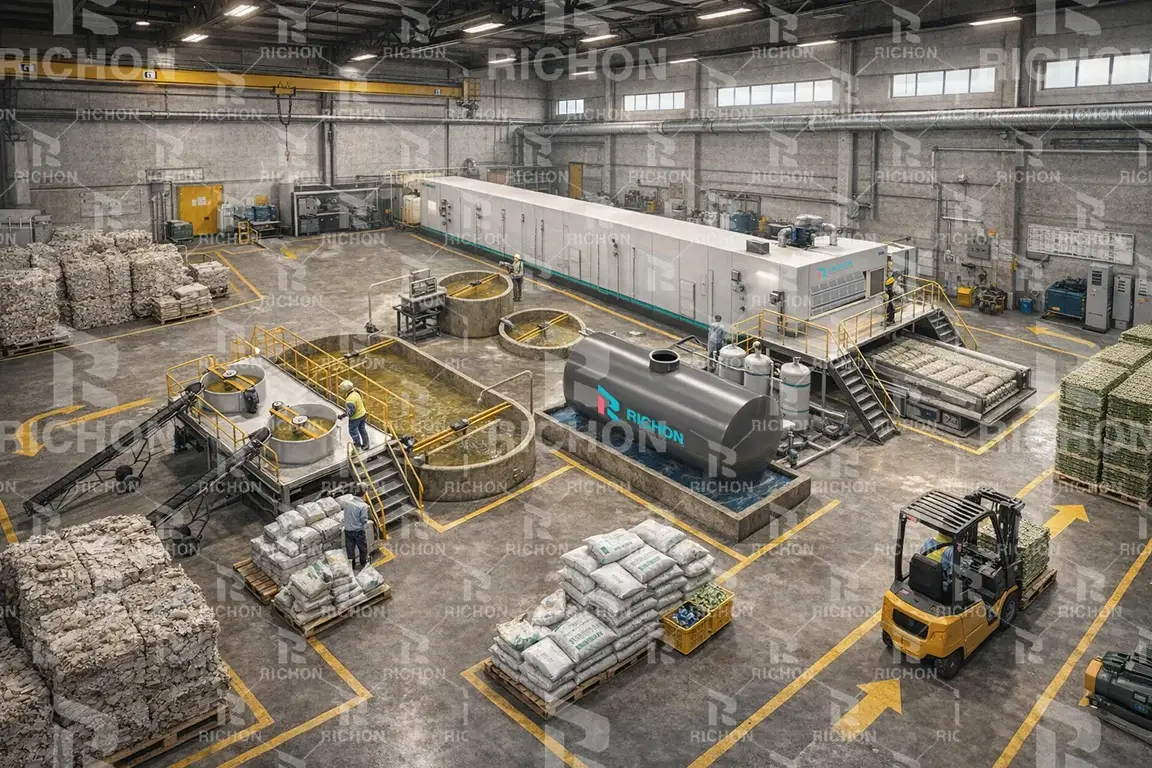
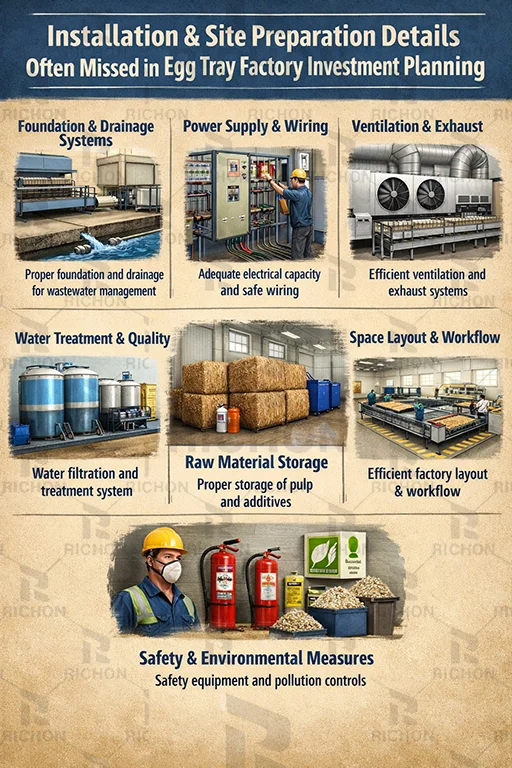
In many projects, factory preparation is underestimated during early budgeting. Workshop size, utility access, storage areas, and internal logistics all affect implementation cost and operational efficiency.
Typical Investment Thinking by Project Type
Different projects should be evaluated with different investment logic. The right configuration depends on local demand, labor conditions, drying preference, and long-term expansion goals.
Entry-Level Projects
Suitable for market validation, limited startup budget, and regions where labor cost remains relatively manageable.
Balanced Commercial Projects
Suitable for investors seeking a practical balance between stable output, manageable labor input, and long-term ROI.
Higher Automation Projects
Suitable for larger output goals, greater production continuity, and factories where labor saving is a strategic priority.
How to Reduce Investment Risk
Strong investment decisions come from matching equipment configuration to real factory conditions rather than choosing only by the lowest quotation.
Frequently Asked Questions
What is included in an egg tray production line investment?
A complete investment plan may include pulping, forming, molds, drying, auxiliary equipment, control systems, installation, training, and early spare parts preparation.
Why does the drying system affect the total budget so much?
Drying is one of the largest cost variables because it influences capital investment, energy use, labor requirement, production continuity, and future expansion potential.
Is a lower machine price always better for ROI?
Not necessarily. A lower quotation may increase labor input, reduce production stability, or create higher long-term operating cost.
What factory conditions should be prepared before installation?
Key conditions include workshop space, utility connections, drainage, storage areas, equipment access paths, and suitable layout planning for material flow.
How do labor and electricity costs affect project planning?
These factors influence whether a more manual or more automated configuration is more economical over the long term.
Can the line be upgraded later as production demand grows?
In many cases, project planning can be prepared with future expansion in mind, but this depends on the original layout, equipment scope, and utility preparation.
Need a Configuration-Based Budget for Your Project?
Send us your target capacity, product type, drying preference, factory space, and local fuel or electricity condition. Richon can help you evaluate a more practical investment direction.
Contact Us
Get in touch with our team for any inquiries about our egg tray machines and services.
Project Scope
Do you need a complete project solution or a partial solution? Our team can customize the perfect setup for your specific needs and budget constraints.
Product Expectations
What kind of finished product do you expect, and what quality standards are important to you?
Project Timeline
What is your expected timeline for project implementation and operation?
Budget Range
What is the approximate budget range for your project procurement?
Send Us Your Information
Accurate project information will help us provide the perfect solution for your needs.