


Egg Tray Dryer System for Efficient and Stable Production
Compare natural drying, brick kiln drying, and metal dryer systems for different egg tray production capacities, factory layouts, local fuel conditions, and investment plans.
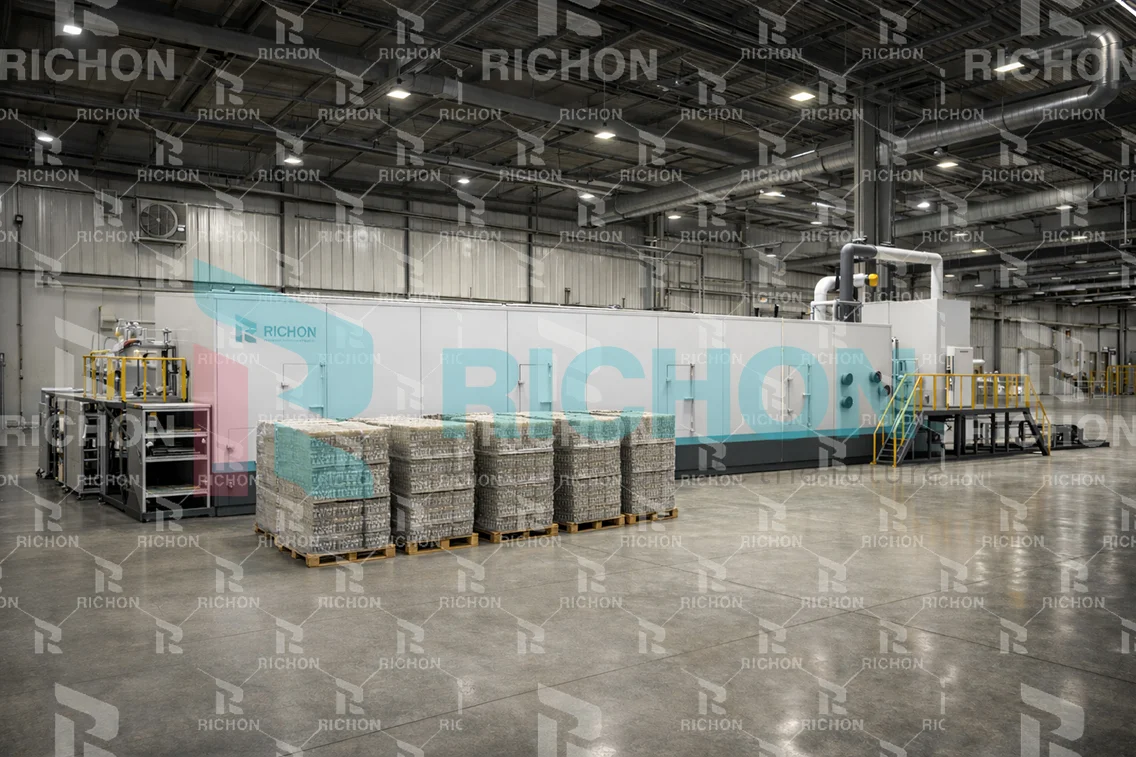
Why the Drying System Matters in Egg Tray Production
In an egg tray production line, the drying system is not simply a heating section. It directly affects product strength, drying consistency, plant layout, transfer efficiency, labor arrangement, and overall operating rhythm.
After forming, wet trays still contain high moisture. Without a suitable drying solution, stable stacking, smooth material flow, and consistent finished product quality become much harder to achieve.
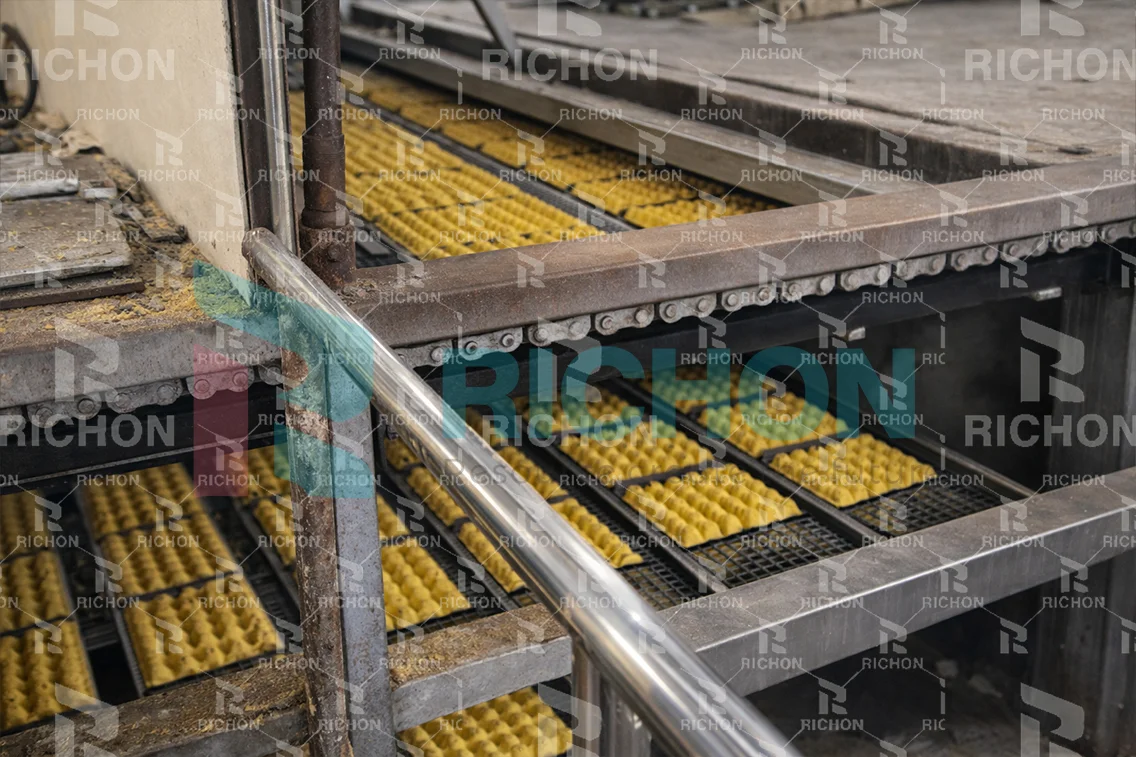
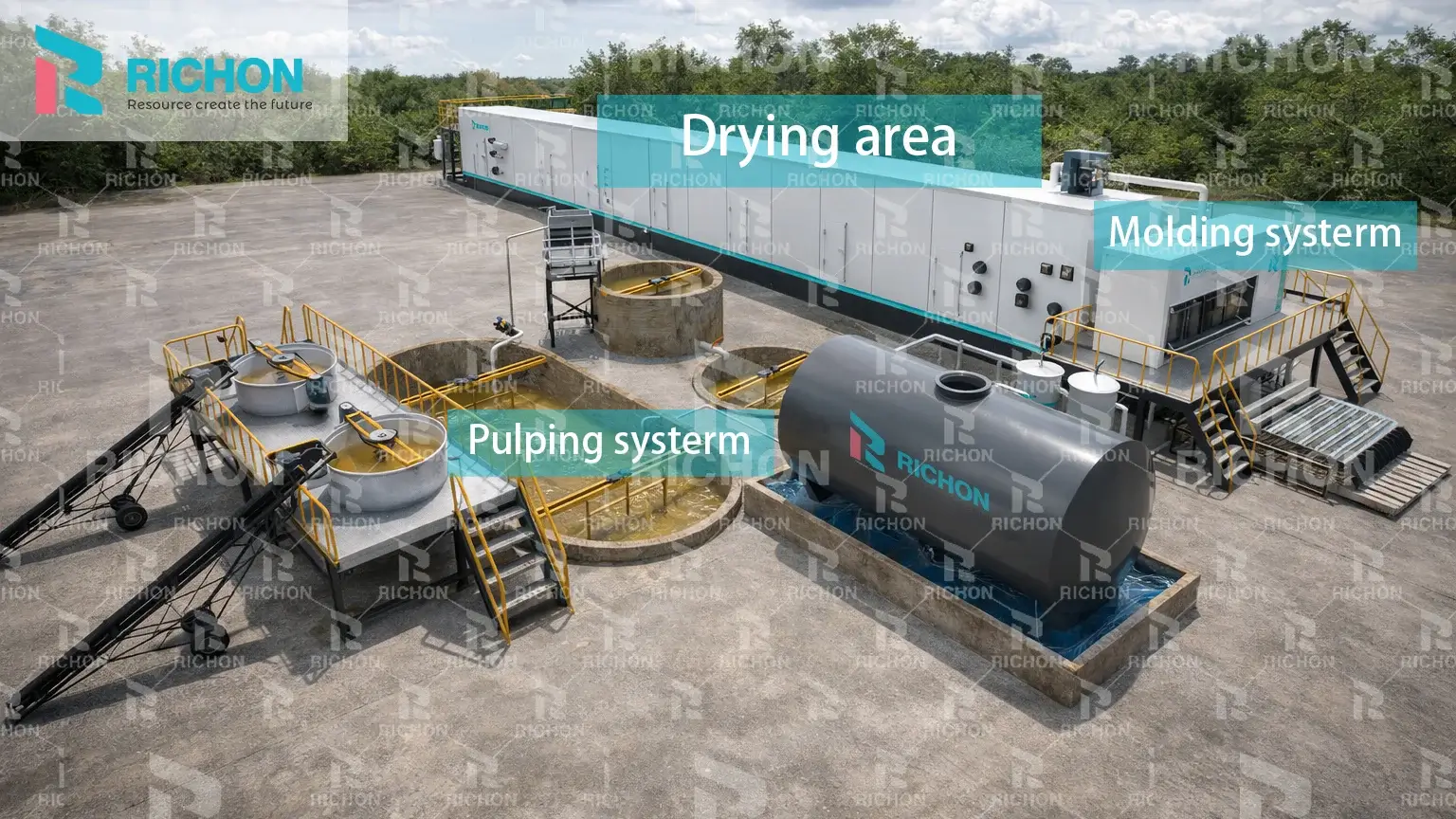
Where the Dryer Fits in the Full Production Line
The drying section connects wet forming output with final stacking and packing, making it one of the key systems in molded pulp production.
Pulping
Waste paper is processed into pulp slurry for molded fiber production.
Forming
Wet egg trays are formed on vacuum molds with defined product shape.
Transfer
Wet trays move from the forming section toward the drying stage.
Drying
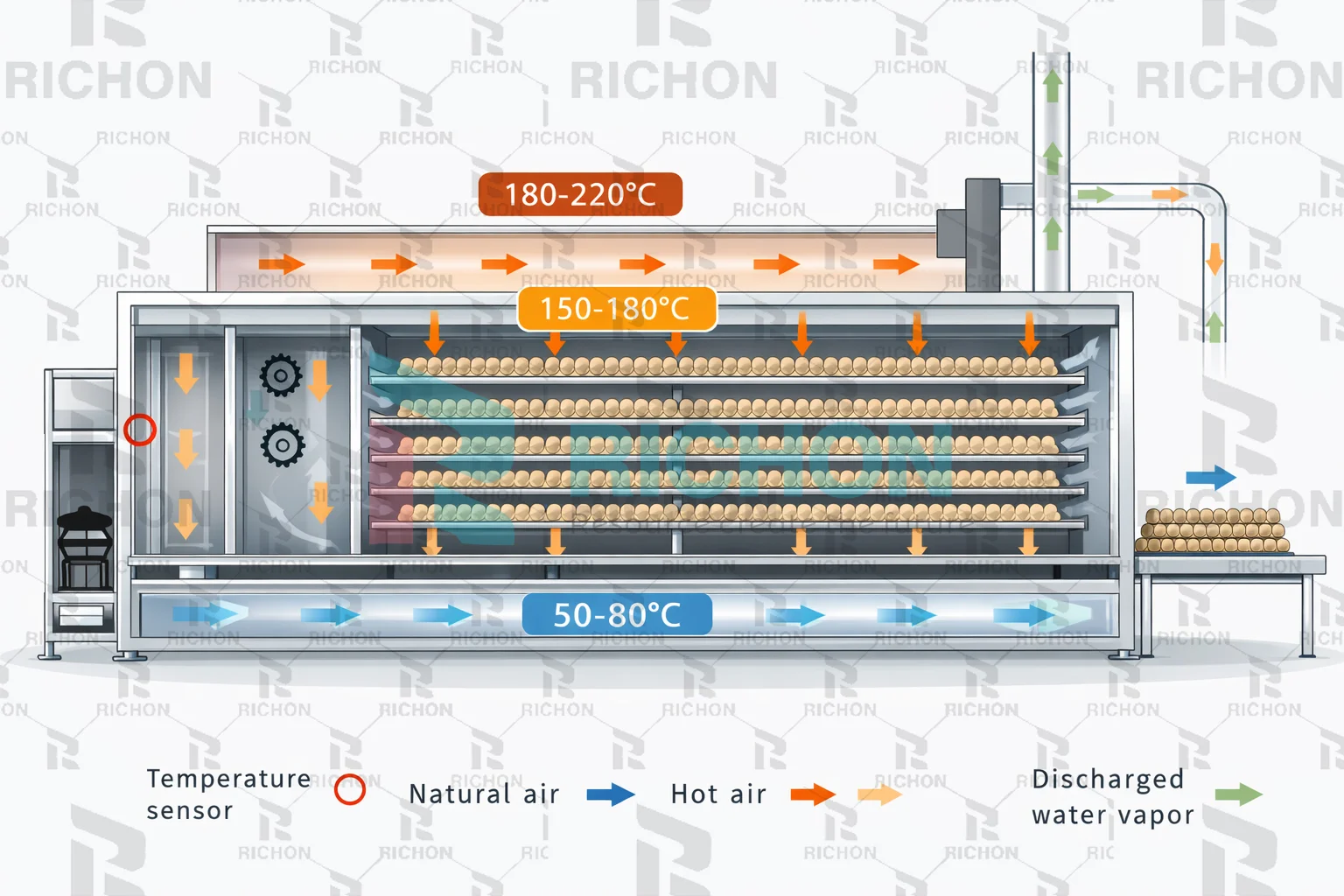
Moisture is removed to stabilize tray strength, shape, and handling condition.
Stacking
Dried trays are stacked, counted, and prepared for storage or shipment.
Main Egg Tray Drying Methods
Different project scales and factory conditions require different drying solutions. The right method depends on site conditions, production target, budget structure, and automation expectations.
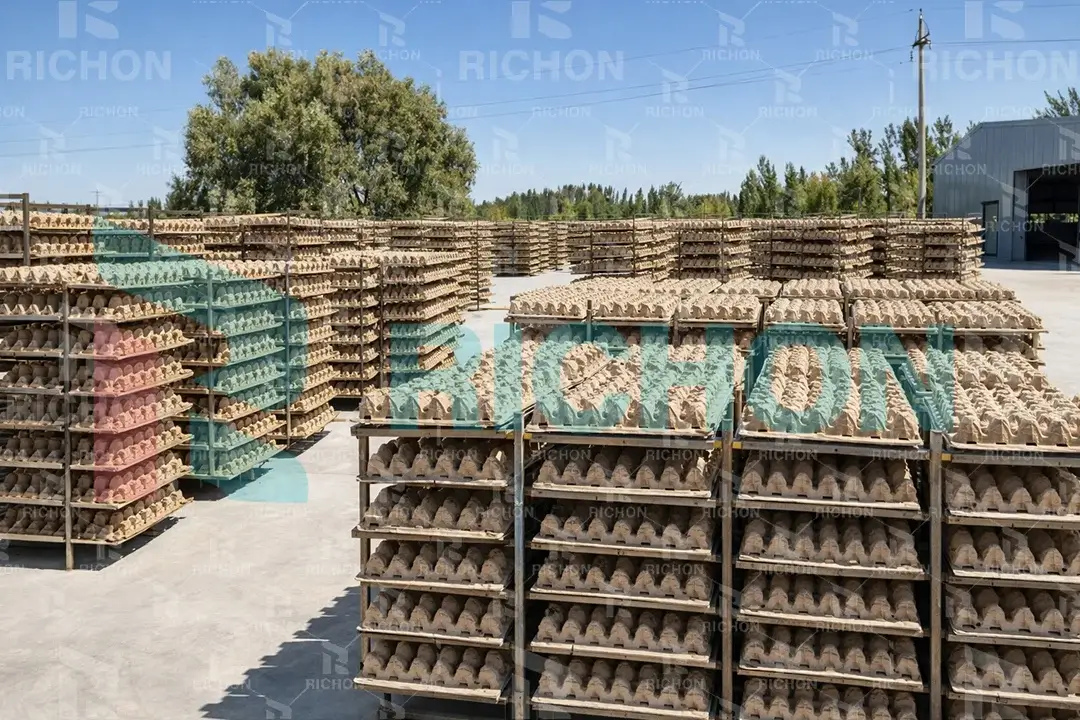
Natural Sun Drying
A low-investment method that uses sunlight and open yard space to dry wet trays.
- Suitable for smaller startup projects
- Very low initial equipment investment
- Requires larger open space
- Strongly affected by weather and humidity
- Higher dependence on manual handling
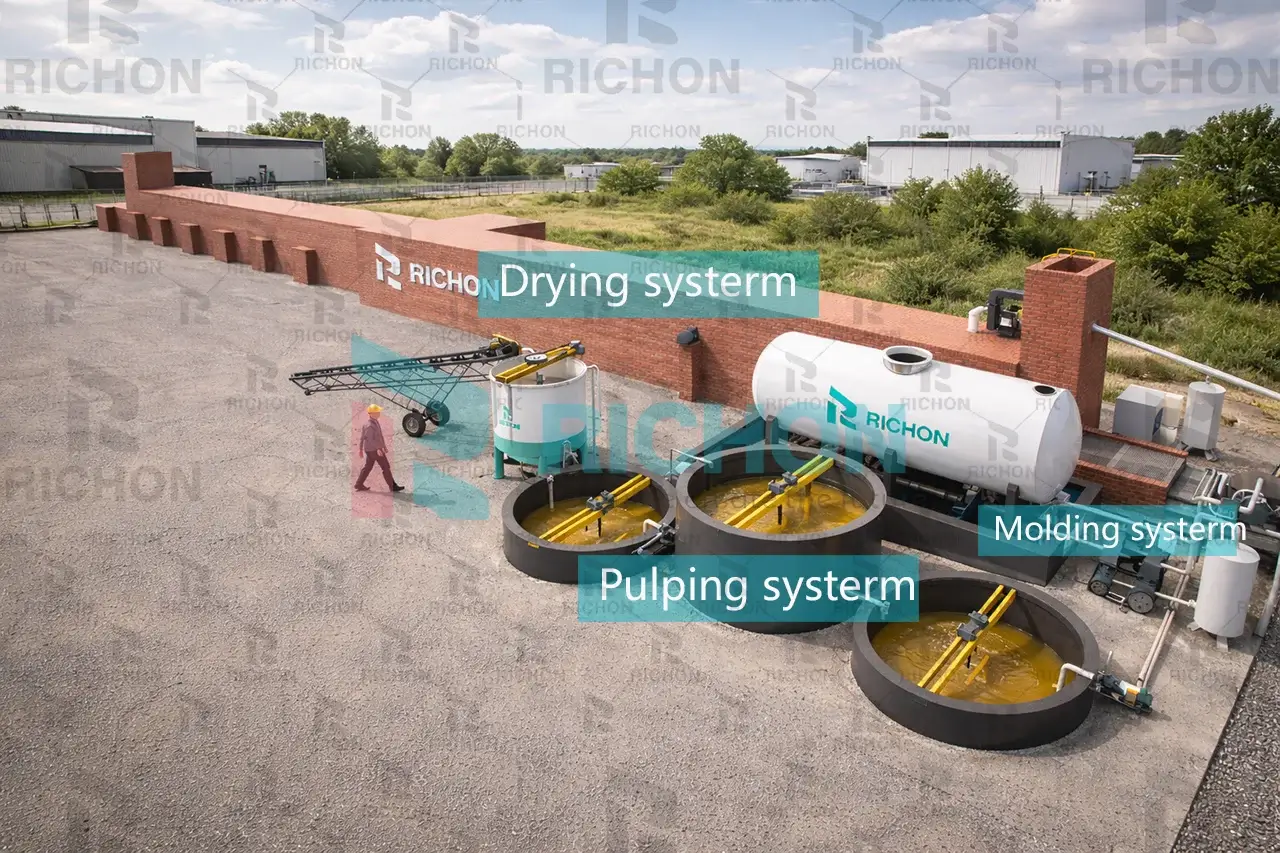
Brick Kiln Dryer
A traditional drying solution widely used for medium-capacity egg tray factories.
- Often selected for balanced investment
- Stable drying compared with open-air methods
- Requires civil construction and site installation
- Usually semi-manual operation structure
- Practical for many local factory projects
Metal Dryer System
A more standardized drying solution designed for continuous and automated production.
- Suitable for higher-capacity production
- Better integration with continuous conveying
- More compact industrial layout
- Lower labor intensity than many manual systems
- Preferred for modern export-oriented projects
Dryer Selection by Production Capacity
Capacity is one of the first filters in choosing the right egg tray dryer system, but it should still be considered together with climate, layout, and labor conditions.
Below 1000 pcs/hour
Natural drying can be considered where climate conditions are suitable and enough open yard space is available for efficient handling and drying.
1000–2500 pcs/hour
Brick kiln drying is often selected for medium-capacity projects that need better drying stability while keeping investment at a practical level.
Above 2500 pcs/hour
Metal dryer systems are usually more suitable for continuous and automated production with stronger workflow control and more standardized factory operation.
Brick Dryer vs Metal Dryer Comparison
Brick dryers and metal dryers serve different project needs. The right choice depends on budget structure, expected automation level, civil construction conditions, and long-term operating goals.
| Comparison Item | Natural Drying | Brick Kiln Dryer | Metal Dryer |
|---|---|---|---|
| Typical Capacity Fit | Small-scale projects | Medium-capacity production | Medium to high-capacity production |
| Initial Investment | Very low | Medium | Higher |
| Automation Level | Manual | Semi-manual | Higher automation |
| Weather Dependence | Very high | Low | Low |
| Civil Construction | Low | High | Lower than brick structure |
| Production Continuity | Weak | Moderate | Strong |
| Labor Intensity | Higher | Medium to higher | Lower |
| Layout Standardization | Low | Medium | High |
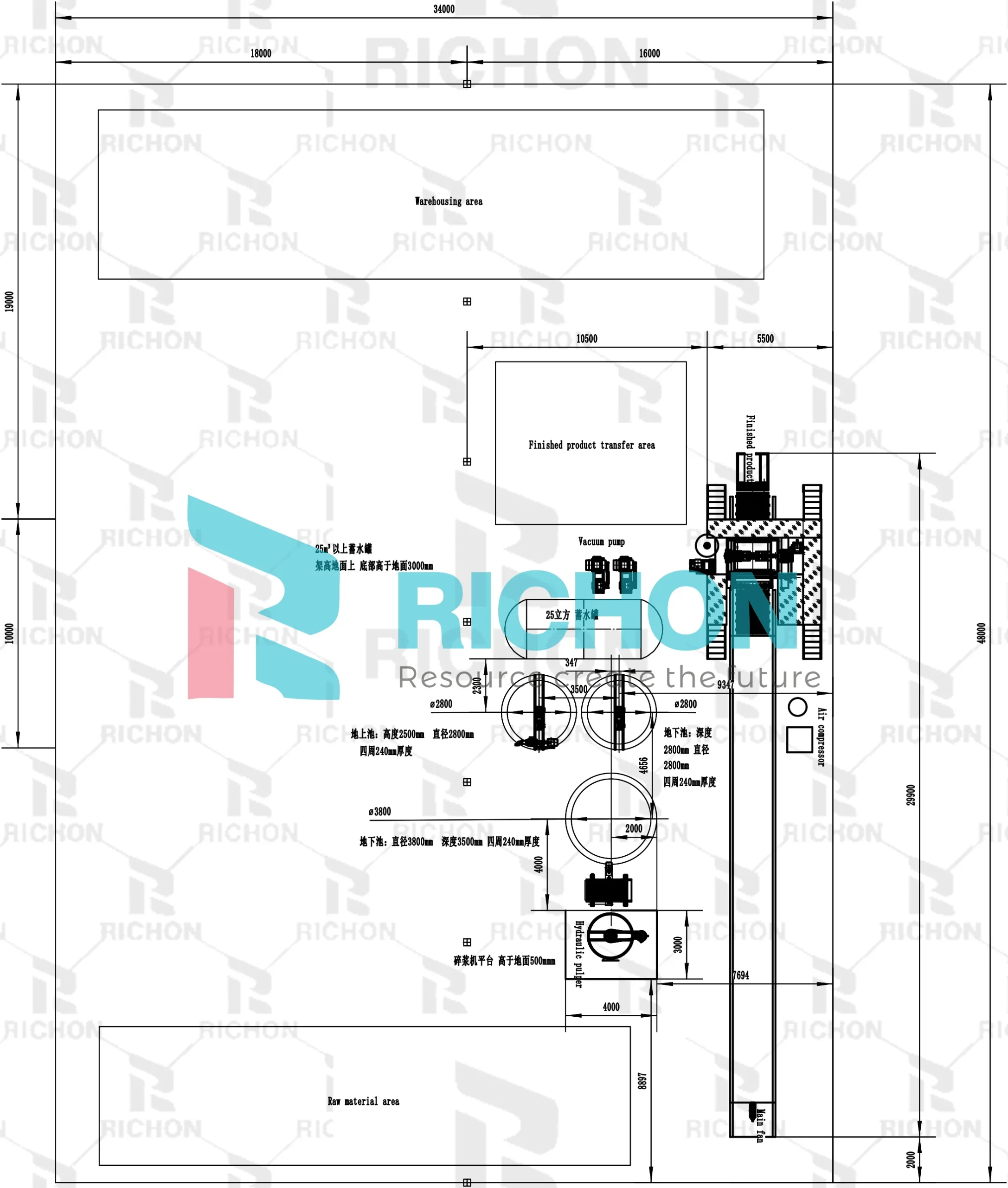
Factory Layout Considerations for Dryer System Selection
Different dryer systems require different workshop arrangements. Dryer planning should be coordinated with pulping area, forming section, wet tray transfer path, utility routing, and finished product flow.
- Natural drying usually requires more open yard area and wider transfer space
- Brick dryers need civil construction zone planning and heating section layout
- Metal dryers are often easier to integrate into compact production lines
- Dryer choice affects daily workflow, labor route, and handling efficiency
Fuel and Energy Considerations
Drying cost is influenced not only by the dryer type, but also by local fuel availability, workshop organization, climate conditions, moisture level, and production continuity.
Natural Drying
Low direct fuel use, but drying performance depends heavily on sunlight, humidity, and seasonal conditions.
Brick Dryer
Often selected where customers want a practical balance between stable drying and controlled investment.
Metal Dryer
Better suited to controlled and continuous heating management in industrial-scale production environments.
Project Evaluation
Actual operating cost depends on fuel source, product design, local climate, and the organization of daily production.
Egg Tray Dryer System Technical Information
The final egg tray dryer configuration should be matched to capacity, plant layout, product type, fuel conditions, and automation requirements.The table below summarizes the key technical factors for a molded pulp production line.
| Item | Egg Tray Dryer System |
|---|---|
| System Position | Installed after the forming section and before stacking or packing, used to remove moisture from wet molded pulp products and stabilize final product condition. |
| Supported Drying Types | Natural drying, brick kiln drying, and metal dryer systems can be configured according to project scale and site conditions. |
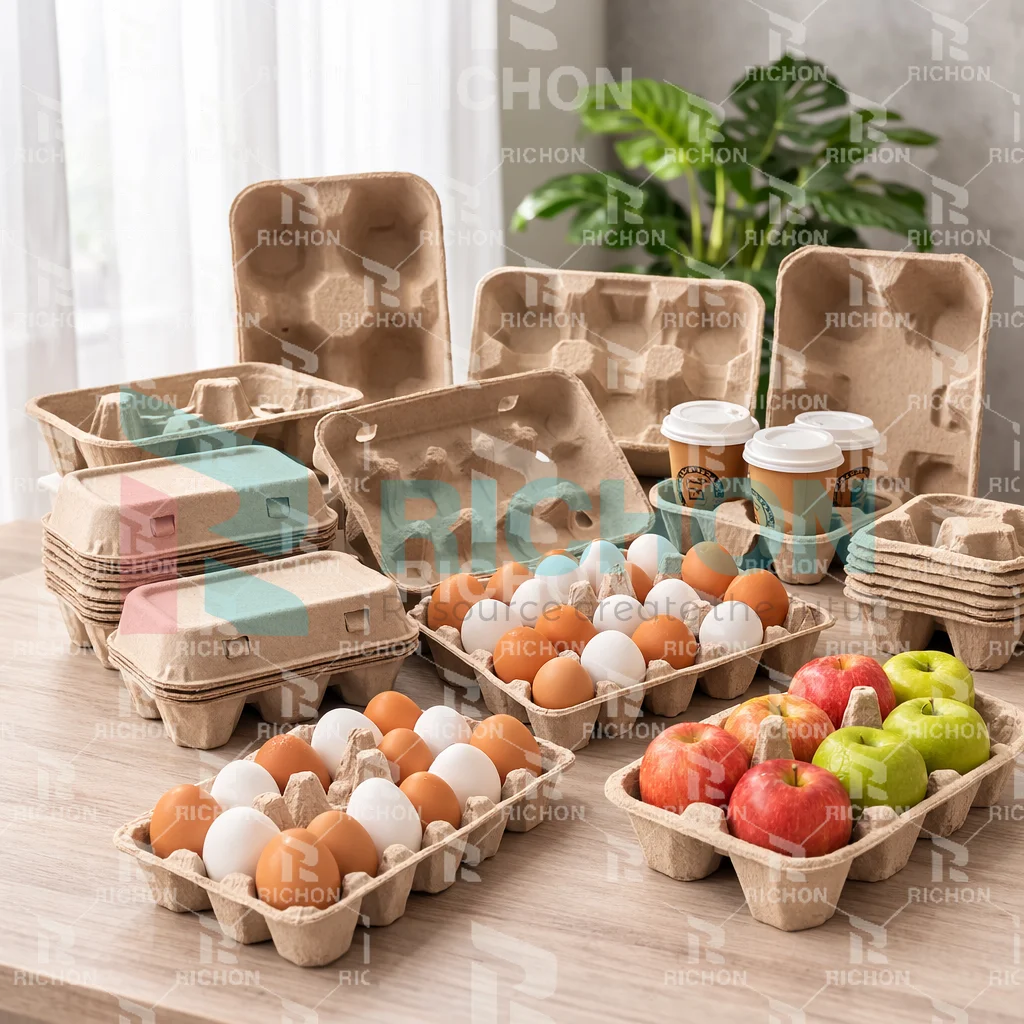
| Applicable Products | Suitable for egg trays, egg cartons, fruit trays, cup carriers, and other molded pulp packaging products with comparable drying requirements. |
| Capacity Matching | The dryer system should be selected according to the planned production output, expected workflow continuity, and future expansion requirements of the egg tray production line. |
| Heating Arrangement | The heating solution depends on the dryer type, local energy conditions, and factory operating plan. Final design should be confirmed according to the project configuration. |
| Fuel Adaptation | Fuel selection should be evaluated based on local availability, operating cost, environmental requirements, and the selected dryer structure. |
| Automation Level | Automation level varies by system type. Natural drying relies more on manual handling, brick kiln systems are usually semi-manual, and metal dryer systems are generally more suitable for continuous automated production. |
| Factory Layout Requirement | Different drying systems require different space planning, transfer paths, utility routing, and thermal zone arrangements. Dryer selection should be coordinated with the full factory layout. |
| Integration with Production Line | The dryer section should be matched with pulping, forming, transfer, and finished product handling to maintain stable material flow and continuous production rhythm. |
| Customization Scope | Final specification may vary depending on product design, mold size, line capacity, workshop dimensions, local climate, and customer investment strategy. |
| Engineering Confirmation | Detailed parameters such as drying length, heating section design, installed power, fuel consumption, and labor arrangement should be confirmed according to the actual project plan. |
Why This Module Matters for SEO
Industrial buyers often look for technical information before sending inquiries. A technical information section improves page depth, reinforces product relevance, and helps search engines understand the engineering nature of the page.
Why This Module Matters for Buyers
This section helps customers quickly understand what factors define a dryer system and why the final solution should be matched to actual production conditions instead of selected only by price.
How Richon Uses It
Richon can further confirm detailed technical configuration after reviewing capacity targets, workshop dimensions, product type, preferred drying method, and local fuel conditions.
How to Choose the Right Egg Tray Dryer System
The best drying solution is not simply the one with the lowest initial cost. It should match your output plan, plant conditions, and long-term production goals.
Production Capacity Requirements
Capacity is one of the first factors to review when selecting a dryer system. Small projects may consider natural drying where climate conditions are favorable, while medium-capacity lines often require more stable controlled drying. Higher-capacity projects usually need a drying solution that can support continuous workflow and better automation.
- Match the dryer to current output demand
- Consider whether future production expansion is planned
- Avoid selecting a dryer system that limits the full line capacity
Factory Layout Conditions
Different drying methods require different factory layouts. Natural drying needs larger open space, brick dryers require civil construction planning, and metal dryers are generally more compact and easier to integrate into a continuous production line. Layout decisions directly affect material transfer and workflow efficiency.
- Review workshop dimensions before fixing the drying method
- Plan transfer routes from forming to drying to stacking
- Consider utility routing and heat zone arrangement early
Fuel and Energy Availability
Energy planning should be based on local operating conditions, not only on equipment preference. Drying cost depends on fuel access, heating arrangement, production continuity, and the type of molded pulp product being produced. A dryer system that looks economical at the beginning may not be the most efficient in long-term operation if local energy conditions are not suitable.
- Evaluate the stability of local fuel supply
- Compare energy cost with expected output rhythm
- Choose a drying structure that fits the real operating environment
Labor, Automation, and Expansion Planning
Labor intensity and automation level vary across drying systems. Natural drying depends more on manual handling, brick dryers often involve more operator coordination, and metal dryers are more suitable for continuous industrial production. If the project is expected to grow, the drying system should also leave room for future workflow upgrading.
- Estimate labor requirements together with automation expectations
- Consider whether continuous production is a target
- Leave space for future system upgrade when possible
Applications Beyond Standard Egg Trays
An egg tray dryer system is not limited to standard 30-cell trays. Depending on mold configuration and production planning, the drying section can also serve multiple molded pulp packaging products.
- Egg trays for transport and storage
- Egg cartons for retail packaging
- Fruit trays for agricultural packaging
- Cup carriers for beverage takeaway use
- Other molded pulp packaging products with similar drying requirements
Frequently Asked Questions
These are common questions customers ask when comparing drying solutions for egg tray production lines.
What is the best drying system for a small egg tray factory?
For smaller projects, natural drying can be considered where climate and land conditions are suitable. If more stable production is needed, a brick dryer or controlled system may be more practical.
Is brick kiln drying still suitable for modern egg tray production?
Yes. Brick kiln drying is still used in many medium-capacity projects where customers want a balance between investment level and drying stability, especially when site construction conditions are available.
What are the advantages of a metal dryer for egg tray machines?
A metal dryer is usually better suited to continuous production, stronger automation, more standardized layout planning, and smoother integration with industrial factory workflow.
Does natural drying work in humid or rainy regions?
Natural drying is much more affected by humidity, rainfall, and seasonal changes. In regions with unstable weather, controlled drying systems are often more reliable for stable output and product quality.
How does dryer selection affect factory layout?
Dryer choice influences workshop space planning, product transfer path, utility arrangement, civil construction scope, and the overall organization of factory operations.
Can one dryer system handle different molded pulp products?
In many cases, yes. Depending on product design, mold arrangement, and production planning, the same drying section may support egg trays, egg cartons, fruit trays, cup carriers, and similar molded pulp products.
Need Help Choosing the Right Egg Tray Dryer System?
Richon can help evaluate your production target, factory space, local fuel conditions, and automation requirements to recommend a suitable drying solution for your egg tray project.
Real Factory Drying System Case
In practical egg tray production projects, the drying system plays a key role in maintaining stable production rhythm and consistent product quality. The example below illustrates a typical factory installation where a matched drying solution was selected according to production capacity and workshop layout.
Typical Egg Tray Production Line Drying Section
In this project, the drying system was configured as part of a complete egg tray production line including pulping, forming, drying, and stacking sections. The drying zone was designed to maintain continuous product flow while ensuring sufficient moisture removal before stacking.
The dryer configuration was selected after evaluating workshop dimensions, product design, expected production capacity, and available heating resources. Proper integration of the dryer section improved production stability and reduced handling interruptions during operation.
- Production Application: Molded pulp egg tray manufacturing
- Drying Method: Project-matched drying solution selected according to production capacity
- Factory Layout: Continuous product transfer from forming section to drying section
- Product Type: 30-cell egg trays and similar molded pulp packaging products
- Production Workflow: Pulping → Forming → Drying → Stacking
- System Objective: Stable drying performance and continuous production operation
Contact Us
Get in touch with our team for any inquiries about our egg tray machines and services.
Project Scope
Do you need a complete project solution or a partial solution? Our team can customize the perfect setup for your specific needs and budget constraints.
Product Expectations
What kind of finished product do you expect, and what quality standards are important to you?
Project Timeline
What is your expected timeline for project implementation and operation?
Budget Range
What is the approximate budget range for your project procurement?
Send Us Your Information
Accurate project information will help us provide the perfect solution for your needs.