


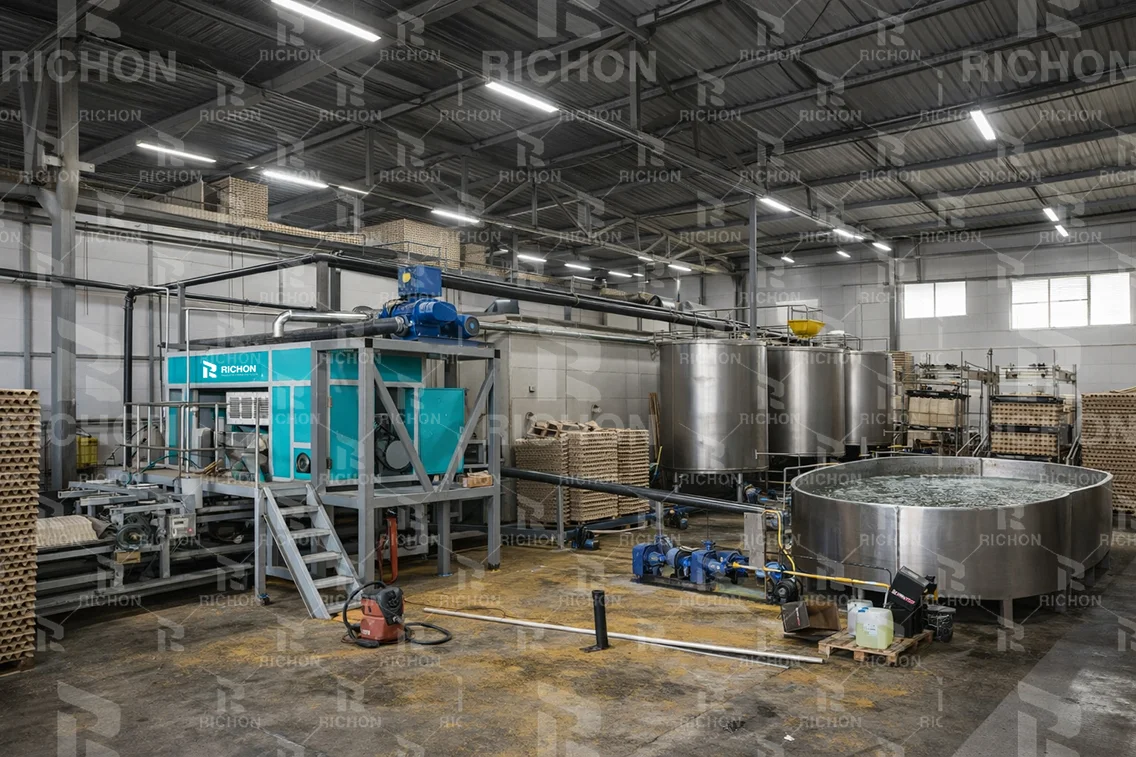
Raw Material & Recycling Guide for Egg Tray Production
Learn how waste paper selection, pulping quality, and water recycling systems affect egg tray strength, surface finish, operating cost, and long-term production stability.
Why Raw Materials Matter in Egg Tray Manufacturing
In molded pulp production, raw material quality is not only a purchasing issue. It directly influences pulping efficiency, slurry consistency, forming performance, drying load, and the final strength of the egg tray.
Material choice affects the whole production line
Different waste paper types have different fiber lengths, ash content, moisture behavior, and contamination levels. These differences can change vacuum dewatering speed, mold release stability, and final product density throughout the egg tray production process.
For egg tray plants, selecting the right paper source is one of the most practical ways to improve output consistency while controlling operating cost. It also affects drainage behavior and fiber distribution in mold technology, especially when tray weight consistency and forming stability are important.
Key technical effects of poor raw material control
In practical factory operation, the same machine can perform very differently depending on the paper source, the recycling loop, and the matching of raw material characteristics with the egg tray drying system.
Common Raw Materials Used for Egg Tray Production
Most egg tray factories use recycled paper as the main fiber source. The best option depends on local waste paper supply, contamination level, target product quality, and cost structure.
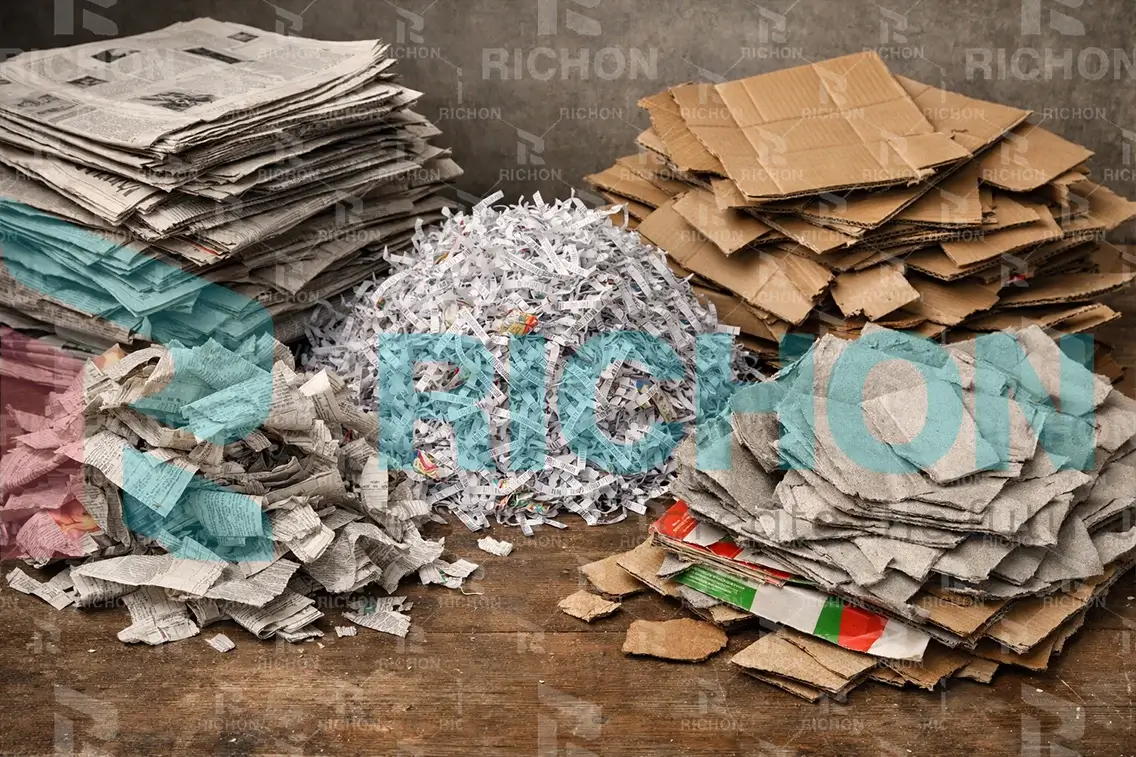
Waste Newspaper (ONP)
A common raw material with relatively soft fibers and good pulping behavior. It is widely used when stable local supply is available.
- Easy to pulp
- Generally good forming behavior
- Suitable for standard egg trays
Old Corrugated Cartons (OCC)
Stronger and longer fibers compared with some mixed papers. Often used when higher tray strength is required or when carton waste is widely available.
- Good structural strength
- May require stronger pulping
- Useful for heavier packaging products
Office Paper Waste
Cleaner in some cases, but not always ideal as a main source because the fiber structure and additive content may differ from packaging-grade papers.
- Can improve appearance in some blends
- Supply may be less stable
- Usually blended rather than used alone
Mixed Paper Waste
Lower-cost material in many markets, but quality can vary significantly. Strong screening and cleaning systems are more important when using mixed paper.
- Cost-effective in many regions
- Higher impurity risk
- Requires better process control
Raw Material Comparison for Egg Tray Manufacturing
The table below gives a practical engineering comparison of commonly used raw materials in molded pulp egg tray production.
| Material Type | Cost Level | Fiber Strength | Contamination Risk | Pulping Difficulty | Recommended Use |
|---|---|---|---|---|---|
| Waste Newspaper (ONP) | Medium | Medium | Low to medium | Easy | Standard egg trays with stable forming performance |
| Old Corrugated Cartons (OCC) | Medium | High | Medium | Medium | Stronger trays and packaging products requiring better rigidity |
| Office Paper Waste | Medium to high | Medium | Low | Easy | Blend component for cleaner pulp and visual consistency |
| Mixed Paper Waste | Low | Variable | High | Medium to high | Cost-sensitive plants with proper cleaning and screening systems |
| Virgin Pulp | High | High | Low | Easy | Special products with stricter appearance or hygiene requirements |
Actual performance depends on local supply quality, moisture content, storage condition, and blending ratio in the pulping system.
How Raw Materials Are Processed Before Forming
Before slurry reaches the forming machine, waste paper must go through several preparation stages to ensure stable concentration, impurity control, and uniform fiber dispersion. This front-end preparation is a critical part of the full egg tray production process.
Paper Feeding
Collected waste paper is sorted and fed into the pulping system. Basic separation at this stage helps reduce downstream contamination load.
Pulping
A hydrapulper or equivalent unit breaks the paper into fiber slurry. Typical slurry concentration during pulping is often controlled around a practical low-consistency range for stable transfer and mixing.
Screening
Coarse contaminants such as plastic pieces, tape, string, or oversized fragments are removed to protect pumps, pipelines, and forming molds, while also helping maintain better drainage behavior in mold technology.
Cleaning & Refining
Additional cleaning improves pulp stability. Depending on the raw material source, the plant may use extra filtration or settling steps to reduce reject rate and improve product consistency.
Mixing Tank
The prepared slurry is stored and mixed before being pumped to the forming section. Stable concentration helps improve product weight consistency, molding quality, and downstream drying efficiency.
Water and White Water Recycling in Molded Pulp Production
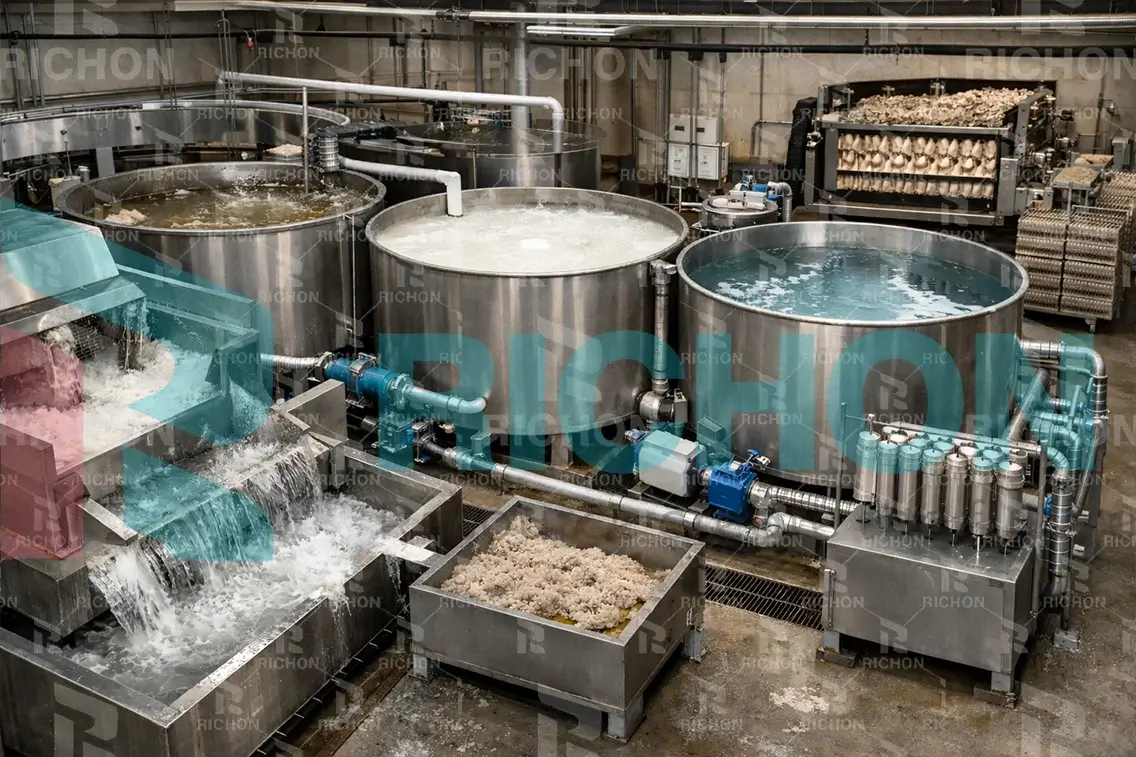
Modern egg tray plants usually use a closed-loop or semi-closed-loop water circulation system. This reduces freshwater consumption while supporting stable slurry preparation and more controlled operation across the egg tray production process.
Why recycling matters
In the forming process, large amounts of process water are separated from the slurry and returned to the system. Efficient recovery reduces water cost and helps maintain sustainable factory operation.
With a properly designed system, many factories can achieve high water reuse rates, especially when filtration, sedimentation, and overflow management are handled correctly. This is also one of the main ways to reduce egg tray water consumption in daily production.
Main recycling components
A practical recycling configuration may include a white water tank, return water tank, filtration unit, sedimentation area, overflow management, and process water pumps.
The exact layout depends on plant size, product type, local water conditions, and the level of automation in the pulping system. Water management also influences dewatering behavior, mold cleanliness, and the overall load on the egg tray drying system.
How Raw Materials Affect Final Egg Tray Quality
Final product performance is closely linked to fiber composition, pulping quality, and contamination control. Even with the same machine, different pulp recipes can lead to different tray results.
Tray Strength
Longer and cleaner fibers usually support better structural integrity, helping trays resist deformation during stacking, transport, and daily handling.
Surface Finish
Cleaner pulp and stable mixing can reduce visible specks, improve product uniformity, and help the tray maintain a more consistent appearance.
Forming Stability
Stable slurry concentration and impurity control improve vacuum forming consistency, tray weight repeatability, and mold release reliability.
How Raw Material Selection Influences Production Cost
In many egg tray projects, raw material cost is one of the largest long-term operating factors. A lower paper price does not always mean lower total manufacturing cost, because raw material quality also affects drainage, drying, cleaning load, and reject rate.
Direct and indirect cost factors
Lower-grade mixed paper may reduce purchasing cost, but it can increase screening load, waste removal, pump wear, and process instability. Cleaner material often improves efficiency even if the paper itself is more expensive.
Plants should evaluate total production economics, including usable yield, contamination handling, water load, drying behavior, and final reject rate. In many cases, raw material quality also affects total energy consumption in egg tray production, especially when moisture removal becomes less efficient.
Practical cost optimization ideas
- Use blended raw material recipes instead of relying on a single paper source.
- Match paper type to the strength requirements of the target product.
- Improve sorting and storage quality before pulping.
- Reduce freshwater demand with an optimized recycling loop.
- Monitor consistency to avoid unstable tray weight and drying inefficiency.
In many projects, total operating cost is improved by stable raw material management rather than only by purchasing the lowest-cost waste paper. This should be evaluated together with equipment selection for the egg tray machine and the complete egg tray production line.
Real Factory Perspective on Raw Material and Recycling Management
In actual factory operation, successful egg tray plants rarely rely on equipment alone. Stable raw material sourcing, pulp preparation, and recycling discipline are equally important for long-term output quality.
Typical engineering practice
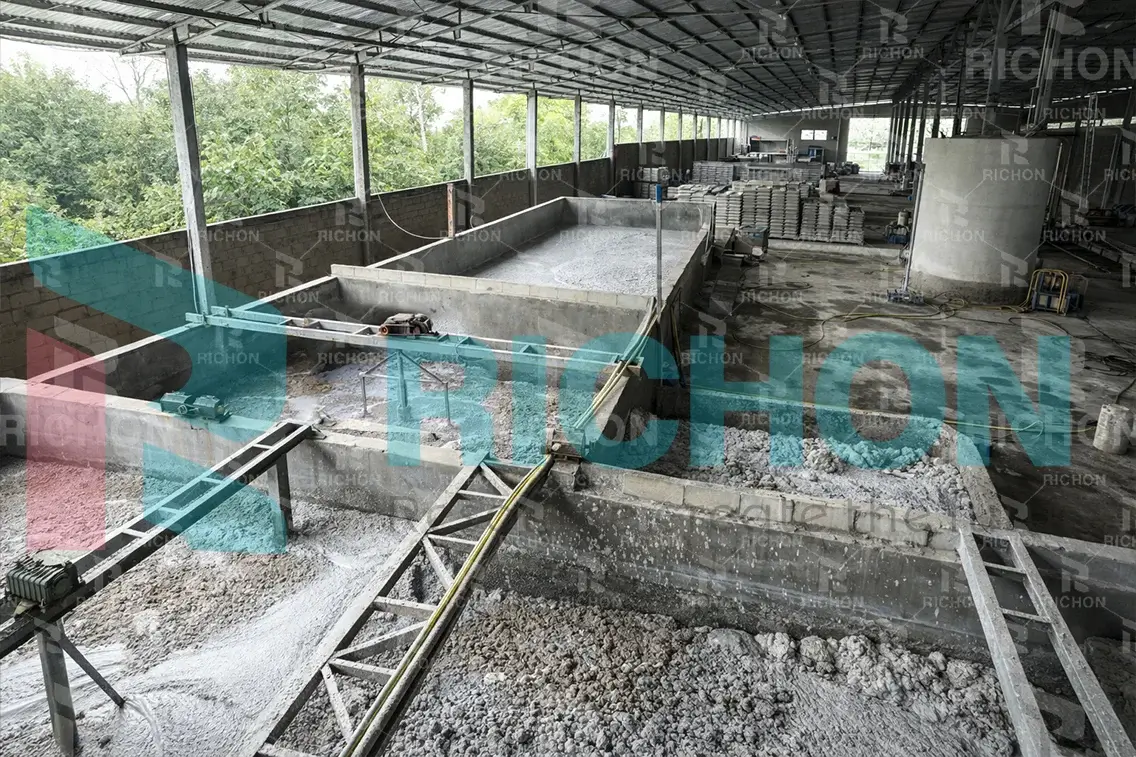
A mid-size egg tray factory may use locally available waste paper as the primary raw material, supported by screening, mixing, and white water return management. When the pulp source is stable, the plant usually sees better forming consistency and fewer interruptions.
In contrast, when incoming paper quality changes frequently, production teams often face more fluctuations in drainage rate, product weight, and drying performance.
Based on real factory operation experience and engineering data from pulp molding projects, stable raw material control is one of the most important factors behind consistent tray quality and sustainable operating cost.
Frequently Asked Questions About Egg Tray Raw Materials
These are some of the most common questions buyers and factory planners ask when evaluating raw material selection and recycling systems for molded pulp production.
What raw materials are commonly used for egg tray production?
Most egg tray factories use recycled paper such as waste newspaper, old corrugated cartons, office paper waste, or mixed paper. The best choice depends on local supply, contamination level, and target tray quality.
Can egg trays be made from 100% recycled paper?
Yes. Many standard egg trays are produced mainly from recycled paper. The exact pulp recipe depends on the required strength, appearance, and the consistency of available waste paper.
How does raw material quality affect egg tray strength?
Fiber length, cleanliness, and slurry uniformity all influence tray strength. Cleaner and more stable fiber sources usually help improve structural integrity and reduce quality fluctuation.
Why is water recycling important in egg tray manufacturing?
Water recycling reduces freshwater consumption, lowers wastewater pressure, and improves resource efficiency. It is an important part of cost control and sustainable factory operation.
Is the cheapest waste paper always the best choice?
Not necessarily. Low-cost mixed paper may increase contamination, process instability, and reject risk. Total production cost should be evaluated, not only the purchase price of the paper.
Project Consultation
Need to confirm capacity, drying layout, or investment plan?
Share your target output, factory conditions, and drying preference. Richon engineers will help review a suitable egg tray production line configuration for your project.