


Egg Tray Drying System Cost: Energy, Fuel & ROI Comparison
Drying is the most energy-intensive stage in egg tray production. In most factories, it accounts for 60%–80% of total operating cost.
However, many buyers only compare machine prices — and ignore the long-term impact of drying system selection.
In this guide, we break down:
- Real fuel consumption
- Electricity vs thermal energy usage
- Cost comparison (brick vs metal dryer)
- ROI differences based on production scale
This is a practical engineering guide, not theory.
Why Drying Cost Dominates Egg Tray Production
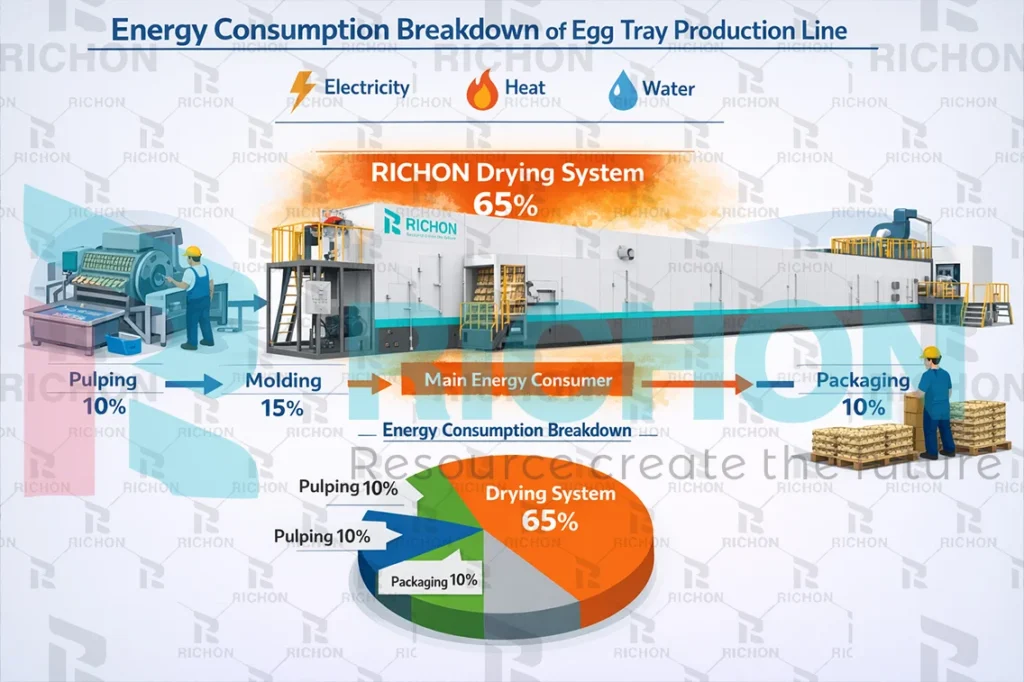
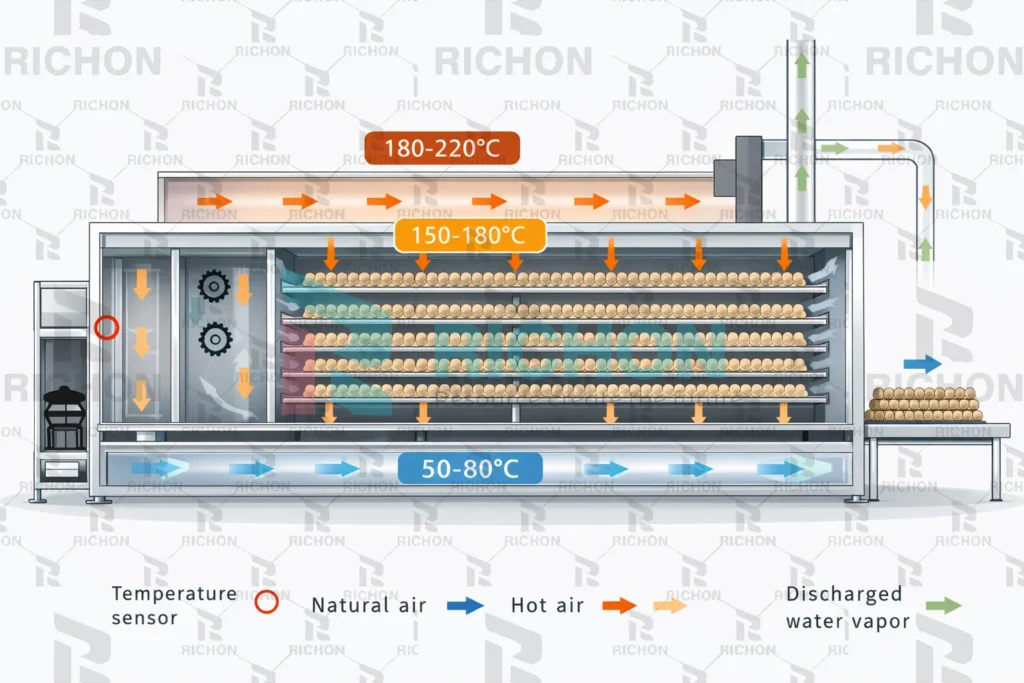
Drying removes moisture from wet pulp trays using heat and airflow.
Key reasons for high cost:
- Continuous heat demand (not intermittent)
- Large air volume circulation
- Heat loss in exhaust systems
- Long drying time (15–25 minutes)
In most cases:
- Forming = electricity-driven
- Drying = thermal energy-driven (main cost)
Related reading:
/how-much-electricity-does-an-egg-tray-machine-use-power-consumption-guide/
Types of Egg Tray Drying Systems and Cost Differences
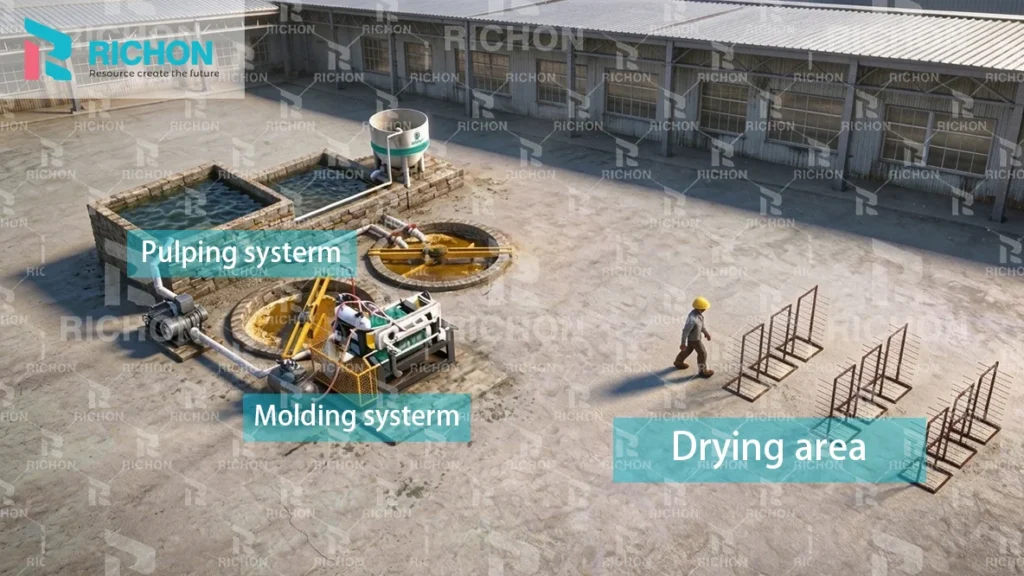
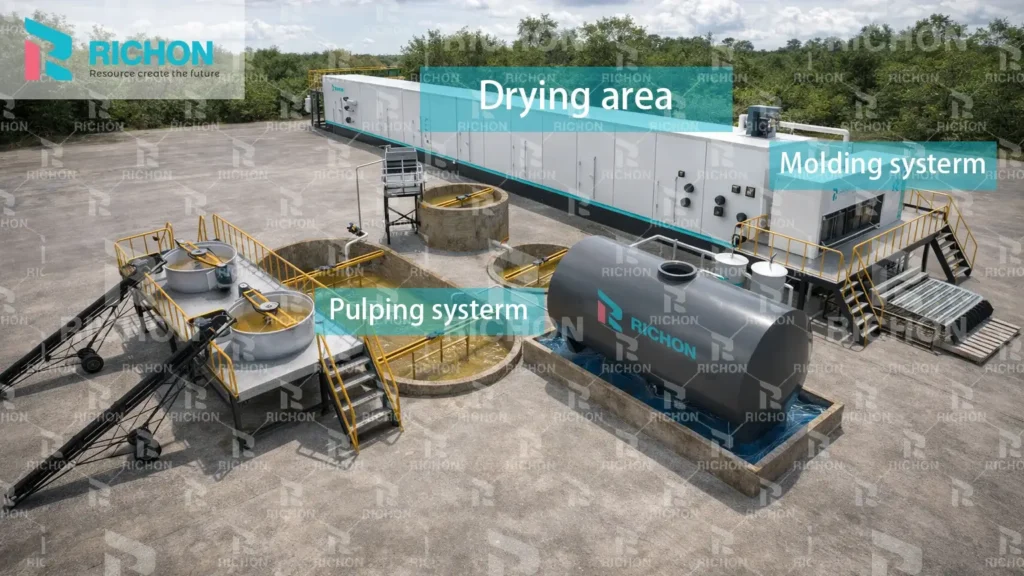
Natural Drying
- Energy cost: almost zero
- Dependency: weather
- Risk: unstable quality
Suitable for:
- Small-scale / startup
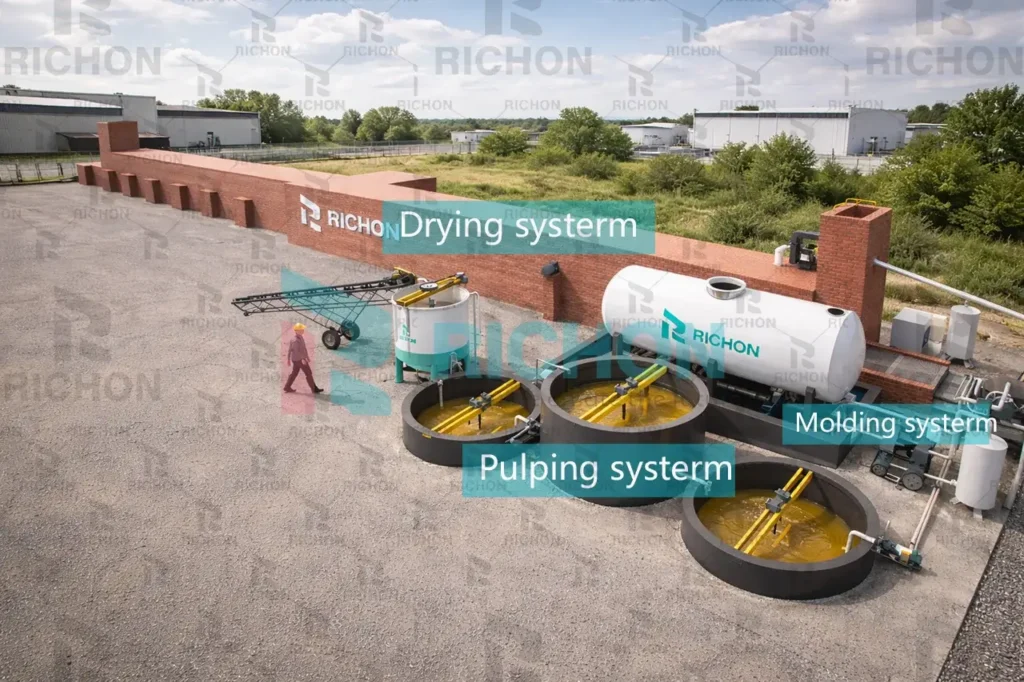
Brick Dryer (Traditional Chamber Dryer)
- Fuel: coal / biomass / wood
- Low fuel cost
- High labor requirement
- Temperature control: manual
Suitable for:
- Developing markets
- Medium investment
Metal Dryer (Automatic Conveyor Dryer)
- Fuel: natural gas / diesel / LPG
- Fully automated
- Stable drying quality
- Higher initial investment
Suitable for:
- Export-oriented production
- Medium to large-scale factories
Fuel Consumption Comparison (Engineering Perspective)
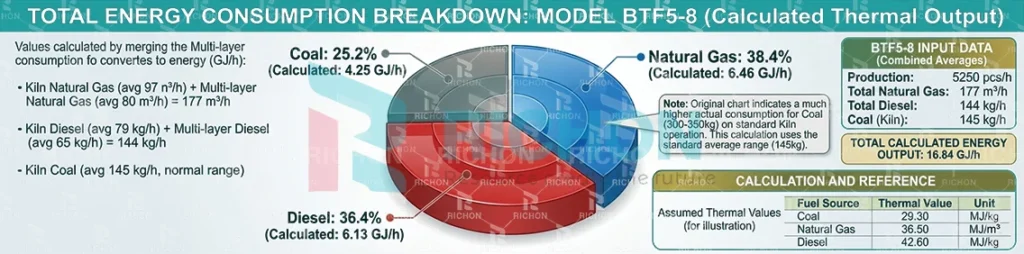
⚠️ Note: Actual consumption depends on:
- Capacity
- Moisture content
- Dryer insulation
- Ambient temperature
Typical reference (6000 pcs/h line):
| Dryer Type | Fuel Type | Consumption Range | Cost Level |
|---|---|---|---|
| Brick Dryer | Coal | 170–180 kg/h | Low |
| Brick Dryer | Biomass | 212–225 kg/h | Low–Medium |
| Metal Dryer | Natural Gas | 100–110 m³/h | Medium |
| Metal Dryer | Diesel | 83–93 kg/h | High |
Key insight:
- Coal = cheapest but labor-heavy
- Gas = best balance
- Diesel = flexible but expensive
Electricity vs Thermal Energy: What Really Costs More?
Many buyers assume electricity is the main cost.
That’s incorrect.
In reality:
| System | Energy Type | Cost Share |
|---|---|---|
| Pulping | Electricity | Medium |
| Forming | Electricity | Medium |
| Drying | Thermal Energy | Highest (60–80%) |
Full breakdown here:
/how-much-electricity-does-an-egg-tray-machine-use-power-consumption-guide/
Real Operating Cost Case (6000 pcs/h Production Line)
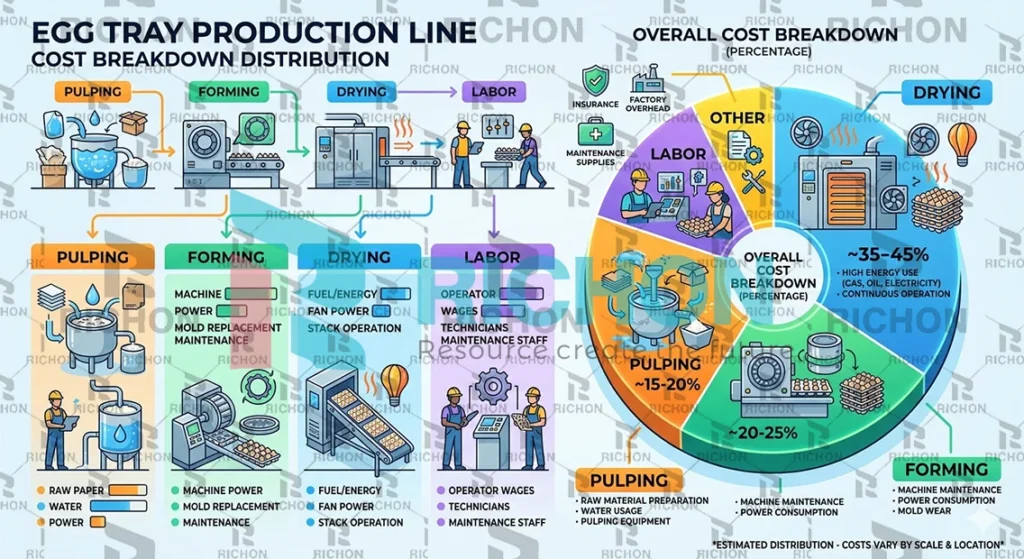
Estimated daily cost structure:
- Electricity: $80–150
- Fuel (drying): $300–600
- Labor: $100–200
- Raw material: variable
Drying cost = largest contributor
Per 1000 trays:
Drying cost often > 50% of total
Egg Tray Drying System Cost: Energy, Fuel & ROI Comparison
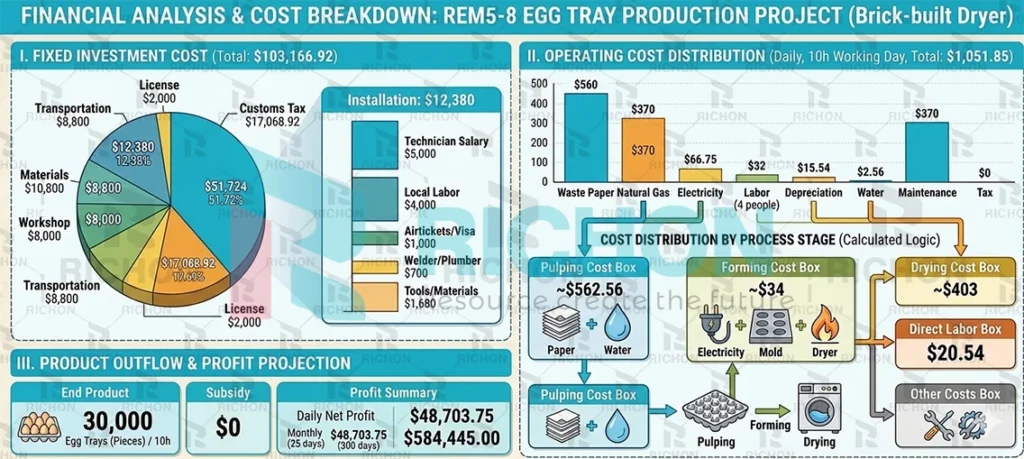
This is where most buyers make mistakes.
Brick Dryer
- Lower initial investment
- Higher labor + instability
- Longer ROI
Metal Dryer
- Higher upfront cost
- Lower labor
- Stable production
- Faster ROI in large-scale production
Conclusion:
| Scenario | Recommended Dryer |
|---|---|
| Small factory | Natural / Brick |
| Medium capacity | Brick / Hybrid |
| Large capacity | Metal dryer |
How to Choose the Right Drying System
Your decision should be based on:
1. Production Capacity
👉 Related:
/how-to-choose-the-right-egg-tray-production-line-capacity-1000-8000-pcs-h-guide/
2. Factory Space
👉 Layout reference:
/how-much-space-is-needed-for-an-egg-tray-factory-layout-guide/
3. Fuel Availability
- Coal → low cost
- Gas → stable
- Diesel → flexible
4. Investment Budget
👉 Cost guide:
/egg-tray-machine-price-2026-complete-cost-breakdown-roi-guide/
5. Automation Level
👉 Dryer system details:
/products/egg-tray-production-line/egg-tray-dryer-system/
FAQ: Egg Tray Drying System Cost
❓ Which drying system is cheapest?
Natural drying has lowest cost but highest risk.
❓ Is gas cheaper than diesel?
Yes. Gas is usually 30–50% cheaper than diesel.
❓ Can I use biomass fuel?
Yes. Biomass is widely used in brick dryers.
❓ What is the biggest cost in egg tray production?
Drying (thermal energy), not electricity.
Choosing the right drying system is not just about equipment —
it directly determines your production cost, product quality, and ROI.
If you’re planning a new project, we recommend evaluating:
- Capacity
- Energy cost
- Local fuel availability
Contact our engineering team for a customized solution.
Need a Capacity Recommendation for Your Market?
Share your target output, local humidity/energy conditions, and tray type. Our engineers will suggest a suitable 3,000–8,000 pcs/h configuration and drying solution.
- Factory layout & utilities checklist
- Drying bottleneck evaluation
- Cost & ROI estimation reference
