


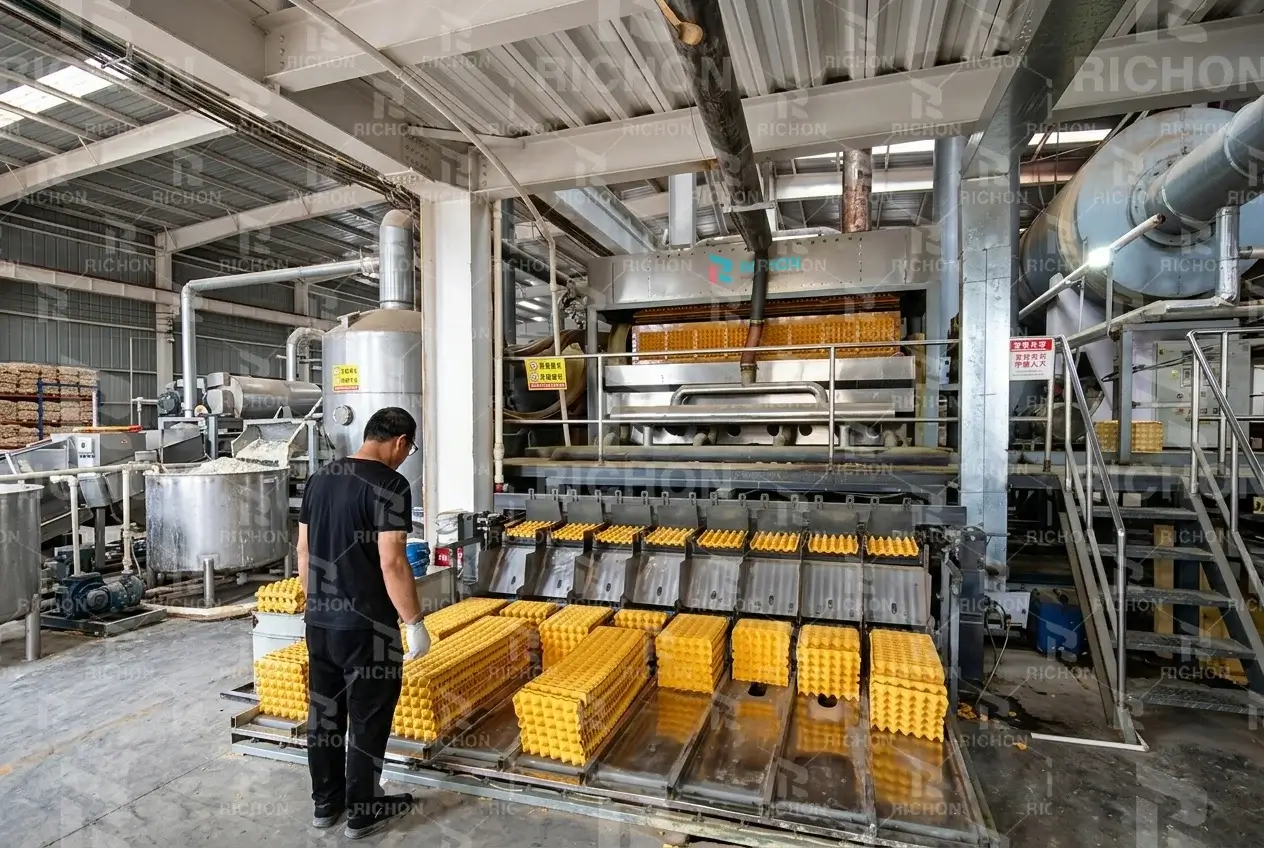
8000 pcs/h Egg Tray Production Line
A high-speed industrial solution designed for large-scale egg tray manufacturing, where automation, drying efficiency, and system stability determine real production output and return on investment.
Who Should Choose an 8000 pcs/h Egg Tray Line?
An 8000 pcs/h egg tray production line is typically selected by manufacturers who already operate at a commercial scale and need higher output stability, stronger automation, and more predictable production economics. If you are comparing lower ranges, you can review the 6000 pcs/h solution or the capacity selection guide.
Suitable For
- Factories with stable large-volume tray demand
- Projects with strong utility and drying infrastructure
- Buyers targeting automation and labor reduction
- Investors planning long-term industrial production
Usually Not Ideal For
- Entry-level or small-scale production projects
- Factories without stable raw material supply
- Projects lacking proper layout planning
- Buyers focusing only on machine price instead of system cost
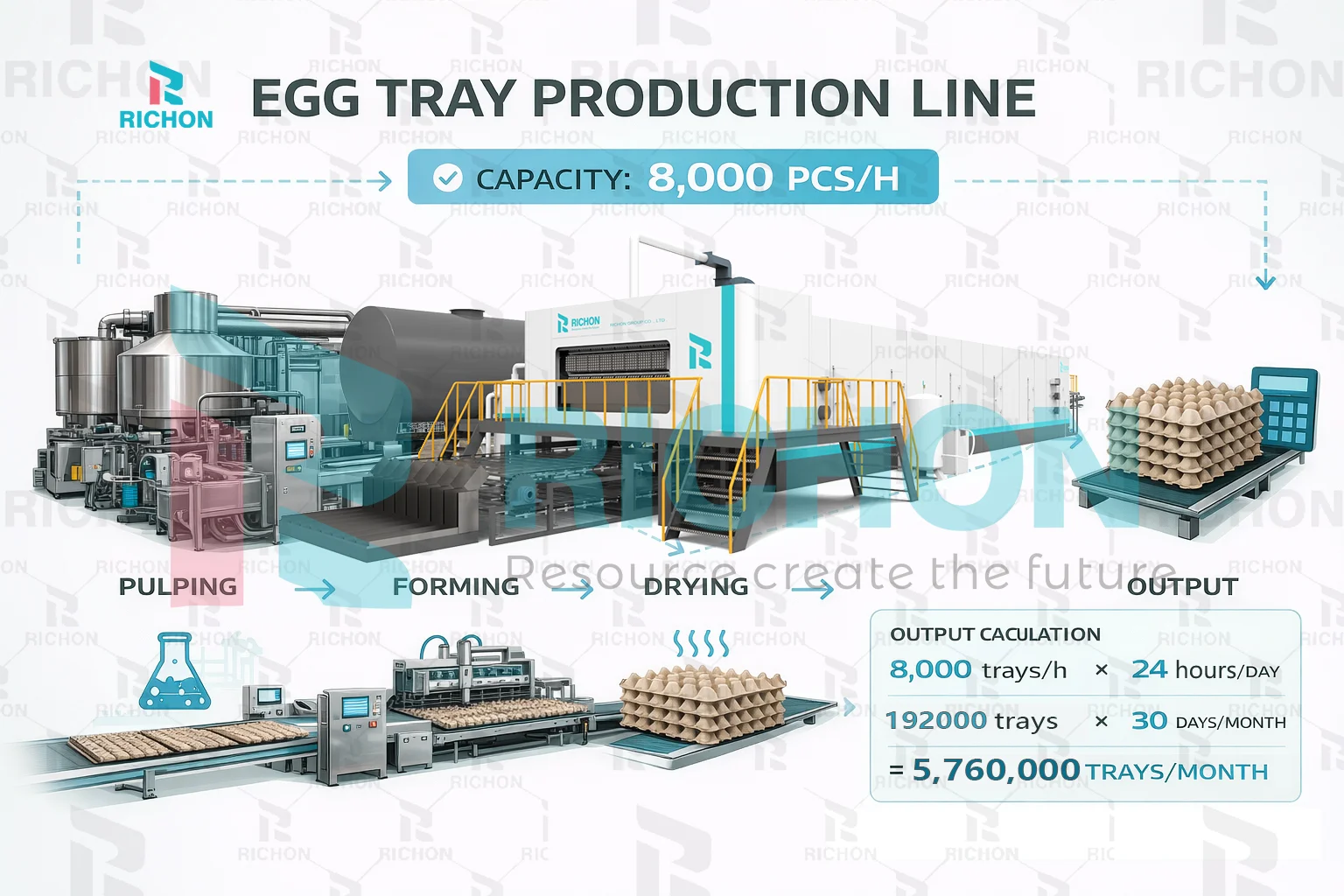
8000 pcs/h Requires Full System Stability, Not Just Speed
At 8000 pcs/h, production performance is no longer limited by forming speed alone. Real output depends on how well the entire system — pulping, forming, drying, and packing — operates together under continuous load conditions.
Many projects overestimate output because they focus on equipment speed rather than system coordination. To understand the real difference, review our capacity comparison guide and production cost analysis.
What Changes When You Move to 8000 pcs/h?
Automation Level
Higher automation is required to maintain stable output and reduce labor dependency.
Drying Dependency
The drying system becomes the dominant factor in production stability.
Energy Structure
Energy planning becomes critical for long-term operating cost control.
Factory Layout
Layout must be designed for flow efficiency, not just equipment placement.
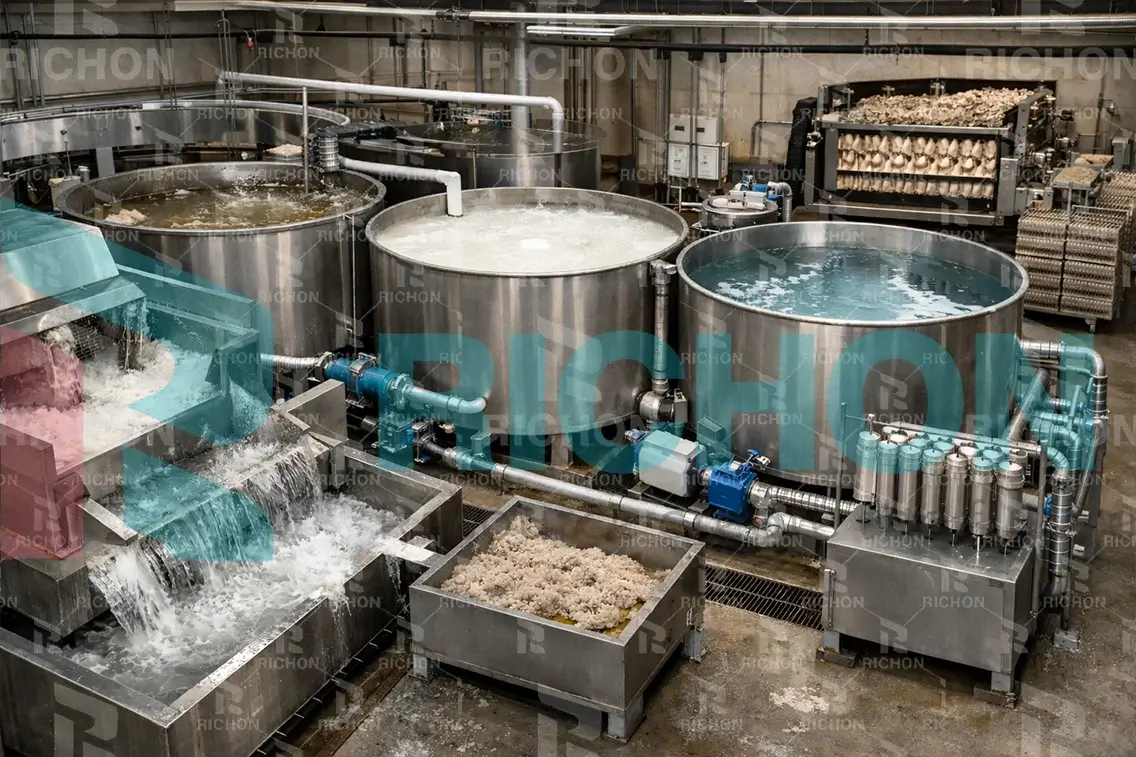
Stable Raw Material Preparation Is a Core Requirement at 8000 pcs/h
At 8000 pcs/h, raw material preparation is no longer just an upstream support process. It directly affects slurry consistency, forming stability, tray weight uniformity, drying behavior, and final reject rate. Weak pulp preparation can create hidden instability throughout the entire production line.
To understand how raw material choice influences production stability, review our raw material guide, the knowledge center raw material page, and the production process guide.
At 8000 pcs/h, Energy Planning Should Be Treated as a Full-System Decision
Buyers often ask about installed electrical power first, but at 8000 pcs/h the bigger question is how electricity, drying energy, workshop utilities, and production rhythm work together. A line may appear efficient on paper while still generating avoidable operating pressure if drying structure and plant layout are not properly aligned.
For deeper electricity discussion, review our power consumption guide. For broader operating logic, see the energy consumption analysis page and our article on egg tray drying system cost.
Electrical Load
Important for utility planning, control systems, and workshop infrastructure preparation.
Thermal Energy
Usually has a greater long-term impact on operating cost than installed electrical power alone.
Real Comparison
Capacity decisions should compare total process economics, not just a single machine power figure.
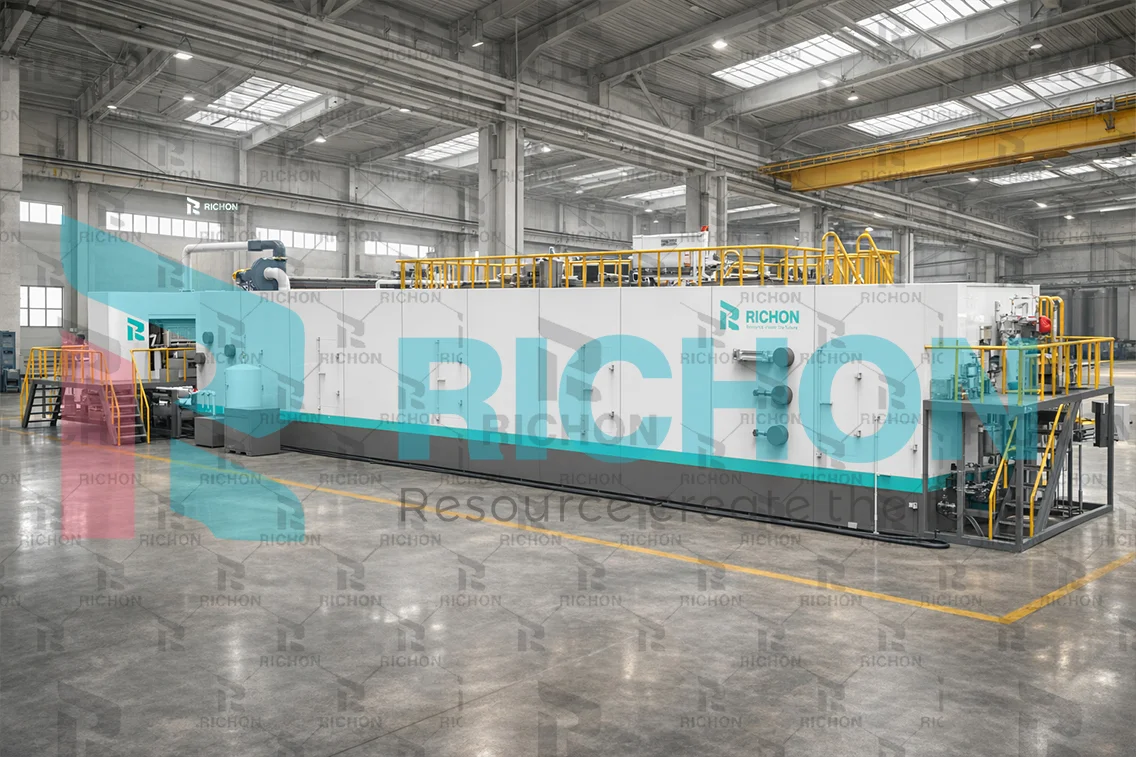
At 8000 pcs/h, Drying Capacity Often Determines Whether the Project Really Works
At this production level, drying is not just one process section. It is often the real governing factor behind stable output, energy cost, and production rhythm. In practical factory operation, many performance gaps come not from forming speed, but from drying mismatch.
For technical comparison, review our drying system comparison and the dedicated egg tray dryer system page.
Natural Drying
Usually not suitable for projects targeting stable large-scale industrial output at this capacity.
Brick Dryer
May fit some projects when local fuel structure, workshop conditions, and investment logic are appropriate.
Metal Dryer
Often preferred for better process control, cleaner integration, and more stable high-capacity output.
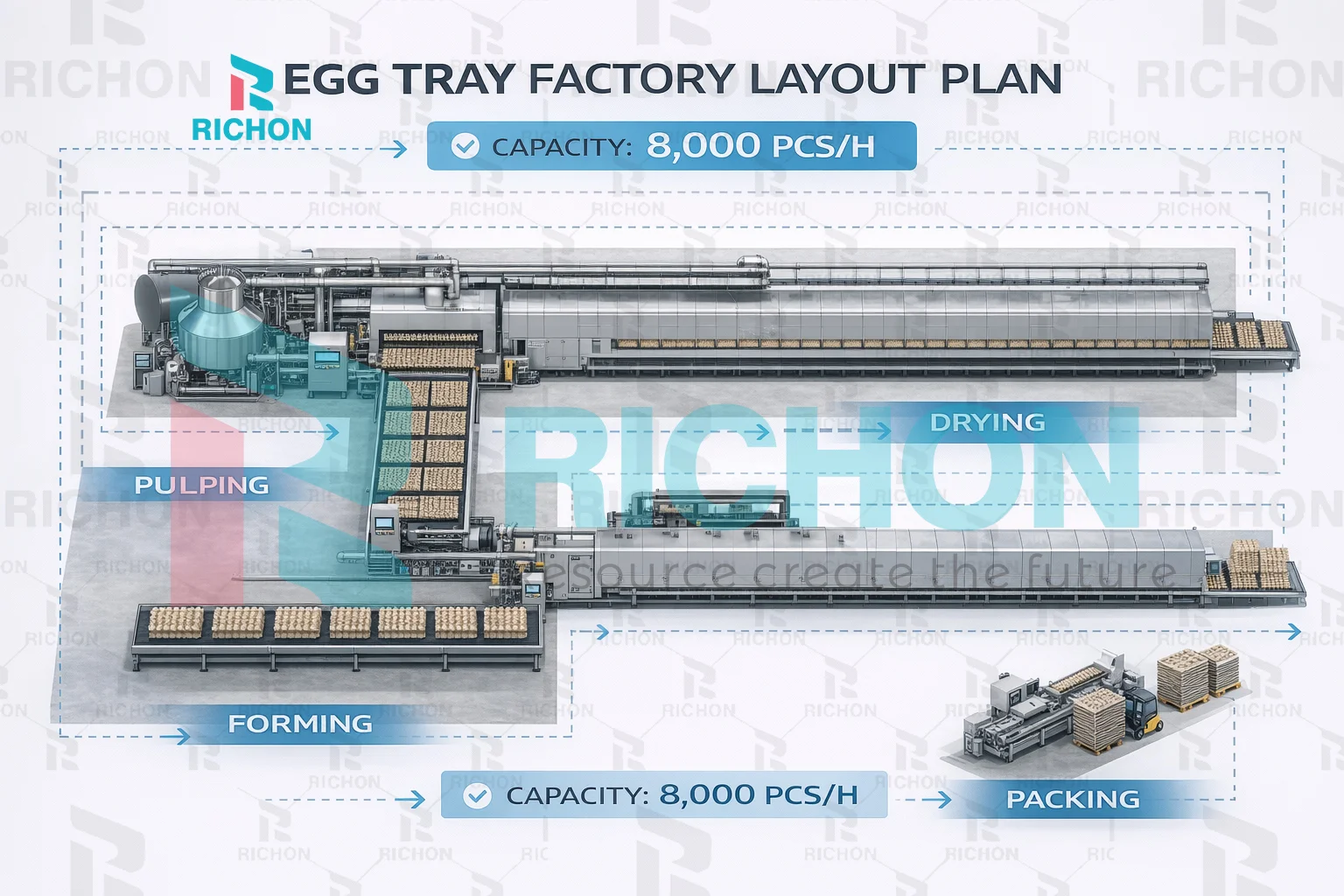
Factory Layout Must Be Planned Around Throughput, Drying Footprint, and Material Flow
At 8000 pcs/h, layout planning becomes a core engineering issue rather than a simple space arrangement task. Raw material transfer, wet tray handling, drying section footprint, finished tray movement, and maintenance access all influence whether the project can sustain real industrial-level output.
Planning only by available floor area is not enough. Buyers should also check utility routing, dryer length, conveyor flow, and packing area coordination. For deeper planning logic, review our factory layout guide, the knowledge center layout page, and project planning.
8000 pcs/h Is an Industrial Investment Decision, Not Just a Bigger Equipment Purchase
An 8000 pcs/h project usually attracts investors targeting stronger market supply, higher plant utilization, and more stable commercial output. But return on investment still depends on more than machine quotation. Raw material cost, drying fuel choice, labor structure, workshop layout, utility planning, and real sales demand all affect the true payback result.
To review the business side in more detail, see our egg tray machine price and ROI guide, cost investment analysis, and the article on real production cost.
Investment Structure
Equipment cost is only one part of the project. Workshop adaptation, dryer configuration, automation level, utilities, and downstream handling also affect total investment.
Operating Cost Logic
Daily economics should be evaluated through energy, labor, maintenance, reject control, and stable throughput together.
Scale Effect
Higher capacity can improve commercial efficiency, but only when matched with stable demand, infrastructure, and disciplined operation.
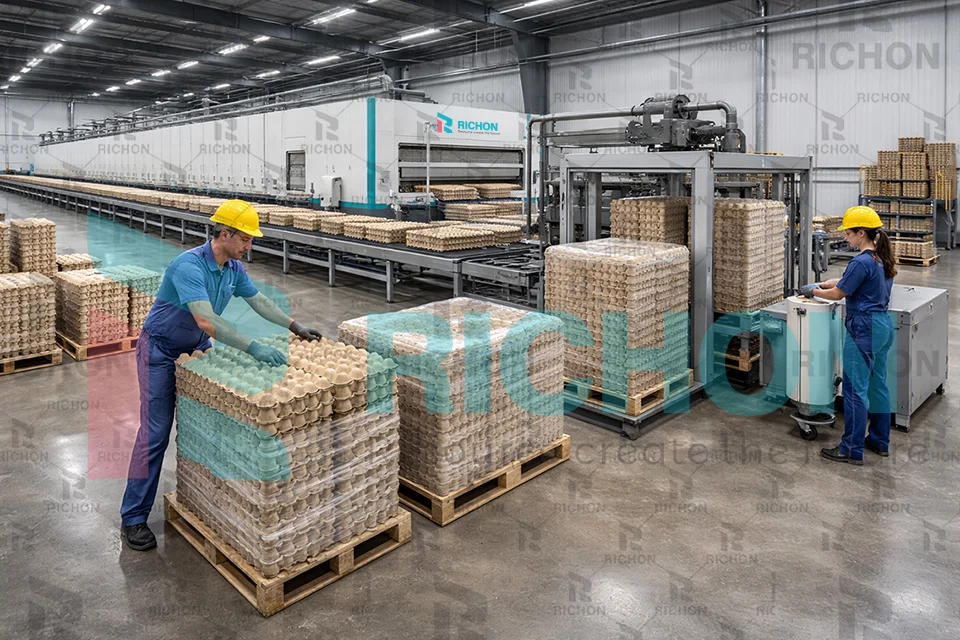
Final Stacking and Packing Must Keep Up with Industrial Output Rhythm
At 8000 pcs/h, the finished product section should be planned as part of the core process, not as a small downstream detail. Once trays leave the dryer, counting, stacking, temporary storage, and shipment preparation all influence whether the factory can maintain stable large-scale output.
Finished tray handling should be planned together with the full egg tray production line, the factory layout guide, and the broader project planning page.
Compare This Capacity with Related Engineering and Investment Topics
A strong 8000 pcs/h decision should be supported by layout planning, drying logic, utility understanding, automation thinking, and realistic commercial comparison.
Common Questions About 8000 pcs/h Egg Tray Production
Is 8000 pcs/h suitable for all factories?
No. This capacity is designed for large-scale operations with stable demand, stronger infrastructure, and more disciplined production planning.
What is the biggest risk at this capacity?
Improper drying system selection and weak factory layout planning are usually the biggest risks.
Does higher capacity always mean higher profit?
No. Higher capacity only improves profitability when it is matched with market demand, energy cost control, and stable plant operation.
What should be checked before choosing 8000 pcs/h?
Raw materials, utilities, layout, drying system, and real sales capacity should all be checked before finalizing this investment.
Where can I compare this line with other options?
You can review the 6000 pcs/h page, the capacity guide, and the knowledge center.
Need Help Checking Whether 8000 pcs/h Fits Your Project?
We do not recommend production capacity only by headline output. A practical decision should match raw material continuity, drying route, utility support, factory layout, automation level, and your real market demand.
Project Consultation
Need to confirm capacity, drying layout, or investment plan?
Share your target output, factory conditions, and drying preference. Richon engineers will help review a suitable egg tray production line configuration for your project.