


How to Choose the Right Egg Tray Production Capacity for Your Project
Richon capacity solutions help investors and factory managers match production output, labor, energy consumption, and drying configuration with real project demand. From 800 pcs/h to 9000 pcs/h, this page gives you a clearer engineering reference before selecting a line.
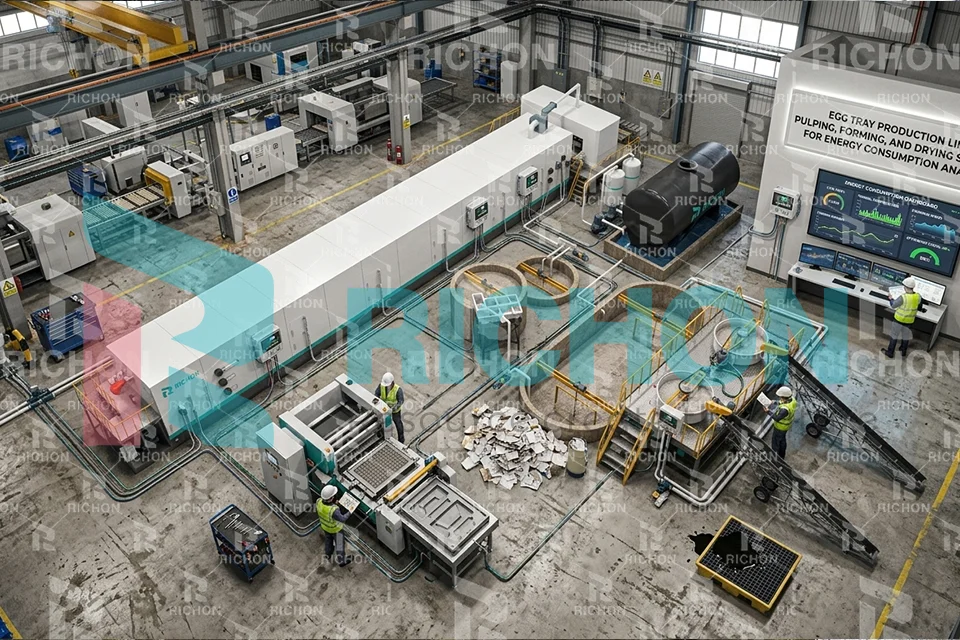
Why Capacity Selection Matters in an Egg Tray Project
Capacity is not only an output number. It directly affects your factory layout, labor requirement, drying system, utility planning, and operating cost. Choosing a line that is too small may limit your order delivery, while choosing one that is too large may increase unnecessary capital pressure.
- Production capacity determines the model structure and molding station quantity.
- Different capacities require different drying technologies and fuel consumption levels.
- Power demand, raw material supply, and labor allocation all change with capacity scale.
- A correct capacity match improves ROI, production stability, and long-term expansion planning.
To understand how capacity links with the full line structure, you can also review the egg tray production line page, the production line overview, and the egg tray project planning guide.
Typical buyer questions this page solves
- Which model is suitable for a new egg tray factory?
- How much power does a 6000 pcs/h line need in actual operation?
- What is the labor difference between 3000 pcs/h and 6000 pcs/h?
- When should brick drying be replaced by multi-layer metal drying?
- How does capacity selection affect future production cost and expansion flexibility?
Egg Tray Production Capacity Comparison by Model
The table below compares Richon mainstream egg tray production models by output range, molding stations, installed power, actual running power, and labor requirement. This helps buyers evaluate which capacity level fits their business scale, utility condition, and factory resources.
| Parameters / Models | REM3-1 | REM4-1 | REM3-4 | REM4-4 | REM4-8 | REM5-8 | REM6-8 | REM8-8 |
|---|---|---|---|---|---|---|---|---|
| Production Capacity | 800–1000 pcs/h | 1000–1500 pcs/h | 1700–2200 pcs/h | 2000–2800 pcs/h | 4000–4500 pcs/h | 5000–5500 pcs/h | 6000–6500 pcs/h | 8000–9000 pcs/h |
| Molding Stations | 3 | 4 | 12 | 16 | 32 | 40 | 48 | 64 |
| Total Power | 32 kW | 36–60 kW | 55–74 kW | 58–88 kW | 127–144 kW | 153–190 kW | 226–239 kW | 374 kW |
| Actual Running Power | 22.4 kW | 25.2–42 kW | 38.5–51.8 kW | 40.6–61.6 kW | 88.9–100.8 kW | 107.1–133 kW | 158.2–167.3 kW | 261.94 kW |
| Labor Required | 3–5 person | 4–6 person | 4–6 person | 4–6 person | 4–6 person | 5–7 person | 6–8 person | 6–8 person |
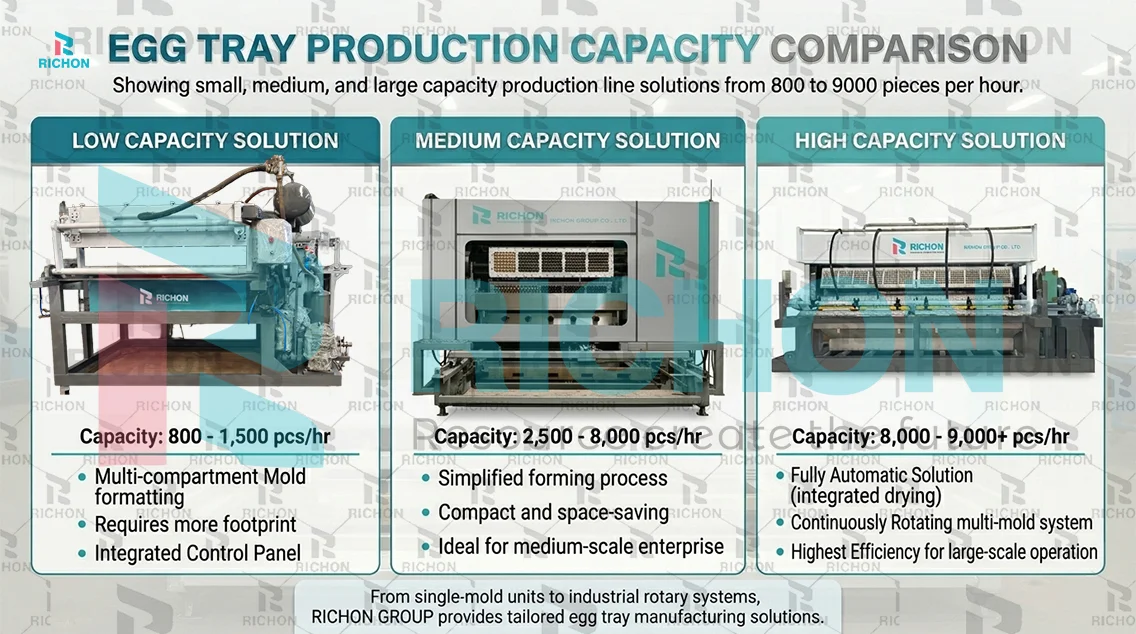
How to read this capacity table
Capacity should be judged together with molding station count, actual running power, labor demand, and downstream drying support. A higher output line is not always the better choice if local utility cost, workshop size, and market demand are still limited.
- Small models are usually suitable for entry-level projects and lower daily demand.
- Mid-capacity models are commonly chosen when buyers want a balance between investment control and output growth.
- Large-capacity lines require stronger drying support, more stable utilities, and better layout planning.
For a broader engineering overview, you can also review the egg tray production line system, the production line overview, and the detailed capacity selection guide.
Note: “Actual Running Power” is based on practical operating load rather than only installed power. This gives a more useful engineering reference for utility planning and operating cost evaluation.
Paper and Water Consumption by Capacity
Capacity selection also affects hourly raw material demand and water circulation load. This reference helps buyers assess waste paper supply, pulping requirement, and water system planning before confirming the final model.
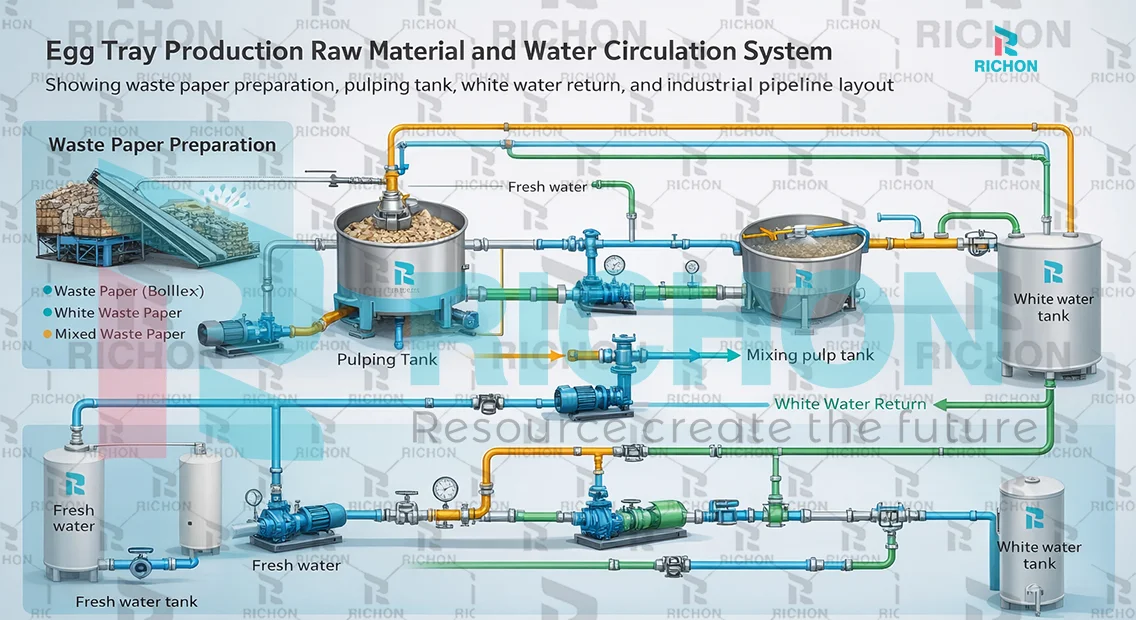
Material supply must match target output
Many buyers focus only on machine capacity, but raw material availability and water circulation design are equally important. As capacity rises, paper demand, slurry stability, and water reuse efficiency become more critical to maintaining consistent production.
- Higher output lines require a more stable waste paper supply chain.
- Water planning affects both pulping consistency and utility cost.
- Closed-loop recycling design can reduce fresh water demand and improve plant sustainability.
For deeper planning, read the Raw Material & Recycling Guide, the water consumption guide, and the production process page.
Brick Drying vs Multi-layer Metal Drying Consumption
Drying is one of the most important parts of capacity planning. In real projects, buyers should evaluate not only electrical load, but also hourly thermal fuel consumption, layout implications, and long-term operating cost.
Brick Drying Consumption per Hour
- REM6-8: Coal 170–180 kg/h | Natural Gas 100–110 m³/h | Diesel 83–93 kg/h
- REM5-8: Coal 140–150 kg/h | Natural Gas 92–102 m³/h | Diesel 74–84 kg/h
- REM4-8: Coal 115–125 kg/h | Natural Gas 74–84 m³/h | Diesel 60–70 kg/h
- REM4-4: Coal 94–104 kg/h | Natural Gas 60–70 m³/h | Diesel 50–60 kg/h
Multi-layer Metal Drying Consumption per Hour
- REM6-8: Natural Gas 90–100 m³/h | Diesel 67–77 kg/h
- REM5-8: Natural Gas 75–85 m³/h | Diesel 60–70 kg/h
- REM4-8: Natural Gas 60–70 m³/h | Diesel 48–58 kg/h
- REM4-4: Natural Gas 48–58 m³/h | Diesel 40–50 kg/h
Selection takeaway
The correct drying choice depends on local fuel availability, climate condition, installation budget, and planned production continuity. For larger automatic lines, drying matching is often the factor that decides whether the rated capacity can be sustained in real operation.
Continue reading on the Egg Tray Dryer System, the Drying System Comparison, and the brick dryer vs metal dryer article.
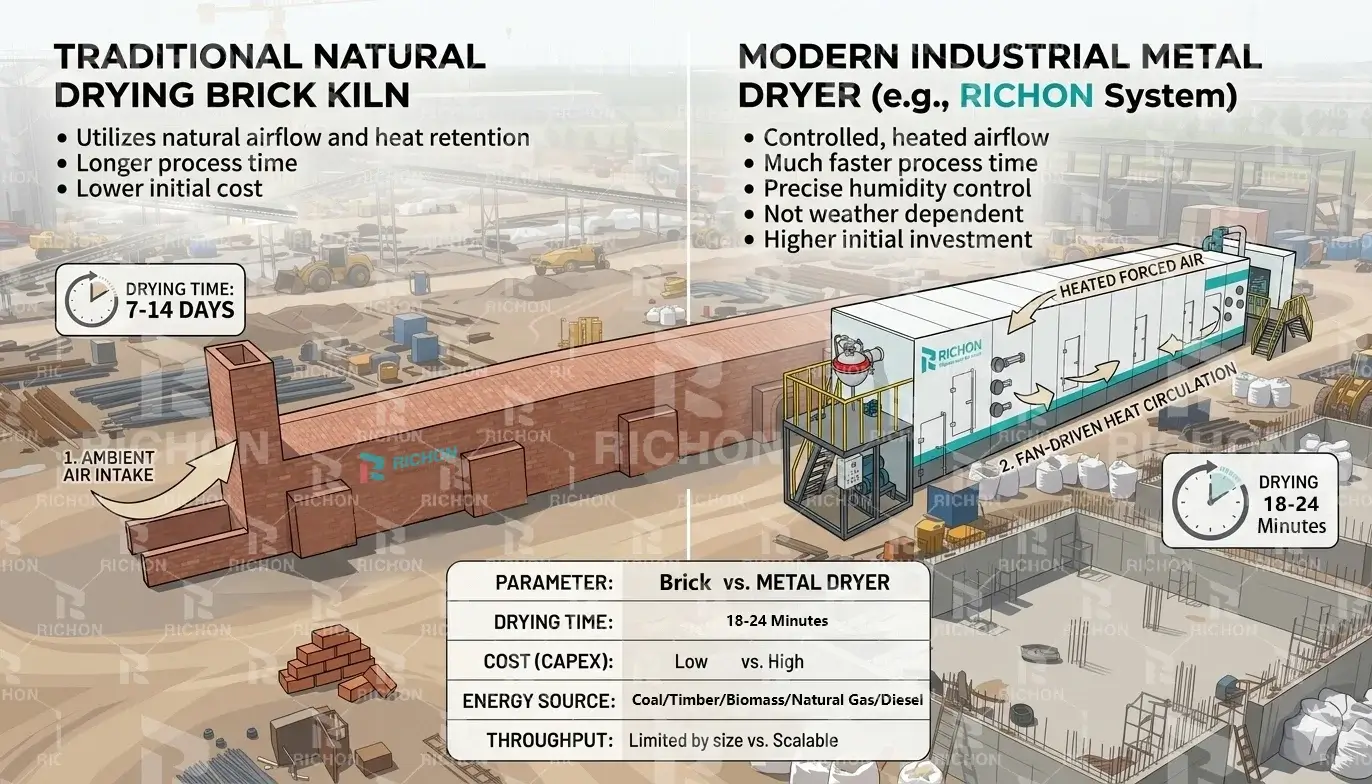
Why drying should be evaluated separately from power
Electrical power only reflects the motors, blowers, and conveyors involved in the drying section. The main operating burden for large-capacity drying usually comes from thermal fuel consumption, which is why capacity planning should always separate electrical load from heat demand.
- Electrical power supports fans, motors, and line transmission.
- Thermal fuel determines the real drying cost in continuous production.
- Drying type influences factory length, automation level, and operating stability.
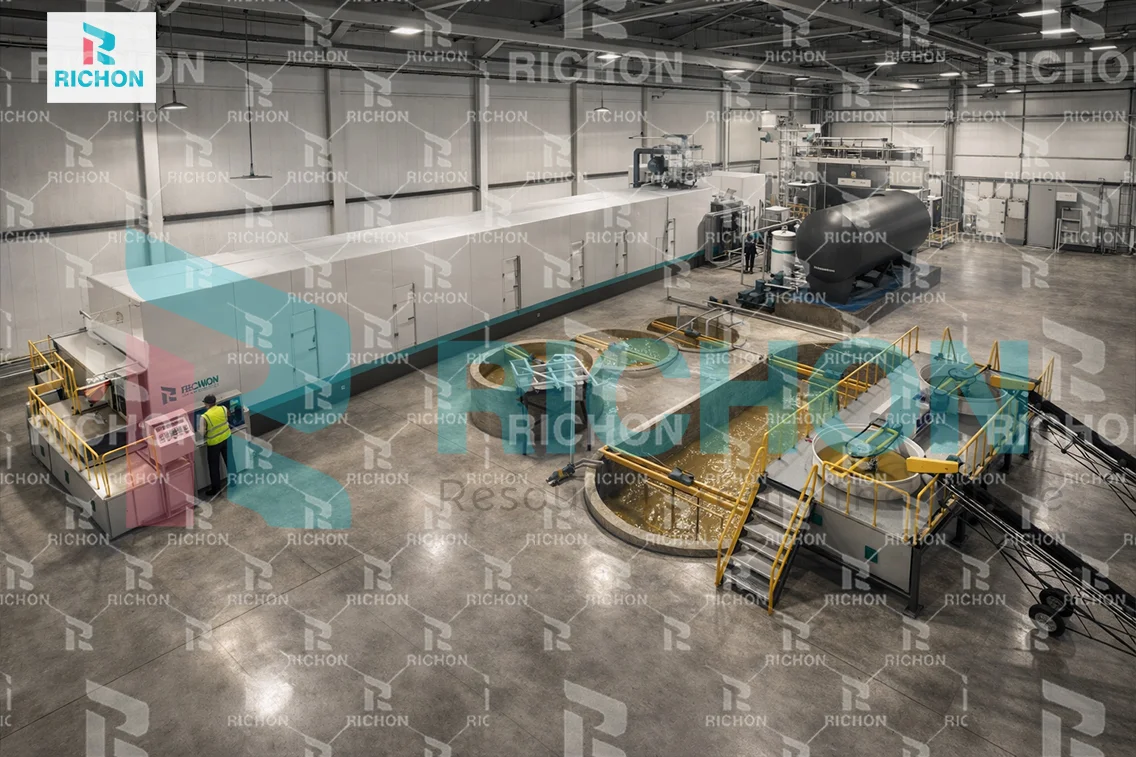
Why 6000 pcs/h Is a Mainstream Capacity Solution for Growing Factories
The REM6-8 model is one of the most practical references for medium-to-large egg tray projects. It balances output, labor, drying efficiency, and future expansion better than very small lines, while still remaining more flexible than oversized systems.
- Capacity: 6000–6500 pcs/h
- Molding Stations: 48
- Total Power: 226–239 kW
- Actual Running Power: 158.2–167.3 kW
- Labor Required: 6–8 person
- Paper Consumption: 520 kg/h
- Water Consumption: 1300 kg/h
- Drying Reference: Brick or metal drying solutions available
To evaluate this model more completely, compare it with the egg tray production line page, the dryer system page, and the cost & investment analysis page.
How to Choose the Right Egg Tray Machine Capacity
Capacity selection should not be based only on output. A practical decision should combine demand, labor, utility conditions, drying configuration, raw material flow, and investment stage.
Confirm required trays per day and effective working hours before narrowing the model range.
Waste paper stability and water system support must match the target output level.
Smaller capacities may allow simpler solutions, while larger automatic lines need stronger continuous drying support.
Compare labor, running power, fuel demand, and future expansion flexibility before final selection.
Simple capacity calculation logic
Required Capacity = Daily Tray Demand ÷ Effective Working Hours
In actual projects, buyers should also consider production efficiency, mold change frequency, drying stability, and maintenance reserve when choosing the final model.
For more supporting references, review the egg tray project planning guide, the cost & investment analysis page, and the energy consumption analysis page.
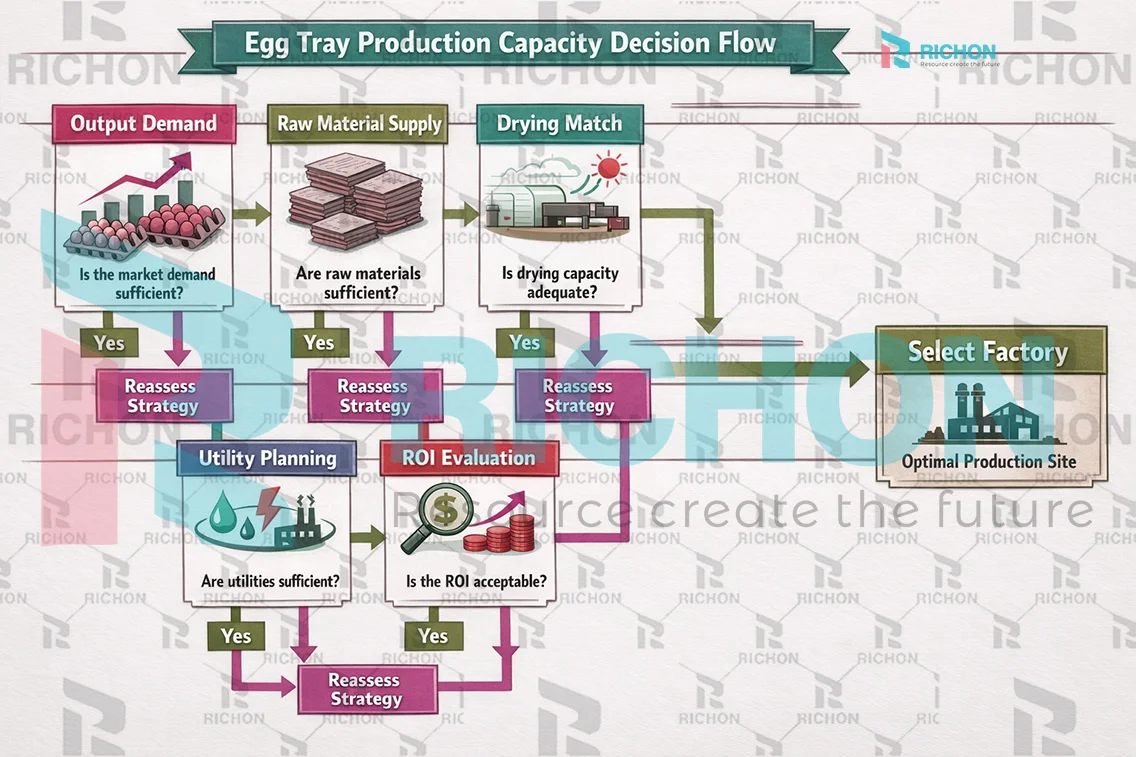
Capacity is a system decision, not a single machine choice
The best model is the one that fits the whole project system. That includes workshop space, drying route, utility cost, target product volume, and whether the factory will expand later.
- Do not compare only installed power.
- Do not choose a larger line without checking drying and layout first.
- Do not underestimate labor savings from a better matched automatic line.
You can also use the factory layout guide and electricity consumption article to refine your project planning logic.
Frequently Asked Questions About Egg Tray Capacity Solutions
What capacity is suitable for a new egg tray project?
For many new investors, a small or medium-capacity line is often easier to manage at the beginning. The final decision depends on expected sales volume, labor cost, drying conditions, and available factory area.
Is higher capacity always better?
No. Higher capacity increases output potential, but it also raises factory utility requirements, drying demand, and overall investment. The best choice is the model that matches real order demand and expansion pace.
Why should drying be considered together with capacity?
Because drying directly affects whether the formed trays can be processed continuously. As capacity rises, thermal energy demand becomes more important, so buyers must evaluate fuel type, drying method, and operating cost together.
What data are most important when comparing models?
Buyers should compare production capacity, molding stations, actual running power, labor requirement, raw material consumption, and drying fuel demand instead of looking only at one power number.
Need a Customized Capacity Solution for Your Egg Tray Factory?
Tell us your target output, raw material type, fuel condition, and factory situation. Richon can help you match the right capacity, drying configuration, and project planning direction.
Contact Us
Get in touch with our team for any inquiries about our egg tray machines and services.
Project Scope
Do you need a complete project solution or a partial solution? Our team can customize the perfect setup for your specific needs and budget constraints.
Product Expectations
What kind of finished product do you expect, and what quality standards are important to you?
Project Timeline
What is your expected timeline for project implementation and operation?
Budget Range
What is the approximate budget range for your project procurement?
Send Us Your Information
Accurate project information will help us provide the perfect solution for your needs.