 English
3000 pcs/h Egg Tray Production Line Project in Africa with Brick Drying System
For many egg tray production projects in Africa, the most practical solution is not always the most automated system. In many cases, investors need a production line that matches local investment levels, available fuel, factory space, labor conditions, and market demand.
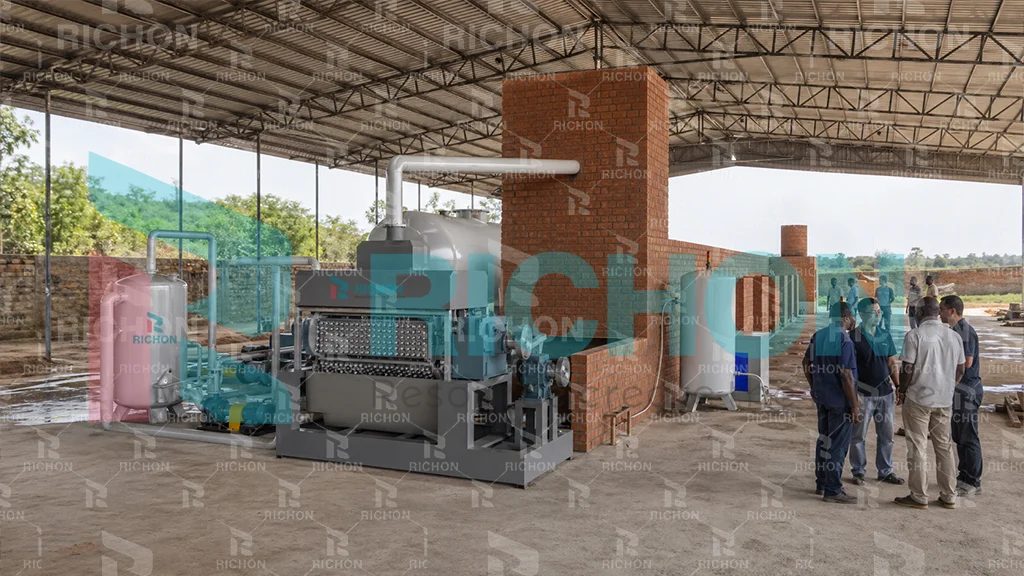
A 3000 pcs/h egg tray production line with a brick drying system is one of the most common and practical configurations for small-to-medium egg tray factories in African markets. It offers a balanced solution between production capacity, initial investment, drying efficiency, and daily operation cost.
This project case explains why a 3000 pcs/h capacity and brick drying structure can be a suitable starting solution for many African egg tray investors.
Project Overview
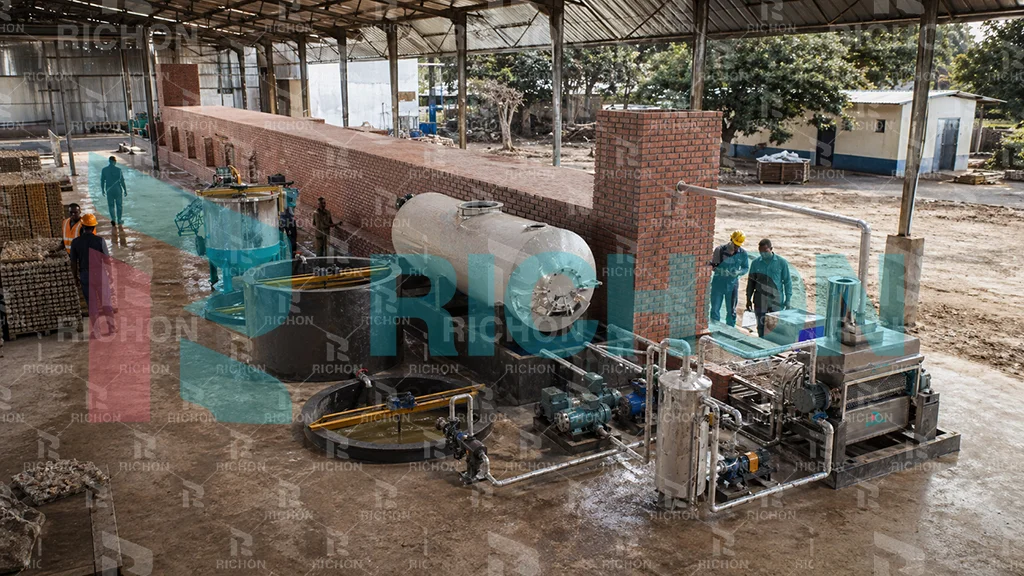
This project is designed for a small-to-medium egg tray factory targeting local poultry farms, egg distributors, and packaging buyers in the African market.
| Item | Project Configuration |
|---|---|
| Project Type | Egg tray production line |
| Target Capacity | 3000 pcs/h |
| Main Product | 30-cell paper egg trays |
| Raw Material | Waste paper, OCC, recycled cartons |
| Drying System | Brick drying system |
| Market Type | Local poultry and egg packaging market |
| Investment Positioning | Practical start-up / medium-scale factory |
Compared with a fully automatic high-capacity metal dryer line, this configuration focuses on lower initial investment, easier local construction, simple maintenance, and practical daily operation.
For investors still comparing different capacity options, this project belongs to the common medium-starting range between small starter lines and large industrial production lines. You can also refer to our guide on how to choose the right egg tray production line capacity.
Why 3000 pcs/h Is Suitable for Many African Egg Tray Projects
A 3000 pcs/h production line is often a practical starting point for African investors because it avoids two common problems:
- Starting too small and failing to meet market demand
- Starting too large and creating heavy investment pressure
For many local markets, 3000 pcs/h can support daily commercial production while keeping the project easier to manage.
Key advantages of 3000 pcs/h capacity
First, the investment is more controllable. Many first-time investors do not want to begin with a very large automatic plant. A 3000 pcs/h line gives them enough production capacity without creating excessive pressure on land, building, energy, and labor.
Second, the daily output is suitable for local poultry demand. In many African regions, egg packaging demand is growing, but buyers may still be concentrated in local farms, wholesalers, and regional distributors. A medium-capacity line is easier to match with this market stage.
Third, operation and training are simpler. Compared with a large automatic line, a 3000 pcs/h project is easier for local workers to learn, operate, and maintain.
Fourth, it leaves room for future expansion. If the local market grows, the factory can later upgrade the drying system, add capacity, or improve automation.
Why the Client Chose a Brick Drying System
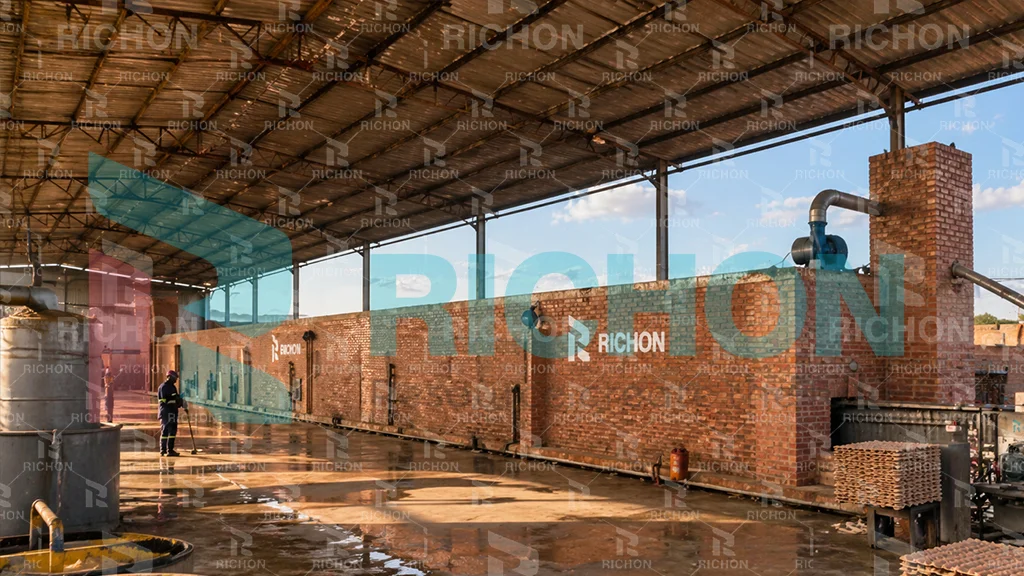
For this type of African project, the brick drying system is not a backward choice. It is a practical engineering decision.
The main reasons include:
- Lower initial investment
- Easier local construction
- Flexible fuel options
- Simple maintenance
- Suitable for 2000–3000 pcs/h production
- Better match with local labor conditions
In many African markets, fuel availability and construction cost are more important than full automation. A brick drying system can use locally available fuels depending on local conditions, such as coal, biomass, wood-based fuel, or other heat sources.
This makes the project easier to start and easier to maintain.
If you want to compare different drying systems, you can read our drying system comparison guide and the detailed egg tray drying system cost analysis.
Production Line Configuration
A complete 3000 pcs/h egg tray production line usually includes four main sections:
1. Pulping System
The pulping system converts waste paper into pulp slurry. Common raw materials include OCC, recycled cartons, old newspapers, and mixed waste paper.
The quality of raw material directly affects:
- Tray strength
- Pulp consistency
- Reject rate
- Water circulation quality
- Final product appearance
For African projects, raw material planning is especially important because waste paper supply may vary by city and region. A stable raw material source helps reduce long-term production cost.
You can read more in our egg tray raw materials guide.
2. Forming System
The forming system uses vacuum forming to shape pulp into wet egg trays. For a 3000 pcs/h project, the forming machine should be selected based on expected output, mold structure, vacuum efficiency, and maintenance convenience.
The forming system affects:
- Production capacity
- Tray shape accuracy
- Water removal efficiency
- Mold life
- Operation stability
A low-cost forming machine may reduce initial investment, but poor vacuum efficiency or weak structure can increase long-term cost through downtime, reject trays, and inconsistent drying.
For more complete system information, refer to the egg tray production line solution page.
3. Brick Drying System
The brick drying system removes moisture from wet egg trays through heated airflow inside a brick drying tunnel or drying room.
For 3000 pcs/h African projects, this system is often selected because it offers a practical balance between cost and output.
Main advantages include:
- Lower construction cost than metal dryer
- Easy to build with local materials
- Suitable for local fuel conditions
- Easier repair and maintenance
- Practical for medium-capacity production
The key engineering point is not only the dryer structure, but also airflow design. Poor airflow can cause uneven drying, tray deformation, slow drying speed, and higher fuel consumption.
4. Packing Area
After drying, egg trays are collected, stacked, counted, and prepared for delivery. For a 3000 pcs/h project, the packing section can usually be arranged near the dryer exit to reduce labor movement and improve workflow efficiency.
The packing area should have enough space for:
- Finished tray stacking
- Quality checking
- Temporary storage
- Manual or semi-automatic packing
- Loading and transportation
Factory Layout Logic
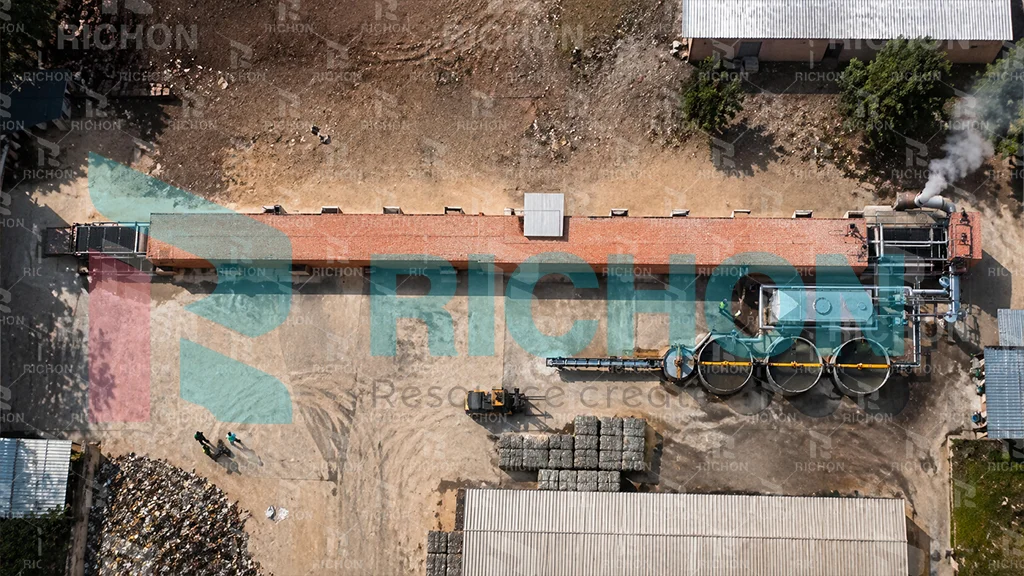
A practical factory layout is critical for African egg tray projects. The goal is to reduce unnecessary handling, shorten production flow, and make daily operation easier for workers.
The recommended layout flow is:
Raw Material Area → Pulping Area → Forming System → Brick Drying System → Packing Area → Finished Product Area
This layout allows the production flow to move in one direction, reducing crossing paths between raw materials, wet products, and finished trays.
Key layout principles
The raw material area should be close to the pulping system to reduce manual handling.
The forming section should be connected smoothly with the brick dryer entrance.
The dryer exit should face the packing and finished product area.
The factory should reserve expansion space for future upgrades.
A good layout does not only save space. It reduces labor cost, improves production efficiency, and helps the factory scale later. For more planning details, refer to the egg tray factory space planning guide.
Cost Considerations for This Project
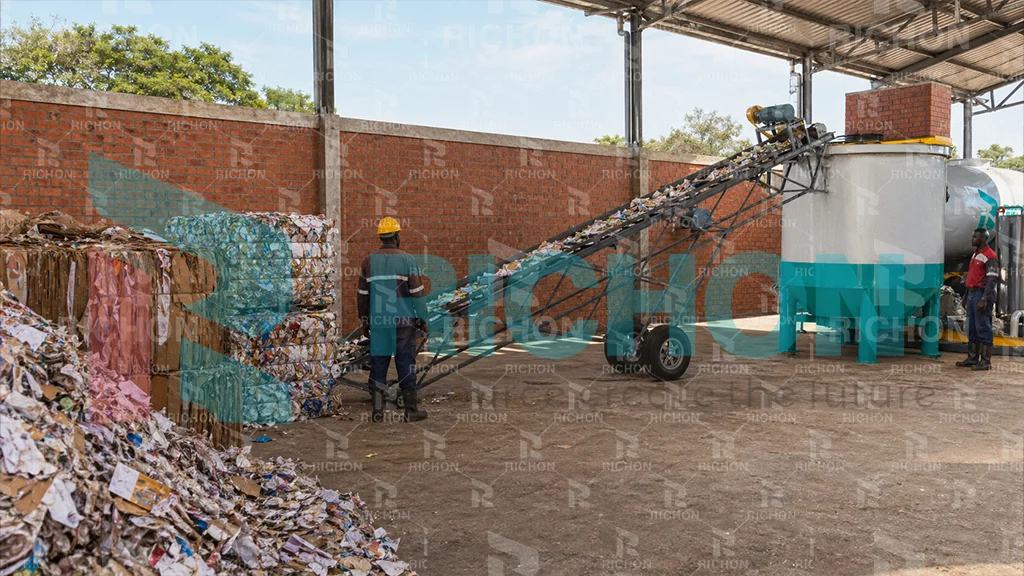
For a 3000 pcs/h egg tray project, the main cost factors include:
- Raw material cost
- Drying fuel cost
- Electricity consumption
- Labor cost
- Maintenance cost
- Factory construction cost
Among these, drying fuel and raw material are usually the most important long-term operating costs.
Many new investors only compare machine price, but the real project cost depends on the complete production system. A cheaper machine with poor drying efficiency or unstable forming performance can increase the cost per tray over time.
The most important calculation is:
Cost per tray = Total hourly operating cost ÷ Hourly output
For a complete cost model, you can read what determines the real production cost of an egg tray production line.
Profit and ROI Logic
The profit of an egg tray factory depends on three key numbers:
- Selling price per tray
- Production cost per tray
- Stable daily output
A 3000 pcs/h line can be profitable if the investor controls raw material cost, drying fuel cost, labor arrangement, and machine downtime.
For African projects, the biggest profit advantage usually comes from:
- Access to low-cost waste paper
- Local poultry packaging demand
- Practical investment scale
- Lower building and labor cost in some regions
However, the factory should not calculate ROI based only on ideal production. Real ROI must consider fuel price, seasonal market changes, machine utilization, and reject rate.
For a deeper financial view, you can read the egg tray profit margin analysis and the egg tray business plan guide.
Why Not Start Directly with a Metal Drying System?
A metal drying system is not wrong. In fact, it is more suitable for some projects.
However, for many African 2000–3000 pcs/h projects, the first-stage priority is often to start production with a practical investment level.
A metal dryer usually becomes more attractive when:
- Capacity reaches 5000–6000 pcs/h
- Labor cost becomes higher
- Export orders become stable
- The factory needs more consistent drying quality
- The investor wants higher automation
- The factory has reliable gas, diesel, or stable heat energy supply
For this project stage, the brick dryer is more suitable because it matches local investment, fuel, and construction conditions.
A better strategy is:
Stage 1: 3000 pcs/h + brick drying system
Stage 2: Expand capacity or upgrade to metal drying system when orders become stable
This gives the investor a lower-risk entry path while keeping future upgrade options open.
Engineering Challenges and Solutions
Challenge 1: Fuel availability
In some African regions, fuel prices and supply conditions may change. The drying system must be designed based on realistic local fuel access instead of theoretical energy cost.
Solution: Confirm available fuel types before finalizing dryer design.
Challenge 2: Raw material stability
Waste paper quality may vary by supplier, city, or season. Poor raw material can increase reject rate and reduce product strength.
Solution: Build a stable raw material supply chain and classify raw paper before pulping.
Challenge 3: Factory layout restrictions
Some investors use existing buildings instead of building a new factory. This can limit dryer length, airflow arrangement, and material movement.
Solution: Design the layout around real factory dimensions and reserve space for maintenance and expansion.
Challenge 4: Worker training
Semi-automatic and brick drying systems require proper operation habits. If workers do not understand pulp consistency, dryer temperature, or stacking control, production quality may become unstable.
Solution: Provide clear operation training and simple daily inspection standards.
Key Lessons from This Africa Project
This project shows that egg tray factory planning should not copy one standard configuration for every country.
For many African investors, the best solution is the one that fits:
- Local market demand
- Available investment
- Raw material access
- Fuel supply
- Labor conditions
- Factory space
- Future expansion plan
A 3000 pcs/h line with a brick drying system is a practical starting solution because it balances investment, output, and operation difficulty.
The goal is not to build the most expensive production line. The goal is to build a line that can run stably, control cost, and support long-term profit.
Need a Similar Egg Tray Project Plan?
If you are planning an egg tray production project in Africa, the most important step is not choosing the machine first.
You need to evaluate:
- Target capacity
- Local raw material supply
- Available fuel
- Factory space
- Labor condition
- Sales market
- Future expansion plan
Richon can help you design a suitable egg tray production line based on your project conditions.
Explore our egg tray production line solutions or contact our engineers for project planning support.
Need a Capacity Recommendation for Your Market?
Share your target output, local humidity/energy conditions, and tray type. Our engineers will suggest a suitable 3,000–8,000 pcs/h configuration and drying solution.
- Factory layout & utilities checklist
- Drying bottleneck evaluation
- Cost & ROI estimation reference
