


3000 pcs/h Egg Tray Production Line Solution
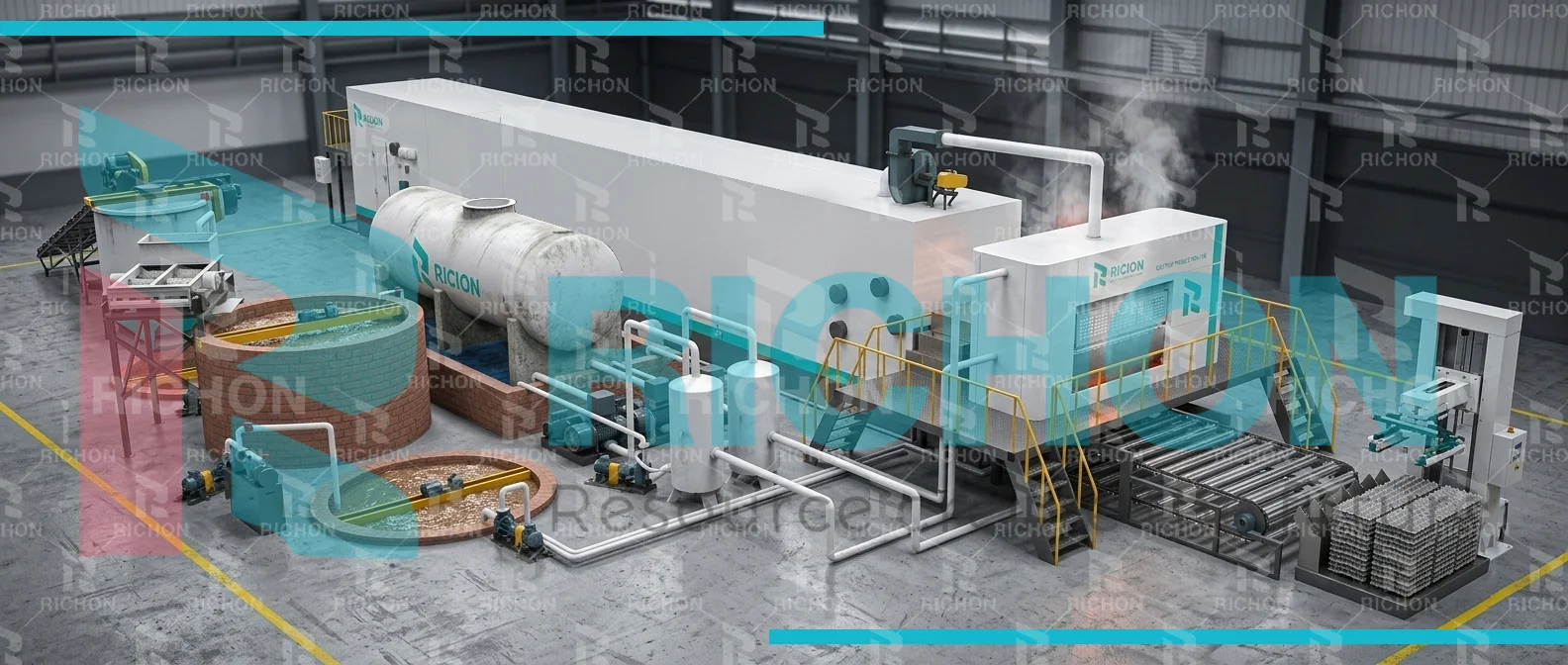
The REM4-4 egg tray production line is a stable mid-capacity solution designed for investors who need balanced output, controlled energy consumption, and a practical factory layout for continuous commercial production.
REM4-4 Quick Overview
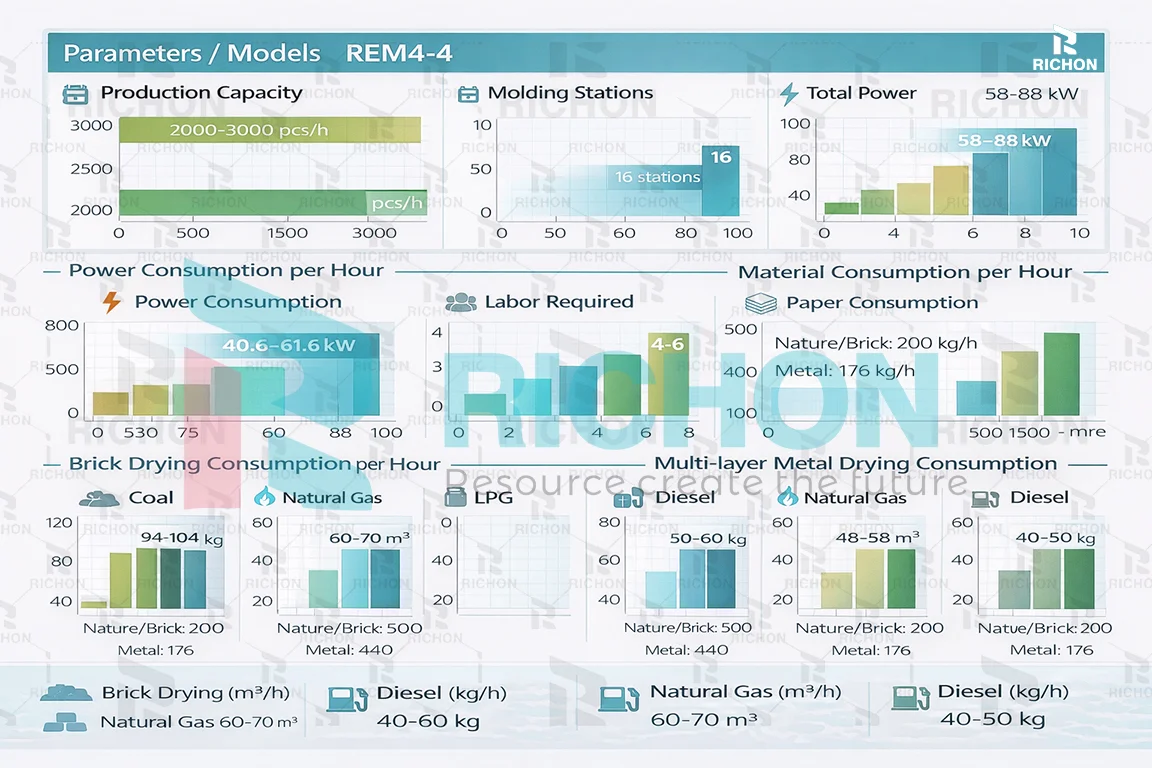
- Model: REM4-4
- Capacity: 2000–3000 pcs/h
- Molding Stations: 16
- Total Power: 58–88 kW
- Power Consumption: 40.6–61.6 kW
- Labor Required: 4–6 persons
REM4-4 Capacity and Core Parameters
This 3000 pcs/h egg tray production line is built around the REM4-4 forming system, offering practical output, moderate labor requirements, and flexible drying options for different factory conditions.
Production Capacity
2000–3000 pcs/h
Molding Stations
16
Total Power
58–88 kW
Actual Power Consumption
40.6–61.6 kW
Labor Required
4–6 persons
Recommended Project Type
Mid-capacity commercial production
Who Should Choose a 3000 pcs/h Egg Tray Production Line?
The 3000 pcs/h capacity level is often the most practical choice for buyers who need a commercially viable output without jumping directly into a larger and more capital-intensive automatic line.
First-Time Industrial Investors
Suitable for customers who want to enter the molded fiber packaging business with a controllable equipment budget, manageable labor structure, and moderate factory space requirement.
Factories Upgrading from Small Capacity
A natural step for manufacturers moving from 1000–2000 pcs/h production and looking for better output stability, improved delivery capability, and more efficient batch production.
Markets with Stable Egg Packaging Demand
Well matched to regional markets that already have continuous demand for egg trays, fruit trays, or basic molded paper packaging products.
Buyers Seeking Balanced ROI
This capacity is widely selected because it balances output, operating cost, drying investment, and factory utility planning better than both very small and very large lines.
Main Systems of the REM4-4 Egg Tray Line
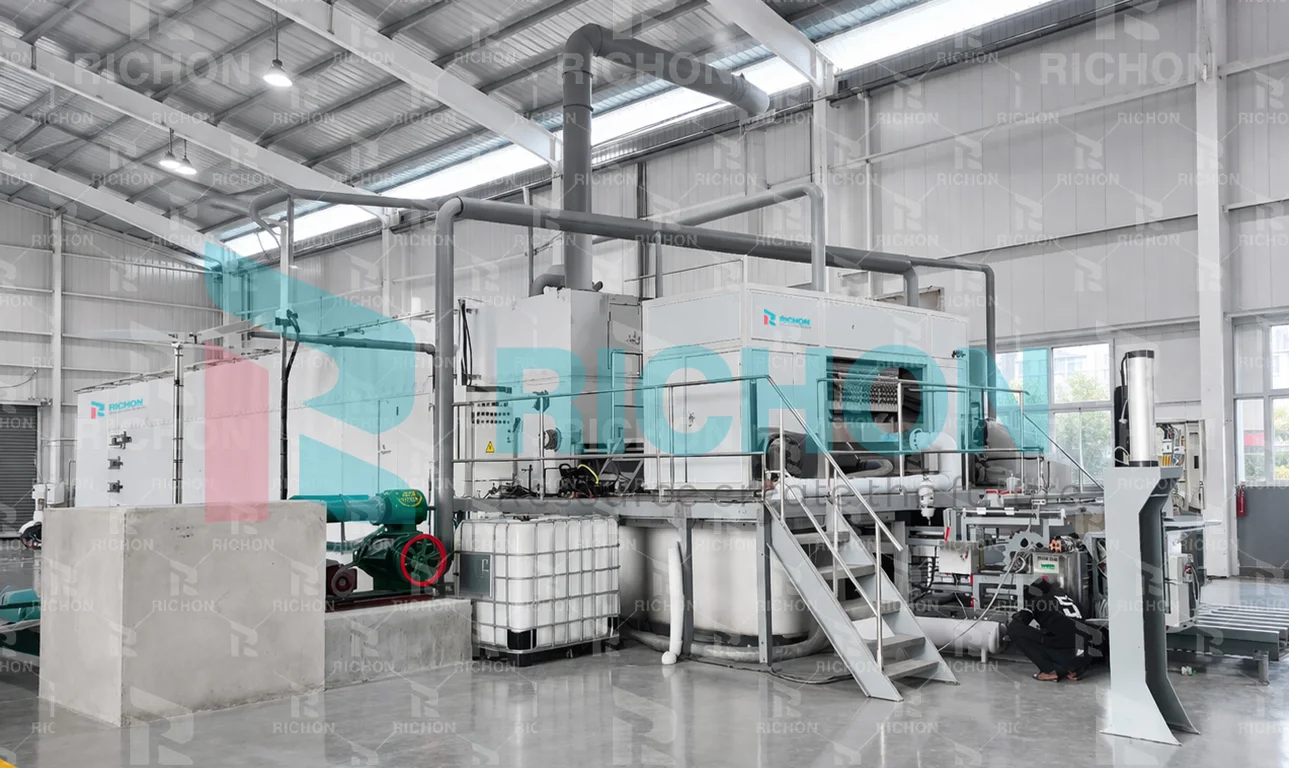
A complete 3000 pcs/h egg tray production line is not only about forming capacity. It depends on how pulping, forming, drying, and packing systems are matched to each other for continuous production stability.
Pulping System
The pulping section prepares waste paper into stable slurry and supports recycled white water circulation. Proper pulp consistency directly affects forming stability and product appearance.
Forming System
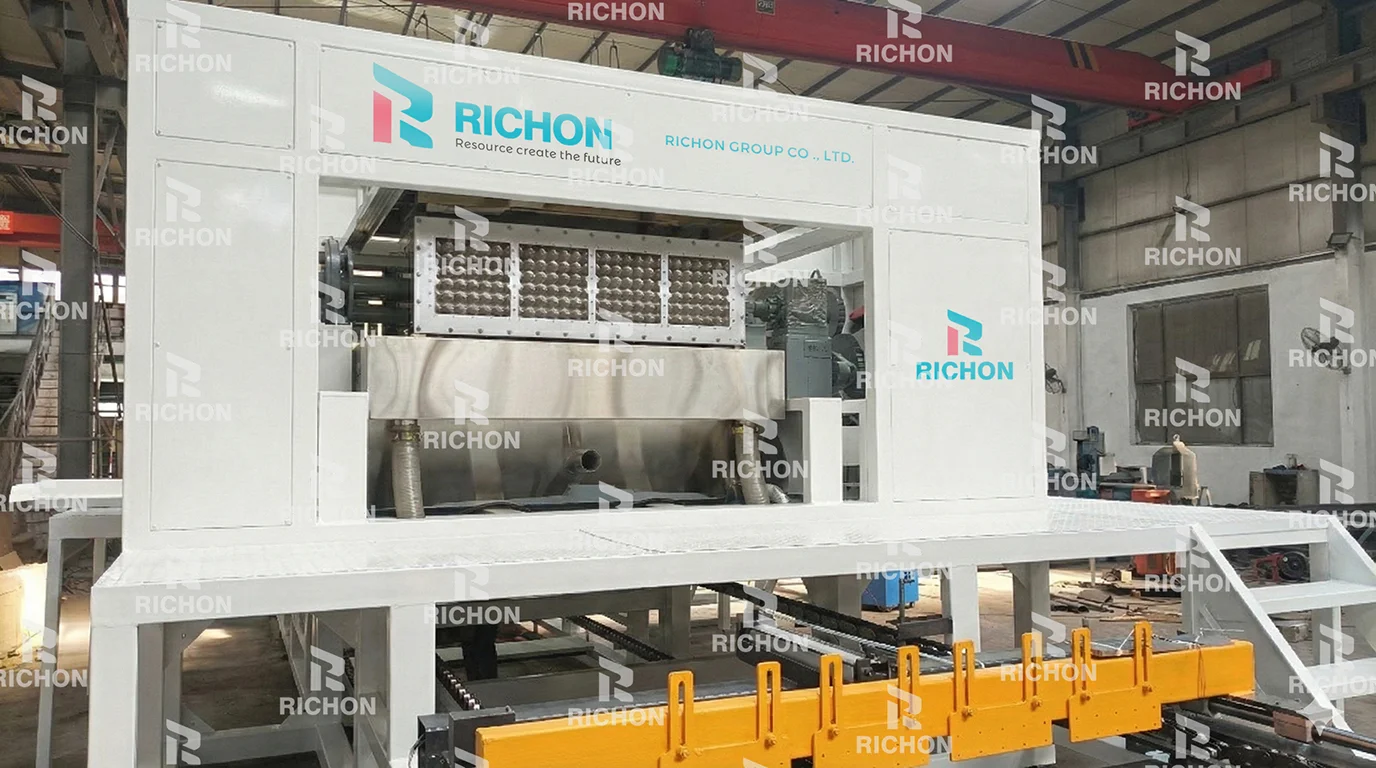
The REM4-4 forming machine uses 16 molding stations to deliver a stable output range of 2000–3000 pcs/h, making it suitable for medium-scale egg tray production planning.
Drying System
Customers can choose natural drying, brick drying, or multi-layer metal drying according to land availability, climate conditions, investment budget, and fuel supply.
Packing System
The packing stage handles tray collection, stacking, and final transportation preparation. It should be planned together with output rhythm and downstream logistics requirements.
Material, Water, and Drying Consumption Reference
The operating cost of a 3000 pcs/h egg tray production line depends not only on electricity but also on paper consumption, water recycling efficiency, and the selected drying configuration.
Paper Consumption per Hour
- Nature / Brick Drying: 200 kg/h
- Multi-layer Metal Drying: 176 kg/h
Water Consumption per Hour
- Nature / Brick Drying: 500 kg/h
- Multi-layer Metal Drying: 440 kg/h
Brick Drying Consumption
- Coal: 94–104 kg/h
- Natural Gas: 60–70 m³/h
- Diesel: 50–60 kg/h
Multi-layer Metal Drying Consumption
- Natural Gas: 48–58 m³/h
- Diesel: 40–50 kg/h
For a more detailed cost breakdown, you can also review our Energy Consumption Analysis and Water Consumption Guide.
Factory Layout Planning for a 3000 pcs/h Egg Tray Line
A 3000 pcs/h line usually requires coordinated planning for raw material storage, pulping area, forming section, drying route, tray collection, and operator movement. The drying solution will strongly affect total factory length, utility arrangement, and operating rhythm.
If natural drying is selected, more land and climate compatibility are needed. If brick or metal drying is used, the project will require more integrated fuel, ventilation, and workshop layout planning.
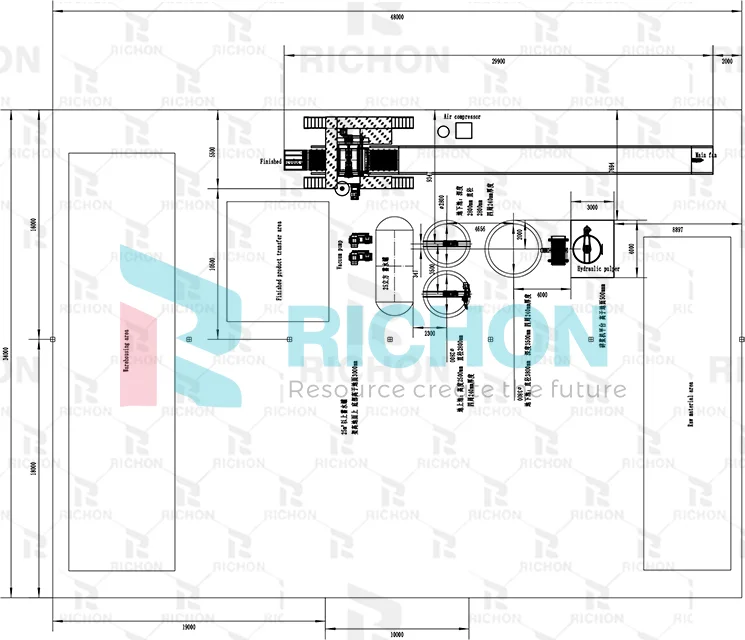
Why Layout Matters for 3000 pcs/h
- Impacts installation efficiency and piping design
- Affects drying system matching and utility routing
- Reduces unnecessary material transfer distance
- Improves operator workflow and daily maintenance access
- Supports future capacity expansion planning
Need a 3000 pcs/h Factory Plan?
We can help evaluate layout direction, drying configuration, and energy matching based on your factory conditions and market target.
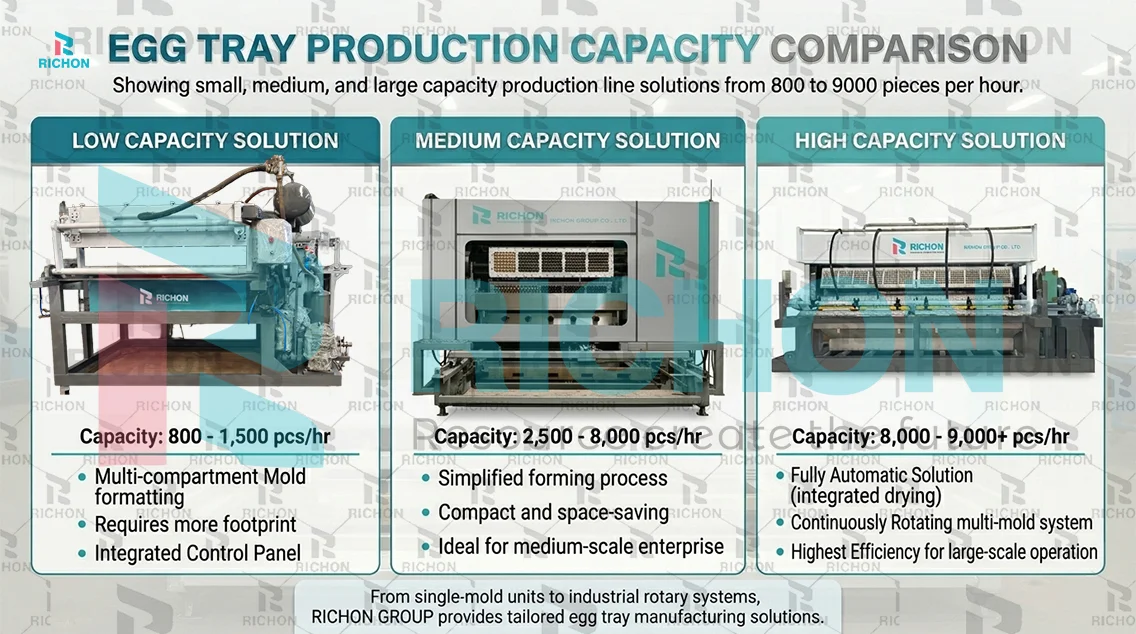
Talk to Richon EngineeringHow 3000 pcs/h Compares with Smaller and Larger Egg Tray Lines
For many investors, 3000 pcs/h is the most balanced capacity level. It offers better commercial output than entry-level lines, while avoiding the higher utility pressure, larger workshop demand, and bigger budget typically associated with 5000–6000 pcs/h projects.
| Comparison Item | 1000 pcs/h | 3000 pcs/h | 6000 pcs/h |
|---|---|---|---|
| Investment Level | Lower | Balanced | Higher |
| Factory Layout Pressure | Low | Moderate | High |
| Drying System Matching | Flexible | Highly Practical | More Complex |
| Labor Structure | Smaller Team | 4–6 Persons | Larger Team |
| Commercial Delivery Capacity | Entry-Level | Stable Mid-Scale | Large-Scale |
| ROI Balance | Slower Growth | Strong Balance | Higher Throughput Potential |
If you are still deciding between different outputs, read our capacity selection guide to compare investment logic, layout planning, and matching production targets.
Typical Mid-Capacity Project Reference for a 3000 pcs/h Line
A 3000 pcs/h egg tray production line is often selected by customers who already have a clear regional market, available waste paper supply, and a target to build a stable daily production rhythm without oversizing the initial investment.
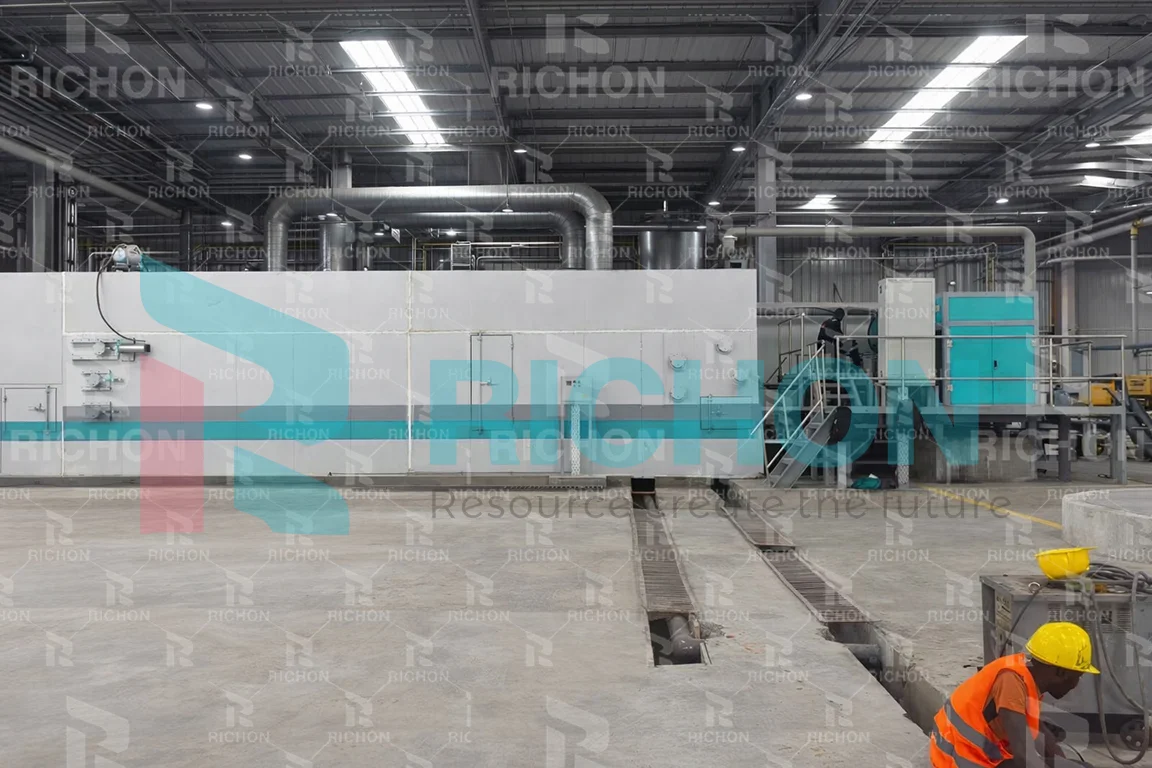
Project Positioning
This type of project is commonly used for commercial egg tray production serving poultry farms, tray distributors, and local packaging wholesalers.
Recommended Drying Direction
Buyers usually choose brick drying when land and fuel conditions are suitable, while multi-layer metal drying is more practical for projects requiring stronger production continuity and more compact workshop planning.
Operation Logic
The line should be matched with stable pulp preparation, reliable forming rhythm, and a drying capacity that can absorb hourly output without causing tray accumulation or process bottlenecks.
Why Buyers Choose This Range
Compared with smaller lines, this capacity improves commercial delivery ability. Compared with larger lines, it reduces the pressure on workshop length, heat source planning, and initial utility infrastructure.
This is why the REM4-4 configuration is widely considered a practical starting point for medium-scale molded fiber packaging investment.
Request a Project EvaluationFrequently Asked Questions About a 3000 pcs/h Egg Tray Production Line
These are some of the most common questions buyers ask when evaluating a REM4-4 egg tray machine configuration for medium-capacity production.
Is 3000 pcs/h a good capacity for a first commercial egg tray project?
What model is commonly used for a 3000 pcs/h egg tray line?
How much power does the REM4-4 line require?
How many workers are usually needed?
Which drying method is better for a 3000 pcs/h project?
Where can I learn more about energy use and layout planning?
Continue Exploring Related Egg Tray Production Knowledge
To help buyers move from capacity selection to full project planning, the links below cover factory layout, energy consumption, drying systems, raw materials, and production line comparison.
Knowledge Center
Browse the main technical knowledge hub for egg tray production and project planning.
Energy Consumption Analysis
Understand electricity, drying fuel demand, and operating cost logic for egg tray production lines.
Mold Technology
Learn how mold structure, tooling precision, and forming design affect tray quality and output stability.
Egg Tray Dryer System
Compare drying configurations and see how layout, heat source, and capacity influence system selection.
Factory Layout Guide
See how production flow, utility routing, and workshop arrangement affect plant planning.
Water Consumption Guide
Review how water circulation and white water reuse influence daily operating efficiency.
Capacity Selection Guide
Compare different output levels and decide which production scale fits your market and budget.
Contact Richon
Discuss layout direction, drying matching, and capacity planning for your project.
Project Consultation
Need to confirm capacity, drying layout, or investment plan?
Share your target output, factory conditions, and drying preference. Richon engineers will help review a suitable egg tray production line configuration for your project.