 English

How Much Electricity Does an Egg Tray Machine Use? Power Consumption Guide
Introduction: Why Electricity Consumption Matters in Egg Tray Production
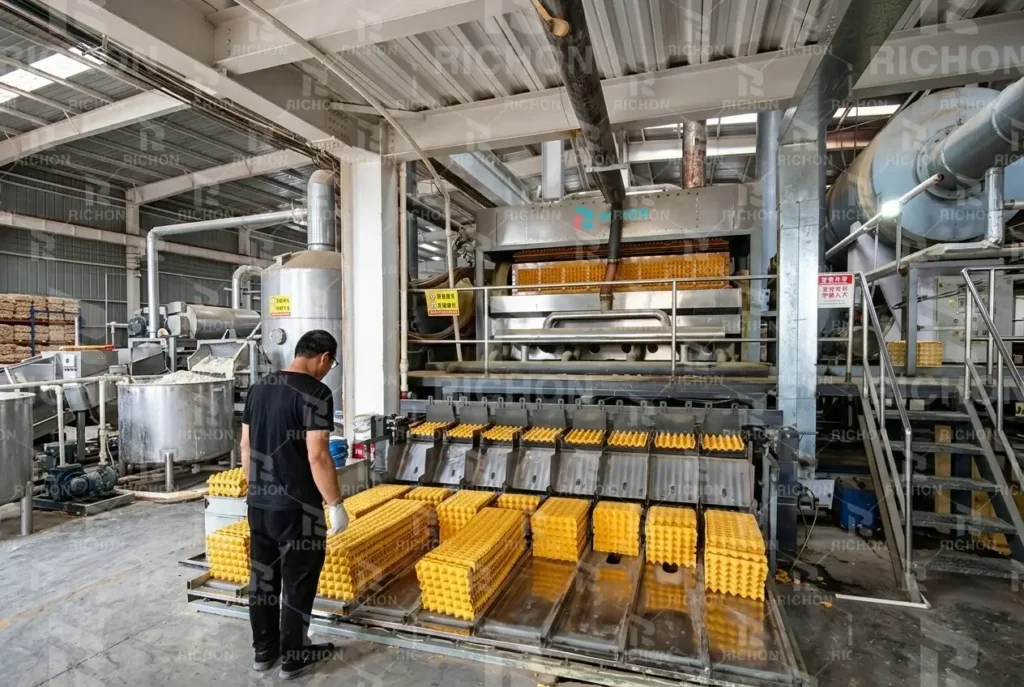
For investors planning to start an egg tray manufacturing business, one of the most common questions is: how much electricity does an egg tray machine use?
Electricity consumption is an important part of the operating cost of molded fiber packaging production. Although waste paper raw materials are inexpensive, energy consumption can significantly affect long-term factory profitability. Understanding the electricity requirements of an egg tray production line helps factory owners estimate operating costs and select the most suitable equipment configuration.
A complete egg tray manufacturing line includes several systems that consume electricity, including the pulping system, forming machine, vacuum pumps, air compressors, and drying system fans. Each stage of the production process contributes to the overall energy consumption.
By understanding where electricity is used and how to estimate the cost, factory investors can better plan budgets and improve operational efficiency.
Typical Power Consumption of Egg Tray Machines
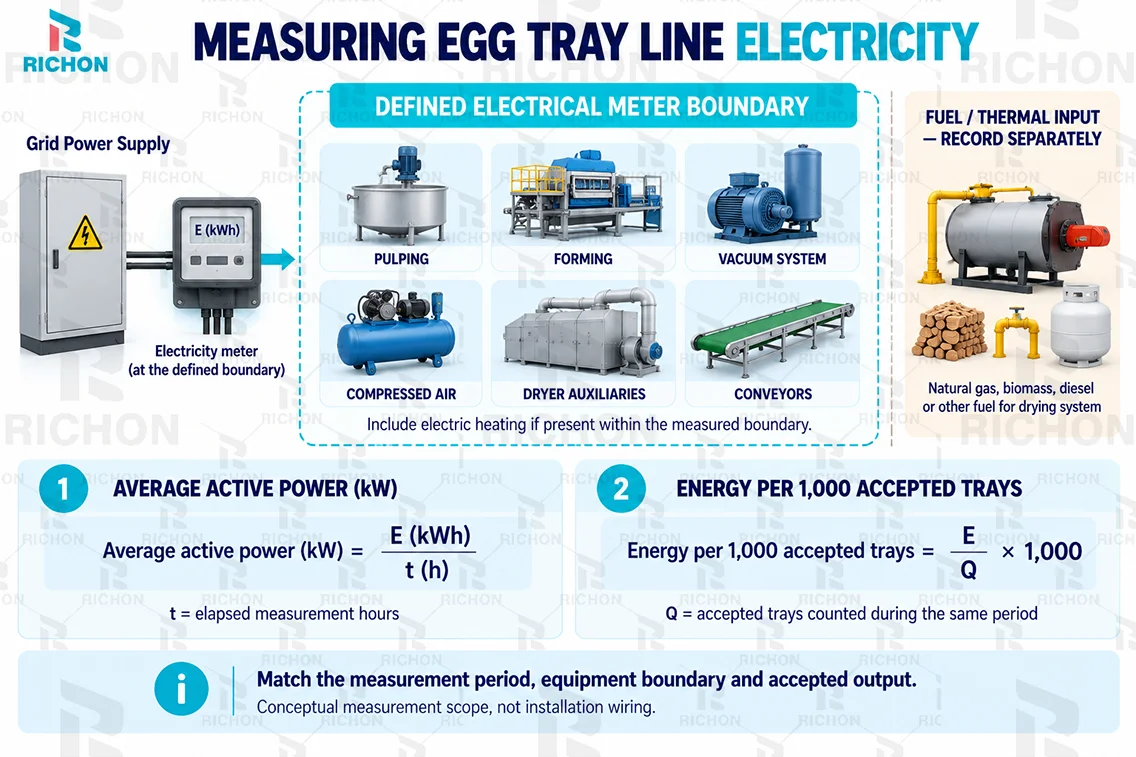
Conceptual measurement scope, not installation wiring or a measured configuration. Record fuel and thermal inputs separately. View full-size image
Installed power, operating power and electricity consumed over time are different quantities. The electrical schedule defines the configured equipment load; operating records show how much electricity that configuration uses. Hourly capacity alone is not enough to assign a reliable power range.
| Quantity | Unit / basis | What to confirm |
|---|---|---|
| Installed electrical load | kW, with the equipment-schedule basis stated | Included motors, pumps, compressors, fans, conveyors and any electrical heating |
| Average operating active power | kW over a stated interval | Metered kWh divided by the same elapsed hours; equipment and operating-state coverage |
| Electricity consumed | kWh for the stated period | Start/end meter readings and the measurement duration |
| Electricity per 1,000 accepted trays | kWh/1,000 accepted trays | The same electricity boundary and period as the accepted-output count |
| Drying fuel and heat input | The fuel quantity and its stated energy basis | Separate fuel use from electrical consumption before comparing total energy cost |
Confirm the selected configuration before using an electrical figure in a budget. For the relationship between electrical and thermal energy, see the energy consumption analysis.
Main Equipment That Consumes Electricity in an Egg Tray Production Line
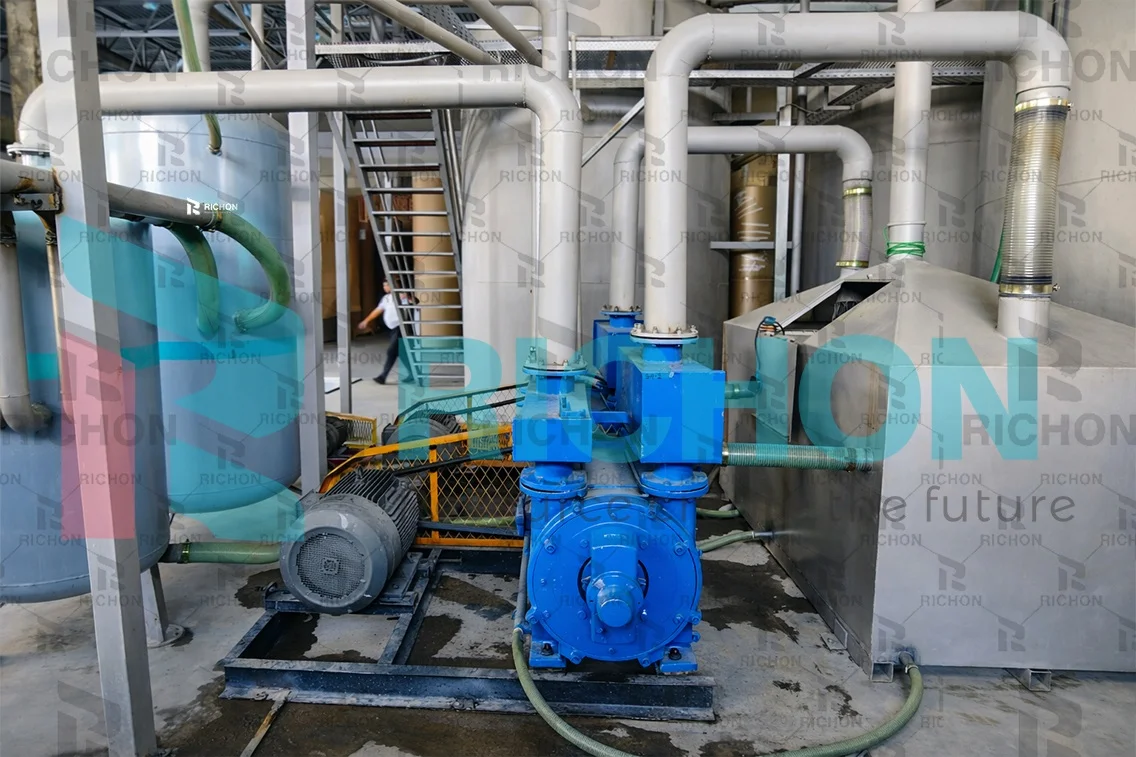
Equipment illustration only; not evidence for the 167.3 kW reference or a particular installed power. View full-size image
The total electricity consumption of an egg tray factory is distributed across several key pieces of equipment.
Hydraulic Pulper
The pulper breaks waste paper into pulp fibers. Confirm the motor rating, duty cycle and actual operating demand for the selected pulper and tank arrangement. A motor nameplate value alone does not establish electricity consumed during a production shift.
Forming Machine
The egg tray forming machine shapes the pulp into trays using vacuum suction. The forming machine itself requires relatively little electricity, but the vacuum system connected to it consumes a significant amount of power.
Vacuum Pump System
Vacuum pumps create suction to form wet trays. Confirm the pump selection, operating duty, vacuum setting and leakage condition. Measure its electrical contribution within the stated system boundary instead of applying one power range to every line.
Air Compressor
Compressed air helps release the molded trays from the molds and supports mechanical movements. Confirm compressor sizing, loading and unloading behavior, pressure setting and whether it also supplies other equipment. Shared compressed-air use must be separated or explicitly included in the comparison.
Drying System Fans
In fully automated production lines, hot air circulation fans are used in the drying system. A detailed comparison of drying technologies can be found in our guide to egg tray drying systems.
Electricity Consumption by Production Capacity
A higher-capacity line may draw more total electrical power without using more electricity per accepted tray. Compare measured kWh and accepted output over the same period. Rated capacity alone does not establish that a larger line is more energy-efficient.
For a measured average active power P in kW and measurement duration t in hours, electricity consumed is E = P × t in kWh. Where load changes, meter readings or interval measurements provide a better basis than a single instantaneous power reading. Include idle and standby energy if they fall inside the chosen period.
Keep the production, electrical and drying boundaries consistent when comparing capacities. The project reference below belongs to the reported 6,000–7,000 pcs/h line range; it is not a replacement value for a 4,000 pcs/h configuration.
Real Factory Electricity Consumption Case
Richon’s anonymized operating reference is a 2018 REM6-8 standard complete production-line project, also referenced in our business plan. Customer identity and location are omitted. The figures below are supplied and confirmed by Richon; they have not been independently audited for this article.
Installed equipment power was 239.2 kW. Measured average active electrical power over the continuous 24-hour operating-data period was 167.3 kW. The electrical scope includes all supporting production-line equipment and excludes office electricity. Installed power and average operating power are different quantities.
Electricity for the period, calculated from the confirmed average, is 167.3 kW × 24 h = 4,015.2 kWh. This is a calculation from the reported average, not a separate meter-reading record presented here. The drying heat source was natural gas, with reported consumption of 100–110 m³ per hour. Gas consumption is reported in m³/h, not normalized to standard volume, and is separate from electrical kWh. This reference does not describe an electrically heated dryer.
Richon reports around 6,200 saleable trays per hour after wet-tray inspection samples were deducted. Hourly quality checks reported a finished-product rate above 99.3%; inspection samples should not automatically be classified as defective scrap. Do not apply that percentage again to the reported 6,200-tray figure, which is already after sample deductions.
Using the reported average values gives an indicative electrical consumption of 167.3 ÷ 6,200 × 1,000 ≈ 27.0 kWh per 1,000 saleable trays. This is a calculation from approximate reported averages, not a separately reconciled batch-meter and counted-output measurement. A formal verification should use the actual meter readings and matched saleable-output count from the same period. The reference is project-specific, not a universal value for every REM6-8 line.
For a local cost estimate, apply your electricity tariff to electrical kWh and your gas tariff to gas volume on the supplier’s billing basis. Treat demand charges and other bill items separately. Electric-heating or steam-based drying alternatives require their own energy and equipment boundaries; they do not inherit the electricity or gas figures from this natural-gas reference.
How to Calculate Electricity Cost for Egg Tray Production
For a measurement period, let E be electrical energy in kWh, Q be accepted trays produced and T be the energy tariff in currency per kWh. Use the same period and equipment boundary for E and Q.
Electricity per 1,000 accepted trays = E ÷ Q × 1,000.
Energy charge per 1,000 accepted trays = E × T ÷ Q × 1,000.
The factor of 1,000 is required when Q is counted in individual trays. If Q is zero, do not calculate a unit figure. This formula covers the energy charge; add demand charges, fixed fees or other applicable electricity-bill items separately. For total production cost, include drying fuel and other relevant costs without counting any item twice. See the machine price and project cost guide.
Factors That Affect Egg Tray Machine Electricity Consumption
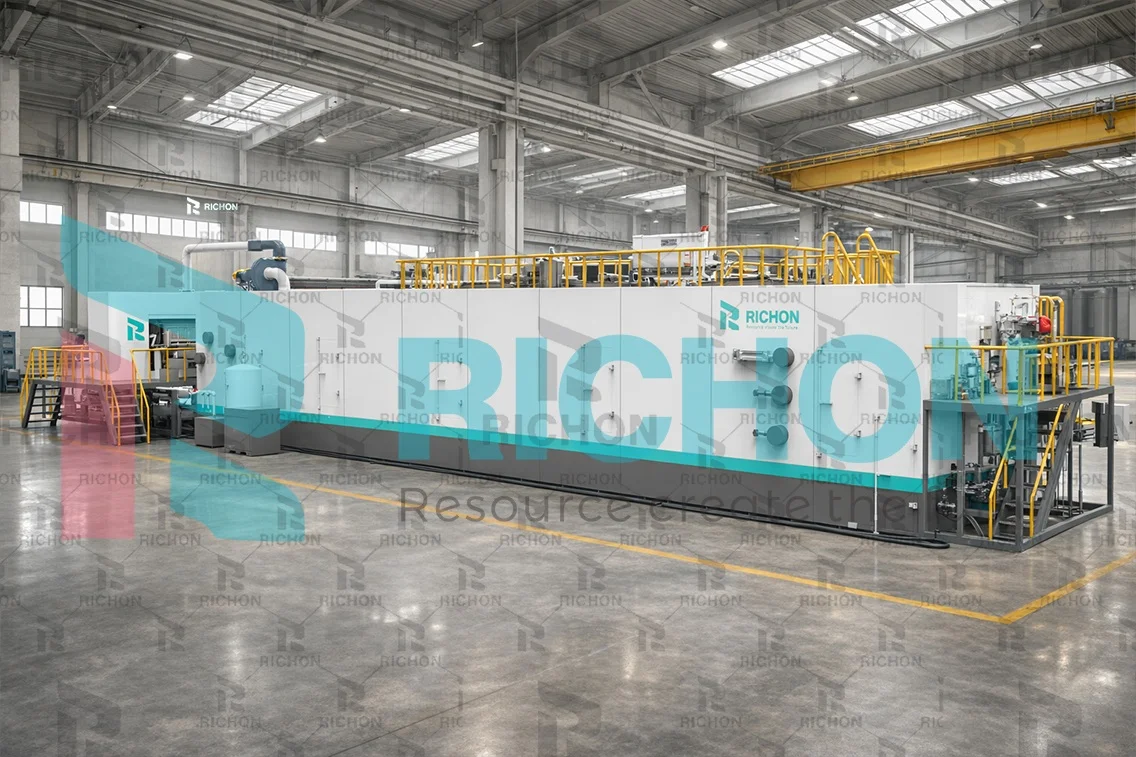
Equipment illustration only; heat source, electrical load and project identity are not inferred from this image. View full-size image
Several factors influence the energy consumption of egg tray machines.
Machine design
Vacuum-system condition, motor and pump selection, controls and transfer arrangements affect electrical demand. Confirm the effect using measurements for the selected configuration and operating conditions; design features alone do not establish a reduction percentage.
Production capacity
Utilization and accepted output affect unit electricity consumption. Higher rated capacity does not automatically mean lower kWh per 1,000 accepted trays, especially if the line runs below its intended load or the dryer limits production.
Automation level
Fully automatic production lines include additional conveyors, pumps, and motors that increase installed power but improve overall productivity.
Drying system design
The drying stage is closely related to the egg tray production process, including pulp forming and moisture removal stages.
Equipment maintenance
Poor maintenance, worn motors, or clogged pipelines can increase electricity consumption and reduce equipment efficiency.
Energy Saving Tips for Egg Tray Factories
Reducing electricity consumption can significantly improve long-term profitability.
Recommended energy-saving practices include:
• Using high-efficiency vacuum pumps
• Installing variable frequency drives (VFD) for motors
• Optimizing vacuum pipeline layout
• Regularly maintaining motors and bearings
• Improving airflow efficiency in drying systems
Choose changes only after checking the operating problem and equipment compatibility. A variable-frequency drive, for example, requires a suitable motor, control method and operating range; it is not a universal retrofit. Compare electrical use per accepted tray at equivalent product quality and output, and confirm that drying fuel use or rejected production has not increased elsewhere.
Engineering Insight from Real Egg Tray Factory Projects
Compare production-line configurations using actual electrical energy and accepted output from comparable operating periods. Match tray specification, product weight, moisture and quality requirements, drying conditions, heat source and electrical-meter boundary. When output or operating hours differ, compare kWh per 1,000 accepted trays using the same counting rules.
Use measured records for both lines before reporting a saving. Lower electrical demand alone does not establish lower total energy cost, and a comparison between line configurations does not by itself establish the result of a vacuum-pipeline or motor retrofit. Contact Richon to review the equipment scope and local electricity, fuel or steam prices by email or in an online meeting.
Conclusion: Understanding Energy Consumption Before Investing
Evaluate the selected line using measured electrical energy, accepted output and the applicable tariff. Keep installed load, operating power, electrical kWh and drying fuel distinct. Use project references with their stated conditions, then confirm your own configuration and production requirements before budgeting electricity or comparing suppliers.
Related Guides for Egg Tray Factory Planning
If you are planning to start an egg tray manufacturing business, the following guides provide more detailed technical and investment information:
- Egg Tray Production Line Overview
- Egg Tray Drying System Comparison: Brick Dryer vs Metal Dryer
- How to Choose the Right Egg Tray Production Line Capacity
- Egg Tray Machine Price and ROI Guide
- Egg Tray Production Process Explained
Frequently Asked Questions
How much electricity does an egg tray machine use?
Confirm the selected configuration and distinguish installed power in kW from measured electricity in kWh. Use operating records for the same equipment boundary and period; capacity alone is not enough to give a reliable universal range.
Which equipment consumes the most electricity?
Vacuum pumps, pulping equipment, compressors and dryer auxiliaries can be important electrical loads. Their relative shares depend on the configuration and operating duty, so confirm the main loads from the electrical schedule and measurements.
Does the drying system use electricity?
Fans, conveyors and controls use electricity. Heating commonly uses natural gas or diesel in Richon’s stated project context; electric heating or steam-based drying can also be evaluated according to local energy prices and the selected system. Confirm the actual project heat source. Count electric heating inside the electrical boundary when present, and record fuel or steam energy and costs separately.
How can egg tray factories reduce electricity consumption?
Factories can reduce electricity usage by installing efficient vacuum pumps, optimizing pipelines, using VFD motors, and maintaining equipment regularly.
Need a Capacity Recommendation for Your Market?
Share your target output, local humidity/energy conditions, and tray type. Our engineers will suggest a suitable 3,000–8,000 pcs/h configuration and drying solution.
- Factory layout & utilities checklist
- Drying bottleneck evaluation
- Cost & ROI estimation reference
