


Egg Tray Production Line Cost & Investment Analysis
Plan your egg tray manufacturing investment with a configuration-based view of equipment scope, drying system, factory preparation, utility conditions, operating cost, and long-term expansion risk.
- Separate machine quotation from total project budget
- Compare drying, labor, energy, and workshop requirements together
- Confirm final cost according to capacity, layout, and local conditions
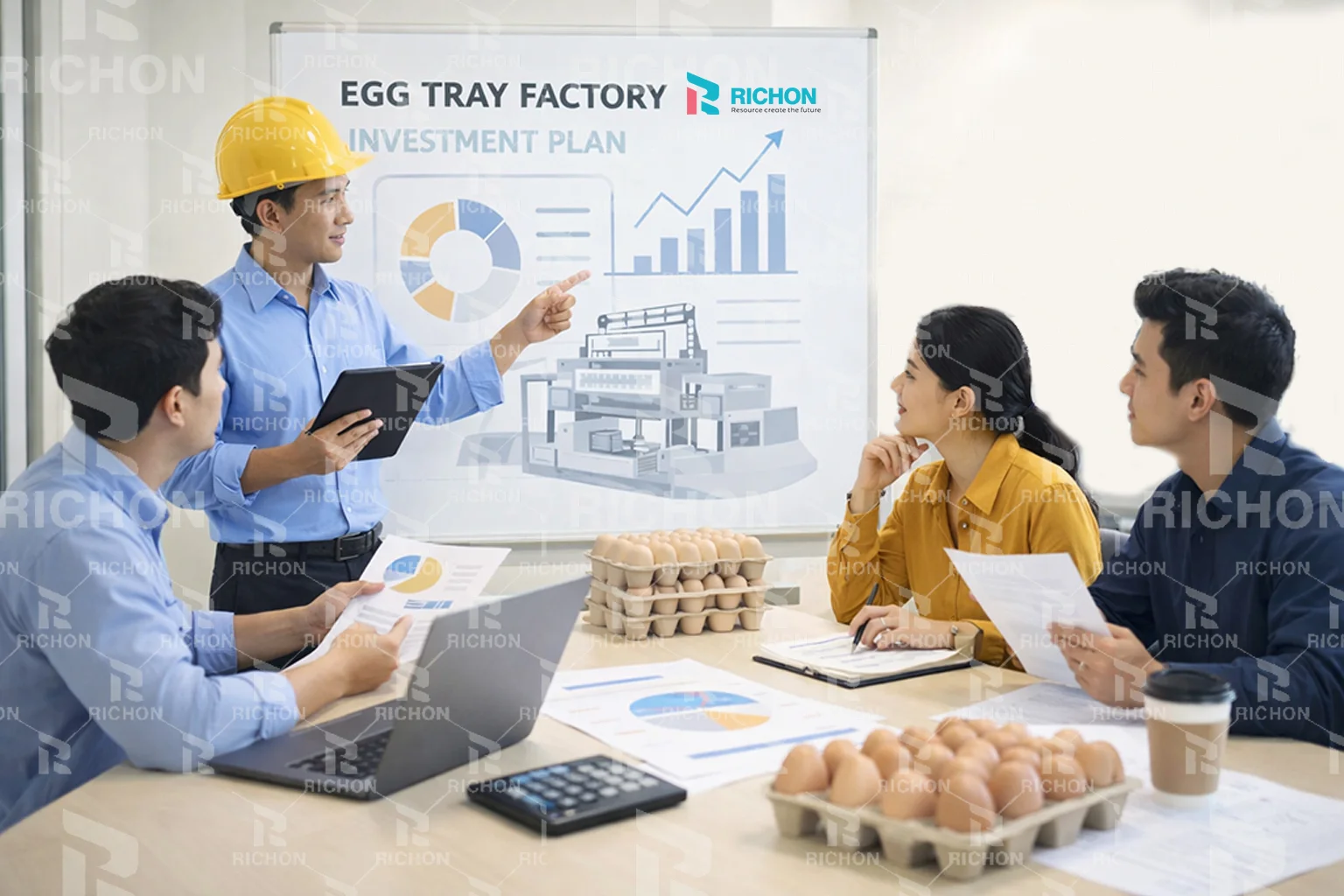
Why Investment Analysis Matters Before Buying
The equipment quotation is only one part of an egg tray project budget. A realistic plan also checks drying configuration, factory conditions, labor cost, power supply, water circulation, and startup preparation.
A lower machine price does not always create a lower manufacturing cost. For many projects, stable output, maintenance planning, and practical drying performance influence long-term return more than the quotation alone.
- Separate machine price from full project investment.
- Evaluate drying, workshop, utilities, and labor before comparing suppliers.
- Use egg tray production line solutions as the base for configuration-based budgeting.
What Determines Egg Tray Production Line Cost?
Total investment is not a fixed number. It depends on equipment configuration, production goals, drying method, local utilities, automation level, and the support systems required for stable operation.
Production Capacity
Capacity affects forming section size, pulping demand, drying load, and auxiliary equipment selection.
Automation Level
Semi-automatic and fully automatic lines differ in labor demand, transfer method, control scope, and startup budget.
Drying Method
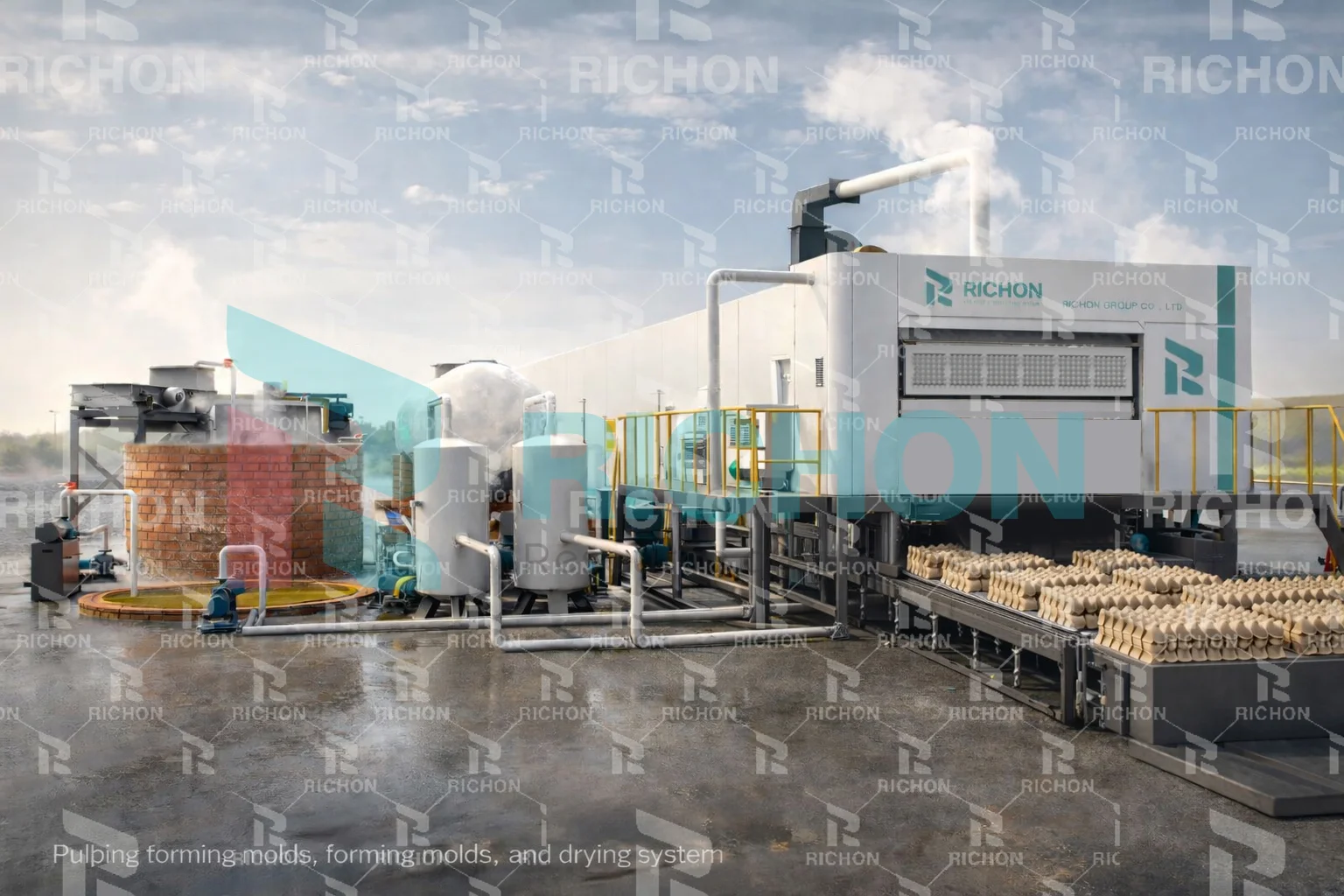
Natural drying, brick drying, and metal continuous drying change investment, space, fuel, labor, and production continuity.
Product Type & Mold Design
Tray structure, product dimensions, mold quantity, and changeover plans influence tooling and production planning. Review mold technology early if product types may expand.
Factory Layout
Workshop dimensions, raw material flow, drying area, and finished product storage affect implementation cost.
Local Labor Cost
Higher labor cost may justify more automation, while lower labor cost can support staged investment in some markets.
Energy Price
Electricity and fuel pricing affect both equipment choice and long-term production economics.
Installation Scope
Commissioning, operator training, utility connection, and spare parts preparation should be included in the full project plan.
Main Investment Breakdown
A complete project budget usually includes more than the forming machine. Use this structure to check whether a quotation covers the production line itself, the drying plan, installation support, and early operation needs.
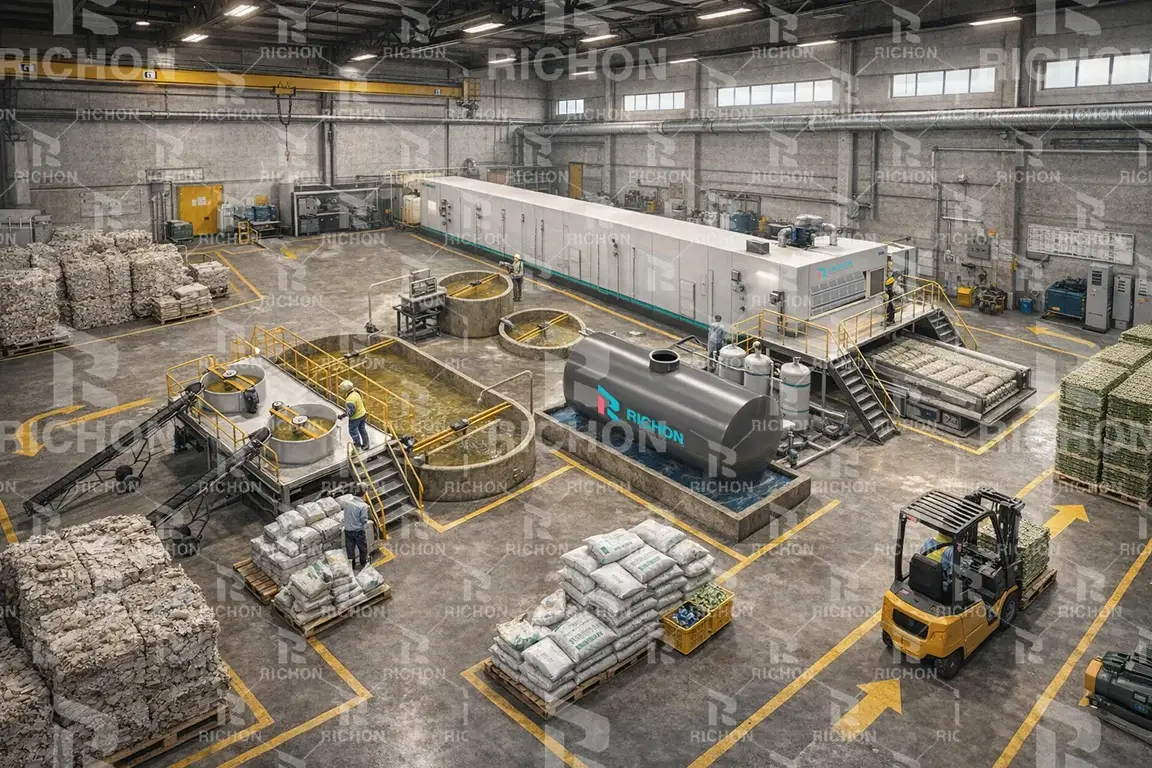
Factory Setup and Utility Requirements
Factory preparation is often underestimated during early budgeting. Workshop size, utility access, drainage, storage, and internal logistics can affect both installation cost and daily operating efficiency.
Typical Investment Thinking by Project Type
Different projects should be evaluated with different investment logic. The right configuration depends on local demand, labor conditions, drying preference, site readiness, and long-term expansion goals.
Entry-Level Projects
Suitable for market validation, limited startup budget, practical labor availability, and staged investment. The exact configuration should be confirmed by product type, drying method, and local utilities.
Balanced Commercial Projects
Suitable for investors seeking stable output, manageable labor input, controlled drying risk, and a practical path toward future expansion.
Higher Automation Projects
Suitable for larger output goals, stronger production continuity, lower manual dependence, and factories where long-term operating efficiency is a priority.
If capacity selection is still unclear, compare available capacity solutions before finalizing your investment direction.
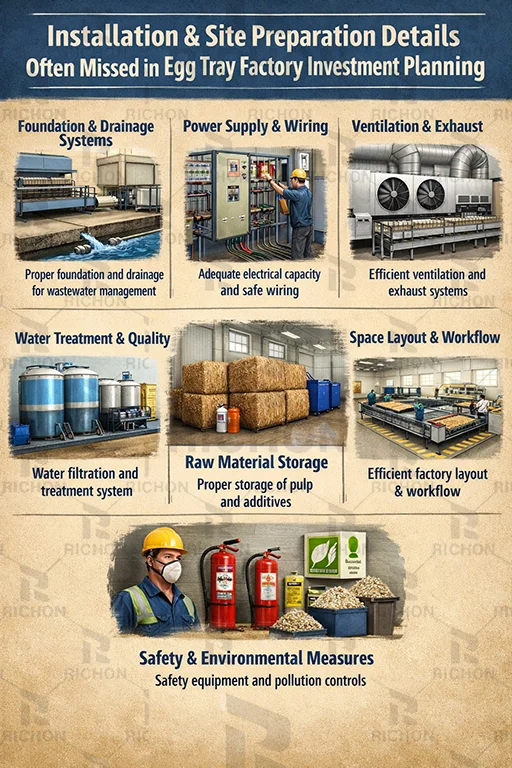
How to Reduce Investment Risk
Strong investment decisions come from matching equipment configuration to real factory conditions rather than choosing only by the lowest quotation.
Frequently Asked Questions
What is included in an egg tray production line investment?
A complete investment plan may include pulping, forming, molds, drying, auxiliary equipment, electrical control, installation, operator training, and early spare parts preparation.
Why does the drying system affect the total budget so much?
Drying affects capital investment, workshop space, fuel use, labor demand, production continuity, and future expansion potential, so it is one of the biggest variables in project budgeting.
Is a lower machine price always better for ROI?
Not necessarily. A lower quotation may increase manual handling, reduce production stability, or create higher long-term operating cost if the configuration does not match the factory conditions.
What factory conditions should be prepared before installation?
Key conditions include workshop space, power supply, water supply, drainage, fuel preparation, storage areas, equipment access paths, and a layout that supports smooth material flow.
How do labor and electricity costs affect project planning?
Labor and electricity costs influence whether a more manual, semi-automatic, or highly automated configuration is more economical over the long term.
Can the line be upgraded later as production demand grows?
In many cases, future expansion can be considered during the first layout plan, but upgrade feasibility depends on the original equipment scope, workshop space, drying system, utilities, and material flow design.
Need a Configuration-Based Budget for Your Project?
Send your target capacity, product type, drying preference, factory space, local fuel condition, and power supply information. Richon engineers can help you evaluate a more practical investment direction before final quotation.