 English
How to Make Egg Trays from Waste Paper
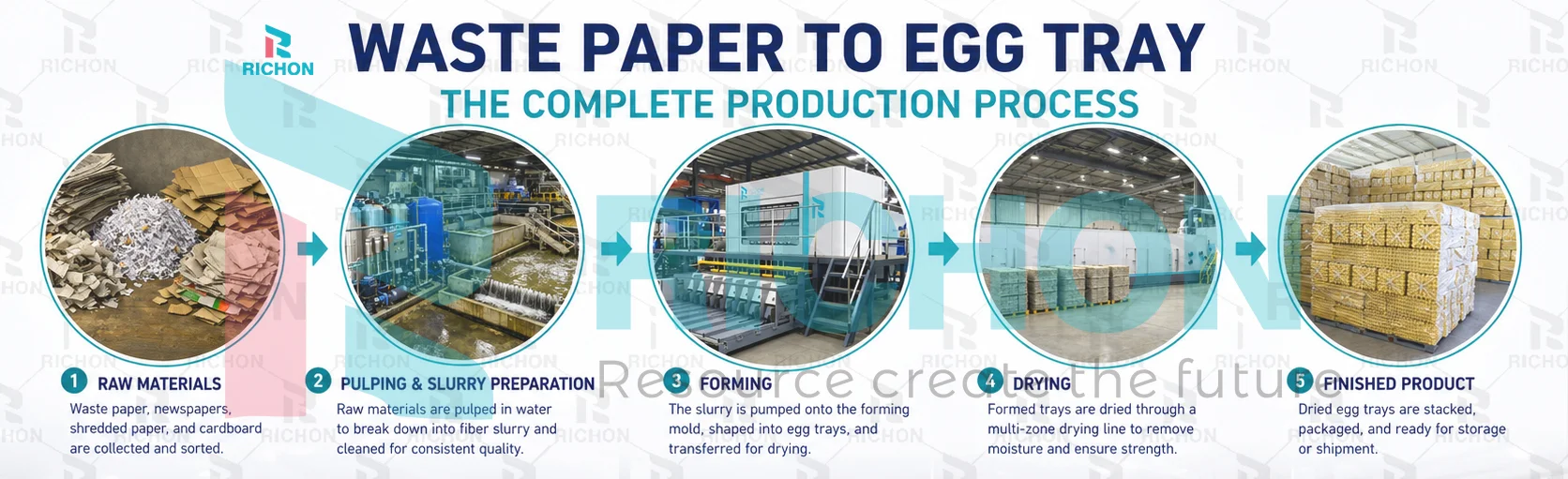
Waste paper can be recycled into molded pulp egg trays through pulping, forming, drying, stacking, and packing. For new investors, the key question is not only how to make egg trays from waste paper, but also how to choose the right paper egg tray making machine, drying method, factory layout, and ROI plan.
Waste Paper Preparation
Old cartons, newspaper, office paper, and recycled paper are sorted for pulp molding use.
Pulping and Mixing
Waste paper is mixed with water, refined into pulp, and adjusted for forming quality.
Forming and Drying
The egg tray forming machine shapes wet trays before natural, brick, or metal drying.
Stacking and Packing
Dried trays are stacked, counted, packed, and prepared for farms, distributors, or egg packaging buyers.
What Waste Paper Can Be Used for Egg Tray Production?
A paper pulp egg tray is usually made from recycled paper materials. For beginners, the most important point is that waste paper should be easy to pulp, stable in supply, and suitable for producing trays with enough strength, shape stability, and drying performance.
Old Cartons and Cardboard
Cartons and recycled cardboard are commonly used because they contain longer fibers and can help improve the strength of molded pulp egg trays.
Old Newspapers
Newspaper is easy to collect in many markets and can be mixed with other recycled paper materials for stable egg tray forming.
Office Paper
Office paper can provide cleaner pulp, but the cost and local supply should be checked before using it as a major raw material source.
Used Books and Magazines
Book paper and magazine paper may be used after sorting, but ink, coating, and impurities should be controlled during pulp preparation.
Kraft Paper
Kraft paper can improve fiber strength, but it should be balanced with cost, pulping difficulty, and the target tray quality.
Mixed Recycled Paper
Many egg tray factories use a mixed waste paper formula. The key is to keep the pulp ratio stable for consistent forming, drying, and finished tray quality.
Not all waste paper gives the same result
The quality of a paper egg tray depends on more than the waste paper price. Fiber strength, moisture level, impurity content, ink, coating, and collection stability all affect the final tray strength, surface appearance, drying speed, and production cost.
Before choosing raw materials, check these points
For detailed paper types, pulp ratio, and cost control, read the raw materials for egg tray production guide.
Basic Process: From Waste Paper to Finished Egg Tray
The waste paper to egg tray process is not complicated, but each step affects tray strength, forming stability, drying efficiency, and final production cost. For a new investor, understanding this basic workflow helps you choose a suitable egg tray production line instead of only comparing machine price.
Waste Paper Collection and Sorting
The process starts with collecting cartons, newspaper, office paper, kraft paper, or mixed recycled paper. Plastic film, metal pieces, sand, and other impurities should be removed before pulping.
Stable raw material supply is important because unstable paper quality may cause changes in pulp consistency, tray strength, and drying time.
Pulping and Fiber Preparation
Waste paper is mixed with water in a hydrapulper and broken down into paper pulp. The pulp is then prepared to reach suitable fiber condition for molded pulp egg tray forming.
Good pulp preparation helps improve forming quality, tray shape, surface appearance, and production stability.
Screening, Cleaning, and Mixing
Before forming, the pulp may pass through cleaning, screening, and mixing steps to reduce impurities and keep the pulp concentration stable.
Some projects may adjust pulp formula or add suitable additives according to local paper quality, tray strength requirements, and customer market standards.
Egg Tray Forming
The egg tray forming machine uses molds and vacuum suction to form wet trays from recycled paper pulp. Mold design, vacuum stability, pulp consistency, and machine structure all affect tray shape and output.
This is the key step where waste paper becomes a paper pulp egg tray with a clear cell structure.
Drying Wet Paper Egg Trays
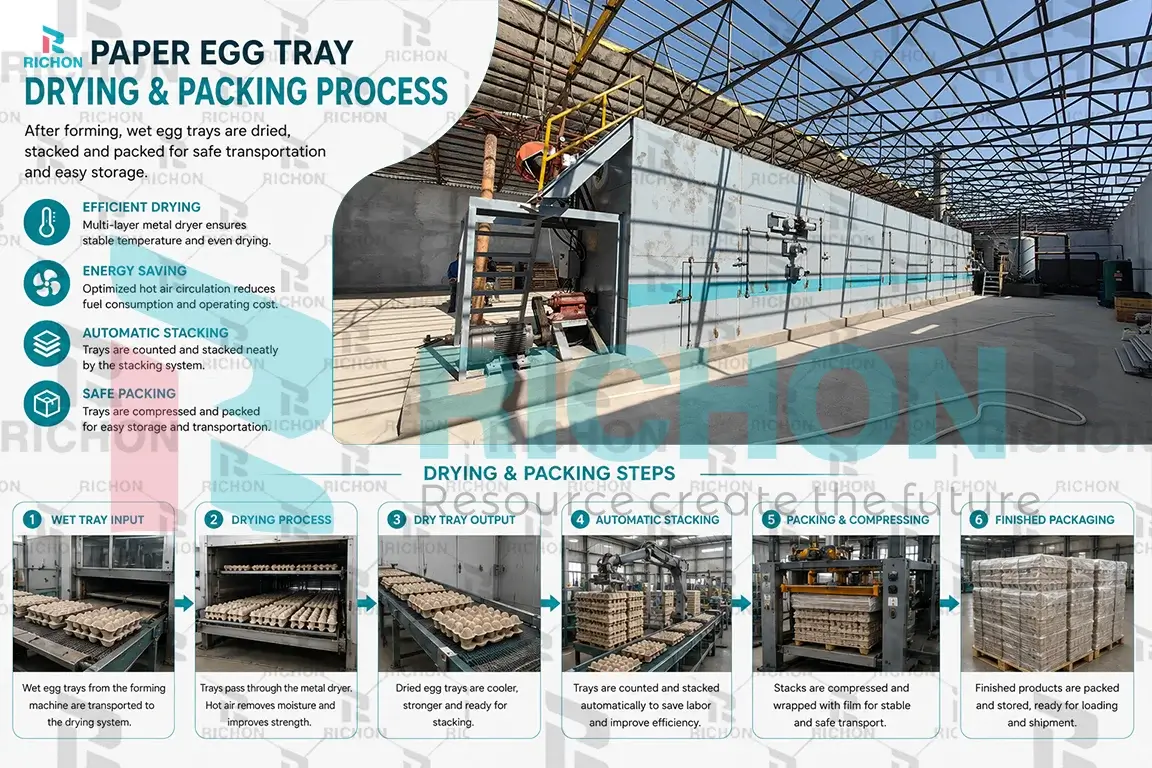
Wet egg trays contain a high amount of moisture after forming. They must be dried by natural drying, brick dryer, or metal dryer before stacking and packing.
Drying is one of the most important cost points because it affects factory space, fuel consumption, labor, output stability, and delivery speed.
Stacking, Counting, and Packing
After drying, the finished paper egg trays are stacked, counted, and packed for farms, egg distributors, supermarkets, packaging suppliers, or local tray buyers.
Final product quality should be checked for moisture, shape, strength, stacking performance, and tray appearance.
The process is simple, but the project plan must be accurate
Many beginners focus only on how to make egg trays from papers, but real project success depends on capacity selection, drying method, energy cost, labor arrangement, factory layout, and ROI planning.
Need the full technical workflow?
This section gives a beginner-level overview. For a more detailed explanation of pulping, forming, drying, quality control, and production line arrangement, read the full process guide.
What Machine Is Needed to Make Egg Trays from Waste Paper?
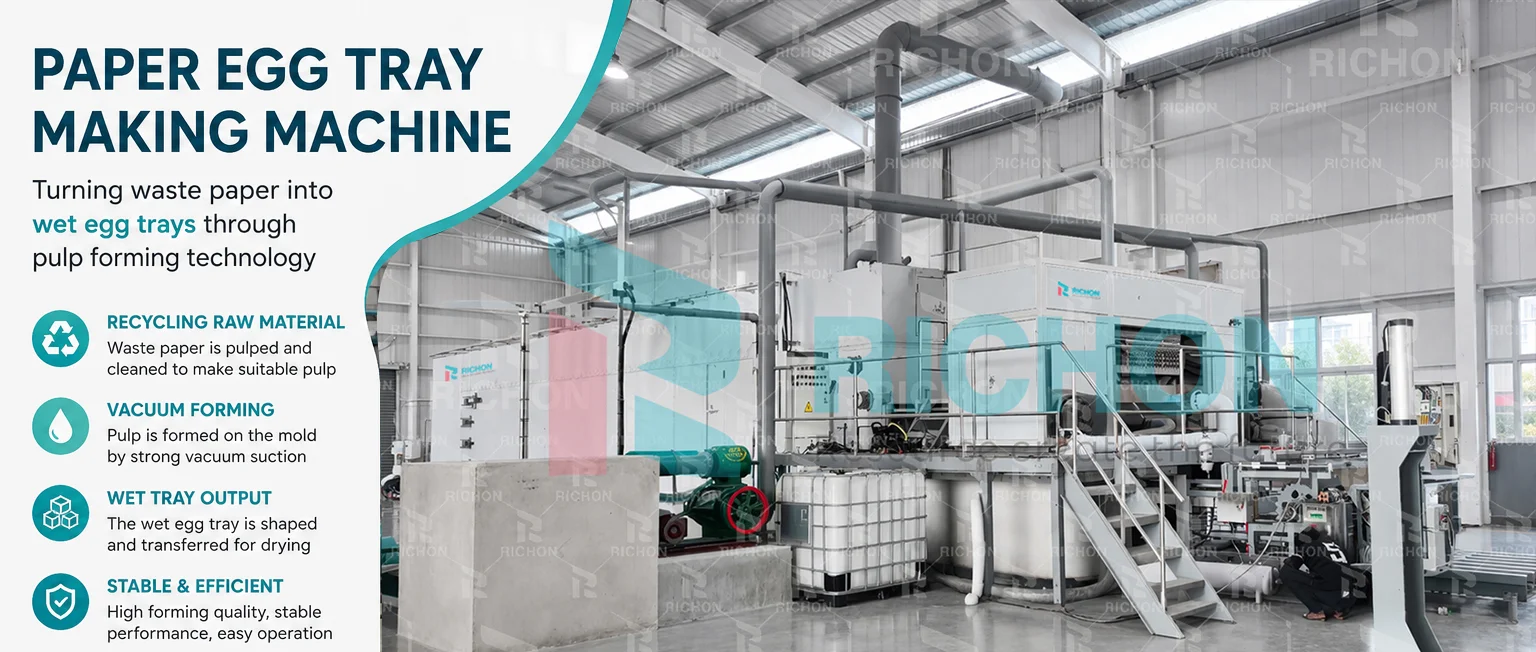
To turn waste paper into finished egg trays, you need more than one forming machine. A complete paper egg tray making machine project usually includes pulping equipment, forming equipment, molds, vacuum system, drying system, stacking system, and electrical control. The right configuration should match your target capacity, local energy cost, factory space, and expected payback period.
Complete Paper Egg Tray Making Machine Solution
A beginner may ask for only an egg tray making machine, but in real production the equipment should be planned as a complete waste paper to egg tray production line. Each system affects output, labor, tray quality, drying efficiency, and investment return.
Richon helps investors choose a suitable machine configuration based on project conditions instead of only comparing machine price.
Pulping System
The pulping system mixes waste paper with water and prepares suitable pulp for forming. It usually includes hydrapulper, pulp tanks, pumps, pipelines, and cleaning equipment according to project size.
Egg Tray Forming Machine
The forming machine uses molds and vacuum suction to shape wet paper pulp into egg trays. Mold accuracy, vacuum stability, and machine structure directly affect tray shape and production output.
Mold System
Egg tray molds determine tray size, cell structure, appearance, and product compatibility. Different markets may require different tray types, mold designs, and stacking performance.
Vacuum System
Vacuum suction removes water from pulp during forming and helps the wet tray attach to the mold surface. Stable vacuum performance supports better forming quality and lower moisture before drying.
Drying System
Wet trays must be dried before packing. Natural drying, brick dryer, and metal dryer have different effects on space, fuel cost, labor, automation, and production stability.
Stacking and Control System
Automatic stacking, counting, and control systems help reduce labor and improve production management, especially for medium and high-capacity egg tray production lines.
Do not choose equipment by machine price alone
A lower machine price may not mean a lower project cost. If the drying system, factory layout, mold plan, labor arrangement, or energy cost is not matched correctly, the production line may face bottlenecks after installation. For new investors, the better choice is to compare the complete project plan.
Compare machine structure before buying
Learn more about the paper egg tray making machine and the key components that affect production quality, maintenance, automation, and long-term operating cost.
How to Estimate Cost, Capacity, and Profit Before Buying a Machine
Before investing in a paper egg tray making machine, beginners should not only ask how much the machine costs. A better question is whether the whole waste paper to egg tray project can make stable profit under local raw material cost, energy price, labor conditions, factory space, and tray selling price.
Main cost factors in a paper egg tray project
The total project cost is affected by machine capacity, automation level, drying method, fuel type, workshop layout, mold quantity, installation conditions, and local operating cost.
Machine Capacity
Higher capacity usually needs stronger forming, drying, stacking, and control systems.
Drying Method
Natural drying, brick dryer, and metal dryer have different investment and operating costs.
Raw Material Cost
Waste paper price and pulp ratio directly affect the cost of each finished egg tray.
Fuel and Electricity
Drying fuel, power consumption, and local energy price are key parts of daily operating cost.
Labor Arrangement
Automation level, drying method, and packing method decide how many workers are needed per shift.
Factory Layout
A poor layout may increase handling distance, drying bottlenecks, labor cost, and production waste.
A simple way to think about profit
To evaluate whether making egg trays from waste paper is profitable, you need to compare your expected daily sales revenue with daily production cost. The target is not only to produce trays, but to build a project with a reasonable payback period and stable cash flow.
Capacity choice should match your market and drying plan
| Capacity Range | Typical Project Type | Common Drying Choice | Planning Focus |
|---|---|---|---|
| 1,000–1,500 pcs/h | Small startup, farm use, local trial project | Natural drying or simple drying solution | Low investment, simple operation, market testing |
| 2,500–3,000 pcs/h | Starter commercial egg tray factory | Natural drying or brick dryer | Balanced cost, local sales, manageable labor |
| 4,000–5,000 pcs/h | Growing factory with stable orders | Brick dryer or metal dryer | Output stability, drying efficiency, cost control |
| 6,000–9,000 pcs/h | Industrial production and larger distribution market | Metal dryer | Automation, continuous production, energy planning, ROI |
Low machine price does not always mean low project risk
If the machine capacity is too high for your market, or the drying system is too small for the forming output, the project may face cash flow pressure, drying bottlenecks, unstable delivery, or a longer payback period. The better strategy is to choose a configuration based on real local conditions.
Plan price and profit before confirming equipment
Compare machine cost, drying cost, daily output, raw material cost, and local selling price before making the final investment decision.
Need a Waste Paper to Egg Tray Project Plan?
If you are planning to turn waste paper into paper egg trays, Richon can help you choose a suitable paper egg tray making machine, drying method, factory layout, capacity plan, and ROI strategy according to your real project conditions.
What information should you prepare?
A more accurate egg tray project plan needs real local data. Before choosing equipment, prepare the following information so the machine configuration and ROI estimate can be matched to your market.
Frequently Asked Questions About Making Egg Trays from Waste Paper
These questions help new investors understand the basic requirements, machine selection, drying method, cost, and factory planning for a waste paper to egg tray project.
Can egg trays be made from waste paper?
What machine is used to make egg trays from waste paper?
Is natural drying enough for paper egg tray production?
How much does it cost to start making egg trays from waste paper?
How do I choose the right capacity for an egg tray production line?
Is making paper egg trays from waste paper profitable?
Need help planning your waste paper to egg tray project?
Share your target capacity, local waste paper price, fuel cost, factory space, and target selling price. Richon can help you choose a suitable machine configuration, drying method, factory layout, and ROI plan.
Contact Richon for Project Planning