 English

Molded Pulp Packaging
Egg Carton Making Machine for Molded Pulp Packaging
Richon supplies equipment for producing molded pulp egg cartons, with standard mold options and custom product development. Start with the carton you want to sell: its egg fit, lid, closure and stacking requirements help determine the mold and production process.
Whether you are planning a new egg carton production line or assessing an existing pulp molding system, the equipment selection should follow the product requirements. Forming, wet-product transfer, drying and any finishing stages need to be reviewed together.
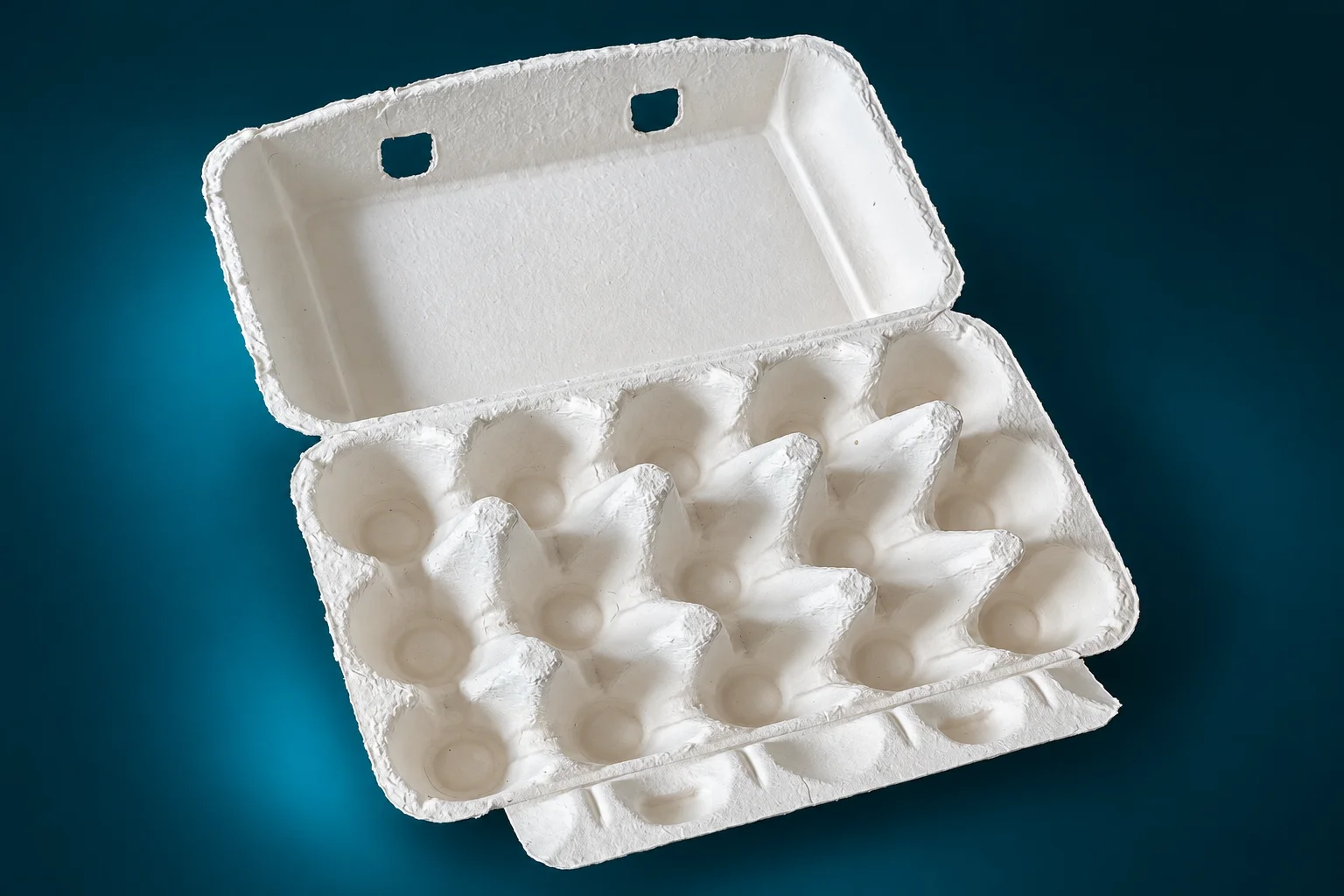
Product design
Define the Egg Carton Before Selecting the Machine
This page covers molded pulp egg cartons, also called molded pulp egg boxes. It does not cover equipment for printing and folding paperboard boxes.
An open transport tray and a carton with a lid place different demands on the product design. For a carton, discuss both how the eggs sit in the base and how the finished pack opens, closes and stacks.
| Product detail | Information to provide | What needs review |
|---|---|---|
| Egg fit and cell arrangement | Egg size range, preferred pack format and a sample if available | Cell shape, spacing and product dimensions |
| Lid and closure | Open and closed views, hinge and closure requirements | Molded features and the intended closing action |
| Surface and edges | Reference sample and required finish | Whether additional finishing should be evaluated |
| Stacking and packing | Desired stacking arrangement and downstream packing method | Finished-product handling and separation |
Reference photographs help explain your target product. A physical sample or dimensioned drawing can provide more detail for a configuration discussion.
Mold and product planning
Standard Mold Options and Custom Egg Cartons
Richon offers standard mold options and can assess custom egg carton designs. The proposed carton must still be checked against the forming platform, transfer arrangement and downstream process. A standard mold option does not mean that every carton format fits every machine.
For an existing design, share the sample or drawing you want to reproduce. For a new design, explain the egg fit, closure, handling and appearance requirements before finalizing the mold.
Our mold technology guide explains the roles of forming and transfer molds. The specific mold arrangement for your carton is confirmed during product and equipment evaluation.
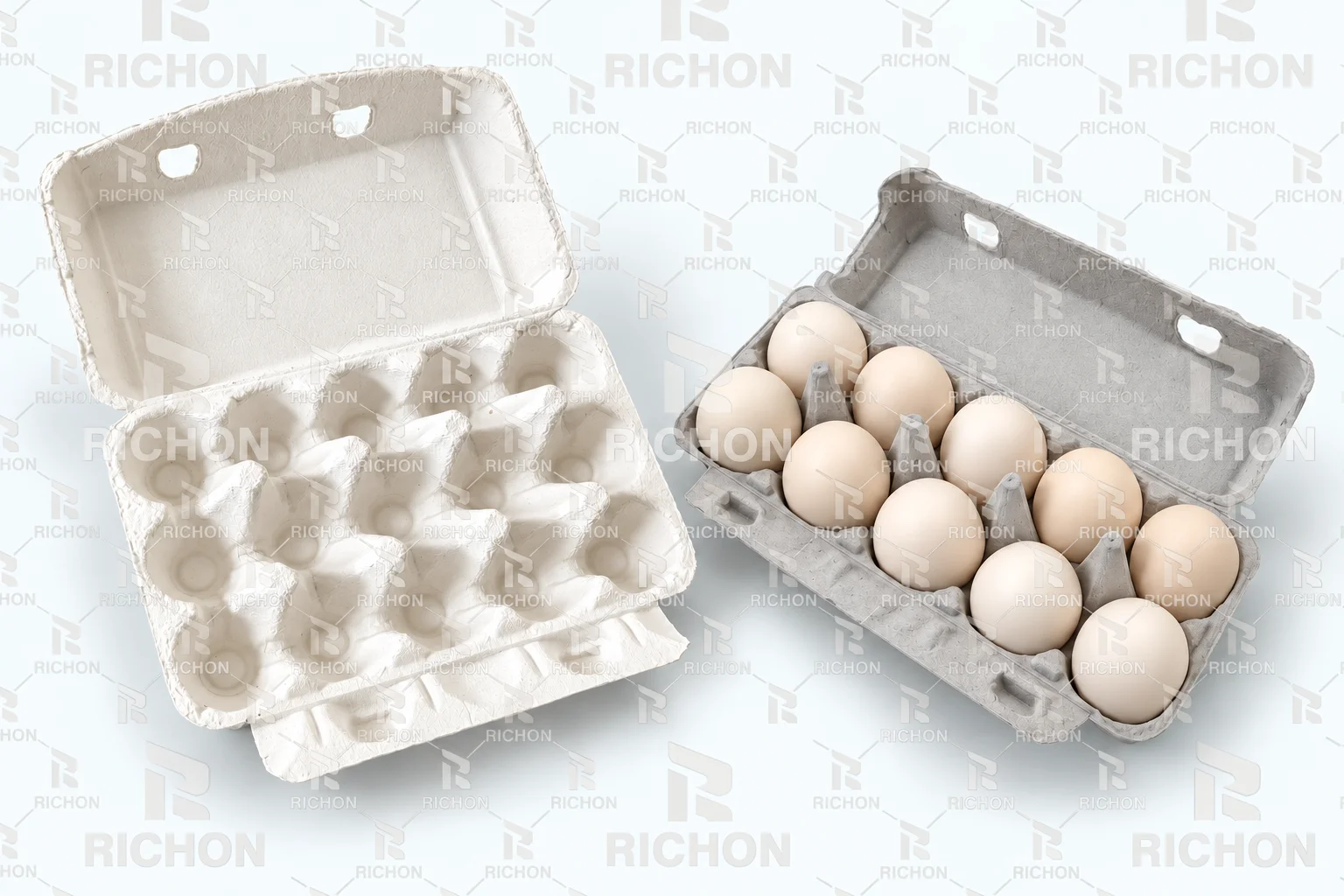
Process matching
Match Forming, Drying and Finishing to the Carton
Forming and wet-product transfer
The forming stage shapes the wet pulp product, while transfer moves it to the next stage. Review the carton structure and transfer arrangement together, including how the lid and base are supported before drying.
Drying
Drying selection should account for the product, planned output, heat source and factory conditions. For a lidded carton, the shape after drying and the intended closing action are important discussion points. An output figure for an egg tray does not establish the output of a different egg carton.
The drying system overview introduces available planning considerations. The final arrangement must be matched to the carton and operating conditions.
Finishing and handling
Hot pressing or other finishing should be evaluated against the required shape, edges and appearance. It should not be assumed to be included, required for every carton, or unnecessary for every carton. Stacking and any downstream packing stages also need an agreed scope.
Equipment scope
Forming Machine or Complete Egg Carton Production Line
A forming machine and a complete line are different purchasing scopes. Clarify which stages are being supplied, which equipment is already available and where the interfaces will be.
| Project route | Main questions to resolve |
|---|---|
| New production line | Which pulping, forming, transfer, drying, finishing and handling stages are required in the proposed scope? |
| Adding cartons to an existing system | Can the existing forming and transfer arrangement support the proposed carton, and what downstream changes need evaluation? |
| Additional carton formats | Which product-specific molds and process adjustments are needed for the additional design? |
For general equipment context, see the egg tray forming machine overview and egg tray production line overview. Those pages describe egg tray equipment; their capacity tables should not be used as egg carton performance figures.
The supply boundary, equipment configuration and any product checks should be agreed for the proposed project. Listing a process stage here does not mean it is automatically included in every quotation.
Investment planning
What Determines Output and Project Cost?
Start with your required saleable carton output and working schedule. Carton geometry, product specification, pulp condition, forming cycle, drying and downstream handling all need consideration before an equipment output is proposed.
For investment planning, separate the agreed equipment scope from tooling, utilities, site work, transport, installation and any other project items. Their inclusion and cost should be confirmed in the proposal rather than assumed from a generic machine price.
Richon can discuss standard molds and custom production requirements for your project. Specific output, utility requirements, dimensions and commercial terms depend on the evaluated configuration.
Project inputs
Prepare Your Egg Carton Enquiry
To begin the discussion, prepare the information already available to you:
- Carton photographs, a sample or a drawing, including open and closed views where applicable.
- Egg size range, pack format, overall dimensions and closure requirements.
- Target saleable output and intended working schedule.
- New-line or existing-equipment requirements, including any equipment you plan to retain.
- Site location, available heat source and relevant utility or space constraints.
- Required finish, stacking and packing arrangement.
You do not need to finalize every detail before contacting us. Explain what is known and what still needs evaluation. If files cannot be sent through the contact form, describe them in your message and agree a suitable way to share them during follow-up.
Buyer FAQ
Egg Carton Equipment Questions
Can the same equipment produce egg trays and egg cartons?
Some projects may be configured for both products, but changing the mold alone should not be assumed sufficient. Product structure, mold fit, wet transfer, drying and finishing requirements need evaluation for the proposed equipment.
Do you offer standard and custom molds?
Yes. Richon offers standard mold options and can assess custom designs. The format, dimensions, lid and closure requirements are checked before a specific mold arrangement is agreed.
Does an egg carton line always need hot pressing?
The need for hot pressing or another finishing step depends on the product requirements and proposed process. It is evaluated as part of the project rather than assumed for every carton.
Can I use an egg tray machine’s output to estimate carton output?
It should not be used directly. A different product can change forming, drying and handling requirements. Request an output proposal based on the intended carton and configuration.
Is this equipment for folding printed cardboard egg boxes?
No. This page concerns molded pulp cartons formed from pulp. Printing and folding paperboard boxes is a different equipment application.
Project consultation
Discuss Your Molded Pulp Egg Carton Project
Share the carton you want to produce, the required output and your site conditions. Richon can assess standard mold options or custom requirements and discuss the equipment scope for your project.
Contact Richon About Egg Carton Equipment or return to our pulp molding product overview.