


Ultimate Guide to Egg Tray Production Line (2026 Edition)
Egg tray production is one of the most stable and scalable businesses in the pulp molding industry.
However, most investors misunderstand one key fact:
👉 The success of an egg tray project is not determined by machine price, but by system design and cost control.
This guide explains the complete production system, including raw materials, capacity, energy consumption, cost structure, and profit model.
What Is an Egg Tray Production Line?
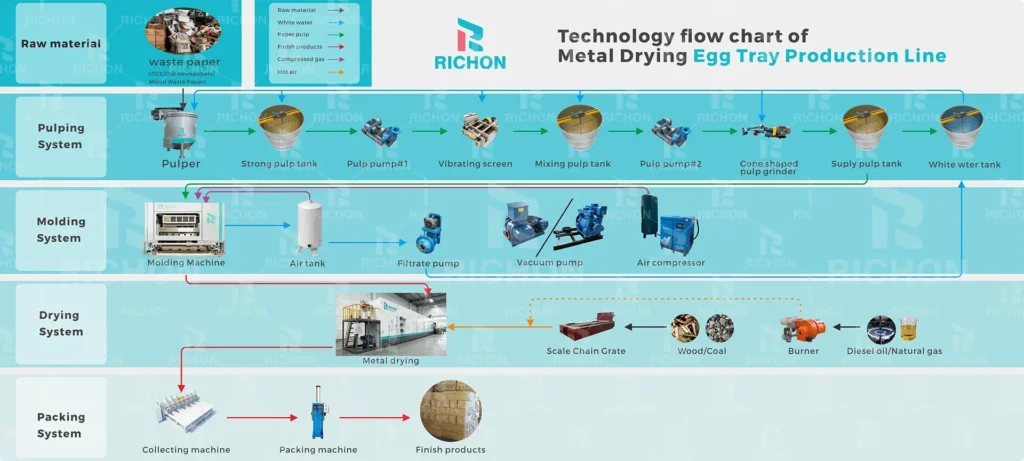
An egg tray production line converts waste paper into molded pulp packaging through a continuous industrial process.
Main process:
- Pulping system
- Forming system
- Drying system
- Packing system
👉 Learn detailed process: egg-tray-production-process
Raw Materials for Egg Tray Production
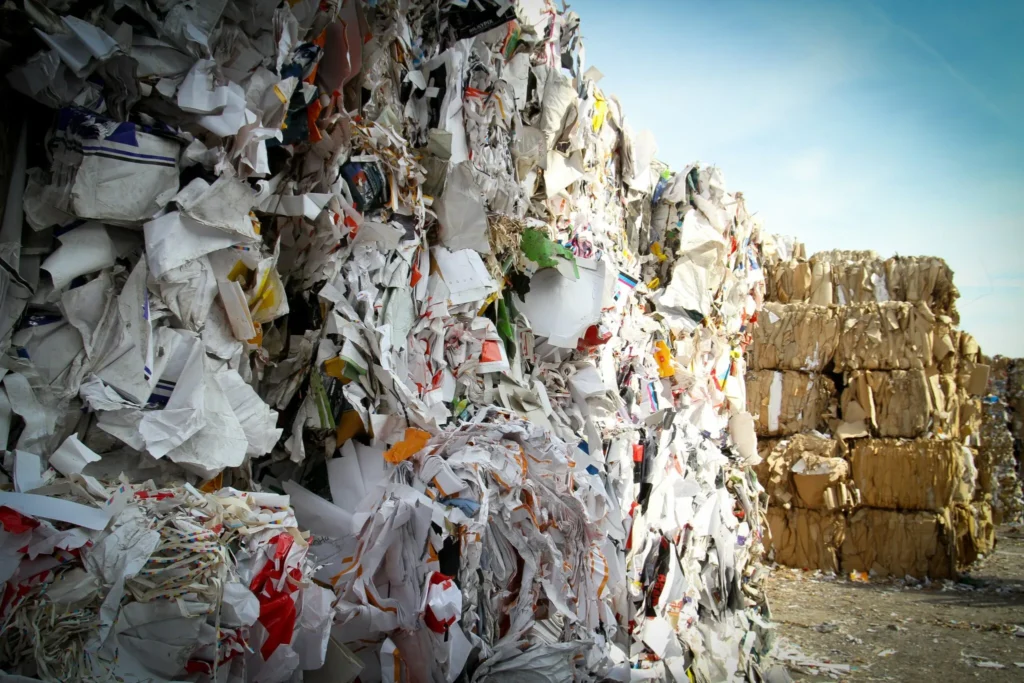
Raw materials are the largest cost component in production.
Common materials:
- OCC (old corrugated cartons)
- Waste cartons
- Old newspapers
- Mixed recycled paper
👉 Raw material guide: egg-tray-raw-materials
Production Capacity (1000–8000 pcs/h)
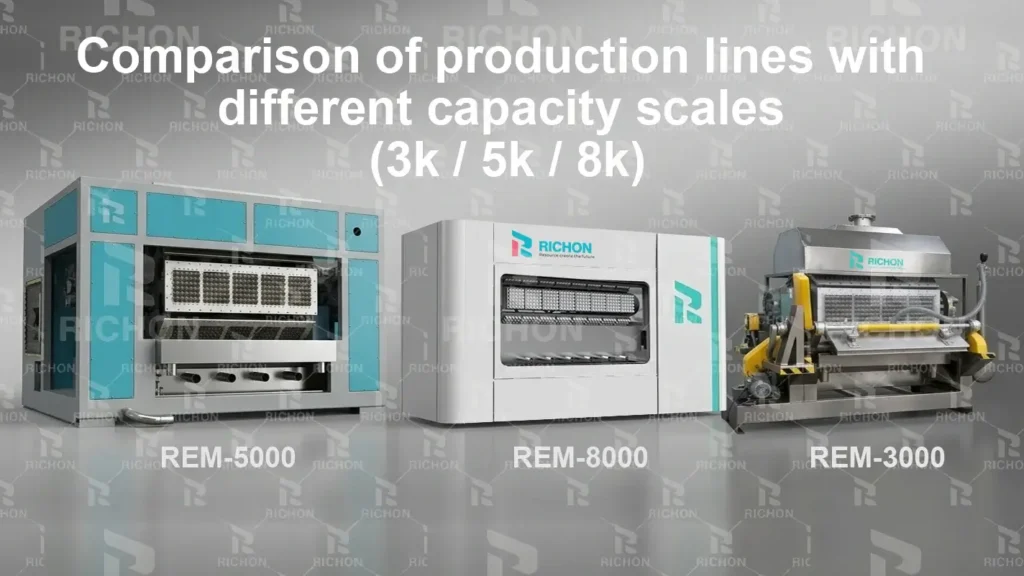
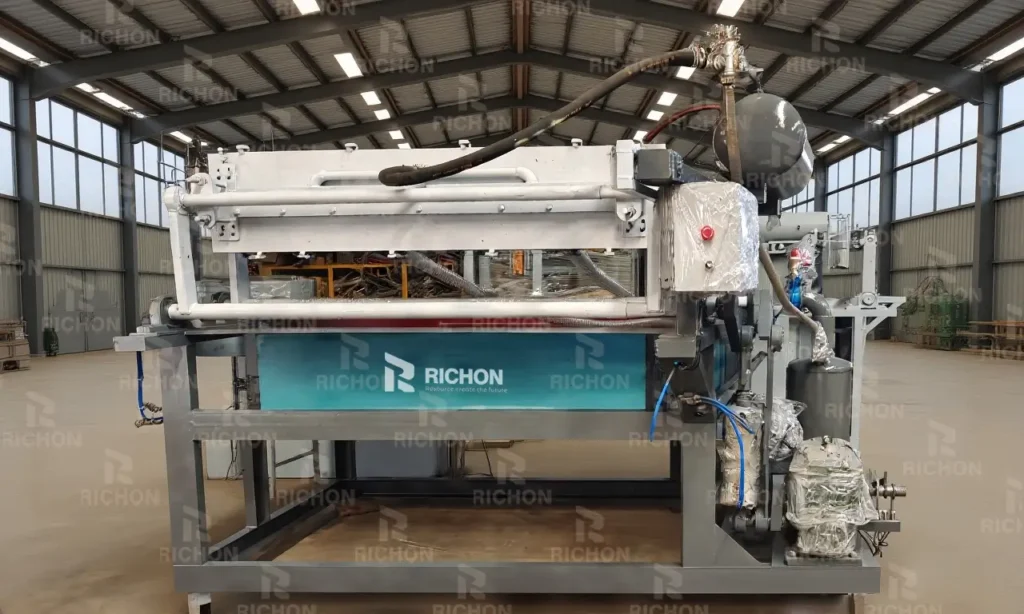
- Investment size
- Energy efficiency
- Profit potential
Typical ranges:
| Capacity | Application |
|---|---|
| 1000–2000 pcs/h | Small business |
| 3000–4000 pcs/h | Medium investment |
| 5000–6000 pcs/h | Industrial scale |
| 8000+ pcs/h | Large factory |
👉 Capacity selection: how-to-choose-the-right-egg-tray-production-line-capacity-1000-8000-pcs-h-guide
👉 Related solution pages: capacity-solutions
Drying System: The Core Cost Driver
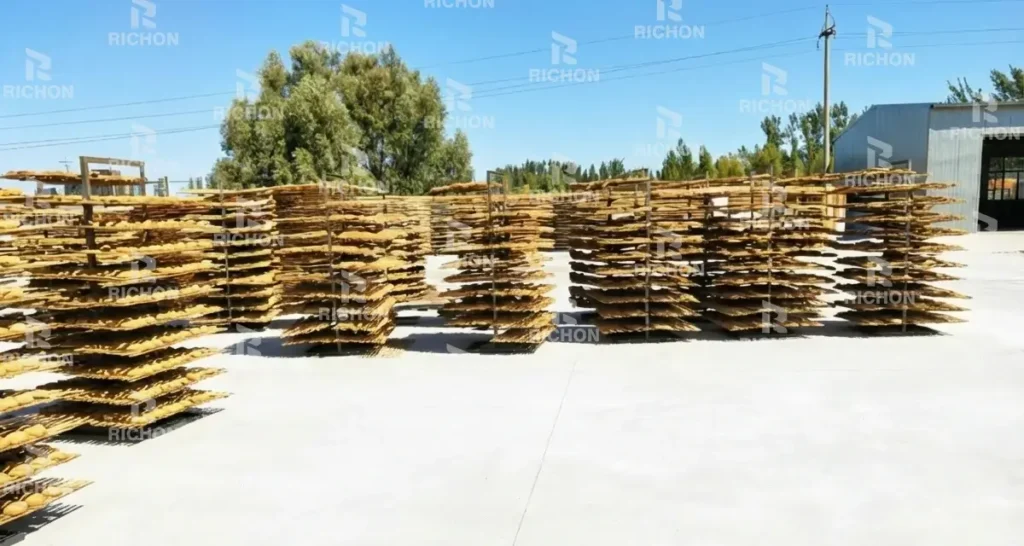
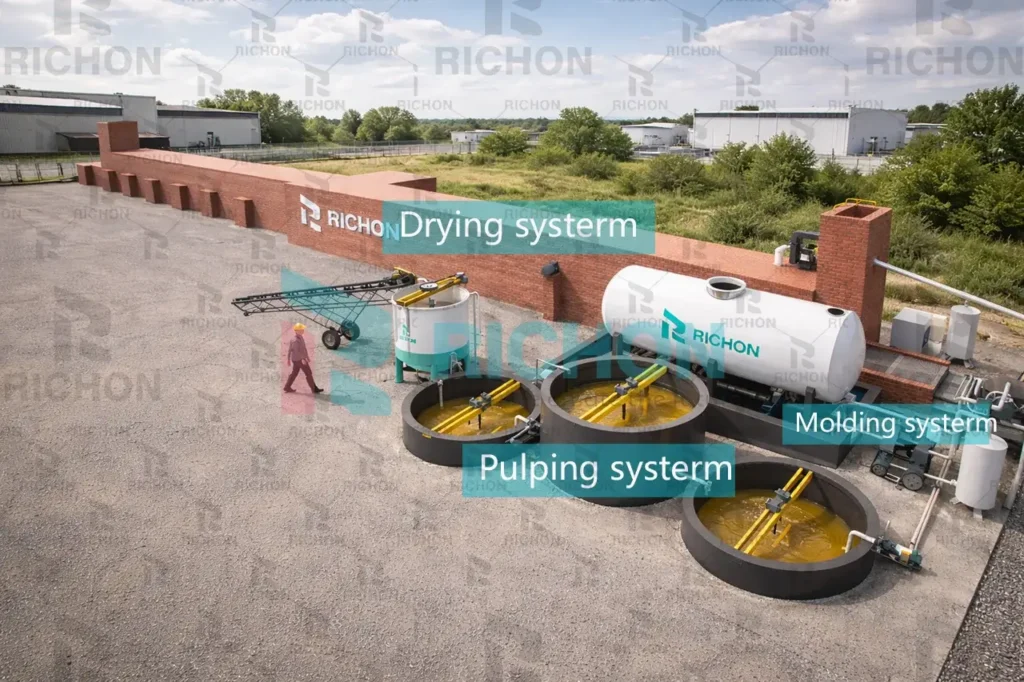
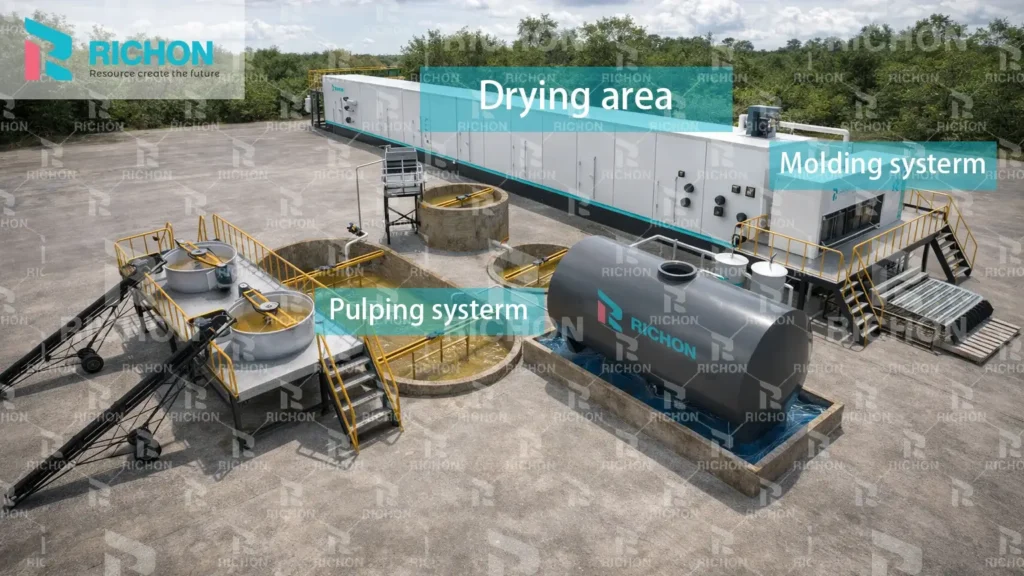
The drying system is the most critical part of the entire production line.
Types:
- Natural drying
- Brick kiln drying
- Metal drying system
👉 Key insight:
Drying accounts for 60–80% of total energy cost
👉 Drying comparison: brick-dryer-vs-metal-dryer
👉 Drying cost analysis: egg-tray-drying-system-cost
Energy Consumption Breakdown
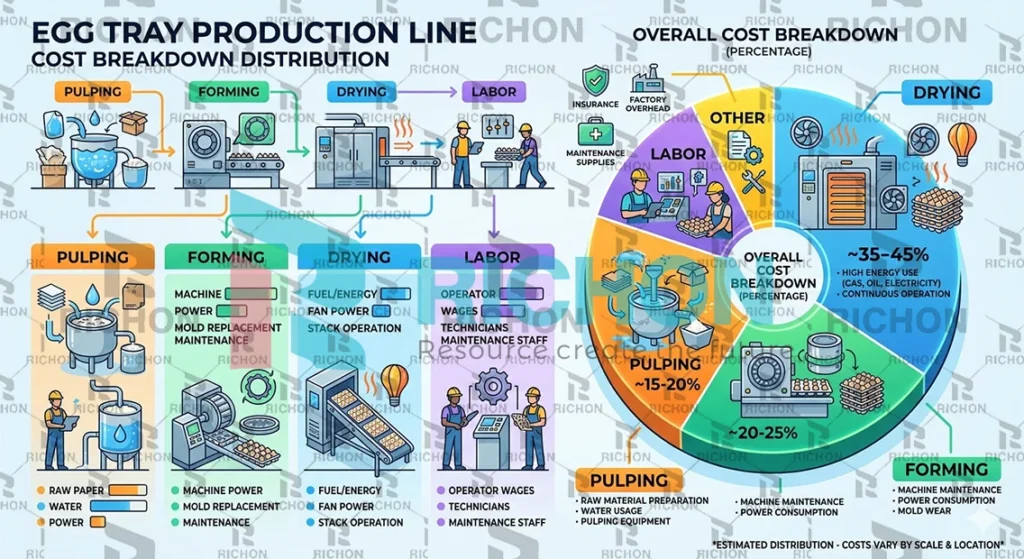
Energy consumption consists of:
- Drying fuel (dominant)
- Electricity
- Water recycling
👉 Electricity consumption: how-much-electricity-does-an-egg-tray-machine-use
👉 Water consumption: how-much-water-is-needed-for-egg-tray-production
👉 Energy analysis hub: energy-consumption-analysis
Production Cost: How to Calculate Cost Per Tray
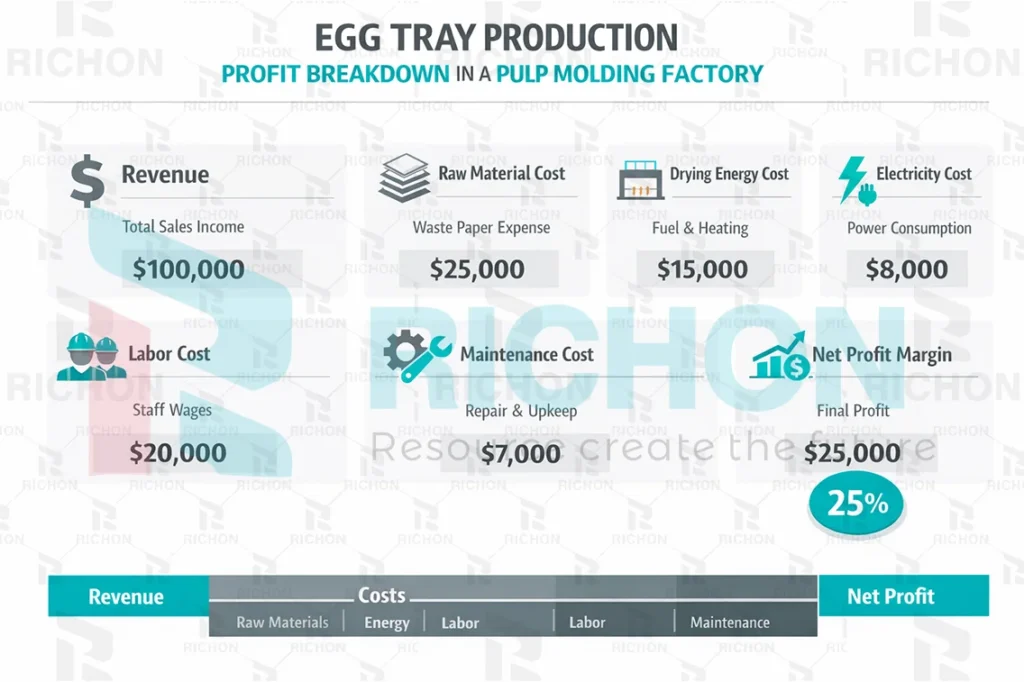
Core formula:
👉 Cost per tray = Total hourly cost ÷ Output per hour
Example:
- 6000 pcs/hour
- $120/hour
👉 Cost per tray:
= $0.02
👉 Full cost breakdown: what-determines-the-real-production-cost-of-an-egg-tray-production-line
👉 Maintenance cost: egg-tray-machine-price-2026-complete-cost-breakdown-roi-guide
Profit Margin & ROI Analysis
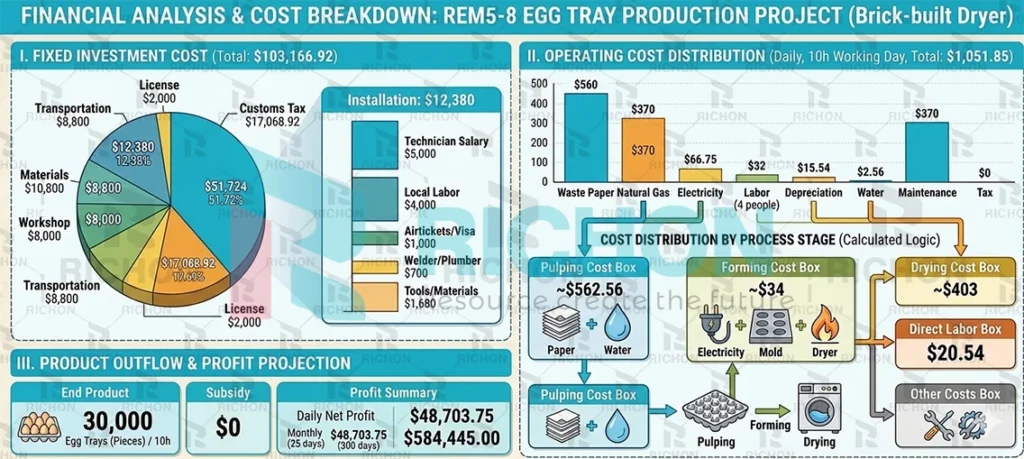
Profit model:
- Selling price: $0.035
- Cost: $0.020
👉 Profit:
= $0.015 per tray
ROI:
👉 Typical payback period: 6–12 months
👉 Profit analysis: egg-tray-profit-margin
Factory Layout & Space Planning
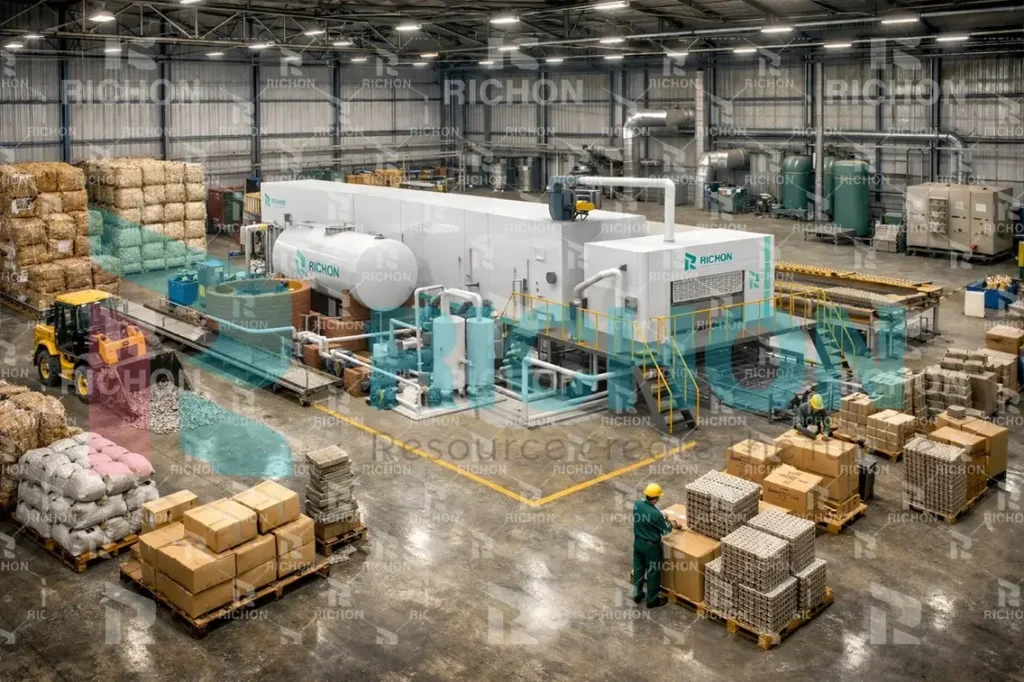
Key factors:
- Production flow
- Drying space
- Material handling
👉 Factory layout guide:how-much-space-is-needed-for-an-egg-tray-factory
Common Mistakes to Avoid
❌ Choosing the lowest price machine
👉 leads to higher long-term cost
❌ Ignoring drying system
👉 causes energy cost explosion
❌ Poor raw material selection
👉 increases reject rate
❌ No maintenance planning
👉 leads to downtime
👉 Related: maintenance-cost-of-egg-tray-machine
How to Choose the Right Egg Tray Production Line
Key decision factors:
- Capacity
- Energy availability
- Labor cost
- Market demand
👉 Full solutions: egg-tray-production-line
Final Conclusion
Egg tray production is not just equipment—it is a system engineering project.
👉 Long-term success depends on:
- Cost per tray
- Energy efficiency
- Production stability
- Proper system design
Need a Capacity Recommendation for Your Market?
Share your target output, local humidity/energy conditions, and tray type. Our engineers will suggest a suitable 3,000–8,000 pcs/h configuration and drying solution.
- Factory layout & utilities checklist
- Drying bottleneck evaluation
- Cost & ROI estimation reference
